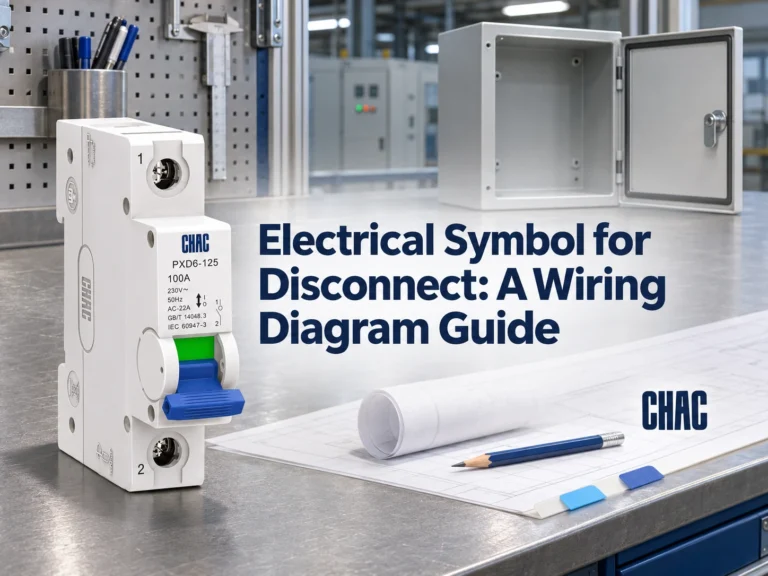
Compatibilité DC MCB AC n’est pas déterminé par la poignée du disjoncteur, la taille du châssis ou la photographie de catalogue. Un AC disjoncteur miniature peut ne pas être adapté à un circuit en courant continu, car la méthode d’ouverture du circuit, la tension par pôle, la polarité et l’orientation autorisée du circuit peuvent différer. La réponse sûre est conditionnelle : utiliser un dispositif dont le marquage et la documentation technique couvrent la tension continue réelle, le courant, le niveau de court-circuit, la disposition des pôles et le système d’installation. Ce guide propose une démarche d’approvisionnement et de vérification destinée aux ingénieurs, aux constructeurs de tableaux et aux distributeurs.
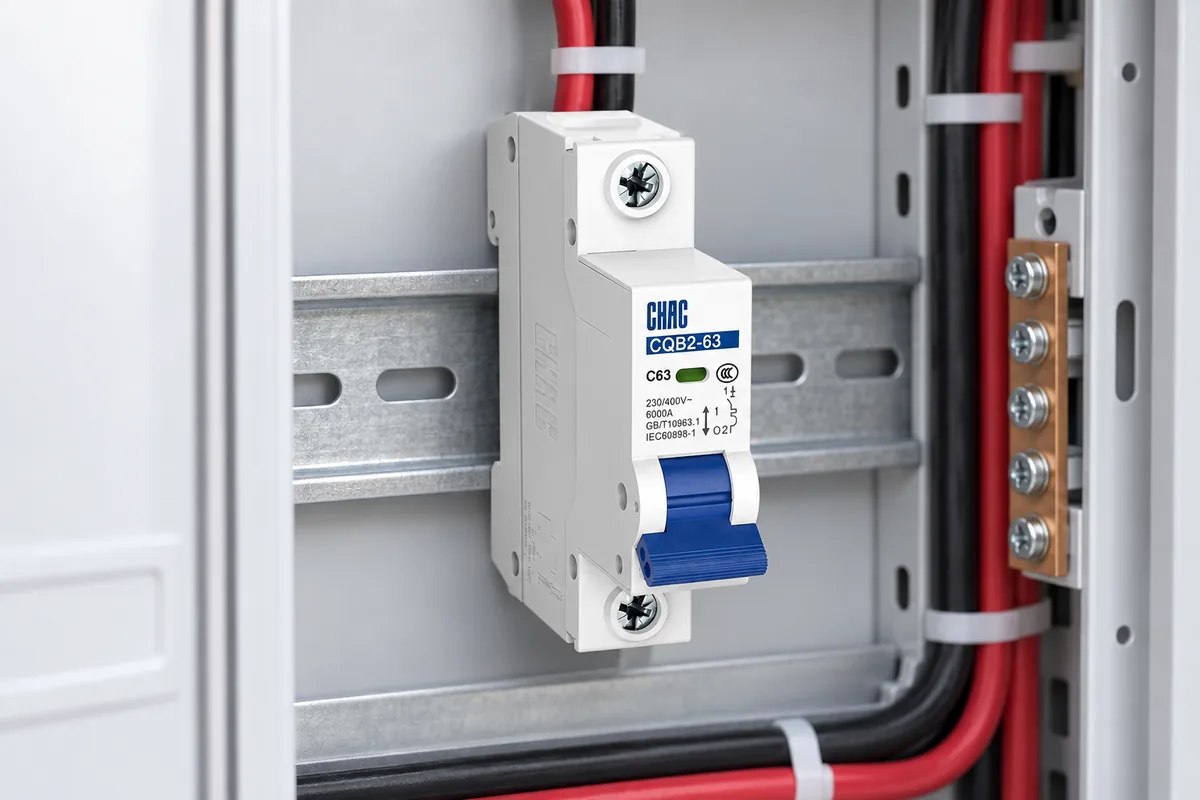
Est-il possible d’utiliser un MCB à courant continu dans un circuit à courant continu ?
Pas automatiquement. A Washington, D.C. Disjoncteur Il doit être sélectionné parmi la documentation indiquant sa capacité d’interruption en courant continu. Le courant alternatif passe par un point zéro naturel à chaque cycle, tandis qu’un arc en courant continu ne présente pas ce même passage répété par zéro. Par conséquent, on ne peut pas appliquer directement une caractéristique CA à du CC simplement parce que les valeurs de tension et de courant semblent similaires.
Pour un remplacement ou une nouvelle conception, enregistrez la tension du système, le courant continu maximal admissible, le courant de court-circuit prévisible, le nombre de pôles, les exigences de polarité, la disposition des conducteurs et les conditions d’encapsulation. Si le fabricant ne publie pas la valeur nominale en courant continu requise ni l’orientation, considérez l’appareil comme non vérifié plutôt que de supposer qu’il est adapté.
Que faut-il comparer avant de choisir un disjoncteur DC ?
| Champ de décision | Pourquoi c'est important | Éléments de preuve à conserver |
|---|---|---|
| Tension continue par pôle | Un dispositif multipolaire peut avoir une limite de tension définie par pôle ou pour un montage en série spécifié. | Fiche technique actuelle et marquage de la plaque signalétique |
| Courant continu et courant de défaut | Le courant de fonctionnement et le courant de défaut disponible influencent la charge thermique et la capacité d’interruption. | Calcul de charge et étude des niveaux de court-circuit |
| Polarité et orientation | Certains schémas en courant continu exigent le sens de la ligne par rapport à la charge ou la polarité indiqués par le fabricant. | Schéma de câblage et instructions d’installation |
| Pôles et isolement | Le circuit peut nécessiter l’ouverture simultanée des conducteurs positif, négatif ou d’autres conducteurs. | Schéma unifilaire et configuration des poteaux |
| Standard et liste | Les essais des composants n’entraînent pas automatiquement la réception du panneau complet ni de l’installation. | Certification applicable, édition standard et approbation du projet |
Ces phénomènes expliquent également pourquoi une valeur nominale de courant plus élevée ne constitue pas une solution universelle. Une valeur nominale plus élevée peut modifier la protection des conducteurs, la coordination des dispositifs de protection et l’énergie que le système doit supporter avant d’être interrompu.
Pourquoi la polarité est-elle importante sur certains disjoncteurs CC ?
Polarity can affect the magnetic field and arc path used to help extinguish a DC arc. The exact requirement depends on the breaker design, pole arrangement, and the manufacturer’s tested application. Do not infer the wiring direction from a generic diagram or from an AC installation. Follow the product marking and the installation manual for the exact model.
The same caution applies to series-pole arrangements. A drawing that shows two poles does not prove that the device is approved to combine them for a particular DC voltage. That relationship must be stated in the product evidence.
Comment doit-on examiner le remplacement d’un disjoncteur alternatif‑continu ?
- Define the circuit: source type, nominal and maximum voltage, load current, fault current, and environment.
- Confirm the required protective function and which conductors must open together.
- Check the candidate device’s DC voltage, current, polarity, interrupting, and mounting data.
- Compare terminals, enclosure, accessories, clearances, and conductor requirements.
- Obtain approval from the responsible engineer or authority having jurisdiction before release.
For a product discussion, compare the project conditions with CHAC’s DC circuit breaker range et le relevant DC miniature circuit breaker option. The product page is a starting point for model matching, not a replacement for the project fault and wiring data.
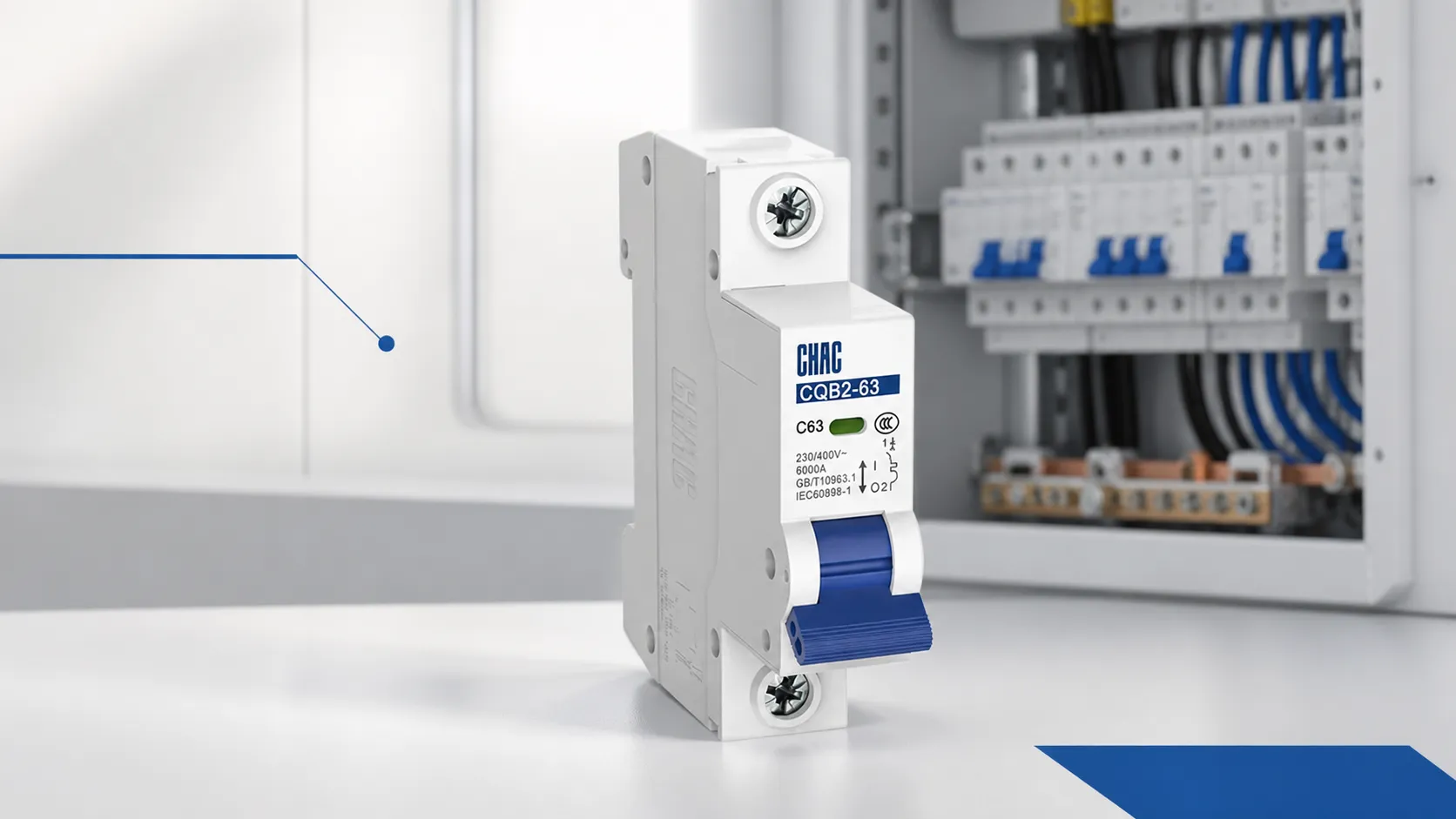
Comment l’installation doit-elle être vérifiée avant sa mise sous tension ?
Verify de-energization, conductor identification, terminal condition, torque, enclosure suitability, labels, and required spacing. Then complete the tests required by the device instructions and local installation code. Record the model, revision, test method, readings, date, and responsible person. If a breaker trips, heats, or shows an unexpected arc path, isolate the circuit and investigate the documented conditions before resetting it.
For AC equipment, use an AC MCB product category only when the application and product evidence match the AC system. AC and DC devices should not be treated as interchangeable categories.
FAQ
Can AC MCBs be used in DC circuits?
Only when the manufacturer explicitly rates the device for the required DC voltage, current, polarity, and interruption duty. An AC-only marking is not evidence of DC suitability.
Can a DC circuit breaker be used for AC?
Do not assume so. Check the device marking and instructions for an AC application, including voltage, frequency, interrupting rating, and required accessories.
Are AC and DC circuit breakers different?
They can use different arc-interruption and wiring assumptions. Selection must follow the application rating and tested configuration rather than the external appearance.
Why are some DC breakers polarity-sensitive?
The tested arc path may depend on current direction and magnetic effects. Follow the polarity marks and the exact installation instructions for the model.
What happens if an AC breaker is used on DC?
The device may fail to interrupt the fault as intended, so the circuit can remain exposed to sustained arcing or unacceptable damage. Stop and verify the application before energizing.
Sources pour les normes et vérifications supplémentaires
- International Electrotechnical Commission standards portal
- UL Solutions standards and certification guidance
- NFPA 70, National Electrical Code information
Decision principle: approve AC breaker on DC ou Compatibilité DC MCB AC only after the voltage, fault current, polarity, pole arrangement, listing, and installation method are documented. When those inputs are available, CHAC Electric can help match them to the appropriate product evidence through its technical contact channel.