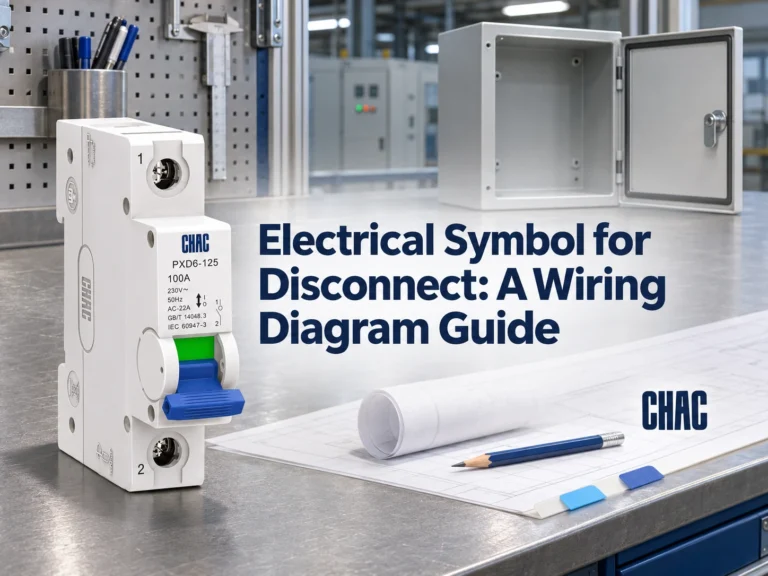
Compatibilidade do MCB DC com AC não é determinado pela alavanca do disjuntor, pelo tamanho do quadro ou pela fotografia do catálogo. Um AC disjuntor miniatura pode ser inadequado para um circuito de corrente contínua, pois o método de interrupção, a tensão por polo, a polaridade e a orientação permitida do circuito podem ser diferentes. A resposta segura é condicional: utilize um dispositivo cuja marcação e documentação técnica abranjam a tensão, a corrente, o nível de curto-circuito, a disposição dos polos e o sistema de instalação reais em corrente contínua. Este guia apresenta uma orientação para a aquisição e a avaliação destinada a engenheiros, montadores de painéis e distribuidores.
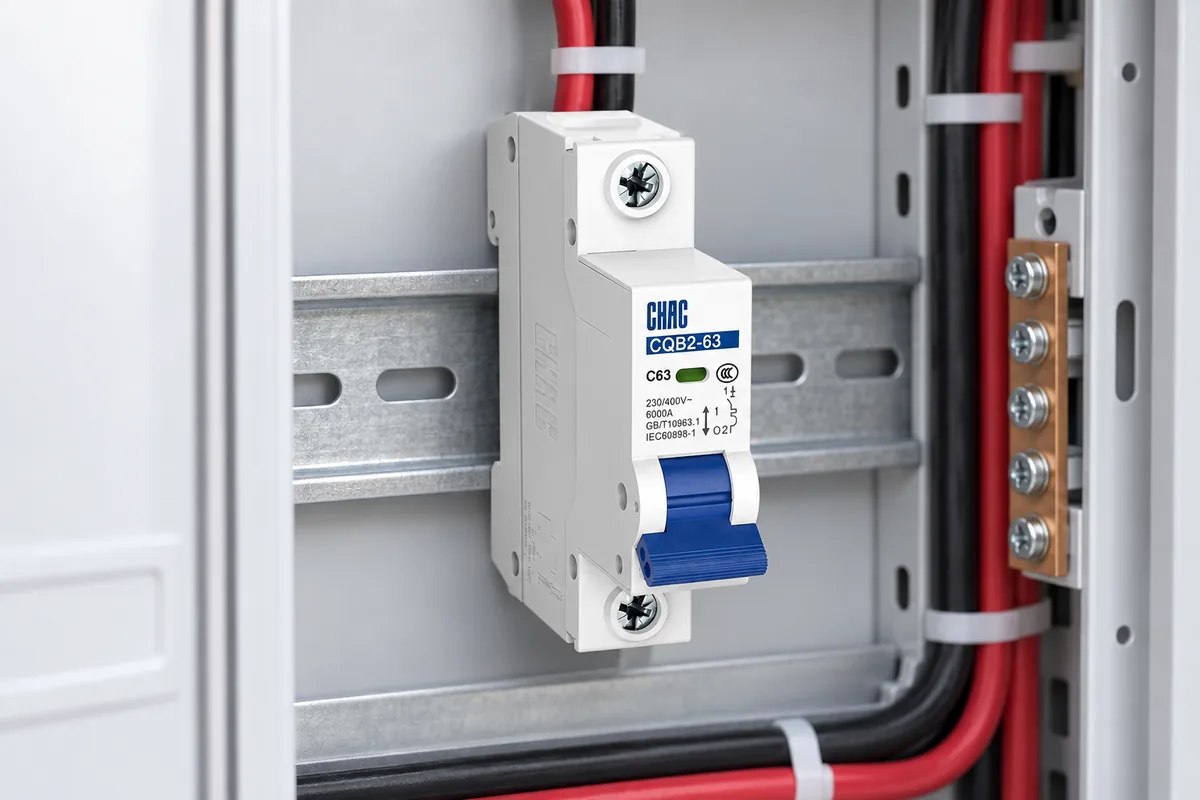
Um disjuntor CA pode ser utilizado em um circuito CC?
Não automaticamente. A DC disjuntor Deve ser selecionado com base em documentação que declare sua aplicação em corrente contínua e sua capacidade de interrupção. A corrente alternada passa por um ponto zero natural a cada ciclo, enquanto um arco de corrente contínua não apresenta essa mesma passagem periódica pelo zero. Consequentemente, uma classificação para corrente alternada não pode ser aplicada diretamente à corrente contínua apenas porque os valores de tensão e corrente parecem semelhantes.
Para uma substituição ou um novo projeto, registre a tensão do sistema, a corrente contínua máxima, a corrente de curto-circuito presumida, o número de polos, os requisitos de polaridade, a disposição dos condutores e as condições da caixa. Se o fabricante não publicar a classificação em CC ou a orientação necessárias, considere o dispositivo como não verificado, em vez de presumir que ele é adequado.
O que deve ser comparado antes de escolher um disjuntor CC?
| Campo de decisão | Por que é importante | Provas a reter |
|---|---|---|
| Tensão CC por polo | Um dispositivo multipolar pode ter um limite de tensão definido por polo ou para uma determinada configuração em série. | Folha de dados atual e marcação da placa de identificação |
| Corrente contínua e corrente de falta | A corrente de operação e a corrente de curto-circuito disponível influenciam a carga térmica e a capacidade de interrupção. | Cálculo de carga e estudo de nível de curto-circuito |
| Polaridade e orientação | Alguns projetos de corrente contínua exigem a direção ou a polaridade da linha em relação à carga conforme indicado pelo fabricante. | Diagrama de fiação e instruções de instalação |
| Poloneses e isolamento | O circuito pode exigir a abertura simultânea dos condutores positivo, negativo ou de outros condutores. | Diagrama unifilar e configuração dos postes |
| Padrão e listagem | Os ensaios de componentes não aprovam automaticamente o painel completo ou a instalação. | Certificação aplicável, edição padrão e aprovação do projeto |
These fields also explain why a larger current rating is not a universal solution. A higher rating can change conductor protection, coordination, and the energy the system must withstand before interruption.
Por que a polaridade é importante em alguns disjuntores de corrente contínua?
Polarity can affect the magnetic field and arc path used to help extinguish a DC arc. The exact requirement depends on the breaker design, pole arrangement, and the manufacturer’s tested application. Do not infer the wiring direction from a generic diagram or from an AC installation. Follow the product marking and the installation manual for the exact model.
The same caution applies to series-pole arrangements. A drawing that shows two poles does not prove that the device is approved to combine them for a particular DC voltage. That relationship must be stated in the product evidence.
Como deve ser avaliada a substituição de um disjuntor CA para CC?
- Define the circuit: source type, nominal and maximum voltage, load current, fault current, and environment.
- Confirm the required protective function and which conductors must open together.
- Check the candidate device’s DC voltage, current, polarity, interrupting, and mounting data.
- Compare terminals, enclosure, accessories, clearances, and conductor requirements.
- Obtain approval from the responsible engineer or authority having jurisdiction before release.
For a product discussion, compare the project conditions with CHAC’s DC circuit breaker range and the relevant DC miniature circuit breaker option. The product page is a starting point for model matching, not a replacement for the project fault and wiring data.
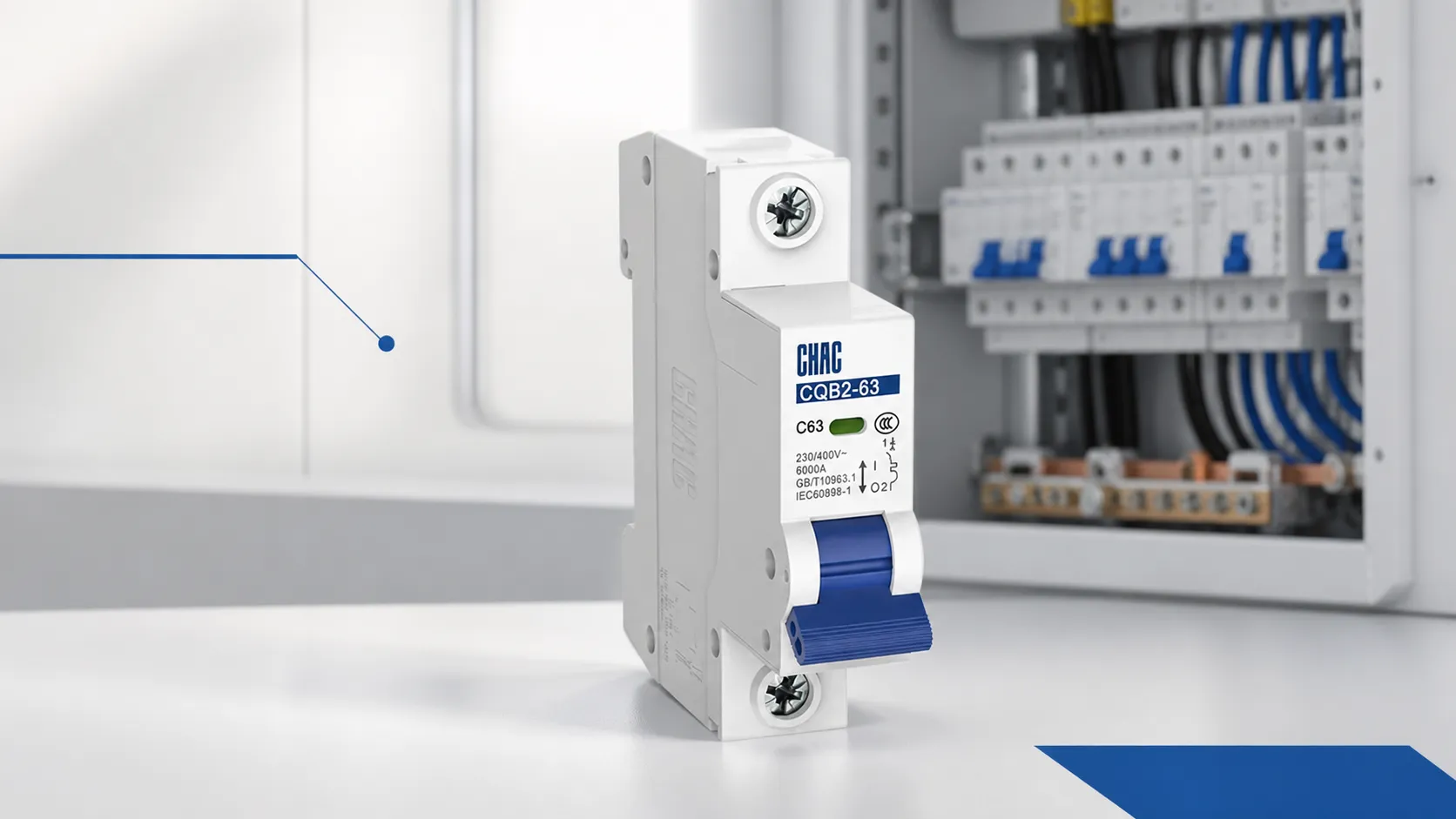
Como a instalação deve ser verificada antes de ser energizada?
Verify de-energization, conductor identification, terminal condition, torque, enclosure suitability, labels, and required spacing. Then complete the tests required by the device instructions and local installation code. Record the model, revision, test method, readings, date, and responsible person. If a breaker trips, heats, or shows an unexpected arc path, isolate the circuit and investigate the documented conditions before resetting it.
For AC equipment, use an AC MCB product category only when the application and product evidence match the AC system. AC and DC devices should not be treated as interchangeable categories.
FAQs
Can AC MCBs be used in DC circuits?
Only when the manufacturer explicitly rates the device for the required DC voltage, current, polarity, and interruption duty. An AC-only marking is not evidence of DC suitability.
Can a DC circuit breaker be used for AC?
Do not assume so. Check the device marking and instructions for an AC application, including voltage, frequency, interrupting rating, and required accessories.
Are AC and DC circuit breakers different?
They can use different arc-interruption and wiring assumptions. Selection must follow the application rating and tested configuration rather than the external appearance.
Why are some DC breakers polarity-sensitive?
The tested arc path may depend on current direction and magnetic effects. Follow the polarity marks and the exact installation instructions for the model.
What happens if an AC breaker is used on DC?
The device may fail to interrupt the fault as intended, so the circuit can remain exposed to sustained arcing or unacceptable damage. Stop and verify the application before energizing.
Fontes para normas e verificação adicional
- International Electrotechnical Commission standards portal
- UL Solutions standards and certification guidance
- NFPA 70, National Electrical Code information
Decision principle: approve AC breaker on DC ou Compatibilidade do MCB DC com AC only after the voltage, fault current, polarity, pole arrangement, listing, and installation method are documented. When those inputs are available, CHAC Electric can help match them to the appropriate product evidence through its technical contact channel.