When panel-design engineer Maya Chen in Manchester encountered an immediate trip during a retail-board commissioning, she isolated the new socket circuit and replaced its protective device. The replacement opened again within seconds of energization. Testing reversed the first diagnosis: the devices were not simply defective; the schedule had paired an MCB-only circuit with an unsuitable shared residual-current arrangement and a crossed downstream neutral. Selection and wiring, not product quality alone, caused the failure.
Resumen: The central MCB vs RCBO difference is functional: an MCB protects against overload and short circuit, while an RCBO adds residual-current protection in the same device. IEC 60898-1 and IEC 61009-1 provide different product and test frameworks; neither is a certification by itself. Rated residual operating current, RCBO type, earthing arrangement and applicable local rules are project-specific inputs. Never treat an MCB as a substitute for residual-current protection where that protection is required.
Both devices can protect final circuits, but their different sensing functions affect panel architecture, testing and lifecycle cost. Compare the hazards addressed before device width or purchase price.
What Changes Between an MCB and an RCBO?
What does an MCB detect?
A thermal-magnetic MCB responds to current through its protected poles. Its thermal element addresses sustained overload, while its magnetic release responds to high short-circuit current. IEC 60898-1 covers household and similar AC applications within its stated scope, including devices up to 125 A and 440 V AC; those are scope limits, not ratings for every product.
An MCB does not measure the imbalance between outgoing and returning current. A leakage path may therefore remain far below the breaker’s overcurrent threshold even though residual-current protection is required by the installation design. An MCB can be coordinated with a separate RCCB or other RCD, but it cannot replace that function.
What extra function does an RCBO provide?
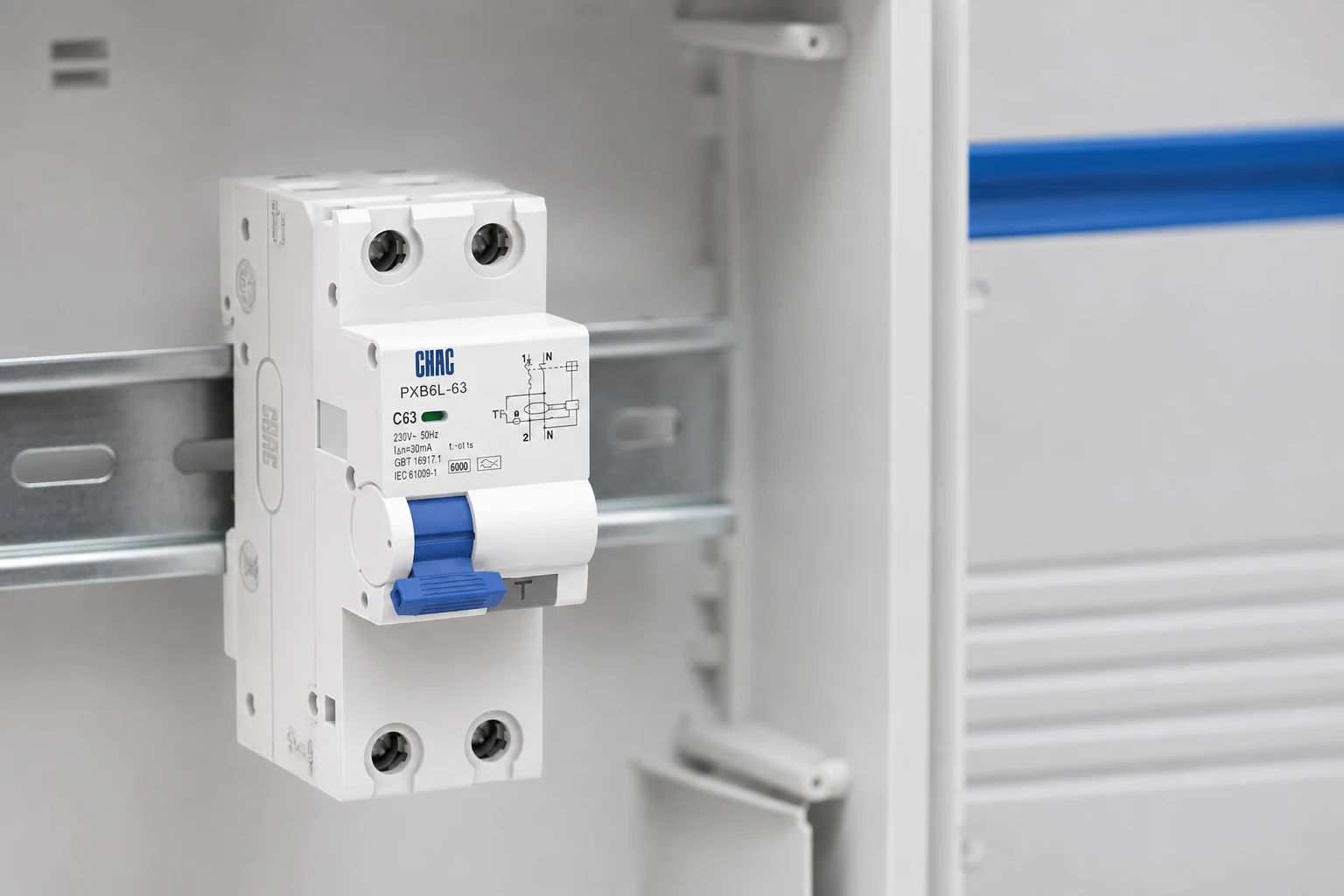
An RCBO combines overcurrent protection with residual-current sensing. Its live conductors pass through a summation transformer; an unintended difference between outgoing and returning current can operate the residual release. IEC 61009-1 is the general product and test framework for household and similar RCBO applications, not a blanket approval.
The marked rated residual operating current, IΔn, is a selection parameter distinct from the device’s rated load current. A 30 mA value is associated with additional protection in particular IEC 60364-4-41 applications, but it is not a universal setting for every feeder, machine or market. The required IΔn, time behavior and residual-current type must come from the protective measure, load characteristics, earthing arrangement and adopted rules.
How Do MCB and RCBO Value Differ in a Distribution Board?
Total cost also includes board space, RCD architecture, wiring, testing, spares and downtime when one residual fault disconnects several circuits. IEC 60364-6 verification makes test access and records part of the design.
| Área de decisión | IGD | Interruptor automático magnetotérmico modular con protección contra sobreintensidad y corriente de fuga a tierra |
|---|---|---|
| Protección | Overload and short circuit | Overload, short circuit and residual current |
| Residual coordination | Needs a separate RCD where required | Provides circuit-level residual protection |
| Fault isolation | A shared RCD may disconnect a group | Can localize a residual fault to one circuit |
| Panel and wiring | Simple module; the system may need an RCCB | Integrated; width and neutral arrangement vary |
| Testing | Includes tests for any separate RCD | Test function plus specified instrument checks |
| Cost tendency | Usually lower device cost | Usually higher device cost but potentially lower downtime |
For an illustrative TCO check, add device and installation cost to “expected interruption hours × loaded downtime rate.” A two-hour search after a shared RCD trip belongs in the comparison. Circuit-level RCBOs may reduce the affected area, but they do not guarantee selectivity.
Where Does Each Device Fit Best?
Application names alone do not determine protection. IEC 60364-4-41, equipment instructions and national rules connect shock-protection measures to actual installation conditions.
| Application condition | Likely architecture to assess | Critical checks before approval |
|---|---|---|
| Dry-area lighting or controls | MCB with any separately required RCD | Ampacity, inrush, fault level and local rules |
| Socket, outdoor or wet-location circuit | Individual RCBO where residual protection is required | IΔn, type, earthing, environment and testing |
| Several circuits under one RCCB | Coordinated downstream MCBs | Leakage, subdivision and common-trip consequence |
| Drive, UPS, EV, PV or filtered load | Engineered RCBO/RCD solution | Residual waveform and equipment instructions |
| Business-critical branch | RCBO may improve fault localization | Selectivity, spares, testing and downtime |
Which Standards and Compliance Evidence Matter?
- IEC 60898-1 sets requirements and test methods for MCBs for overcurrent protection in household and similar AC installations within its scope.
- IEC 61009-1 sets general requirements and tests for RCBOs with integral overcurrent protection within its scope.
- IEC 60364-4-41 addresses protection against electric shock in low-voltage installations, including circumstances where RCD additional protection applies.
- IEC 60364-6 addresses initial and periodic verification; the test button alone does not prove conductor continuity, insulation resistance, polarity, trip time or actual operating current.
These references are standards and test frameworks, not certifications. Destination-market law, the adopted edition, national deviations, intended use and marketing claims determine the required certificate, declaration or test report. Unsupported claims can lead to rejected submittals, rework or shipment delays.
How Should Buyers Select MCBs and RCBOs?
- Define voltage, phases, load and inrush, conductor, environment and prospective short-circuit current.
- Map overload, short-circuit and residual-current measures against the TT, TN or IT earthing arrangement.
- Record IΔn, RCBO type, permitted delay, standing leakage and electronic-load waveform.
- Verify poles, neutral treatment, breaking capacity, backup, selectivity, enclosure and test access.
- Request model-specific data, reports, markings, drawings, traceability and a replacement route.
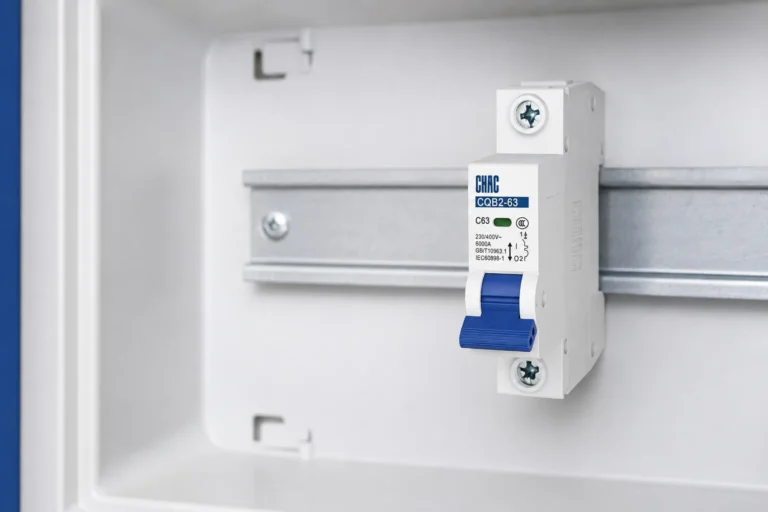
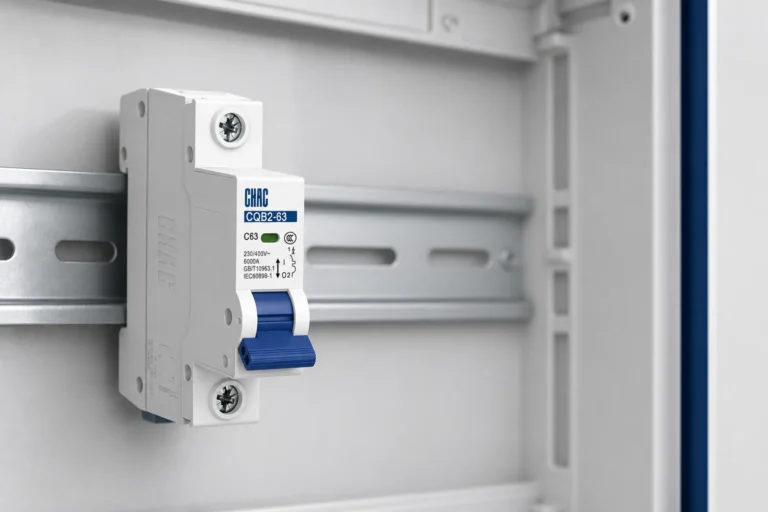
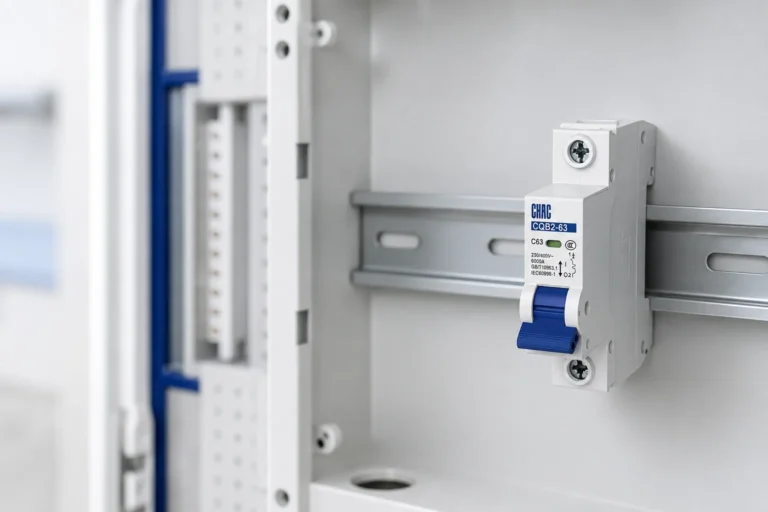
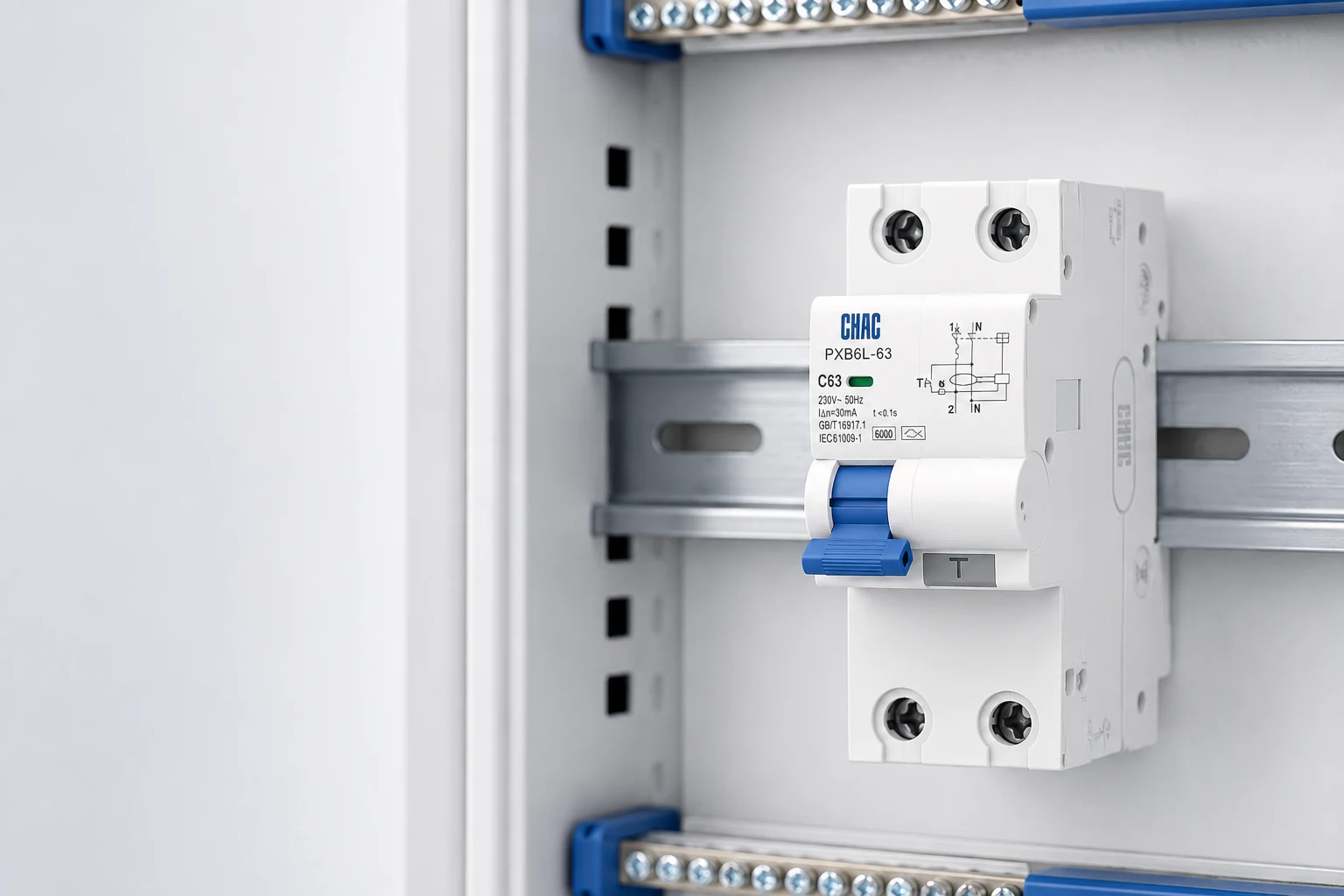
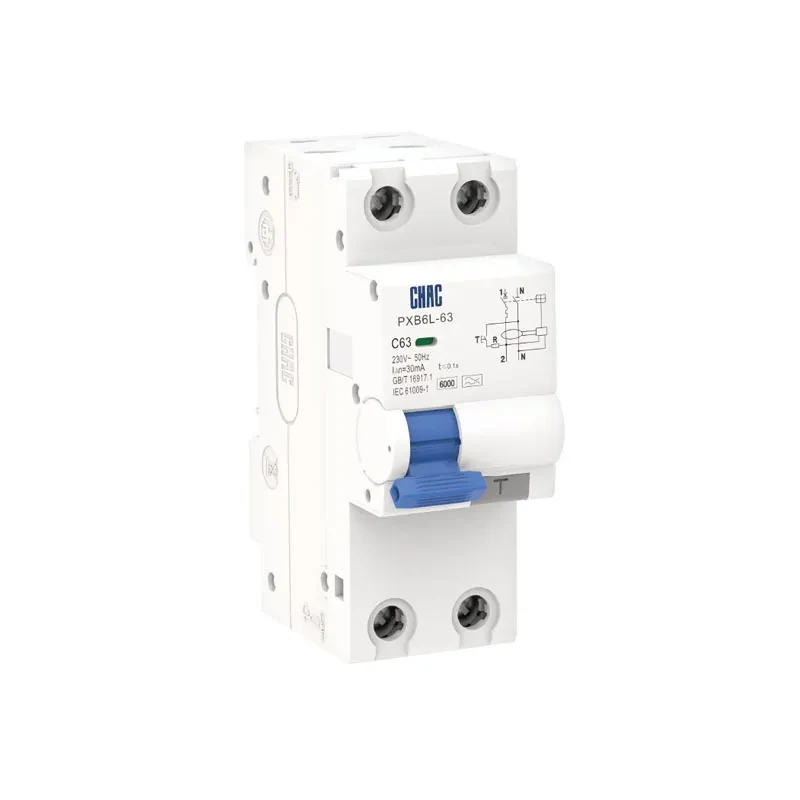
CHAC Electric can support that comparison with separate product-family references. The miniature circuit breaker page presents the CQB2-63 for overload and short-circuit protection; CCC is the only certification confirmed here, while IEC 60898-1 is treated as a product standard and test framework. For combined protection, review the RCBO with overcurrent protection PXB6L-63 and the PXB9L-40 electromagnetic leakage miniature circuit breaker. Exact ratings, residual-current characteristics and documents must be confirmed for the selected model and market.
The guide to RCD wiring and electrical safety standards adds commissioning detail on neutral segregation, leakage and instrument verification.
MCB vs RCBO FAQs
Does an RCBO replace an MCB?
An RCBO includes the overcurrent functions of an MCB and adds residual-current protection, so it can serve as the combined protective device for a circuit when its ratings, poles, standard, enclosure compatibility and local approval are suitable. It is not automatically a drop-in replacement for every MCB or MCB-plus-RCD arrangement.
Can an MCB protect against earth leakage?
No. An MCB responds to overload and short-circuit current; it does not provide the residual-current sensing required for earth-leakage or additional shock protection. Where residual-current protection is required, use a coordinated RCD architecture such as an RCCB with suitable overcurrent protection or an appropriate RCBO.
What rated residual operating current should an RCBO have?
There is no universal answer. Although 30 mA is widely associated with additional protection in specified final-circuit applications, the correct IΔn depends on the protective measure, circuit purpose, standing leakage, upstream coordination, earthing arrangement and local rules. Record the basis of selection rather than copying a familiar value.
Which RCBO type should be used for electronic loads?
Choose from the residual-current waveform the equipment can produce and the applicable instructions—not from a simple hierarchy. Type AC, A, F and B devices respond to different defined waveforms; drives, EV equipment, PV inverters and UPS systems may also include DC-residual considerations that require a coordinated design.
Why does an RCBO trip when the connected load appears normal?
The cause may be cumulative filter leakage, damaged insulation, moisture, a shared neutral, a downstream neutral-to-earth connection or a transient rather than overload. Identify which function operated where possible, inspect conductor routing, measure insulation and leakage with suitable instruments, and do not defeat the residual protection to keep the circuit running.
Referencias
- International Electrotechnical Commission, IEC 60898-1 catalogue record: circuit-breakers for overcurrent protection.
- International Electrotechnical Commission, IEC 61009-1 catalogue record: RCBOs with integral overcurrent protection.
- International Electrotechnical Commission, IEC 60364-4-41 catalogue record: protection against electric shock.
- Electrical Safety First, RCDs explained.
The durable rule is simple: select the protective function first, then prove that the chosen device, wiring and test plan deliver it.
When your project team has the load schedule, fault level, earthing arrangement and destination-market requirements ready, compare the CHAC product families above and Contactar a CHAC Electric for model-specific documentation and selection support.