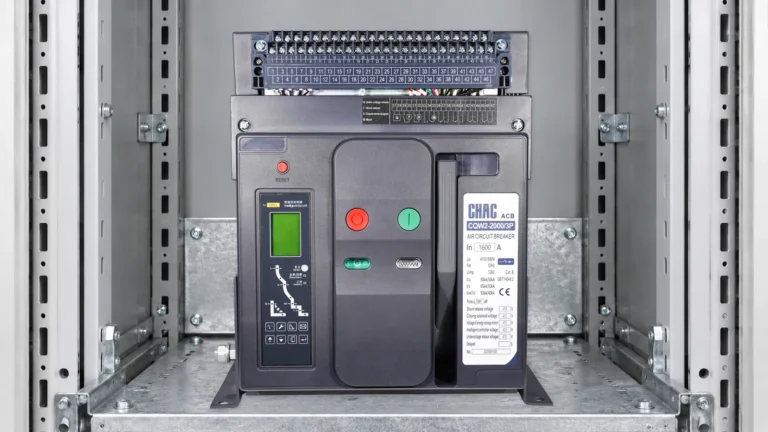
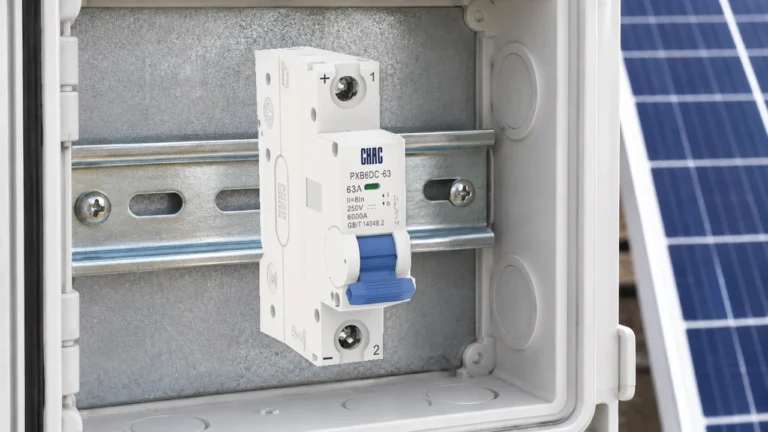
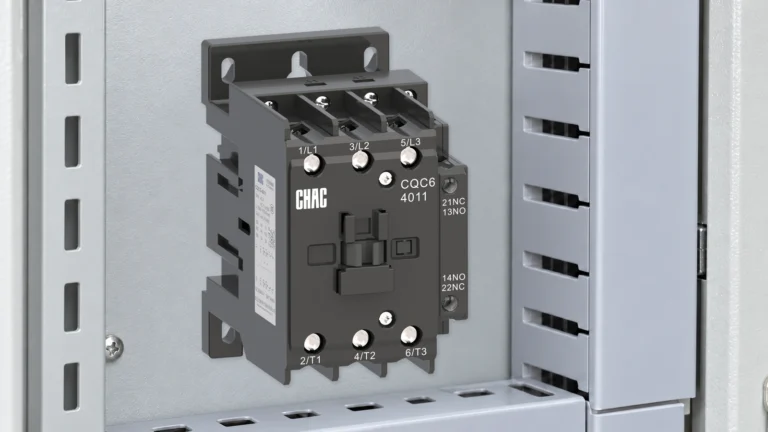
A fused or non-fused disconnect cannot be selected from an enclosure photo or a familiar product family. The panel drawing must show the protection arrangement, the isolation point, and the circuit conditions; selected-device documentation then confirms whether the quoted route fits the request.
Índice
Part 1. Start with the protection arrangement, not the enclosure
Fused versus non-fused disconnect is first a question about where the circuit’s overcurrent protection is defined. A drawing may place protection upstream, integrate it in another assembly, or require a particular protective arrangement at the isolation point. That architecture determines what must be reviewed before a supplier proposes a device.
For a panel team, the useful opening question is simple: what must this device isolate, and where is the protective function documented? Treating the disconnect housing as the answer skips the information that actually differentiates the request.
Part 2. Separate isolation from overcurrent protection
Isolation and overcurrent protection are related in a panel, but they should not be collapsed into one assumption. The circuit documentation must identify each function and the selected equipment must support the role assigned to it. A label, a similar handle, or a familiar frame size cannot complete that review.
The IEC standards system and manufacturer documentation are useful for locating the right selected-device evidence, while the project drawing remains the reference for the circuit arrangement. Keep the two records together when discussing a quote.
Important: Do not treat a catalog image as proof that a disconnect includes the required protective function. The function must be supported by the circuit arrangement and selected-device documentation. (IEC switchgear publications — selected-document review context)
Part 3. Compare the evidence behind each RFQ route
The table below does not select a device by itself. It shows the questions that keep a fused or non-fused RFQ connected to the actual panel design.
| Review point | Fused-route evidence to request | Non-fused-route evidence to request |
|---|---|---|
| Protection arrangement | Where the protective element is shown and what documentation identifies it | Where upstream or separate protection is shown and how it is identified |
| Rol del circuito | Isolation point, load description, and drawing reference | Isolation point, load description, and drawing reference |
| Selected device | Model, poles, terminals, and installation information | Model, poles, terminals, and installation information |
| Project conditions | Enclosure location and applicable project requirements | Enclosure location and applicable project requirements |
| Supplier return | Proposed model documents matched to the RFQ | Proposed model documents matched to the RFQ |
This structure makes a useful distinction: the request is not “quote a fused device” or “quote a non-fused device” in isolation. It is “quote the documented device route that matches the protection arrangement and panel evidence.”
Part 4. Read the single-line diagram before a supplier quote
The single-line diagram provides the quickest shared reference for the isolation point, source and load relationship, upstream protection, and conductors involved. Add the drawing revision to the RFQ so that the buyer and supplier discuss the same arrangement.
Next, record the pole arrangement, enclosure location, access constraints, and any requirement for associated documentation. These details help identify questions for the selected model without inventing a project approval from a broad catalog statement.
For a broader drawing-led view, see the related disconnect switch selection guide for panel builders. DC PV and battery isolation should remain in its own scope, as outlined in the DC isolator selection article.
Part 5. Put decision-critical inputs in the disconnect RFQ
An RFQ should make comparison possible without asking a supplier to infer the circuit from a product name. Send the records that explain the device role, then request selected-model documentation in the response.
| Include with the quote request | Lo que resuelve | Respuesta del proveedor a la solicitud |
|---|---|---|
| Current single-line diagram and revision | Protection arrangement and isolation point | Proposed model matched to the stated circuit role |
| Supply and load description | Scope of the switching or isolation question | Confirmation of documentation reviewed |
| Pole arrangement and conductor scope | Physical circuit boundary | Terminal and pole information for the proposed model |
| Enclosure location and project conditions | Conditions requiring review | Información de instalación y límites establecidos |
| Required evidence pack | A comparable technical response | Product identification and requested documentation |
Usa el isolating-switch category as the upward product-family context, and keep the wider gama de aparatos eléctricos terminales available when the drawing includes related components.
Part 6. Use the CHAC isolating-switch route after the evidence set is complete
Once the RFQ identifies the protection arrangement and required documentation, the CQD2-125 miniature isolating switch product route can start a selected-product discussion. Its public page lists the product route and ordering fields, rather than deciding whether a fused or non-fused architecture fits a particular panel.
Recomendación de producto
Isolating Switch – CHAC Electric
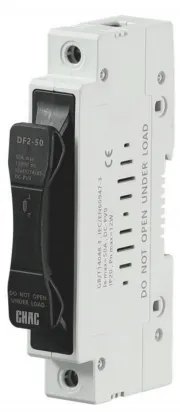
Use this route when the RFQ needs an isolating-switch product discussion and the drawing has already clarified the required function. Do not substitute a generic fuse product or an unrelated breaker: neither proves the isolation duty, pole scope, or protection arrangement. For OEM labeling or a tailored documentation discussion, include the requirement through the página de personalización eléctrica de terminales.
Part 7. Know where this comparison stops
This comparison is suitable for early RFQ preparation and selected-document review. It does not provide a field switching method, a protection-coordination study, local-code interpretation, or a claim that a particular configuration is approved for a site.
Fit Boundary: use the article to frame an evidence-based supplier conversation; retain the final decision with the approved drawing, selected-device documents, applicable project requirements, and qualified engineering review. Share the drawing revision and required evidence with CHAC Eléctrico when requesting a product route.
What must the RFQ show before a fused or non-fused route can be compared?
A fused disconnect y un non-fused disconnect should be compared through the protection arrangement on the single-line diagram. The question is not which enclosure looks better; it is where overcurrent protection is provided, which conductors are isolated, and whether the selected switch is rated for the actual load and utilization category.
| campo de RFQ | ¿Por qué cambia la opción | Supplier evidence |
|---|---|---|
| Protection location | Shows whether fuses are part of the disconnect or provided upstream | Single-line diagram and proposed model |
| Load and duty | Separates isolation from load switching | Voltage, current, utilization category and duty |
| Fault coordination | Confirms the device is not being asked to interrupt an unsupported fault | Conditional short-circuit and upstream-device data |
Use the CHAC isolating-switch product route only after the drawing defines the function. The isolation and overcurrent protection entries should remain separate in the approval record.
Does a non-fused disconnect provide short-circuit protection?
Not by its name alone. Confirm the upstream protective device and the selected switch’s documented conditional short-circuit arrangement.
Can a fused disconnect replace every circuit breaker?
No. The project protection architecture, device ratings and applicable installation rules determine whether the fused route is suitable.
Preguntas frecuentes
What is the difference between a fused and non-fused disconnect?
The difference must be reviewed through the circuit’s protective arrangement and selected-device documents. A product category name alone does not show where protection is defined in a specific panel.
Does a fused disconnect replace a circuit breaker?
Do not assume that it does. The protection architecture and project documentation determine the device roles and the evidence needed for the selected equipment.
When is a non-fused disconnect appropriate?
That decision follows the approved circuit arrangement, including how protection is documented elsewhere in the panel. Request selected-model information before placing it on the BOM.
Which drawing details determine disconnect selection?
Start with the isolation point, supply and load relationship, protection arrangement, pole scope, enclosure location, and drawing revision. These inputs make the supplier response reviewable.
What information should be included in a disconnect RFQ?
Include the current single-line diagram, circuit role, pole arrangement, project conditions, requested evidence pack, and any branding requirements that need confirmation.
Can an isolating switch be assumed to include fuse protection?
No. Confirm the function from the circuit arrangement and the selected-product documentation rather than from appearance or a family label.