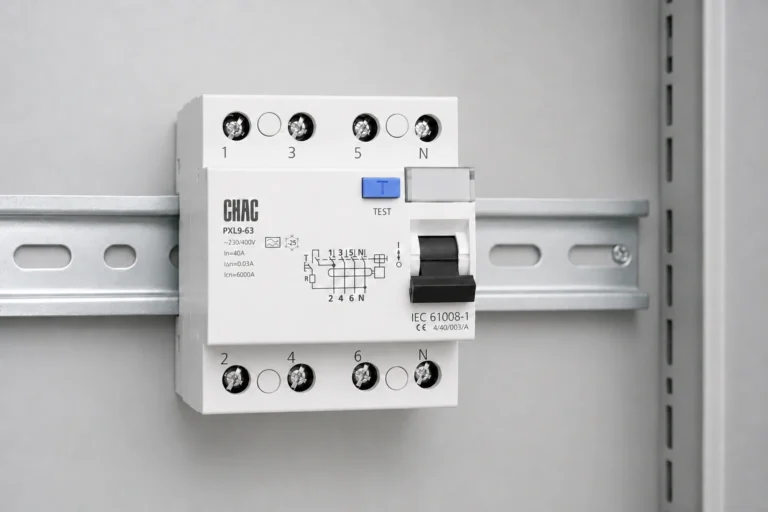
Over under voltage protector work starts with the circuit role, the project requirement, and selected-model documentation. Over-Under Voltage Protector RFQ Questions for Panel Programs helps panel builders organize those checks before a device is specified or an RFQ is issued. Voltage-guard selection stays with the monitored supply definition, reset expectations, and the selected-model instructions that govern those behaviors.
Índice
Part 1. What decision does an over-under voltage protector RFQ support?
The RFQ asks which monitored supply, trip or disconnect behavior, and reset mode the panel needs under the project rules. It is a specification-input question, not a claim that one protector fits every feeder or machine control supply.
Part 2. Which supply and load inputs belong first?
Define the monitored voltage system, expected operating band, load sensitivity to undervoltage or overvoltage, and whether the device should open, signal, or both. These inputs prevent quoting from a generic voltage-protector label alone.
Part 3. How should reset behavior be written into the RFQ?
State whether automatic reset, manual reset, or another documented mode is required, and ask the supplier to confirm that mode in the selected-model documentation. Reset assumptions are a frequent source of mismatched field behavior.
Importante: Voltage-guard setpoints and reset behavior are model-specific; catalogue claims do not authorize values that are missing from the selected-product documentation. (fuente — IEC low-voltage control and protective device standards discovery)
Part 4. Where do interfaces and indication need explicit fields?
If the design needs auxiliary indication, interlocking with other devices, or a specific modular footprint, list those interfaces separately. Do not infer them from an enclosure photo.
Part 5. What documentation should buyers request?
Request model identification, installation instructions, monitoring and reset descriptions, and any project evidence pack named in the RFQ. Compare quotations against that evidence, not against marketing adjectives.
Una lista de entradas de RFQ compacta facilita la comparación de las respuestas de los proveedores:
| El comprador debe proporcionar | Por qué importa | Error común |
|---|---|---|
| Conjunto de planos actual | Define el límite del circuito | Envío del nombre de un producto sin un diagrama |
| Funciones requeridas | Hace que la solicitud sea revisable | Tratar opciones no verificadas como estándar |
| Contexto de instalación | Identifica las condiciones del proyecto para confirmar | Asumiendo que la copia de la categoría es una aprobación del proyecto |
| Solicitud de documentación | Conecta la RFQ con la evidencia exacta | Aceptando afirmaciones genéricas en lugar de datos del modelo |
| Enviar con cotización | Hace que la comparación de proveedores sea verificable | Citando sin el paquete de evidencia solicitado |
Para un contexto más amplio, revise el over under voltage protector product family y lo relacionado página de línea de productos.
Part 6. Which CHAC product route starts sourcing?
The CQAU2 over-under voltage guard switch product route is a suitable starting point after the monitored-supply inputs are written, with the terminal-electrical category for family context. The route does not by itself prove every setpoint or reset option for a given panel.
Recomendación de producto
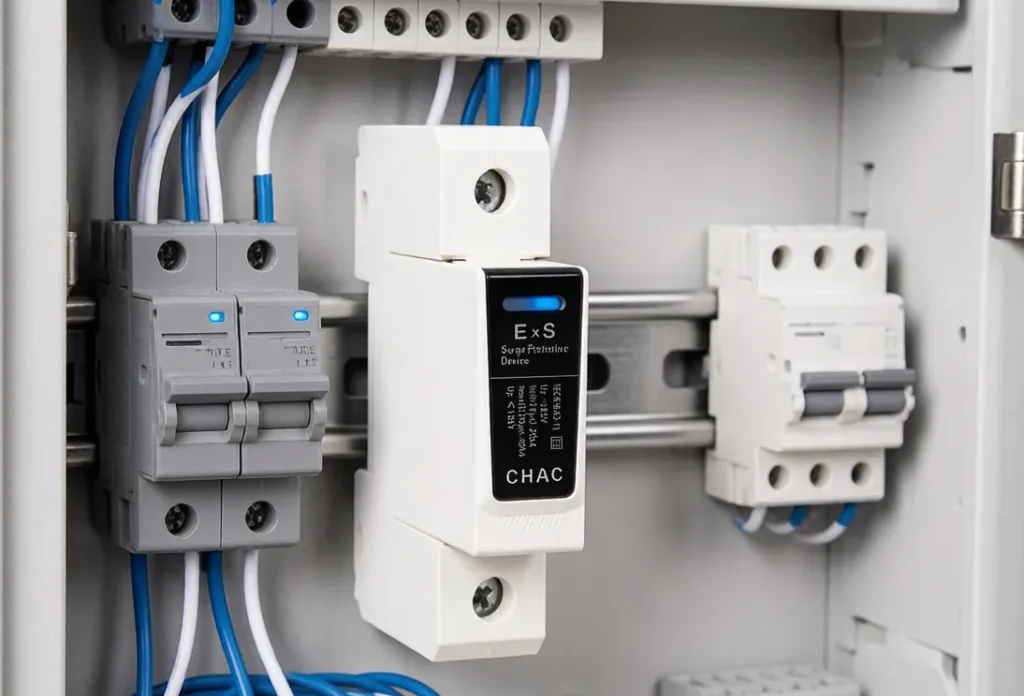
Protector contra sobretensiones enchufable unipolar ExS-T1T2-AC | CHAC Electric

Utilice el publicado página de producto CHAC relevante as a documented product route starting point for a product discussion only after the RFQ inputs are complete. Branded packaging for voltage-guard devices can be raised on the página de personalización eléctrica de terminales. Two devices labeled over-under voltage do not automatically share the same monitoring range, reset mode, or contact arrangement.
Part 7. Where does voltage-protector RFQ support hand off to settings review?
Use this article for early RFQ preparation. It is not permission to set thresholds without selected-model data, and it is not a substitute for the MCCB undervoltage-release accessory discussion when that is the actual device class on the drawing. Add a drawing review of the monitored supply and load side so reset behavior is not confused with feeder protection duties.
Lectura relacionada: un artículo de CHAC más específico y ya publicado está enlazado por contexto, no como un sustituto del alcance de decisión de este artículo.
Send the monitored-circuit notes and reset expectations to Contactar a CHAC Electric for a voltage-protector product-route discussion.
Fit Boundary: this RFQ guide stops before setpoint approval, discrimination claims, or energized adjustment work.
Preguntas frecuentes
Is an over-under voltage protector the same as an MCCB undervoltage release?
No. They are different device roles; confirm which one the drawing actually specifies.
Can reset mode be assumed from the product name?
No. Confirm automatic, manual, or other documented reset behavior from the selected model.
What supply data belongs in the RFQ?
Monitored system voltage context, expected operating band intent, and the action required on abnormal voltage.
Why request installation instructions early?
Terminals, indication, and reset controls are model-specific and affect enclosure layout.
What should a supplier map in the quotation?
Requested monitoring duty, reset mode, interfaces, and the exact model evidence pack.
When should setpoints be finalized?
Finalize them only after the selected-model documentation and project rules are reviewed by the responsible designer.