

An over-under предохранитель напряжения monitors supply voltage and initiates the action declared by its design. It is not automatically an MCB, an undervoltage release or a surge protective device. A responsible selection records thresholds, delay, reset behaviour, output ratings and the load that the device is expected to control.
What abnormal-voltage response does the panel need?
Define the monitored system, the normal operating band, the response to overvoltage and undervoltage, and whether the output opens a contactor or switches a load directly. The CQB3GQ voltage-protector route can be reviewed after those requirements are written.
Which supply and load details affect the choice?
Record phase arrangement, nominal voltage, load current, inrush, permissible voltage range, ambient conditions and the consequence of interruption. A low-current monitoring output may need to operate a suitably rated contactor rather than carry the load directly.

How should reset and restart behaviour be specified?
State whether reset is automatic or manual, the delay before reconnection, any hysteresis and whether a restart could create a hazard. Automatic recovery after a voltage event can unexpectedly re-energize equipment, so the operating philosophy belongs in the control design.
Which interfaces and indicators must be mapped?
List terminals, relay contact ratings, status indication, phase-loss or sequence functions, mounting format and wiring access. These are model-specific details that affect enclosure layout and should be confirmed from the installation instructions.
What documents make the quotation reviewable?
Request the exact model, wiring diagram, threshold and delay ranges, output ratings, reset description, installation instructions and applicable declarations. Do not treat a generic portal page as a substitute for the selected model’s evidence.
Which CHAC products can support the first comparison?
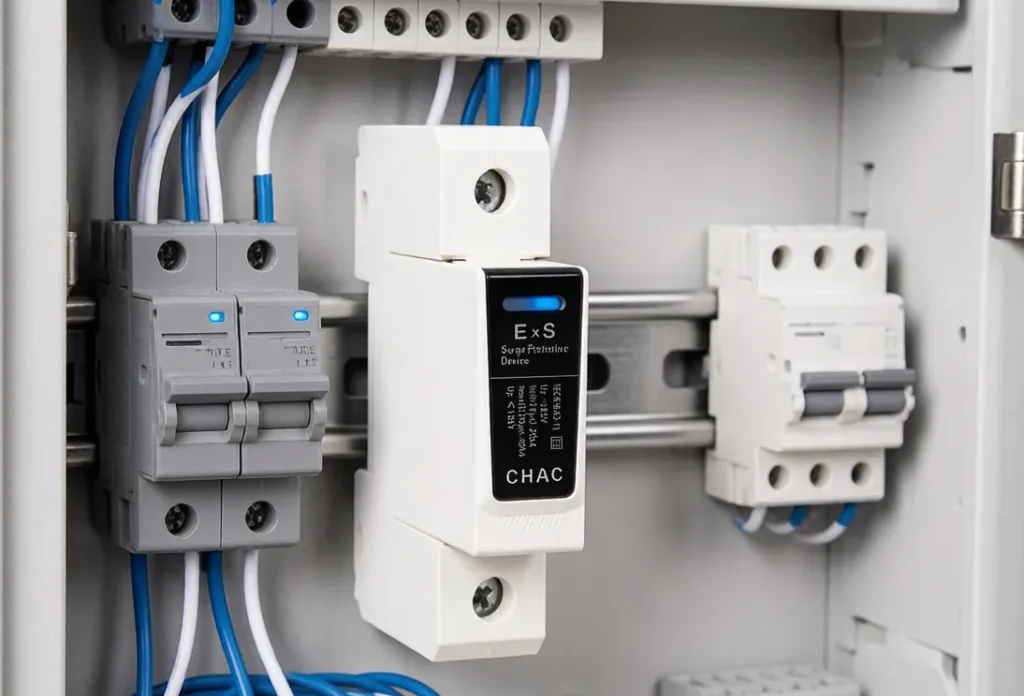
Compare the CQGQ1 self-resetting protector with the PXB6 undervoltage-release accessory only when the drawing confirms that the two devices have different roles. A surge protector such as the ExS-T1T2 SPD addresses a separate transient-protection question.
When must settings return to the designer?
Return to the responsible designer when threshold values, automatic restart, phase monitoring or the load-control method affect safety or process continuity. The exact product documentation, not the category name, controls the final settings.
The approved over-under voltage protection entry should show the monitored supply, trip action, delay, reset mode and output duty in the same control document.
Часто задаваемые вопросы
Is an over-under voltage protector the same as an MCCB undervoltage release?
No. They are different device roles; confirm which one the drawing actually specifies.
Can reset mode be assumed from the product name?
No. Confirm automatic, manual, or other documented reset behavior from the selected model.
What supply data belongs in the RFQ?
Monitored system voltage context, expected operating band intent, and the action required on abnormal voltage.
Why request installation instructions early?
Terminals, indication, and reset controls are model-specific and affect enclosure layout.
What should a supplier map in the quotation?
Requested monitoring duty, reset mode, interfaces, and the exact model evidence pack.
When should setpoints be finalized?
Finalize them only after the selected-model documentation and project rules are reviewed by the responsible designer.


