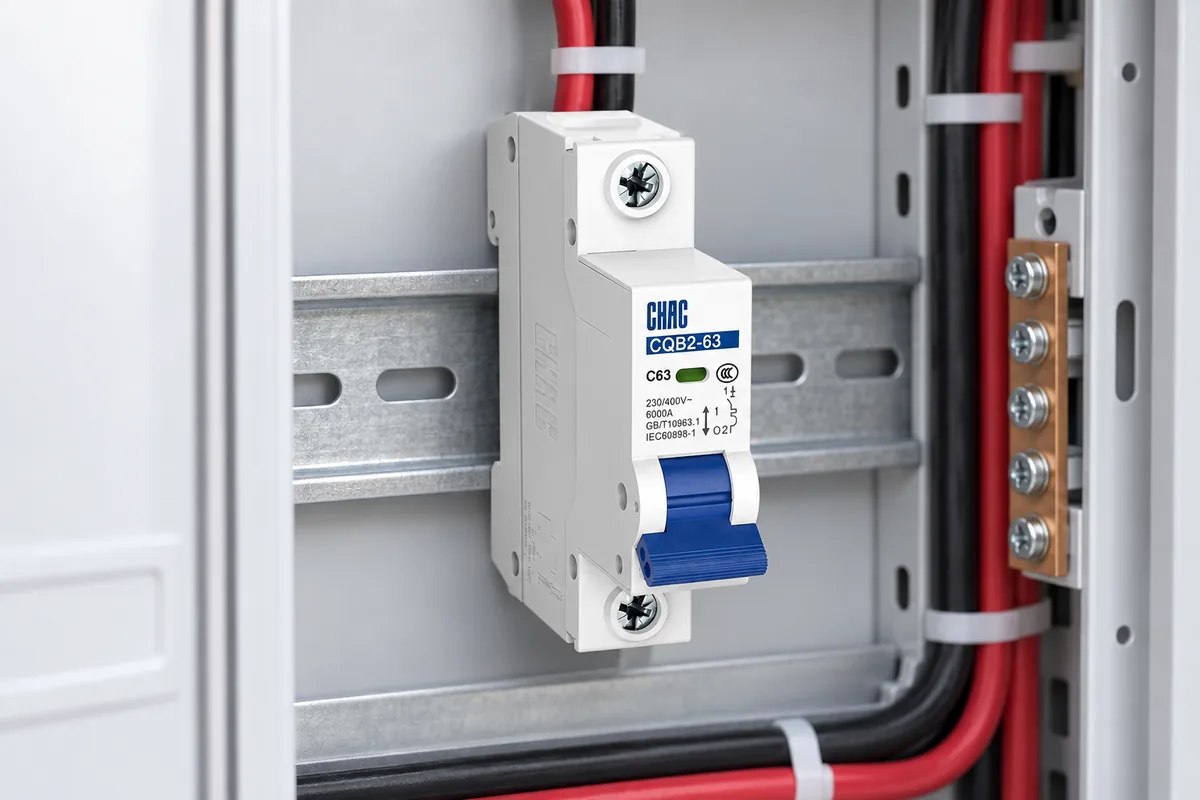
Kompatybilność DC z MCB AC nie jest określany przez uchwyt wyłącznika, rozmiar obudowy ani zdjęcie katalogowe. AC wyłącznik nadprądowy Może okazać się nieprzystosowany do obwodu prądu stałego, ponieważ metoda rozrywania obwodu, napięcie na biegun, polaryzacja oraz dopuszczalna orientacja obwodu mogą różnić się. Bezpieczną zasadą jest: stosować urządzenie, którego oznaczenia i dokumentacja techniczna obejmują rzeczywiste napięcie prądu stałego, prąd, poziom zwarciowy, rozmieszczenie biegunów oraz system instalacyjny. Niniejszy przewodnik przedstawia procedurę zakupu i weryfikacji dla inżynierów, konstruktorów szaf rozdzielczych oraz dystrybutorów.
Czy wyłącznik AC można stosować w obwodzie prądu stałego?
Nie automatycznie. A DC przekaźnik Muszą być dobrane na podstawie dokumentacji, która określa ich zdolność do pracy w obwodach prądu stałego oraz zdolność do wyłączania prądu. Prąd przemienny przechodzi przez naturalny punkt zerowy w każdym cyklu, podczas gdy łuk prądu stałego nie ma takiego powtarzającego się przejścia przez zero. W rezultacie danych dotyczących klasyfikacji dla prądu przemiennego nie można bezpośrednio przenieść na prąd stały tylko dlatego, że wartości napięcia i prądu wydają się podobne.
W przypadku wymiany lub projektu nowego urządzenia zanotuj napięcie systemowe, maksymalny ciągły prąd roboczy, szacowany prąd zwarciowy, liczbę biegunów, wymagania dotyczące polaryzacji, układ przewodów oraz warunki obudowy. Jeśli producent nie podaje wymaganej klasy DC ani orientacji, uznaj urządzenie za niezweryfikowane, zamiast zakładać, że jest ono odpowiednie.
Co należy porównać przed wyborem wyłącznika prądu stałego?
| Pole decyzji | Dlaczego to ma znaczenie | Dowody do zachowania |
|---|---|---|
| Napięcie DC na każdy biegun | Urządzenie wielobiegunowe może mieć określony limit napięcia na jeden biegun lub dla zadanego układu szeregowego. | Aktualny arkusz danych i oznaczenie na tabliczce znamionowej |
| Prąd ciągły i prąd zwarciowy | Prąd roboczy i dostępny prąd zwarciowy wpływają na obciążenie cieplne oraz zdolność do przerwania prądu. | Obliczenia obciążenia i analiza poziomu zwarć |
| Polarność i orientacja | Niektóre konstrukcje zasilania prądem stałym wymagają określonego kierunku przepływu prądu lub biegunowości wskazanej przez producenta. | Schemat elektryczny i instrukcja montażu |
| Polacy i izolacja | Obwód może wymagać jednoczesnego odłączenia przewodów dodatnich, ujemnych lub innych. | Schemat jednoliniowy i konfiguracja słupów |
| Standard i lista | Testowanie komponentów nie prowadzi automatycznie do zatwierdzenia całego panelu ani instalacji. | Odpowiednia certyfikacja, edycja standardowa i zatwierdzenie projektu |
Te czynniki wyjaśniają również, dlaczego wyższa wartość prądu znamionowego nie stanowi uniwersalnego rozwiązania. Wyższa wartość może wpłynąć na ochronę przewodów, ich koordynację oraz na ilość energii, jaką system musi wytrzymać przed odcięciem obciążenia.
Dlaczego polaryzacja ma znaczenie w niektórych wyłącznikach prądu stałego?
Polarity can affect the magnetic field and arc path used to help extinguish a DC arc. The exact requirement depends on the breaker design, pole arrangement, and the manufacturer’s tested application. Do not infer the wiring direction from a generic diagram or from an AC installation. Follow the product marking and the installation manual for the exact model.
The same caution applies to series-pole arrangements. A drawing that shows two poles does not prove that the device is approved to combine them for a particular DC voltage. That relationship must be stated in the product evidence.
W jaki sposób należy przeprowadzić przegląd wymiany wyłącznika zasilanego prądem przemiennym na wyłącznik zasilany prądem stałym?
- Define the circuit: source type, nominal and maximum voltage, load current, fault current, and environment.
- Confirm the required protective function and which conductors must open together.
- Check the candidate device’s DC voltage, current, polarity, interrupting, and mounting data.
- Compare terminals, enclosure, accessories, clearances, and conductor requirements.
- Obtain approval from the responsible engineer or authority having jurisdiction before release.
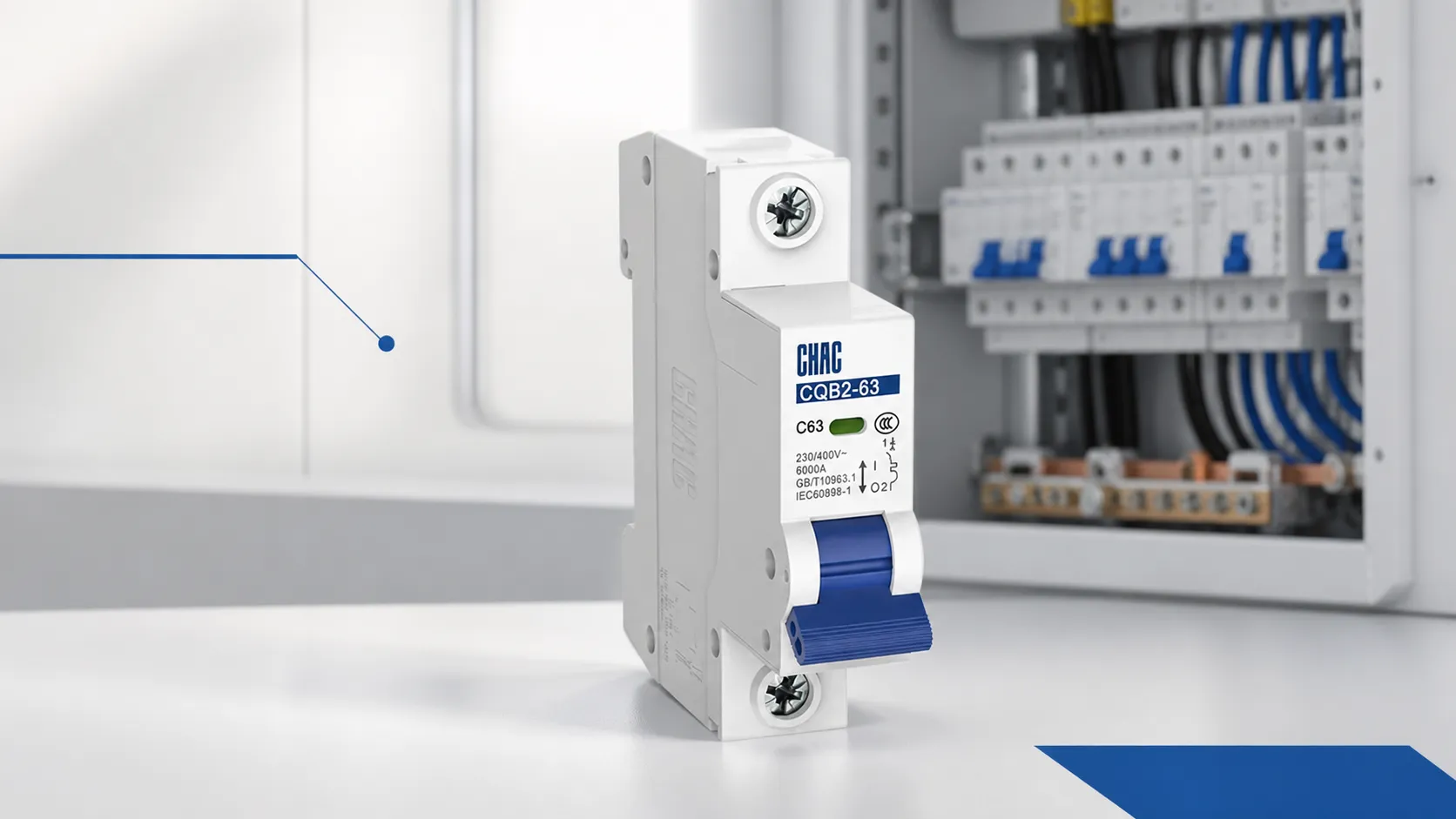
For a product discussion, compare the project conditions with CHAC’s DC circuit breaker range i odpowiednie DC miniature circuit breaker option. The product page is a starting point for model matching, not a replacement for the project fault and wiring data.
W jaki sposób należy zweryfikować instalację przed jej włączeniem pod napięcie?
Verify de-energization, conductor identification, terminal condition, torque, enclosure suitability, labels, and required spacing. Then complete the tests required by the device instructions and local installation code. Record the model, revision, test method, readings, date, and responsible person. If a breaker trips, heats, or shows an unexpected arc path, isolate the circuit and investigate the documented conditions before resetting it.
For AC equipment, use an AC MCB product category only when the application and product evidence match the AC system. AC and DC devices should not be treated as interchangeable categories.
FAQ
Can AC MCBs be used in DC circuits?
Only when the manufacturer explicitly rates the device for the required DC voltage, current, polarity, and interruption duty. An AC-only marking is not evidence of DC suitability.
Can a DC circuit breaker be used for AC?
Do not assume so. Check the device marking and instructions for an AC application, including voltage, frequency, interrupting rating, and required accessories.
Are AC and DC circuit breakers different?
They can use different arc-interruption and wiring assumptions. Selection must follow the application rating and tested configuration rather than the external appearance.
Why are some DC breakers polarity-sensitive?
The tested arc path may depend on current direction and magnetic effects. Follow the polarity marks and the exact installation instructions for the model.
What happens if an AC breaker is used on DC?
The device may fail to interrupt the fault as intended, so the circuit can remain exposed to sustained arcing or unacceptable damage. Stop and verify the application before energizing.
Źródła dla standardów i dalsza weryfikacja
- Portal standardów Międzynarodowej Komisji Elektrotechnicznej
- Normy i wytyczne w zakresie certyfikacji firmy UL Solutions
- NFPA 70, informacje dotyczące Krajowego Kodeksu Elektrycznego
Zasada decyzji: approve AC breaker on DC lub Kompatybilność DC z MCB AC only after the voltage, fault current, polarity, pole arrangement, listing, and installation method are documented. When those inputs are available, CHAC Electric can help match them to the appropriate product evidence through its kanał kontaktowy techniczny.