

Single-pole and double-pole MCB selection begins with the conductors that the circuit must switch and protect. A familiar pole label is not enough: a single-phase circuit may be line-to-neutral or line-to-line, and a two-pole product may have a different protected-pole arrangement from another two-pole product.
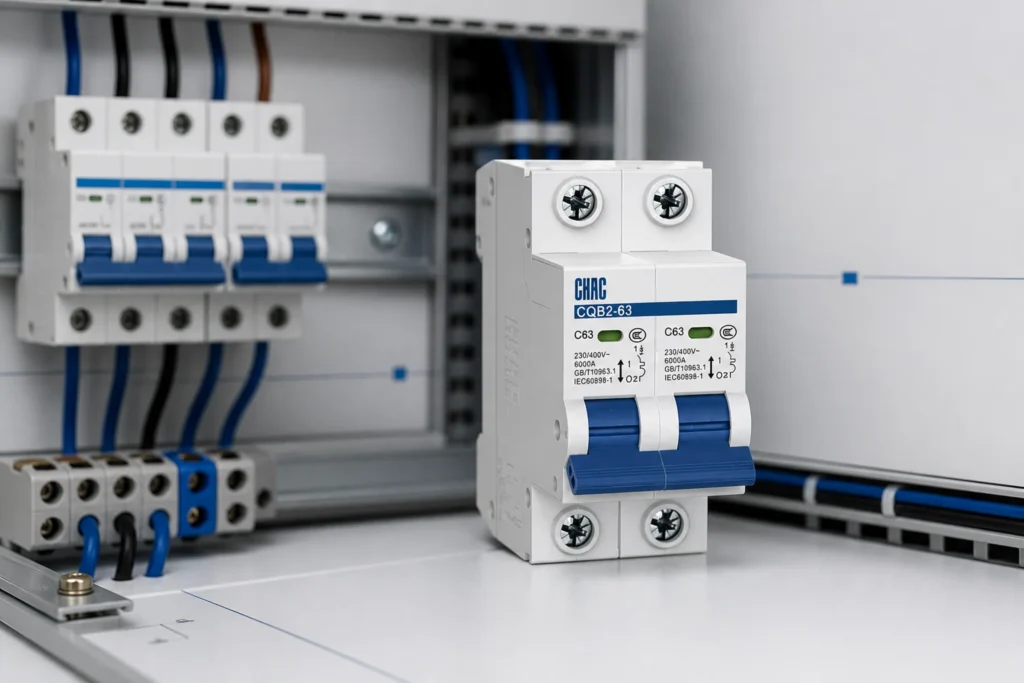
A practical way to frame the pole decision
Draw the complete circuit first, including the source, neutral, protective conductor, shared neutrals and the intended isolation point. Then record whether each pole is switched, protected, or both. The MCB selection range can be reviewed after those inputs are fixed, not before.
Which conductors must the device disconnect?
A single-pole MCB may suit a line conductor where the applicable installation rules permit that arrangement. A double-pole device may be required where line and neutral must open together, but the selected model must document how the neutral pole is treated. Shared or borrowed neutrals are a common reason to stop and redraw the circuit.
What does a single-pole MCB actually cover?
One pole does not automatically describe the entire circuit’s isolation or fault behaviour. Verify the rated voltage, breaking capacity, protected pole and the installation rule for the circuit topology. A nominally single-phase supply is not always a line-to-neutral supply.
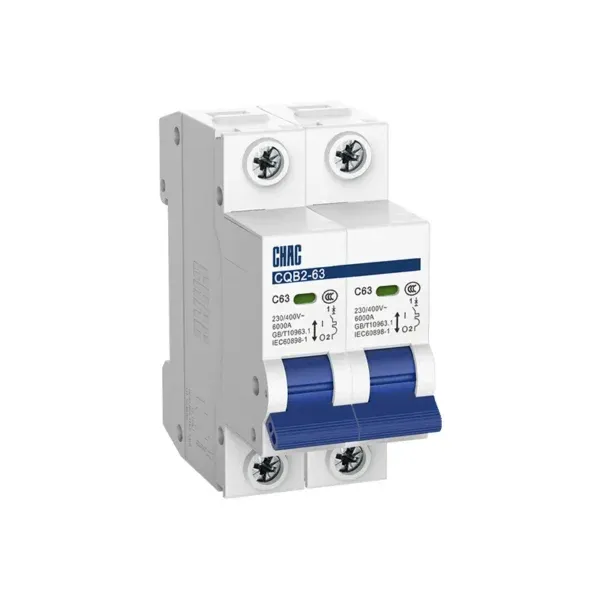
Why should 1P+N be reviewed separately from 2P?
1P+N commonly indicates line-and-neutral switching with overcurrent protection on the line pole, while a 2P device can have another protection arrangement. Treat the labels as a prompt to inspect the wiring diagram and markings, not as interchangeable product names.
When does a double-pole MCB become the better review route?
Consider it when simultaneous disconnection is required by the design or local rules, when the supply arrangement makes both conductors part of the isolation boundary, or when the selected product’s documented ratings match that duty. Pole count does not by itself increase breaking capacity.
How should the comparison appear on the panel schedule?
List the circuit topology, pole configuration, protected poles, AC or DC duty, rated voltage, breaking capacity, trip curve and neutral arrangement as separate fields. This makes supplier responses comparable and exposes missing information before the bill of materials is released.
Which product pages can support the shortlist?
For a model-level check, review the CQB2-63 miniature circuit breaker page and compare its published configuration with the panel drawing. Related MCB options should be treated as separate model reviews.
When is pole count not enough for final selection?
Stop the comparison and return to the responsible designer when the project needs discrimination, local-code interpretation, a DC application, shared neutrals or model-specific approval. IEC 60898-1 et IEC 60947-2 have different scopes, so the applicable standard must be identified rather than assumed.
For a double-pole MCB selection, the final schedule should show the actual line and neutral arrangement, protected-pole designation and the evidence used to approve the device.
That record is also useful when a later service change introduces a shared neutral or a different supply topology. The installer can see which assumptions were part of the original approval instead of treating the pole label as a universal rule.
It also gives the panel reviewer a clear way to reject a nominally similar device when its terminal marking, neutral treatment or permitted voltage does not match the approved circuit.
FAQ
What is the basic difference between a 1P and a 2P MCB?
A 1P MCB has one pole for the conductor assigned to it. A 2P MCB has two mechanically linked poles that open together. The selected product documentation must still confirm the function and protection arrangement of each pole.
Is 1P+N the same as 2P?
No. A 1P+N label is commonly associated with line-and-neutral switching with overcurrent protection on the line pole, while a 2P device may have a different protected-pole arrangement. Confirm both the wiring diagram and product markings before treating them as alternatives.
Does a 2P label prove that both poles are protected?
No. Pole count alone does not establish how each pole is protected. Request the selected model’s datasheet and wiring information, then compare them with the circuit requirement.
Can an AC MCB be used on a DC circuit?
Only when the exact device is explicitly rated and documented for the intended DC duty. IEC 60898-2 addresses additional requirements for eligible single- and two-pole AC/DC breakers, but it does not make every AC MCB suitable for DC.
Which standards should a panel builder review for an MCB request?
Start with the standard and installation rule named in the project documents. IEC 60898-1 covers AC breakers for household and similar installations within its scope, while IEC 60947-2 is a low-voltage circuit-breaker standard context for instructed or skilled persons. The project requirement and selected-model documents determine the final basis.
What should be included in an MCB RFQ?
Include the single-line diagram, supply and circuit arrangement, conductors to be switched, protected-pole expectation, AC or DC duty, applicable standard, selected-model evidence required, panel constraints, and any branding or packaging request.
When is this guide not enough for final selection?
It is not enough when the project requires final coordination, local-code interpretation, live-work guidance, or a model-specific approval. Those decisions require the actual circuit and load information, local rules, and the selected product documentation.


