Un quadro elettrico può non avere spazi liberi di dimensione standard pur disponendo ancora di una capacità elettrica sufficiente per un altro circuito. Ciò non rende automaticamente il disgiuntore tandem la soluzione adeguata: il problema degli spazi vuoti, il numero massimo di circuiti ammesso dal quadro e la sua capacità di carico sono aspetti da valutare separatamente. L’adattabilità fisica non costituisce di per sé una garanzia di conformità, e un dispositivo compatto potrebbe non offrire la protezione necessaria a un nuovo circuito. La decisione deve basarsi sull’etichetta del quadro e sulla documentazione dei disgiuntori, e non sul numero di maniglie che possono trovare posto dietro il coperchio.
La risposta breve è che un interruttore tandem può fornire due circuiti di derivazione protetti in modo indipendente in uno spazio del quadro elettrico omologato. In un tipico quadro elettrico statunitense 120/240 a fase divisa, entrambi i circuiti tandem convenzionali sono collegati alla stessa fase di alimentazione; non costituiscono un circuito 240 a V. Risparmiare uno spazio non aumenta la portata del quadro, del cavo di alimentazione o dell’impianto di servizio. Prima di specificarne uno, verificare il tipo e la posizione dell’interruttore automatico omologato, la disposizione del neutro, la protezione richiesta e il carico calcolato. UL Solutions’ Guida all'applicazione dei quadri elettrici spiega perché le unità installate in campo devono corrispondere alle marcature del quadro elettrico oppure essere state specificamente valutate per tale applicazione di sostituzione.
Che cos’è un interruttore tandem e cosa cambia all’interno del quadro elettrico?
Come può un unico spazio fisico alimentare due circuiti di derivazione?
Un interruttore tandem convenzionale, detto anche interruttore duplex, contiene due dispositivi di protezione da sovracorrente monopolo indipendenti in un unico involucro completo.interruttore di dimensioni Larghezza. Essa determina il modo in cui i circuiti utilizzano una posizione di barra approvata, e non influisce sulla classificazione dell’involucro o del gruppo. Altri modelli di interruttori compatti possono adottare disposizioni diverse; pertanto, la sola presenza di un ingombro pari a metà larghezza non è sufficiente a identificare un interruttore tandem.
Tale distinzione lascia tre aspetti da verificare separatamente. Gli spazi sono le posizioni fisiche; i circuiti sono le derivazioni protette consentite dal quadro; la portata si riferisce ai valori nominali del quadro principale, dei circuiti di distribuzione, delle sbarre e dell’alimentazione. Un quadro può ammettere un numero di circuiti superiore al numero di spazi di dimensione standard, ma il solo valore nominale in ampere non indica se sono accettati interruttori accoppiati.
| Attributo del pannello | Cosa può cambiare un tandem | Ciò che rimane immutato |
|---|---|---|
| Spazi fisici | Due circuiti possono condividere uno spazio approvato. | Posizioni degli autobus e dimensione dell'area recintata |
| Circuiti consentiti | Utilizzo dell’indennità documentata per dispositivi compatti | Il numero massimo di circuiti dell’etichetta |
| Capacità elettrica | Assegnazione aggiuntiva di filiali | Valutazioni di linea principale, linea di alimentazione, linea di servizio e linea bus |
| Doppio dovere | Il dispositivo di protezione della derivazione installato | Corrente di guasto disponibile e valori nominali richiesti |
| Carichi bipolari | Nessuna funzione bipolare proveniente da un tandem convenzionale | Percorsi di alimentazione richiesti, sconnessione e disposizione degli interventi |
Perché due maniglie non formano un interruttore V 240?
Un tandem convenzionale in un quadro elettrico statunitense a fase divisa fornisce due circuiti indipendenti da 120 V da una singola connessione al bus; non è un sostituto per un interruttore bipolare con scatto comune su un carico da 240 V. Un dispositivo quadruplo può combinare funzioni monopolo e bipolo su due moduli, ma le sue connessioni al bus e la disposizione degli scatti sono specifiche del modello. La certificazione UL 489 di un interruttore da sola non garantisce l’idoneità per ogni quadro o per ogni combinazione serie-classificata; UL Solutions’ Servizi di interruttore automatico e protezione supplementare distingue l’indagine sui dispositivi dall’indagine sull’applicazione finale.
In che modo l’etichetta del pannello determina se un tandem è ammesso?
Perché il diagramma di posizione è più importante di una mossa iniziale vuota?
La targhetta, lo schema, la mappa delle posizioni e le istruzioni costituiscono il registro di compatibilità. Alcuni quadri identificano determinati alloggiamenti per interruttori compatti; altri non ne prevedono affatto. Un suono Compatibilità con interruttore in tandem La revisione registra il catalogo dei quadri, la famiglia degli interruttori, la posizione, la corrente nominale, il collegamento alla sbarra e i morsetti. Dimensioni simili non indicano una combinazione valutata.
What does Class CTL establish?
Class CTL means Circuit Total Limitation. CTL equipment historically used markings and rejection features to constrain circuit totals and locations. A legacy non-CTL replacement is not permission to defeat those features or exceed the panel’s documented circuit limit. Equipment generations vary, so the original label and exact manufacturer instructions remain essential.
For US installations, follow the locally adopted NEC and the equipment’s installation conditions. The authority having jurisdiction makes the project-specific acceptance decision. The UL guide cautions that code section numbering can change between editions; a section number copied from another project is not a substitute for the applicable edition.
Does a UL Classified replacement allow any breaker that fits?
No. The Guida all'applicazione dei quadri elettrici describes a specific Classified replacement category: breakers rated 15-60 A at 120/240 V AC, evaluated for identified Listed panelboards rated no more than 225 A at 120/240 V AC, with maximum available system short-circuit current of 10 kA. Those are limits of that described category, not universal tandem ratings or proof that a particular tandem qualifies.
Match the exact panel and replacement catalog numbers against the publication supplied with the breaker, including its restrictions. A Classified mark does not establish permission for an unlisted compact position, a higher circuit count, or an undocumented series-rated combination. UL’s Product Sourcing and Certifications Database supports checking certification identifiers and category guidance; an exact applicable record is still needed. If that evidence is unavailable, do not treat a cross-brand fit as compatibility.
Which Electrical and Protection Limits Remain After Space Is Saved?
Does higher circuit density create more usable capacity?
More handles do not mean more usable amperes. The load calculation still covers feeder demand, continuous loads, conductor ampacity, and panel rating. Greater circuit density can concentrate terminations and loads locally; a properly approved tandem is not inherently unsafe, but torque, conductor condition, and the manufacturer’s installation conditions matter. An infrared survey may reveal a hotspot but cannot prove compatibility. The Guida all'applicazione dei quadri elettrici separates the assembly’s current rating from individual device ratings and explains that neutral-bus ampacity cannot be judged from dimensions alone.
Can neutral arrangements rule out a compact solution?
Map every grounded and ungrounded conductor before moving circuits. A multiwire branch circuit requires the correct supply-leg and disconnecting arrangement; two independent tandem poles on one supply leg are not an automatic solution. The shared neutral must not be mistaken for two independent neutrals. Keep this check separate from conductor sizing and from whether a particular device provides common trip.
There must also be suitable neutral terminations for the added circuits. UL’s Guida all'applicazione dei quadri elettrici calls for individual branch-circuit neutral terminals and markings identifying permitted conductor combinations. Space saved at the breaker does not authorize putting unrelated branch neutrals together under an unsuitable terminal or adding an unapproved terminal kit.
Can a tandem preserve AFCI or GFCI protection?
Required AFCI, GFCI, or dual-function protection cannot be waived to recover panel space. Check whether the exact compatible device and circuit arrangement provide the protection required by the adopted code. A conventional overcurrent-only tandem is not functionally equivalent to an AFCI or GFCI breaker merely because the ampere rating matches. Any alternative protection arrangement needs project-specific code and manufacturer verification, including its neutral connections; do not assume a downstream receptacle solves every requirement.
Fault duty remains a separate check. A tandem does not reduce available fault current. The Guida all'applicazione dei quadri elettrici explains that assembly short-circuit ratings can depend on specific installed devices and documented upstream/downstream combinations. Retain those conditions when adding or replacing a breaker.
When Should a Capacity Review Compare a Tandem With a Panel Upgrade?
Is the least disruptive option always the best long-term choice?
A tandem can work when the panel accepts it, the load calculation has margin, required protection is available, and expansion is modest. A panel capacity upgrade deserves consideration when circuit limits are exhausted, equipment condition is uncertain, fault-duty data is missing, or future loads need unsupported devices. Missing records should first be resolved; they do not by themselves prove the panel must be replaced.
| Condizione del progetto | Possible direction | Prova necessaria |
|---|---|---|
| Approved slot and load margin | Consider a tandem | Label, position map, datasheet, neutral terminals, and load schedule |
| 240 V load or shared neutral | Specified multipole device or approved quad arrangement | Supply-leg, wiring, disconnecting, and trip documentation |
| AFCI, GFCI, or dual-function requirement | Verify the complete protection arrangement | Exact device function, panel compatibility, and neutral instructions |
| No allowance or circuit total reached | Assess a subpanel or panel redesign | Load, feeder, fault-current, and approval records |
Total installed cost includes engineering, shutdowns, relabeling, conductor work, inspection, and the next expansion. Compare those boundaries rather than the breaker price alone. A subpanel adds circuit positions but does not, by itself, increase the supplying service capacity.
What Should Procurement Preserve for Future Maintenance?
Why does catalog traceability matter?
Before release, capture the panel and breaker manufacturer, complete catalog numbers, series, ratings, permitted slot, and instructions. A later equivalent may share a frame size but differ in rejection features, terminals, or protection. If the approved family is becoming obsolete or lacks needed variants, compare documented replacement options with redesign.
After installation, update the panel directory and permitted-slot record; retain approved submittals, label images, and remaining compact positions in the asset file. For separate new low-voltage applications, apparecchiature di distribuzione elettrica must be selected for its destination rules and assembly requirements. An IEC breaker description does not establish suitability as a replacement in a US proprietary panel.
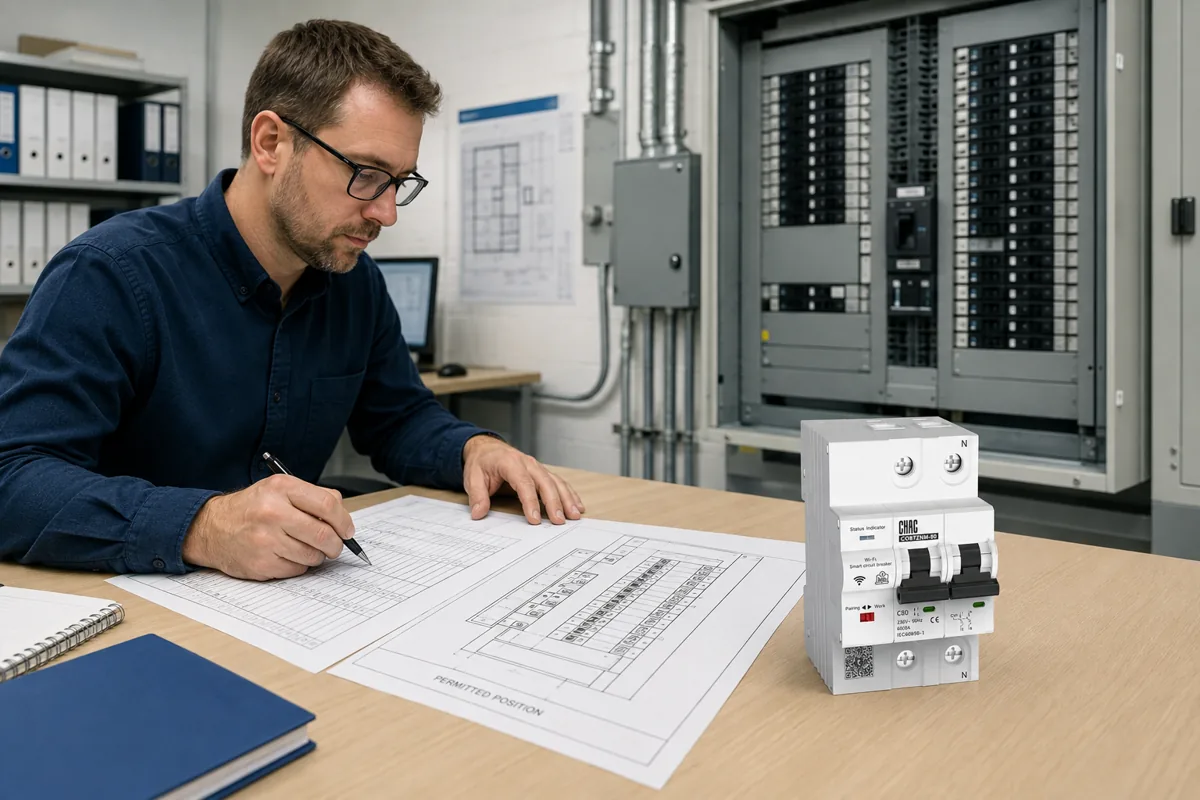
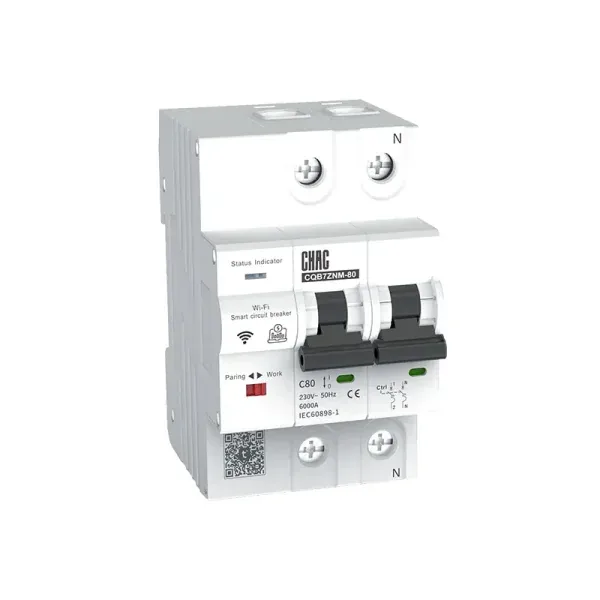
CHAC product documentation can support a separate low-voltage product review; neither the product image below nor a matching current rating establishes tandem compatibility with the existing panel.
How Should a Tandem Retrofit Be Documented for the Next Technician?
The retrofit record should show the panel catalog number, approved compact-breaker positions, complete replacement catalog number, circuit directory, conductor and neutral arrangement, protection type, and the load calculation used for the change. Keep any Classified replacement publication and applicable series-rating documentation with that record. Photographing the label and position map is useful because a future technician cannot infer certification scope from the handle shape.
When no permitted position remains, compare a subpanel or redesign rather than modifying rejection features. Installation and internal inspection belong to qualified electrical personnel; these documentation checks are not instructions for working inside an energized panel.
Domande frequenti
How can a technician tell whether a panel accepts tandem breakers?
Read the panel label, position map, catalog number, and manufacturer instructions. Confirm permitted compact positions and the approved breaker type; an empty slot or matching width is not evidence. A Classified replacement requires its exact panel-specific documentation as well.
What does Class CTL mean on a breaker?
Class CTL is a circuit-total-limitation system that constrains compact breakers to designed counts and locations. It does not override the panel label; legacy non-CTL replacements need exact manufacturer and local guidance.
Can a tandem breaker be used for 240 V?
A conventional tandem in a US split-phase panel connects both independent circuits to one supply leg, so it does not replace a two-pole common-trip device for a 240 V load. An approved quad or two-pole product requires verification of its bus connections, trip diagram, and panel compatibility.
How many tandem breakers are allowed in one panel?
The panel’s ampere rating does not answer this. Permitted numbers and locations come from the exact label, design, certification conditions, manufacturer instructions, and local rules; never exceed the documented circuit total.
What is a tandem breaker used for in a 100-amp panel?
It can provide two independent branch circuits in one space only when that exact panel permits it and the load calculation supports the circuits. Neither the panel’s marked rating nor the service rating increases, and required AFCI or GFCI protection still applies.
What if the panel label or replacement compatibility list is missing?
Use the exact catalog identifiers to obtain the manufacturer’s documentation and applicable certification record before selecting the device. Do not infer permitted positions from another panel that looks similar. If the application cannot be verified, a qualified designer and the local authority should assess a documented alternative.
Referenze
- Guida all'applicazione dei quadri elettrici – UL Solutions; field-installed devices, current ratings, short-circuit ratings, and wiring terminals. Public guidance reviewed October 7, 2026; use the locally adopted code edition.
- Servizi di interruttore automatico e protezione supplementare – UL Solutions; breaker certification and the limits of replacement-device investigation. Public guidance reviewed October 7, 2026.
- Product Sourcing and Certifications Database – UL Solutions; searching certification identifiers and product-category guidance. Public overview reviewed October 7, 2026; no exact panel replacement is established by this overview.
The right compact breaker is the one the panel record, electrical design, and future maintenance plan can all support. First resolve the permitted device and position, then check the load and protection arrangement, and finally preserve the evidence for the next technician. Neither spare electrical capacity nor a certification logo cancels a restriction on where or how a device may be installed. For a separate new low-voltage application, not as a US tandem replacement, review the Interruttore automatico miniaturizzato CQB2-63 documentation with CHAC Electric’s technical team before final selection.
Per una selezione di riferimento relativa a questo argomento, vedere What Is a Tandem Breaker.