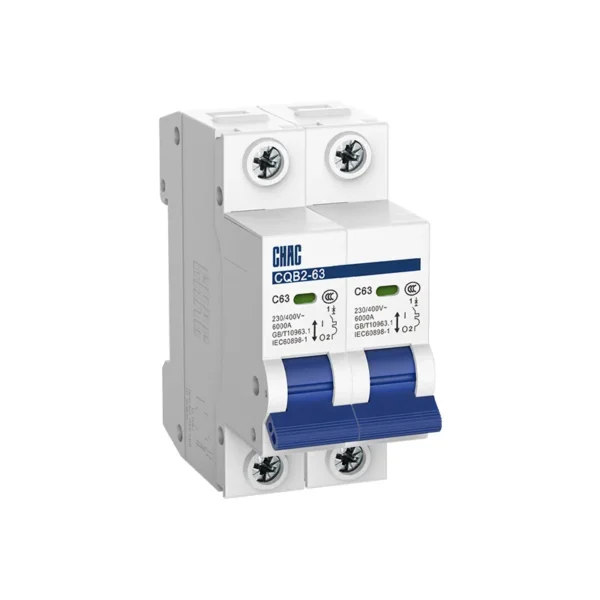
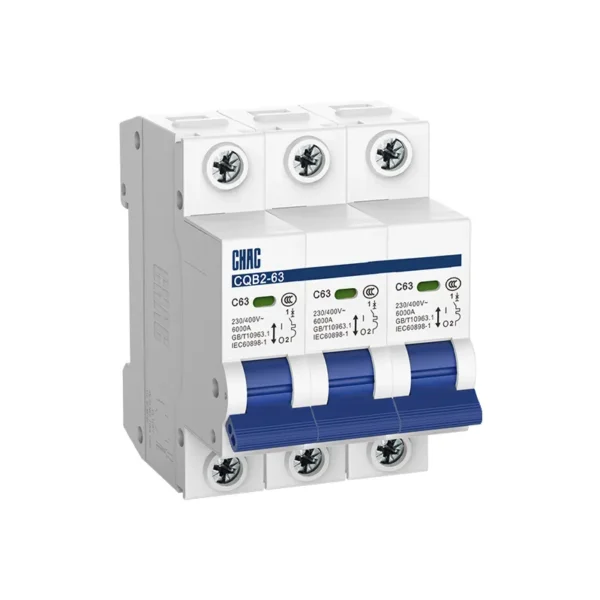
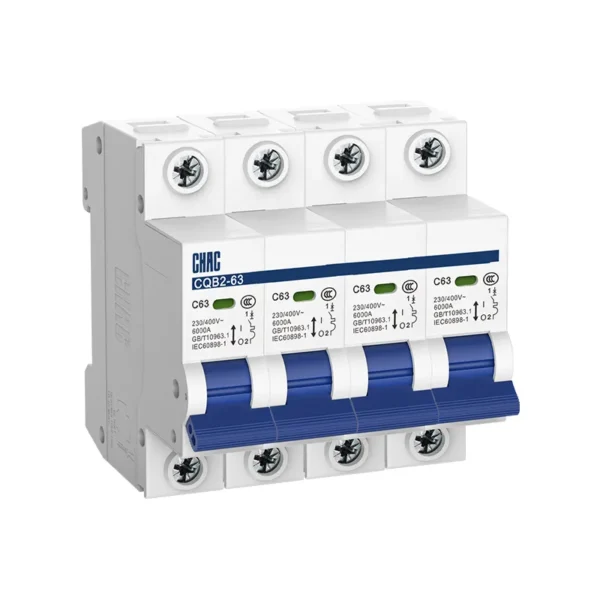
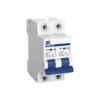
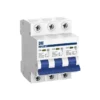
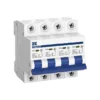
CQB2-63 Brevetto di sicurezza per circuiti chiusi
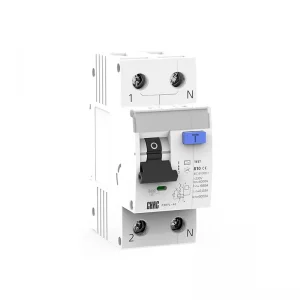
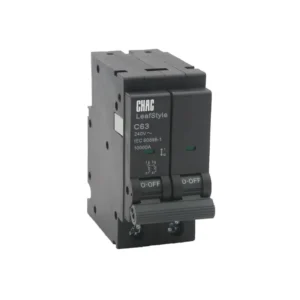
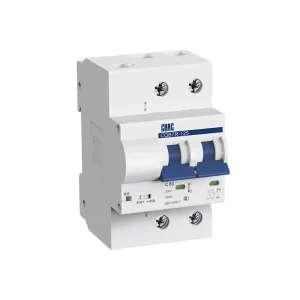
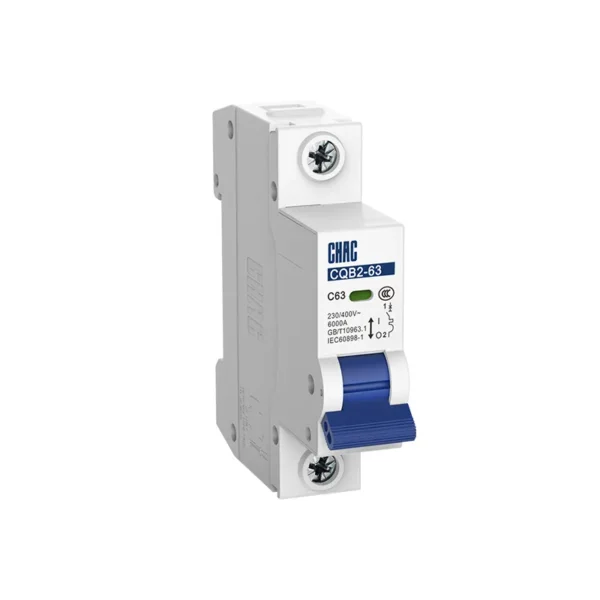
Il Interruttore automatico miniaturizzato CQB2-63 È progettato per la protezione da sovraccarico e cortocircuito nei sistemi di distribuzione finale in corrente alternata 230/400V. Copre le curve di intervento 6A, 63A, B, C e D, nonché le configurazioni 1P, 1P+N, 2P, 3P, 3P+N e 4P. La sua capacità nominale di interruzione del cortocircuito è 6kA, con Icn uguale a Ics. La serie è conforme alla norma IEC 60898-1 e nella pagina del modello è riportata la certificazione CCC. Fornisce a distributori, costruttori di quadri e acquirenti OEM una piattaforma chiaramente definita per progetti di distribuzione residenziale, commerciale e leggermente industriale.
Riassunto del prodotto
Il CQB2-63 è un interruttore miniaturizzato 6kA per circuiti di distribuzione finale che richiedono protezione da sovraccarico e cortocircuito. È classificato per 230/400V AC a 50 o 60Hz ed è disponibile da 6A a 63A. Gli acquirenti possono specificare caratteristiche di sgancio B, C o D e scegliere configurazioni 1P, 1P+N, 2P, 3P, 3P+N o 4P in base al circuito e alle norme di installazione locali.
Per gli acquirenti che confrontano un MCB 6kA, l'interruttore automatico CQB2-63 offre le opzioni B, C e D all'interno delle sue curve di intervento pubblicate.
Per distributori, costruttori di quadri e OEM elettrici, la serie combina una piattaforma a capacità di interruzione uniforme 6kA con un'ampia gamma di configurazioni. La selezione deve comunque basarsi sulla portata in ampere dei conduttori, sul comportamento del carico, sulla corrente di corto circuito presunta, sulle condizioni ambientali e sul mercato di destinazione. Il CQB2-63 è conforme alla norma IEC 60898-1, e la certificazione CCC è quella confermata per questo modello nella pagina prodotto attuale.
Principali caratteristiche
Applicazioni tipiche
Il CQB2-63 è destinato ai circuiti finali negli impianti di distribuzione residenziali, commerciali e leggermente industriali. Gli utilizzi tipici includono l’illuminazione, le prese di corrente, i piccoli sistemi HVAC, le pompe e altri circuiti secondari, quando la corrente nominale selezionata e la curva di intervento sono compatibili con il conduttore, il carico e lo studio della corrente di guasto. Un MCB protegge principalmente i conduttori del circuito, pertanto la scelta deve tenere conto del diametro del cavo, del metodo di installazione, della temperatura ambiente, del raggruppamento e della coordinazione a monte, piuttosto che del solo nome dell’apparecchio.
Modulazioni e Guida alla selezione
| Elemento selezionabile | Come valutarlo | Opzioni CQB2-63 |
|---|---|---|
| Corrente nominale | Verificare la corrente di progetto, la portata dei conduttori, il metodo di installazione, la temperatura ambiente e il raggruppamento. Non aumentare la taratura dell’interruttore per risolvere gli interventi ripetuti senza averne individuato la causa. | 6A, 10A, 16A, 20A, 25A, 32A, 40A, 50A, 63A |
| Curva di intervento | Compare normal operating current, starting or inrush current and the fault-current level needed for timely magnetic operation. | B, C or D |
| Numero di poli | Match the supply system and determine which live conductors—and, where required, the neutral—must be disconnected together. | 1P, 1P+N, 2P, 3P, 3P+N, 4P |
| Capacità di rottura | Verify that the prospective short-circuit current at the installation point does not exceed the device rating. Use another protective solution if the study requires a higher value. | 6kA, Icn = Ics |
| Standard and market documents | Check the product standard, destination-market rules and the exact documents required by the customer or approval body. | IEC 60898-1; CCC confirmed on this page |
Compare breaking capacity, tripping curves, pole configurations and protection functions before selecting the right miniature circuit breaker for your application.
6kA vs 10kA MCB
Select breaking capacity according to the prospective short-circuit current at the installation point, not only the rated current of the circuit.
B Curve vs C Curve vs D Curve
Select the tripping curve according to load inrush characteristics, not by current rating alone.
1P+N vs 2P MCB
Both options can be used in single-phase circuits, but their switching and protection arrangements are different.
MCB vs RCBO
An MCB protects against overload and short circuit, while an RCBO also provides residual-current protection.
Need Help Selecting an MCB Configuration?
Share your pole configuration, rated current, tripping curve and quantity. Our team will help confirm a suitable CQB2-63 option for your application.
Guida all'ordine
Professional MCB product pages commonly identify operating and storage conditions, mounting format, conductor capacity, tightening torque, dimensions and weight. These values vary by product family, rated current and pole configuration, so figures from another brand or series should not be applied to the CQB2-63. Confirm the following items on the approved CQB2-63 datasheet, installation instructions or project quotation before final selection:
For a project-specific confirmation, send CHAC the rated current, trip curve, pole configuration, destination market, expected quantity and panel or conductor constraints.
How to choose between B, C and D curves
The curve identifies the instantaneous magnetic-trip range, not a general quality grade. The CQB2-63 tripping table gives 3–5 × In for B curve, 5–10 × In for C curve and 10–20 × In for D curve. B curve is commonly considered for low-inrush circuits, C curve for moderate inrush, and D curve for higher-inrush equipment. The final choice must still provide adequate fault protection; selecting a slower curve only to avoid nuisance trips can delay operation when fault current is limited.
How to choose the pole configuration
Select the pole arrangement from the actual supply and isolation requirements rather than from panel space alone. A 1P device switches one conductor, while multi-pole versions provide mechanically linked operation for the specified conductors. Neutral switching and isolation rules vary by system and market, so 1P+N, 3P+N and 4P options should be confirmed against the project drawings and local requirements.
When 6kA is not enough
A 6kA marking means the breaker is rated to interrupt a prospective short-circuit current of up to 6,000A under the applicable test conditions; it is not the normal load-current rating. If the calculated or measured prospective fault current at the installation point exceeds 6kA, use equipment with a suitable rating or a verified coordinated solution rather than assuming every MCB is interchangeable.
Designazione del tipo
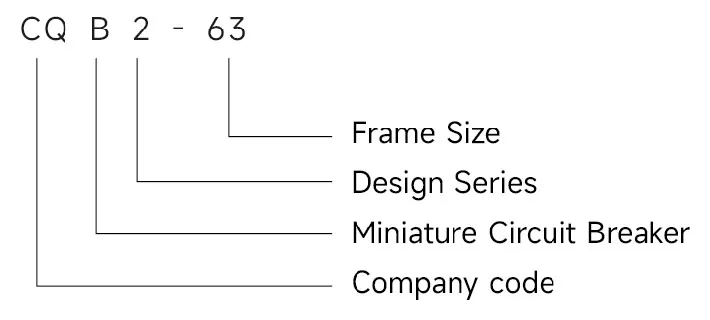
Curvature pericolose

Dimensioni (unità: mm)

Specifiche tecniche
| Parametro | |
| Rated insulation voltage | 500 V |
| Rated impulse withstand voltage (Uimp) | 4000 V |
| Corrente nominale | 6A, 10A, 16A, 20A, 25A, 32A, 40A, 50A, 63A |
| Frequenza nominale | 50 Hz / 60 Hz |
| Numero di poli | 1P, 1P+N, 2P, 3P, 3P+N, 4P |
| Rated breaking capacity (Icn = Ics) | 6000 A |
| Vita meccanica | ≥ 10,000 operazioni |
| Durata elettrica | ≥ 6,000 operations |
| Caratteristiche di intervento | B, C, D |
| Terminal center distance | 45 mm |
| Grado di protezione | IP20 |
| Standard | IEC 60898-1, GB/T 10963.1 |
| Certificazione | CCC |
Table 1 Tripping characteristics (Reference temperature 30°C)
| Oggetto | Curva di intervento | Corrente di prova In(A) | Status iniziale | Termine per l’attivazione o l’inattivazione | Risultato previsto | Commenti |
| a | B, C e D | 1.13ln | Freddo | t≤1h | Non-tripping | La corrente aumenta gradualmente fino al valore specificato in 5 secondi |
| b | B, C e D | 1,45ln | Seguendo l'articolo a) il test | t<1h | Innamorarsi | |
| c | B, C e D | 2,55ln | Freddo | 1s<t<60s(ln≤32A) 1s<t<120s(ln>32A) |
Innamorarsi | |
| d | B | 3In | Freddo | t≤0,1 s | Non-tripping | Accendere l'alimentazione elettrica chiudendo il selettore ausiliario |
| C | 5In | |||||
| D | 10ln | |||||
| e | B | 5In | Freddo | t<0,1 s | Innamorarsi | Accendere l'alimentazione elettrica chiudendo il selettore ausiliario |
| C | 10ln | |||||
| D | 20ln |
Nota: Il termine “freddo” indica che il test viene effettuato a una temperatura di riferimento di calibrazione senza carico prima della prova.
Requisiti relativi al conduttore e sezione trasversale
| Sottotensione della sezione trasversale del cavo (mm²) | Corrente nominale In(A) |
| 1 | In ≤ 6 |
| 1.5 | 6 In≤13 |
| 2.5 | 13 In≤20 |
| 4 | 20 In≤25 |
| 6 | 25 In≤32 |
| 10 | 32 In≤50 |
| 16 | 50 In≤63 |
Perché scegliere CHAC
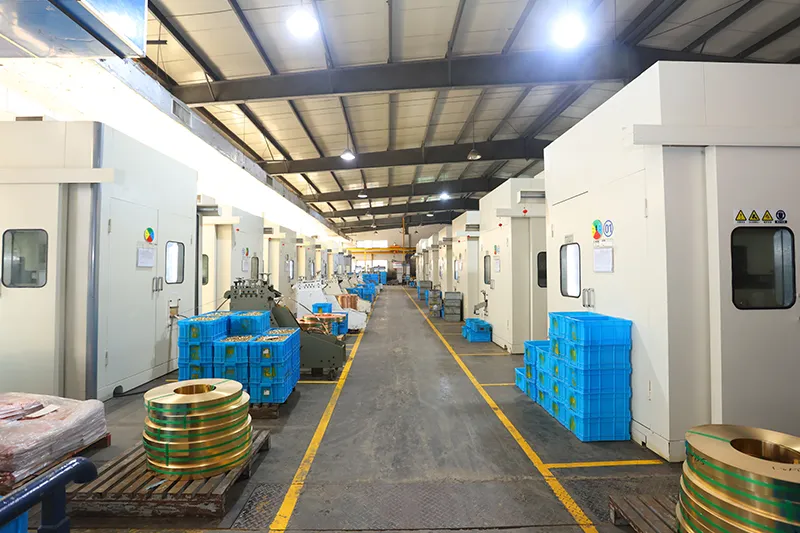
Con oltre 30 anni di esperienza nella produzione, oltre 1100 dipendenti e oltre 100 milioni di pali
Capacità annuale e produzione automatizzata di 90% unità, CHAC garantisce una capacità produttiva stabile e un'alta qualità dei prodotti.
Controllo qualità per clienti OEM/ODM globali. Il nostro sistema di produzione interno supporta la collaborazione a lungo termine
Cooperazione per i marchi elettrici, gli importatori e i distributori.

30+
ANNI DI ESPERIENZA
Specializzata nella produzione di apparecchiature elettriche a bassa tensione

1100+
L'EMPLOYATI
Il team professionale garantisce una qualità e una consegna stabili

100 milioni di persone
Capacità annuale delle stazioni
Capacità produttiva su larga scala per soddisfare la domanda globale

90%
PRODUZIONE AUTOMATIZZATA
Automazione avanzata per un'elevata efficienza e coerenza

Linea di assemblaggio automatizzata

Laboratorio di test
Iniezione e stampaggio

Ispezione di qualità



Un rigoroso sistema di controllo qualità assicura che ogni prodotto soddisfi gli standard internazionali.
Cosa possiamo personalizzare?
CQB2-63 OEM/ODM options are reviewed per project rather than assumed to be available for every configuration. The published 6–63A ratings, B/C/D curves and listed pole arrangements are the starting platform. Marking, packaging, labels, manuals, appearance requests, engineering work and certification support depend on technical feasibility, order quantity, tooling requirements and the destination market. Changes to internal construction, breaking capacity, terminals, dimensions or certified ratings require separate engineering and compliance confirmation.

Logo e branding
Logo and marking requests are reviewed against the available print area, required regulatory markings and approved artwork.


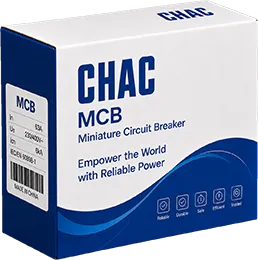
Imballaggio
Personalizzazione
Color boxes, cartons, labels and manuals can be reviewed by language, destination market and order quantity.

Elettrico
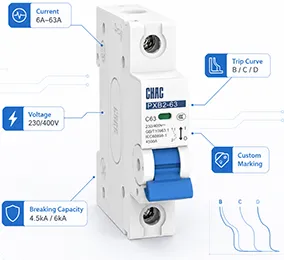
Personalizzazione
Available rated-current, pole and B/C/D curve combinations are reviewed within the validated CQB2-63 platform.

Prodotti
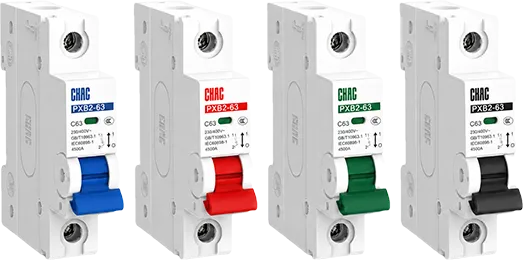
Apparizione
Housing or handle color requests require technical, material, tooling and compliance review before sampling.

Certificazione
Supporto
Destination-market documents and certification requirements are reviewed for the exact model and configuration before sample approval.


Ingegneria
Sviluppo
Drawing, prototype and validation support is scoped per project; internal construction or rating changes are not assumed.

Scarica
Interruttore di circuito miniaturizzato della serie CQB2
Riassunto completo dei prodotti per componenti elettrici a bassa tensione e riferimento per la scelta dei prodotti.
Necessita di documenti tecnici?
Contattateci per ricevere schede tecniche, certificati, disegni, assistenza nella scelta dei prodotti o supporto per progetti OEM/ODM.
CQB2-63 Miniature Circuit Breaker FAQ
How to choose the correct MCB?
Start with the conductor ampacity and circuit design current, then check the supply voltage, pole configuration, load inrush, ambient conditions and prospective short-circuit current. For the CQB2-63, select within 6–63A, match the B/C/D curve to the load and fault conditions, and verify that the installation point does not exceed the 6kA breaking-capacity rating.
What are the different types of poles in an MCB?
MCBs may switch one or several conductors together. The CQB2-63 is offered in 1P, 1P+N, 2P, 3P, 3P+N and 4P configurations; the correct option depends on the single- or three-phase system and whether the neutral must be switched or isolated under the applicable rules.
What does kA mean on circuit breakers?
kA indicates short-circuit breaking capacity, not continuous load current. The CQB2-63 has a 6kA rating, meaning it is designed to interrupt up to 6,000A of prospective short-circuit current under the stated IEC 60898-1 test conditions; the installation must be checked to confirm that this rating is sufficient.
What is the difference between a 1-pole MCB and a 2-pole MCB?
A 1-pole MCB operates one conductor, while a 2-pole MCB provides linked operation across two conductors. The choice depends on the supply arrangement and disconnection rules; two unrelated single-pole breakers should not be assumed to provide the same common operation as a purpose-designed 2P device.
What is the C curve and D curve in an MCB?
For the CQB2-63, the published instantaneous magnetic-trip ranges are 5–10 × In for C curve and 10–20 × In for D curve. D curve tolerates more starting current, but it should only be used when the load profile and available fault current allow the protective device to operate within the required disconnection time.
When should a B-curve MCB be used?
B curve is generally considered for circuits with relatively low starting or inrush current. The CQB2-63 data gives a B-curve magnetic-trip range of 3–5 × In; engineers should still confirm conductor protection, normal transients and fault-loop conditions rather than choosing the curve from the load label alone.
Build the Right CQB2-63 Configuration for Your Market
Send us your required current rating, B/C/D curve, pole configuration, destination market and estimated quantity. CHAC will review the specification and provide the relevant technical documents and commercial proposal.