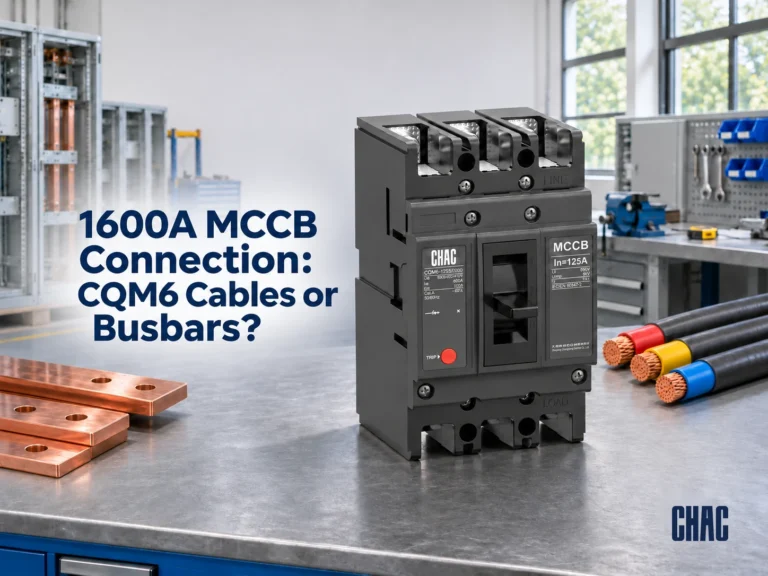
Due dispositivi con la stessa corrente nominale possono proteggere da rischi diversi. Un circuito dotato esclusivamente di un interruttore magnetotermico potrebbe comunque necessitare di un dispositivo differenziale separato, mentre un Interruttore magnetotermico differenziale Combina tale funzione con la protezione da sovracorrente. La scelta tra i due dispositivi, pertanto, non influisce soltanto sul prezzo: incide sulla suddivisione dei circuiti, sul percorso del conduttore neutro, sulle procedure di collaudo e su quali utenze rimangono senza alimentazione in caso di guasto a terra residuo. Questo confronto illustra innanzitutto le rispettive funzioni, per poi esaminare i carichi elettronici, la ricarica dei veicoli elettrici e i limiti della sostituzione di un impianto con RCD condiviso mediante l’impiego di RCBO individuali.
La risposta breve è: Il centrale MCB vs RCBO La differenza è funzionale: un MCB protegge da sovraccarico e cortocircuito, mentre un RCBO aggiunge la protezione da corrente residua nello stesso dispositivo. IEC 60898-1 e IEC 61009-1 prevedono diversi quadri di prodotto e di prova; nessuno dei due costituisce una certificazione a sé stante. La corrente nominale di funzionamento residua, il tipo di RCBO, la configurazione di messa a terra e le norme locali applicabili sono input specifici del progetto. Non considerare mai un MCB come sostituto della protezione da corrente residua laddove tale protezione sia richiesta.
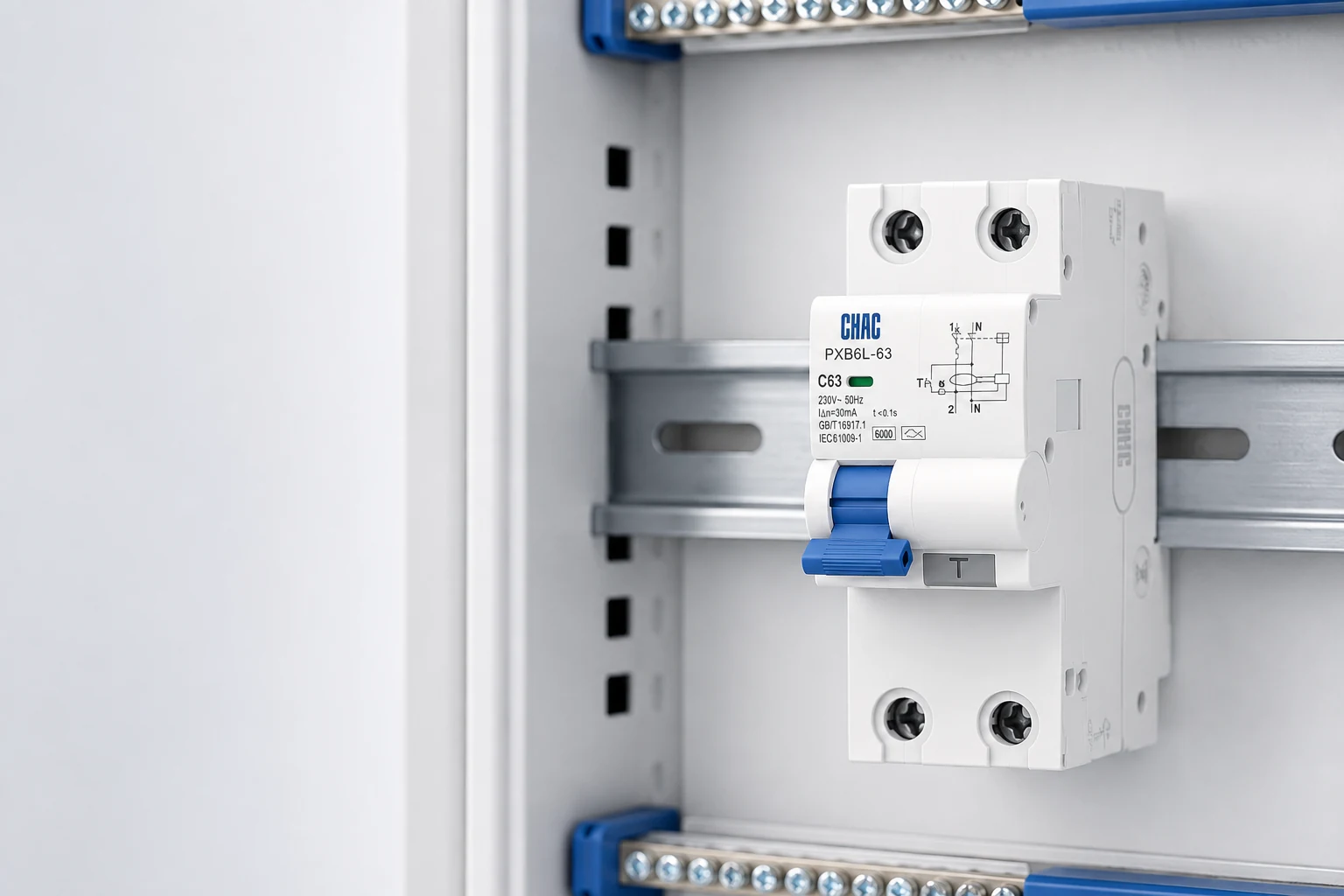
Entrambi i dispositivi possono proteggere i circuiti di utenza, ma le loro diverse funzioni di rilevamento influiscono sull’architettura del quadro elettrico, sulle procedure di collaudo e sui costi complessivi durante il ciclo di vita. Valuta i rischi da mitigare prima di considerare la larghezza dell’apparecchio o il prezzo di acquisto.
Quali sono le differenze tra un interruttore magnetotermico (MCB) e un interruttore differenziale magnetotermico (RCBO)?
Che cosa rileva un interruttore magnetotermico?
Un interruttore magnetotermico risponde alla corrente che attraversa i poli protetti. Il suo elemento termico interviene in caso di sovraccarico prolungato, mentre il suo sgancio magnetico reagisce a correnti di corto circuito elevate. La norma IEC 60898-1 copre applicazioni domestiche e simili in corrente alternata entro il campo di applicazione indicato, compresi dispositivi fino a 125 A e 440 V AC; tali valori rappresentano i limiti di campo, e non le caratteristiche nominali di ogni prodotto.
Un interruttore magnetotermico non misura lo sbilanciamento tra la corrente in uscita e quella in entrata. Di conseguenza, una corrente di dispersione può rimanere ben al di sotto della soglia di sovracorrente dell’interruttore, anche se la protezione da corrente residua è prescritta dal progetto dell’impianto. Un interruttore magnetotermico può essere coordinato con un differenziale separato o con un altro dispositivo differenziale, ma non può sostituirne la funzione.
Quale funzione aggiuntiva offre un interruttore differenziale magnetotermico?
Un RCBO combina la protezione da sovracorrente con il rilevamento della corrente residua. I suoi conduttori sotto tensione passano attraverso un trasformatore di somma; una differenza non intenzionale tra la corrente in uscita e quella in entrata può azionare l'azionamento a corrente residua. La norma IEC 61009-1 è il quadro generale di prodotto e di prova per le applicazioni domestiche e simili degli RCBO, e non costituisce un'approvazione globale.
La corrente residua operativa nominale marcata, IΔn, è un parametro di selezione distinto dalla corrente di carico nominale del dispositivo. Un valore di 30 mA è associato a una protezione aggiuntiva in particolari applicazioni IEC 60364-4-41, ma non costituisce un'impostazione universale per ogni alimentatore, macchina o mercato. Il valore richiesto di IΔn, il comportamento temporale e il tipo di corrente residua devono derivare dalla misura di protezione, dalle caratteristiche del carico, dalla configurazione di messa a terra e dalle norme adottate.
In che modo l’assetto di protezione influisce sui costi e sull’entità delle interruzioni?
Il costo totale comprende anche lo spazio per la scheda, l'architettura RCD, il cablaggio, i test, i ricambi e i tempi di inattività quando un interruttore differenziale disconnette diversi circuiti. La verifica IEC 60364-6 rende l'accesso ai test e la documentazione parte integrante della progettazione.
| Zona di decisione | MCB | Interruttore magnetotermico differenziale |
|---|---|---|
| Protezione | Sovratensione e cortocircuito | Sovraccarico, cortocircuito e corrente residua |
| Coordinamento residuo | Richiede un interruttore differenziale separato ove necessario. | Fornisce protezione residua a livello di circuito |
| Isolamento dei guasti | Un interruttore differenziale comune può disconnettere un gruppo. | È possibile localizzare un guasto residuo a un singolo circuito. |
| Pannello e cablaggio | Modulo semplice; il sistema potrebbe necessitare di un interruttore differenziale (RCCB). | Integrato; la larghezza e la disposizione neutra variano |
| Testaggio | Include prove per eventuali dispositivi differenziali separati. | Funzione di test più controlli strumentali specifici |
| Tendenza dei costi | Di solito, costo del dispositivo più basso | Di solito i costi dei dispositivi sono più elevati, ma i tempi di inattività potrebbero essere inferiori. |
Per un’analisi illustrativa del TCO, aggiungere il costo dei dispositivi e dell’installazione alle “ore di interruzione previste × tasso di fermo impianto caricato”. Una ricerca della causa del guasto della durata di due ore, successiva all’intervento di un differenziale comune, deve essere inclusa nel confronto. Gli RCBO a livello di singolo circuito possono ridurre l’area interessata, ma non garantiscono la selettività.
Quali condizioni del circuito elettrico favoriscono l’impiego di un interruttore magnetotermico (MCB) o di un interruttore differenziale con protezione magnetotermica (RCBO)?
I soli nomi delle applicazioni non determinano la protezione. IEC 60364-4-41, le istruzioni per l’equipaggiamento e le norme nazionali collegano le misure di protezione contro gli urti alle condizioni reali di installazione.
| Condizione di applicazione | Architettura probabile da valutare | Controlli critici prima dell'approvazione |
|---|---|---|
| Illuminazione o sistemi di controllo per aree asciutte | Interruttore automatico magnetotermico con qualsiasi dispositivo differenziale richiesto separatamente | Portata di corrente, corrente di spunto, livello di cortocircuito e norme locali |
| Presa, circuito per esterni o ambienti umidi | Dispositivo RCBO individuale dove è richiesta la protezione contro le correnti di dispersione | IΔn, tipo, messa a terra, ambiente e prove |
| Diversi circuiti sotto un unico interruttore differenziale (RCCB) | Interruttori automatici di linea coordinati a valle | Fuga, suddivisione e conseguenza del distacco simultaneo |
| Carico di guida, UPS, EV, PV o carico filtrato | Soluzione ingegnerizzata RCBO/RCD | Residual waveform and equipment instructions |
| Business-critical branch | RCBO may improve fault localization | Selectivity, spares, testing and downtime |
Which Standards and Compliance Evidence Matter?
- IEC 60898-1 sets requirements and test methods for MCBs for overcurrent protection in household and similar AC installations within its scope.
- IEC 61009-1 sets general requirements and tests for RCBOs with integral overcurrent protection within its scope.
- IEC 60364-4-41 addresses protection against electric shock in low-voltage installations, including circumstances where RCD additional protection applies.
- IEC 60364-6 addresses initial and periodic verification; the test button alone does not prove conductor continuity, insulation resistance, polarity, trip time or actual operating current.
These references are standards and test frameworks, not certifications. Destination-market law, the adopted edition, national deviations, intended use and marketing claims determine the required certificate, declaration or test report. Unsupported claims can lead to rejected submittals, rework or shipment delays.
How Should Buyers Select MCBs and RCBOs?
- Define voltage, phases, load and inrush, conductor, environment and prospective short-circuit current.
- Map overload, short-circuit and residual-current measures against the TT, TN or IT earthing arrangement.
- Record IΔn, RCBO type, permitted delay, standing leakage and electronic-load waveform.
- Verify poles, neutral treatment, capacità di rottura, backup, selectivity, enclosure and test access.
- Request model-specific data, reports, markings, drawings, traceability and a replacement route.
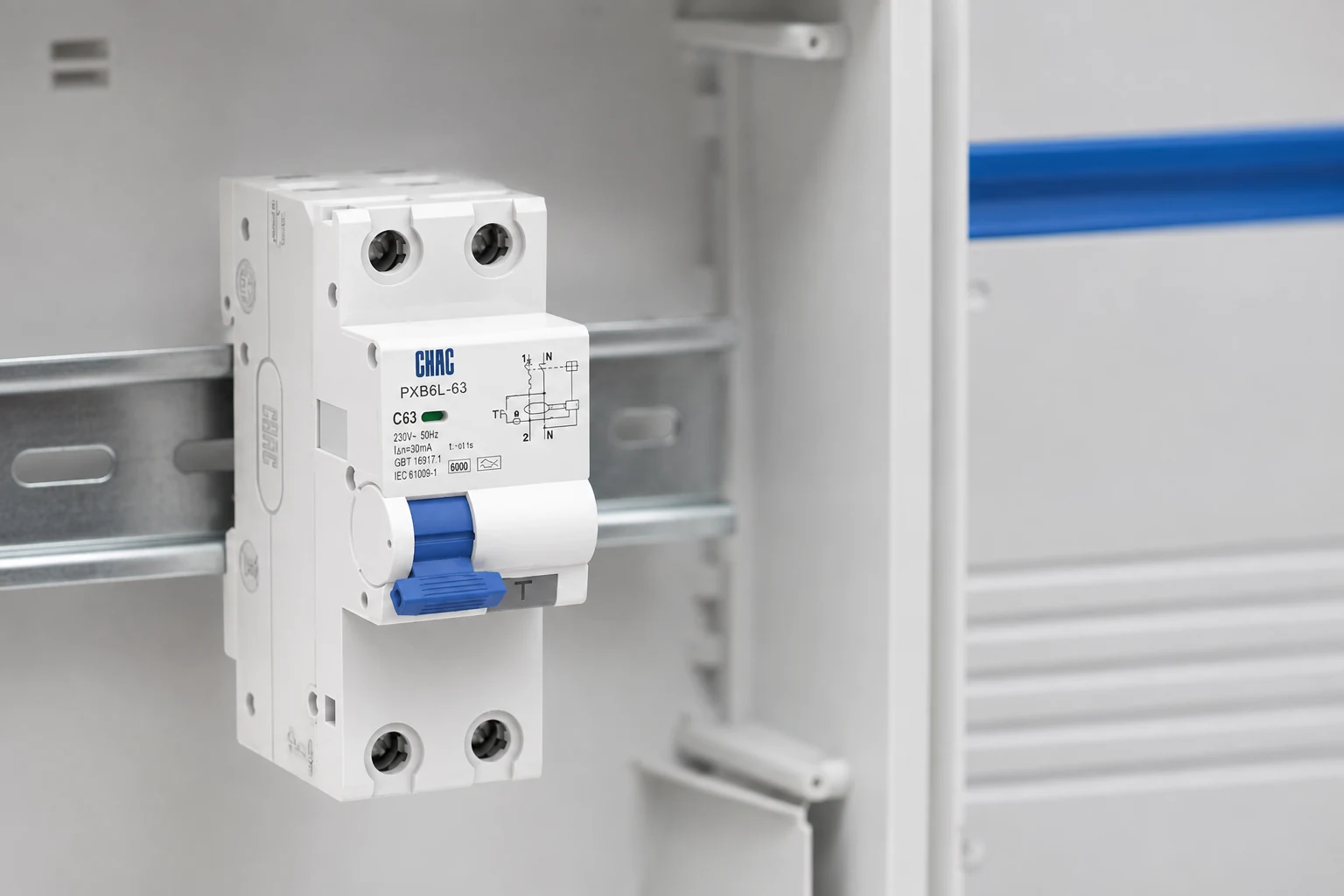
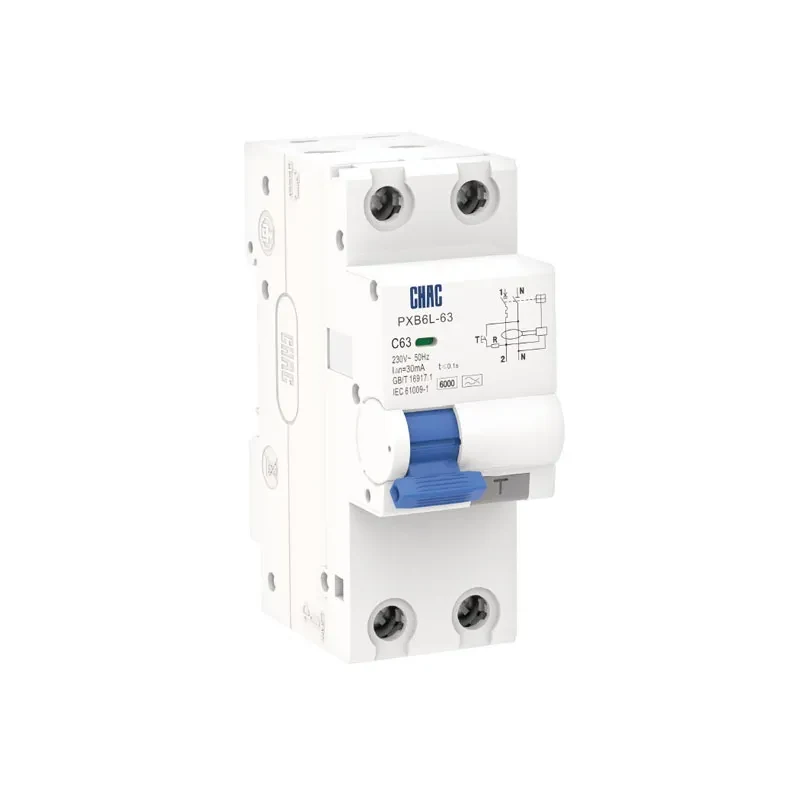
CHAC Electric can support that comparison with separate product-family references. The interruttore magnetotermico miniaturizzato page presents the CQB2-63 for overload and short-circuit protection; CCC is the only certification confirmed here, while IEC 60898-1 is treated as a product standard and test framework. For combined protection, review the RCBO with overcurrent protection PXB6L-63 and the PXB9L-40 electromagnetic leakage miniature circuit breaker. Exact ratings, residual-current characteristics and documents must be confirmed for the selected model and market.
The guide to Cablaggio degli interruttori differenziali e norme di sicurezza elettrica adds commissioning detail on neutral segregation, leakage and instrument verification.
How should lighting and EV circuits be assessed?
An MCB vs RCBO vs RCCB comparison, lighting-circuit review or RCBO for EV charger decision should separate three questions: overcurrent protection, residual-current protection, and how the protection is distributed across circuits. The device should follow the load, earthing arrangement, required residual operating current, waveform type, coordination and local installation rules.
| Device question | Practical distinction | Evidence to confirm |
|---|---|---|
| MCB or RCBO? | An MCB covers overload and short circuit; an RCBO combines those duties with residual-current protection. | Required protection functions and circuit schedule. |
| MCB vs RCBO vs RCCB? | An RCCB provides residual-current protection but normally needs separate overcurrent protection; an RCBO integrates both in one device. | Product standard, rated residual current and coordination. |
| What about lighting? | Lighting selection depends on circuit rules, leakage, driver electronics, discrimination and the required protection arrangement. | Load type, wiring method and adopted code. |
| What about an EV charger? | EV equipment can require a specific residual-current type or upstream arrangement; the charger instructions and local rules control. | Manufacturer installation guide and project protection study. |
Choosing MCB or RCBO is therefore not just a price comparison. An RCBO can localize a residual-current trip to one circuit, while an MCB-plus-RCCB arrangement may be selected for a different board architecture. Review the PXB6L-63 RCBO and CQB2-63 MCB references linked above only after the required functions and ratings are known.
For electronic loads, confirm the device type and residual-current waveform requirements rather than using “RCBO” as a complete specification. The terms “RCD,” “RCCB” and “RCBO” are not interchangeable in every market; use the exact product marking, standard and installation document in the procurement record.
Does a 30 mA RCBO specification identify the required current type?
No. Rated residual operating current and residual-current waveform type are different selection fields. Schneider Electric’s Types of RCDs guide distinguishes AC, A, F and B responses. A familiar sensitivity marking does not show that the device responds appropriately to the fault waveform an electronic load can produce. Use the load manufacturer’s instructions and the applicable installation rules before selecting the type.
EV charging illustrates the evidence boundary. Wallbox’s explanation of charging requirements in Sweden discusses Type B and Type A/F plus DC-detection arrangements under the cited Swedish guidance, then describes its named charger models. That is not proof that every charger has integrated DC detection, nor that a CHAC RCBO has the same capability. Obtain the exact charger’s evidence and determine which upstream functions remain required.
Individual RCBOs can reduce the number of circuits affected by a residual fault, but an upstream RCD may still operate unless coordination is established. Record the upstream and downstream types, sensitivities, time behavior and applicable manufacturer data. Likewise, keep each circuit’s intended neutral routing intact; a crossed or shared return path can defeat the expected subdivision even when the device specification is correct.
MCB vs RCBO FAQs
Should I choose an MCB or RCBO?
Choose an MCB when overload and short-circuit protection are the required functions and residual-current protection is provided elsewhere or is not required. Choose an RCBO when the circuit also needs the specified residual-current protection in the same device.
What is the difference between an MCB, RCBO and RCCB?
An MCB covers overcurrent, an RCCB covers residual current and normally needs separate overcurrent protection, and an RCBO combines the two functions. Exact ratings, types and coordination remain project-specific.
Should an EV charger use an MCB or RCBO?
Follow the charger manufacturer instructions and the adopted installation rules. EV equipment may require a defined residual-current type or a particular upstream arrangement, so an MCB alone should not be assumed sufficient.
Does an RCBO replace an MCB?
An RCBO includes the overcurrent functions of an MCB and adds residual-current protection, so it can serve as the combined protective device for a circuit when its ratings, poles, standard, enclosure compatibility and local approval are suitable. It is not automatically a drop-in replacement for every MCB or MCB-plus-RCD arrangement.
Can an MCB protect against earth leakage?
No. An MCB responds to overload and short-circuit current; it does not provide the residual-current sensing required for earth-leakage or additional shock protection. Where residual-current protection is required, use a coordinated RCD architecture such as an RCCB with suitable overcurrent protection or an appropriate RCBO.
What rated residual operating current should an RCBO have?
There is no universal answer. Although 30 mA is widely associated with additional protection in specified final-circuit applications, the correct IΔn depends on the protective measure, circuit purpose, standing leakage, upstream coordination, earthing arrangement and local rules. Record the basis of selection rather than copying a familiar value.
Which RCBO type should be used for electronic loads?
Choose from the residual-current waveform the equipment can produce and the applicable instructions—not from a simple hierarchy. Type AC, A, F and B devices respond to different defined waveforms; drives, EV equipment, PV inverters and UPS systems may also include DC-residual considerations that require a coordinated design.
Why does an RCBO trip when the connected load appears normal?
The cause may be cumulative filter leakage, damaged insulation, moisture, a shared neutral, a downstream neutral-to-earth connection or a transient rather than overload. Identify which function operated where possible, inspect conductor routing, measure insulation and leakage with suitable instruments, and do not defeat the residual protection to keep the circuit running.
Does a 30 mA marking tell me whether an RCBO is Type A or Type B?
No. Sensitivity and waveform type are different markings. Confirm both, together with the load’s residual-current characteristics and the required protection arrangement.
Do individual RCBOs guarantee that an upstream RCD will not trip?
No. They can improve circuit-level fault localization, but upstream selectivity requires suitable devices, time behavior and verified coordination. It cannot be inferred from individual RCBOs alone.
Referenze
- Schneider Electric: Formati degli interruttori differenziali (RCD); distinguishes residual-only and combined-protection arrangements.
- Schneider Electric: Types of RCDs; waveform-based device selection, updated August 5, 2026.
- Wallbox: Commitment to EV Charging Standards; Swedish SEK Handbook 444 example and named Wallbox models, not a worldwide rule or CHAC capability claim.
The durable rule is simple: select the protective function first, then prove that the chosen device, wiring and test plan deliver it.
When your project team has the load schedule, fault level, earthing arrangement and destination-market requirements ready, compare the CHAC product families above and contatta CHAC Electric for model-specific documentation and selection support.