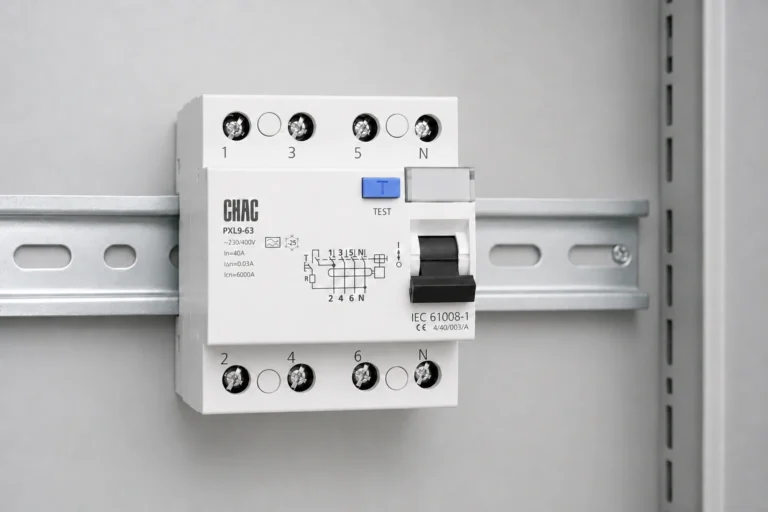
A disjuntor UL 489 is selected for its listing scope and tested application, not simply because the label contains “UL.” Buyers need to distinguish branch-circuit overcurrent protection from supplementary protection used inside equipment. The correct review therefore starts with the intended circuit function, system voltage, available fault current, conductor rules, and the authority having jurisdiction (AHJ), then checks the device listing and installation instructions.
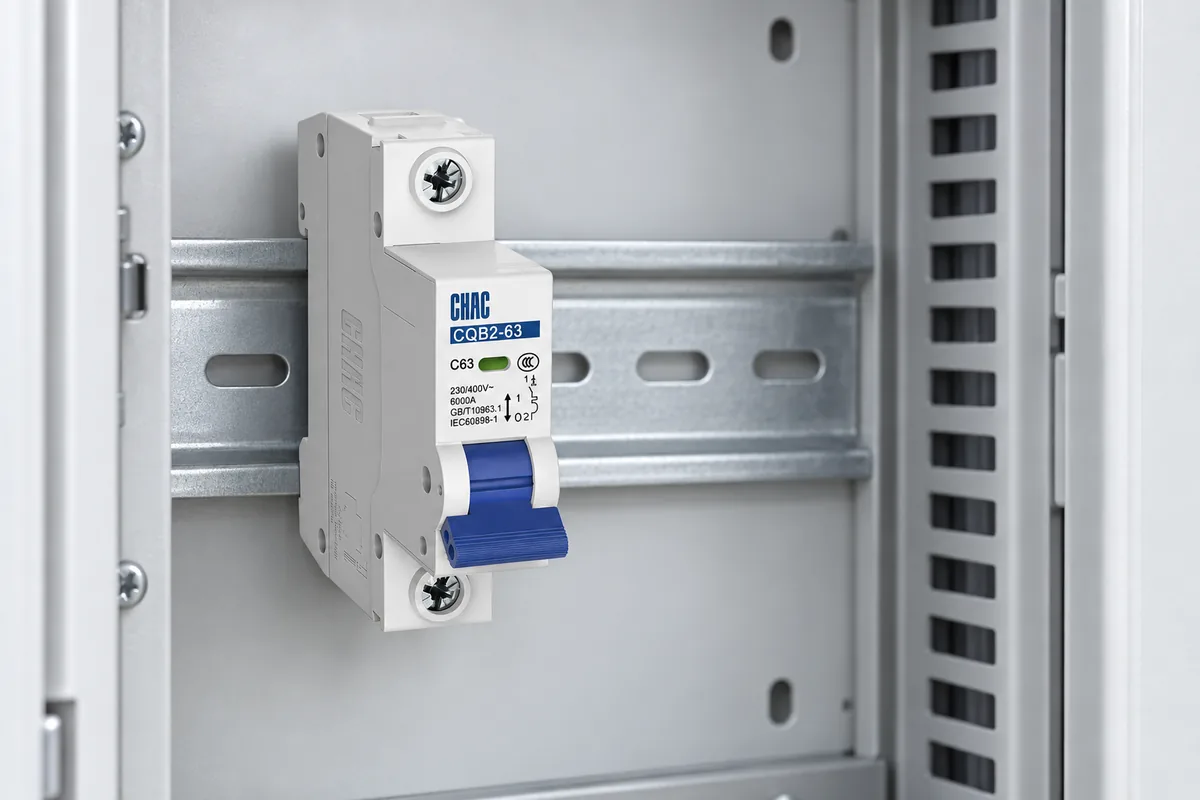
What is a UL 489 circuit breaker?
UL 489 is a North American product standard used for circuit breakers in the scope defined by the standard and the product listing. A listed device is evaluated with specific construction, performance, and marking requirements; the listing does not automatically approve every voltage, enclosure, panel, or installation method.
For procurement, the useful question is not “Does it look like a breaker?” but “Does the listing cover the protective function and system in this project?” Confirm the exact catalog number, poles, voltage, current, interrupting rating, accessories, and panel compatibility from the manufacturer documentation.
What is the difference between UL 489 and UL 1077?
| Review point | disjuntor UL 489 | UL 1077 supplementary protector |
|---|---|---|
| Primary role | Branch-circuit or equipment overcurrent protection within its listed scope | Supplementary protection inside equipment where the installation code permits it |
| Selection question | Does the listing cover the branch, fault level, voltage, and panel arrangement? | Is a separate upstream branch protective device already provided? |
| Evidence | Product marking, listing record, interrupting rating, and installation instructions | Supplementary-protector marking and the equipment manufacturer’s application instructions |
| Common error | Assuming any similarly sized device is interchangeable | Using a supplementary protector as the only branch protection without confirming the code and listing |
This comparison is a scope check, not a claim that one standard is universally better. The adopted installation code and the AHJ determine what is acceptable in a particular market.
What should buyers verify before selecting one?
- Identify whether the device protects a branch circuit, equipment, control circuit, or internal component.
- Record system voltage, frequency, poles, continuous current, and available fault current.
- Check the exact UL listing, catalog number, interrupting rating, terminal range, and temperature conditions.
- Confirm the panelboard or enclosure listing and any required accessories or series combinations.
- Keep the datasheet, installation instructions, marking photo, and approval record with the project file.
CHAC’s Categoria de produtos MCB e MCCB product category can help organize the device family discussion. The final listing and market-approval check must still use the exact candidate model and destination-market documents.
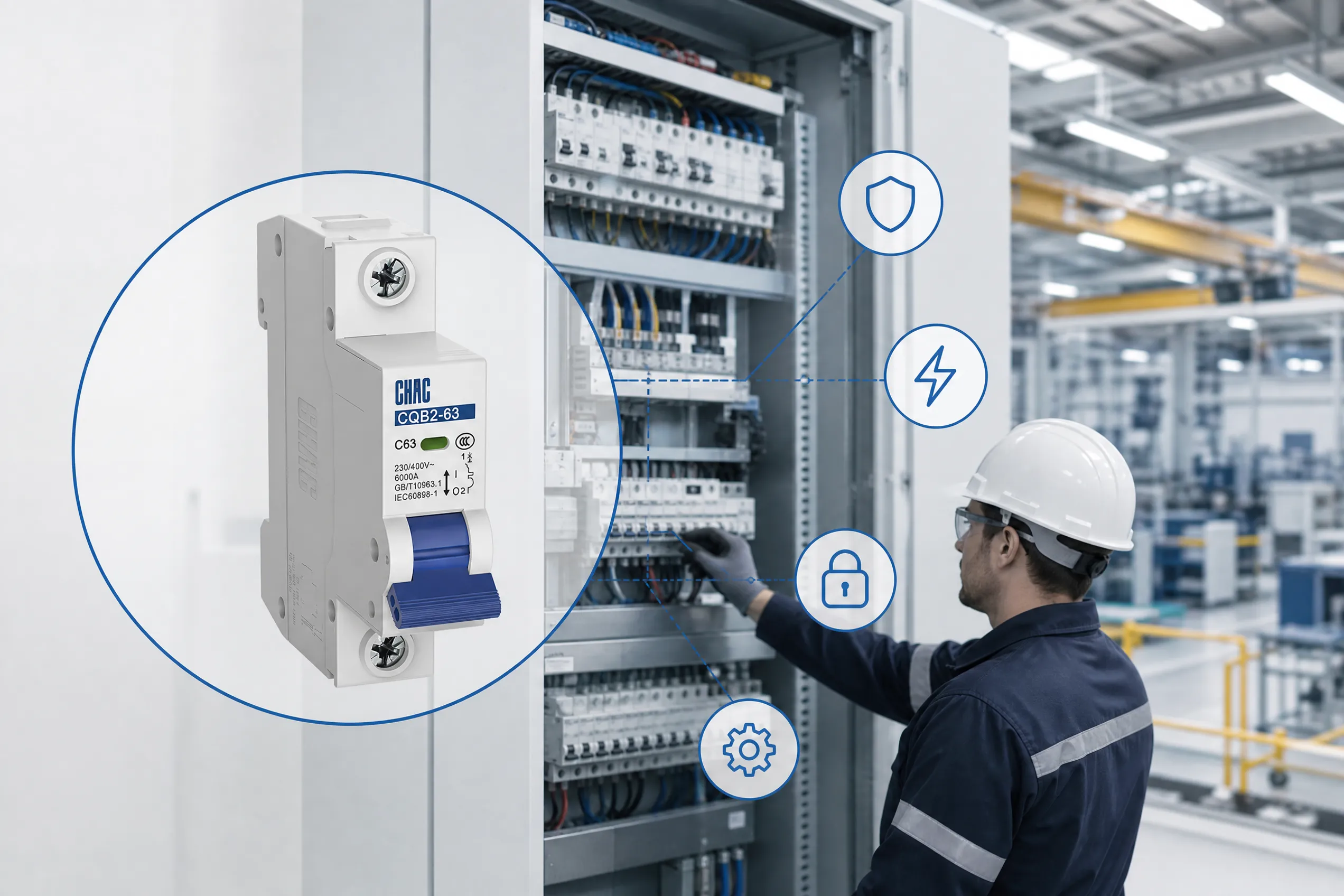
How does a UL 489 breaker differ from an MCP or MCCB decision?
An MCP, MCCB, and miniature circuit breaker are product categories with different construction, adjustment, ratings, and application boundaries. The name alone does not establish the required listing. Start with the circuit function and fault duty, then select the product family that has the needed evidence. For motor circuits, the motor-protection scheme may also include a separate overload device; that is a design question rather than a reason to substitute a random breaker.
What evidence should be prepared for an AHJ review?
| Document | What it should demonstrate |
|---|---|
| Single-line diagram and panel schedule | Where the device is installed and what it protects |
| Product datasheet and listing information | Model, voltage, current, poles, interrupting rating, and scope |
| Panel or enclosure documentation | Compatibility, mounting, terminal, and enclosure conditions |
| Installation and test record | Torque, labeling, inspection, and commissioning evidence |
If any item conflicts, pause procurement and resolve the conflict with the responsible engineer or AHJ. A product can be genuine and correctly tested yet still be the wrong device for the branch or assembly.
FAQs
O que é um disjuntor UL 489?
It is a circuit breaker evaluated and listed within the scope of UL 489. The exact model, ratings, and installation conditions still need to match the project.
Quais são as principais diferenças entre os disjuntores UL 489 e UL 1077?
UL 489 devices are used for circuit-breaker protection within their listing, while UL 1077 supplementary protectors have a narrower equipment-level role. Confirm the upstream branch protection and local code before choosing a supplementary protector.
Is UL 489 required for branch-circuit protection?
The required listing depends on the product, installation code, market, and AHJ. Check the adopted code and the approved equipment specification instead of applying a universal rule.
Que capacidade de interrupção deve ter um disjuntor UL 489?
It must meet or exceed the available fault current at the installation point under the adopted code and project design. The available fault current must be calculated or provided by the responsible designer.
Can a UL 1077 protector replace a UL 489 breaker?
Not as a general substitution. A supplementary protector is only appropriate when the equipment design and upstream branch protection provide the required protective function.
Fontes para normas e verificação adicional
- UL Solutions standards and certification guidance
- International Electrotechnical Commission standards portal
- NFPA 70, National Electrical Code information
Decision principle: a UL 489 listed circuit breaker is appropriate only when its listing scope, ratings, panel context, and installation rules match the intended protective function. CHAC Electric can help organize model evidence through its technical contact channel, but the final approval remains tied to the project documents and AHJ.