A DC contactor RFQ becomes easier to review when it names load polarity and coil polarity separately. Add the working voltage, current, application, switching duty, and the exact product record alongside those fields; otherwise a reply can look complete while still leaving the circuit question unanswered.
- Frequently Asked Questions: DC Contactor Polarity
Part 1. Separate the two polarity questions before reviewing a contactor
Load polarity describes the DC side that the main contacts are expected to switch. Coil polarity concerns the control-side coil connection. They answer different questions, so one should never be used as a substitute for the other in a quote request.
The distinction matters because a product record can state a condition for the load path while the buyer still has a separate control interface to define. The real search question—whether contactor connection direction matters—shows why the RFQ needs both fields before anyone interprets a diagram or a catalogue statement.
| RFQ field | What it identifies | What it does not decide |
|---|---|---|
| Polaridade da carga | The polarity requirement for the power circuit | Coil supply or a project wiring direction |
| Polaridade da bobina | The control-side coil connection requirement | Main-contact load polarity |
| Working voltage and current | The intended electrical operating point | Switching duty or approval for a circuit |
| Product record | The document being reviewed | A substitute for the selected configuration |
For a broader application view, CHAC’s aparelhos elétricos de controlo industrial page is the appropriate product-line starting point. The narrower question here is how to make the polarity request legible to the person reading the RFQ.
Part 2. Read the product record without inferring terminal behaviour
Unlike a generic “DC contactor” label, a published product record can describe a specific load-polarity feature or state conditions that belong only to particular entries. That language should be copied into the RFQ as a document reference, not rephrased as a universal instruction about terminal direction.
Ask for the exact series, configuration, and revision that the buyer wants reviewed. A polarity statement only becomes meaningful when the document, load circuit, and selected contactor option stay together.
Importante: A selection page is not a circuit approval. Schaltbau’s DC contactor selection criteria underline that the contactor must be considered against the actual application conditions.
This boundary also separates this topic from an EV charging DC contactor RFQ, which addresses a wider application set. A polarity field is one document-control input, not a complete selection outcome.
Part 3. Build the circuit context around the polarity field
Before the polarity entry can be reviewed, describe what the contactor is expected to do in the circuit. Selection guidance repeatedly puts working voltage, current, and application beside the component choice because those inputs change the meaning of a nominal rating.
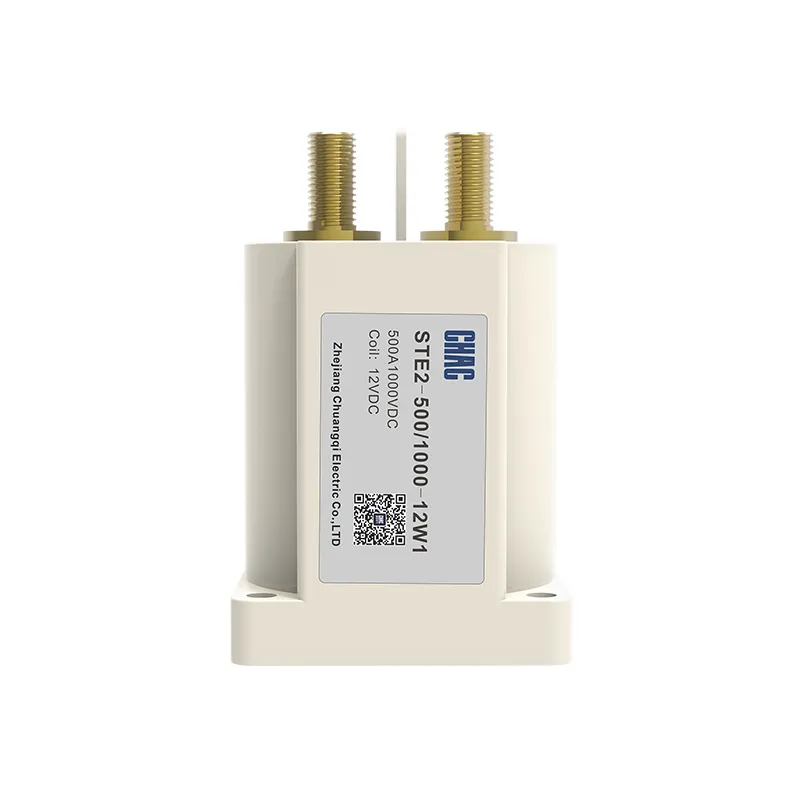
Use a compact context block rather than a long narrative:
- application and the switched DC function;
- working voltage and current at the intended point of use;
- requested load-polarity statement and separate coil-polarity requirement;
- number of poles, if the circuit document requires it;
- switching duty or duty description; and
- drawing, wiring record, or product-document reference used for review.
Manufacturer selection material from HOTSON likewise groups application, voltage, and current inputs. It does not turn a generic rule into a wiring instruction, which is the discipline this RFQ format preserves.
Part 4. Turn polarity into a reviewable RFQ line
For procurement teams, the practical improvement is not a longer email. It is a line-by-line request in which every field can be traced back to the circuit and product record.
| Send with the RFQ | Why the reviewer needs it | Example of a bounded entry |
|---|---|---|
| Polaridade da carga | Identifies the requested load-side condition | “Load-polarity requirement: confirm against named product record” |
| Coil polarity and coil supply | Keeps control information separate | “Coil requirement: state separately from load field” |
| Working voltage / current | Establishes the intended operating point | “State values from the circuit documentation” |
| Application and duty | Gives the contactor-use context | “Describe the switching function and duty” |
| Product record and configuration | Prevents a series-level assumption | “Attach selected product page or data record” |
The phrase “confirm against named product record” deliberately avoids a promise about connection direction. It makes the vendor response auditable: a reviewer can see which information was supplied and which document must answer the configuration question.
Buyers working with a pre-charge path should keep its separate operating question in view; the related pre-charge RFQ article is useful for that context. It should not be used to fill in missing polarity information for a different circuit.
Part 5. Where the STE2 product page fits the record
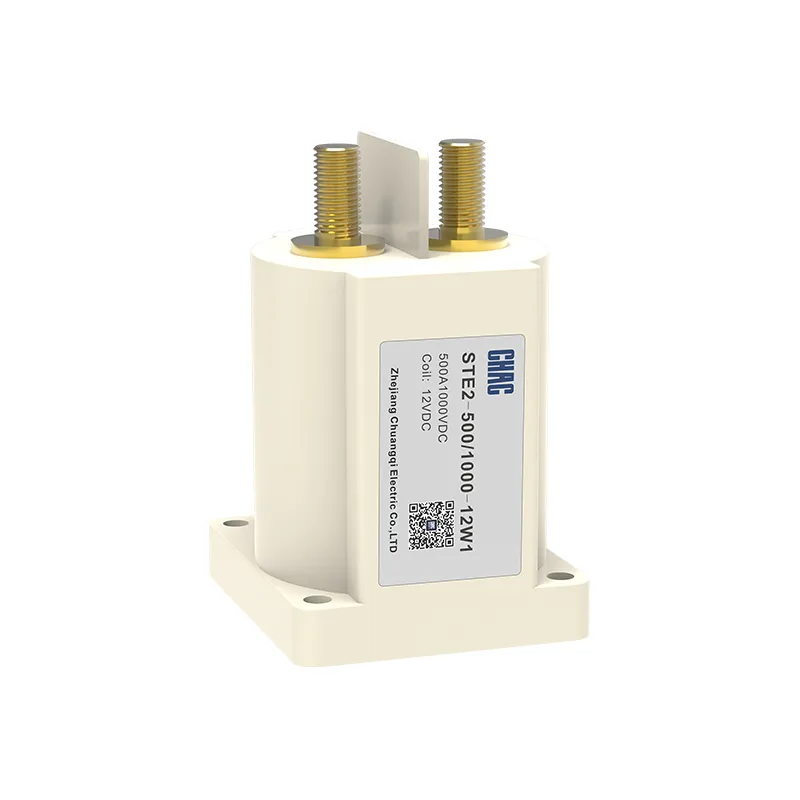
CHAC’s STE2 high-voltage DC contactor product record is useful when the buyer needs a named series page to attach to a review. The page lists a 12–1500 VDC range and a 50–800 A range; it also presents non-polarized load support for specified entries.
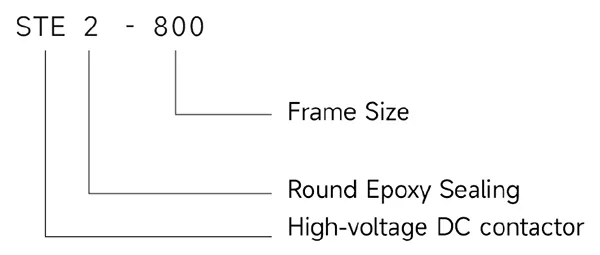
That is a documentation benefit, not a project selection claim. The buyer should still identify the requested configuration, circuit data, and application before asking whether the published statement applies to the intended use.
If an OEM needs product adaptation discussions after that document review, the percurso de personalização de controlo industrial provides the relevant route. A quote request is more useful when it carries the actual circuit and product-record inputs rather than a single polarity word.
Part 6. Keep the selection result inside its evidence boundary
For the final review, keep polarity as a field to be defined and checked rather than a shortcut to an installation decision. A buyer can request a response against the selected product document, but the resulting reply should not be read as an approval of a terminal arrangement, switching performance, or project design.
When the record is complete, send the scope to CHAC through the contact page with the product reference and circuit information. When it is incomplete, ask for the missing record first; guessing from a photograph, a series name, or a generic polarity discussion adds ambiguity rather than removing it.
Frequently Asked Questions: DC Contactor Polarity
Does DC contactor load polarity matter?
It can matter to the selected product and circuit, so the RFQ should state the load-polarity requirement rather than assume it from a general DC label. The named product record is the place to review how that requirement is described.
Is load polarity the same as coil polarity?
No. Load polarity refers to the main switched path, while coil polarity concerns the control-side coil connection. Keep them in separate RFQ fields so the reviewer does not need to infer one from the other.
Which details belong beside a polarity request?
Provide the intended application, working voltage, working current, duty description, requested product configuration, and the circuit or product document used for review. Those details make a polarity request actionable.
Does a non-polarized load statement apply to every contactor?
No. Treat that wording as a scoped product-record statement. Confirm the selected series entry and configuration instead of extending it to every contactor or every project.
Can a product page replace a circuit drawing review?
No. A product page can identify published features and ranges, but it does not show the buyer’s circuit conditions or approve a connection arrangement. Keep the relevant circuit record with the RFQ.
What information should be sent for a quote review?
Send the requested load-polarity and coil-polarity fields, the working voltage and current, application and duty description, product reference, configuration, and available circuit documentation. That gives the reviewer a bounded set of inputs to assess.