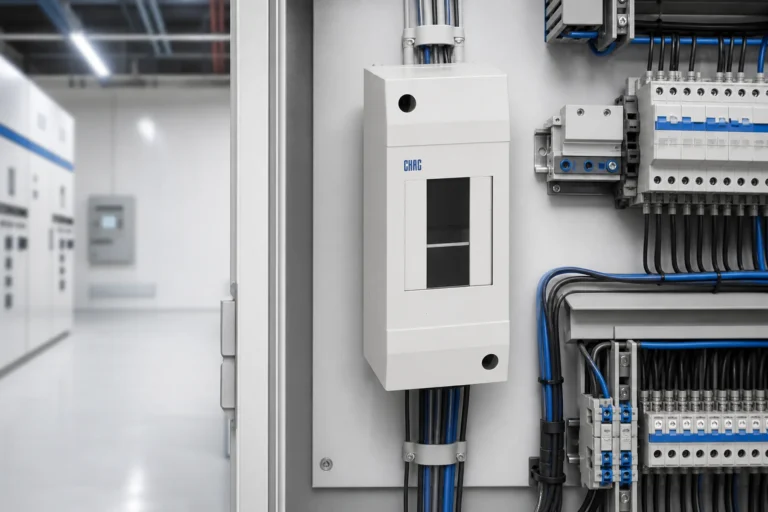
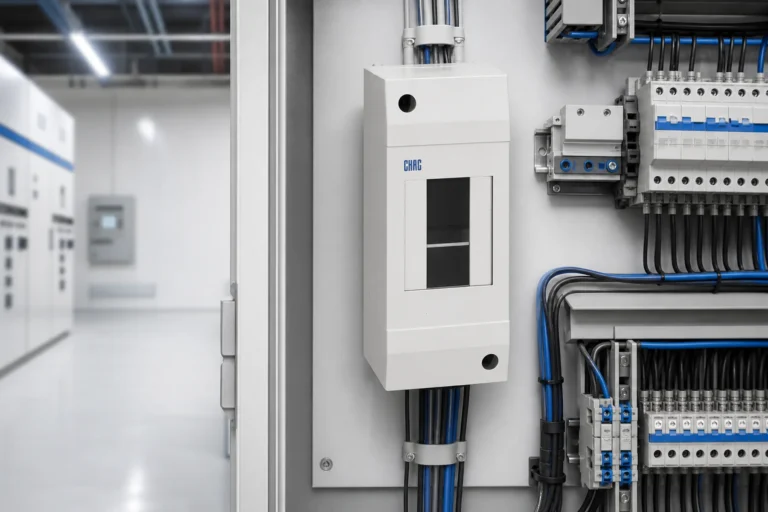
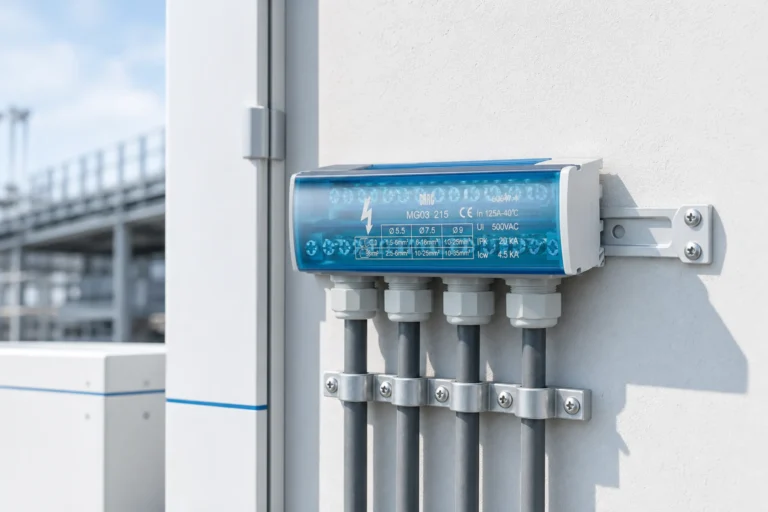
Din rail indicator light selection starts with the circuit role, the project requirement, and selected-model documentation. DIN Rail Indicator Light Selection for Panel Status Circuits helps panel builders organize those checks before a device is specified or an RFQ is issued. Status-lamp meaning stays bound to the approved IO list; the indicator only reports what that list defines.
Conteúdos
Part 1. What role does a DIN rail indicator light play in a panel?
A DIN-rail or panel indicator light communicates a status state defined by the control design. The selection question is which voltage interface, mounting method, legend, and documentation the panel needs, not whether a lamp can replace interlocking, protection, or operator training.
Part 2. Which electrical and mounting inputs come first?
Confirm the control-circuit voltage, expected duty, mounting cut-out or rail preference, front-of-panel access, and enclosure constraints before requesting a catalog family. These inputs keep the RFQ aligned with the assembly drawing instead of a color preference alone.
Part 3. How should color and legend map to the control drawing?
Assign each color and legend text to a named status on the schematic or IO list. The drawing must state what the lamp means when illuminated or extinguished; do not assume industry color habits are universal across every project market.
Importante: An indicator color or legend does not create a safety interlock; treat lamps as status devices unless the project design assigns a verified control function. (fonte — IEC industrial control and signalling device standards discovery)
Part 4. Where do labeling and service access matter?
Operators and service teams need readable legends, stable mounting, and spare-access notes in crowded doors or DIN rows. Record whether the indicator shares a module with another device and how replacement is planned during maintenance.
Part 5. What belongs in an indicator-light RFQ?
List circuit voltage, quantity, required colors or legends, mounting style, environmental context, requested documentation, branding or packaging needs, and the drawing revision that defines the status map. Ask the supplier to respond with exact model evidence rather than a generic lamp description.
Uma lista de introdução de RFQ compacta torna a resposta do fornecedor mais fácil de comparar:
| O comprador deve fornecer | Por que é importante | Erro comum |
|---|---|---|
| Conjunto de desenhos atual | Define o limite do circuito | A enviar um nome de produto sem um diagrama |
| Funções obrigatórias | Torna o pedido passível de revisão | Tratar opções não verificadas como padrão |
| Contexto de instalação | Identifica as condições do projeto a confirmar | Assumindo que o texto da categoria é uma aprovação de projeto |
| Pedido de documentação | Liga a RFQ à evidência exacta | Aceitar afirmações genéricas em vez de dados do modelo |
| Enviar com citação | Torna a comparação de fornecedores auditável | Citação sem o pacote de evidências solicitado |
Para um contexto mais amplo, reveja o din rail indicator light product family e o respetivo página de linha de produtos.
Part 6. Which CHAC route starts a product discussion?
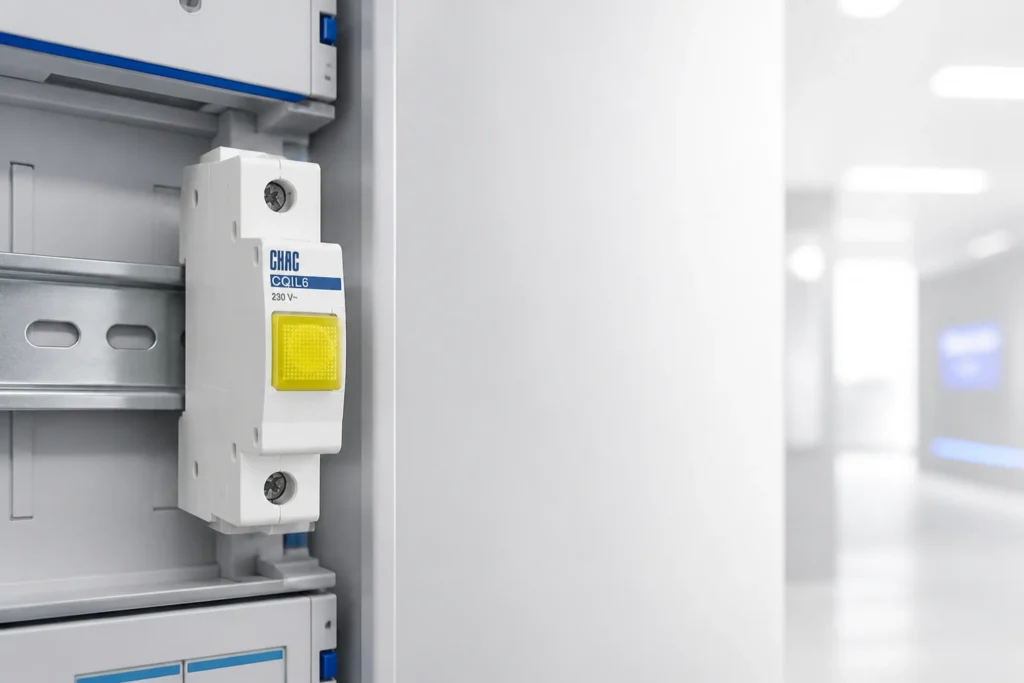
Use the published CQIL compact indicator light product route after the status map is defined, and keep the terminal-electrical category as family context. The product route is a sourcing starting point, not proof that one lens color or voltage option fits every panel.
Recomendação de produto
Luz Indicadora Compacta CQIL6(7) para Montagem em Painel | CHAC Electric

Use o publicado página de produto CHAC relevante as a documented product route starting point for a product discussion only after the RFQ inputs are complete. Private-label indicator packaging can be discussed on the página de personalização de terminais elétricos. Matching lens color across brands is not proof of voltage interface, mounting geometry, or legend durability.
Part 7. Where does indicator-light selection stop and machine-safety begin?
This article supports early panel specification for status indication. It is not a machine-safety assessment, a wiring method for live work, or permission to omit selected-model installation instructions. Add a drawing review of legends against the IO list so operators do not invent lamp meanings on site.
Fit Boundary: indicator selection covers status-map RFQs; it is not a machine-safety function or interlock design.
Leitura relacionada: um artigo da CHAC mais restrito e já publicado está associado por contexto, e não como substituto para o âmbito de decisão deste artigo.
Send the status map and enclosure constraints via contactar CHAC Electric for an indicator product-route talk.
FAQs
Is a DIN-rail indicator light a protection device?
No. It is a status indication device unless the project design documents a different verified function.
Can color selection ignore the control drawing?
No. Color and legend must map to named statuses on the approved drawing or IO list.
What mounting details should buyers confirm?
Confirm rail or panel cut-out preference, enclosure depth, front access, and replacement constraints from the assembly drawing.
Which voltage information belongs in the RFQ?
State the control-circuit voltage and any interface constraints required by the selected indicator documentation.
Why request model documentation for a lamp?
Lens, voltage, terminals, and environmental limits are model-specific and should not be inferred from a category photo.
When should the final indicator schedule be frozen?
Freeze it after the status map and enclosure layout are approved, and before the panel bill of materials is released.