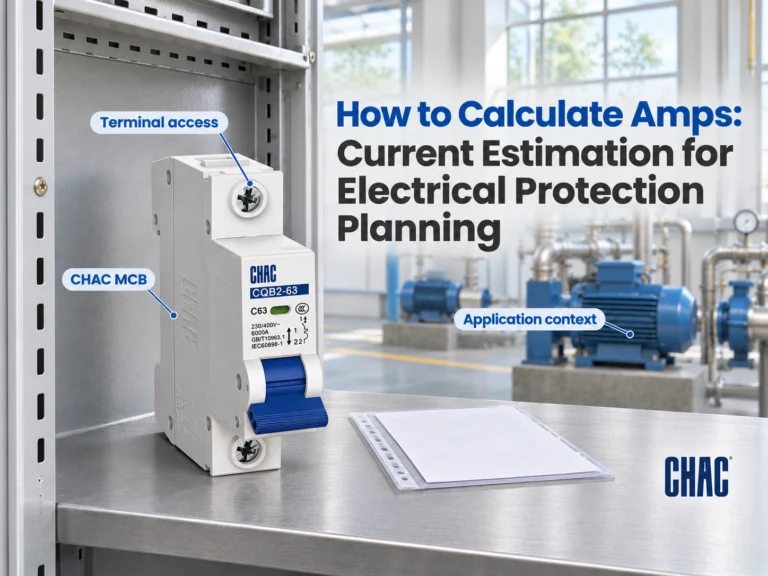
A Bộ ngắt mạch dạng đúc and a miniature circuit breaker can both provide overload and short-circuit protection. The choice depends on the circuit duty and the available device data. An MCCB often offers a wider range of frame sizes, trip settings and accessories, while an MCB is commonly a compact, fixed-characteristic device. There is overlap, so a universal amperage cutoff is a poor substitute for checking the actual products.
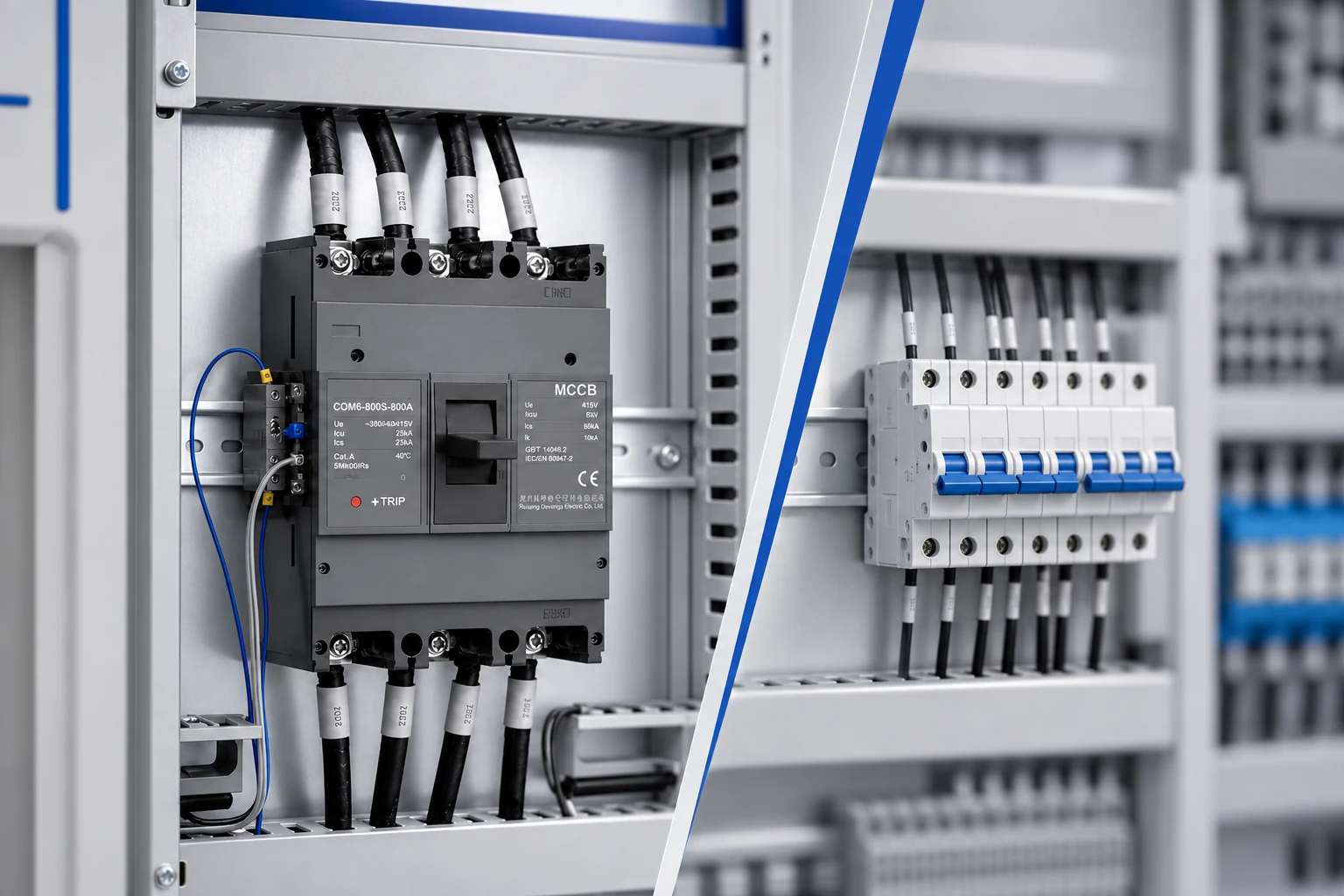
Compare the actual ratings instead of a generic size chart
Start with system voltage, load current, conductor capacity and available fault current. Check the declared breaking rating at the actual voltage for both candidates. A headline kA figure at another voltage or under another standard is not a like-for-like comparison. The enclosure or assembly rating must also remain suitable after either device is installed.
Published comparison tables often show typical product ranges as if they were universal limits. They are useful for orientation but can exclude valid higher-current MCBs or smaller MCCBs. Keep manufacturer-specific ratings attached to the exact catalogue number and variant. A larger molded case is not, by itself, evidence of a better protection match.
Decide whether adjustable protection is genuinely needed
A fixed trip curve may suit a straightforward branch circuit. An adjustable trip unit can be useful where the design needs specific long-time, short-time or instantaneous settings, but available functions vary by device. Specify only the functions needed and check their setting range against cable protection and the expected starting duty.
Adjustability introduces a handover requirement: someone must approve, record and control the settings. An MCCB with an inappropriate setting can leave a conductor poorly protected even when the frame rating appears generous. Include access controls and a setting record in the comparison rather than treating extra dials as an automatic benefit.
Check selectivity separately from breaking capacity
Circuit breaker selectivity concerns which device opens for a fault; breaking capacity concerns the ability to interrupt the declared fault duty. A pair of breakers may have adequate individual ratings yet trip together. Review the manufacturer’s selectivity tables or study for the exact upstream and downstream references.
Backup protection, also called cascading in some IEC guidance, is a different relationship. It can allow a particular downstream combination under specified conditions, but it needs documented evidence. The Electrical Installation Guide explicitly refers to manufacturer combinations tested in laboratories. Do not infer either selectivity or backup protection merely because the devices share a brand.
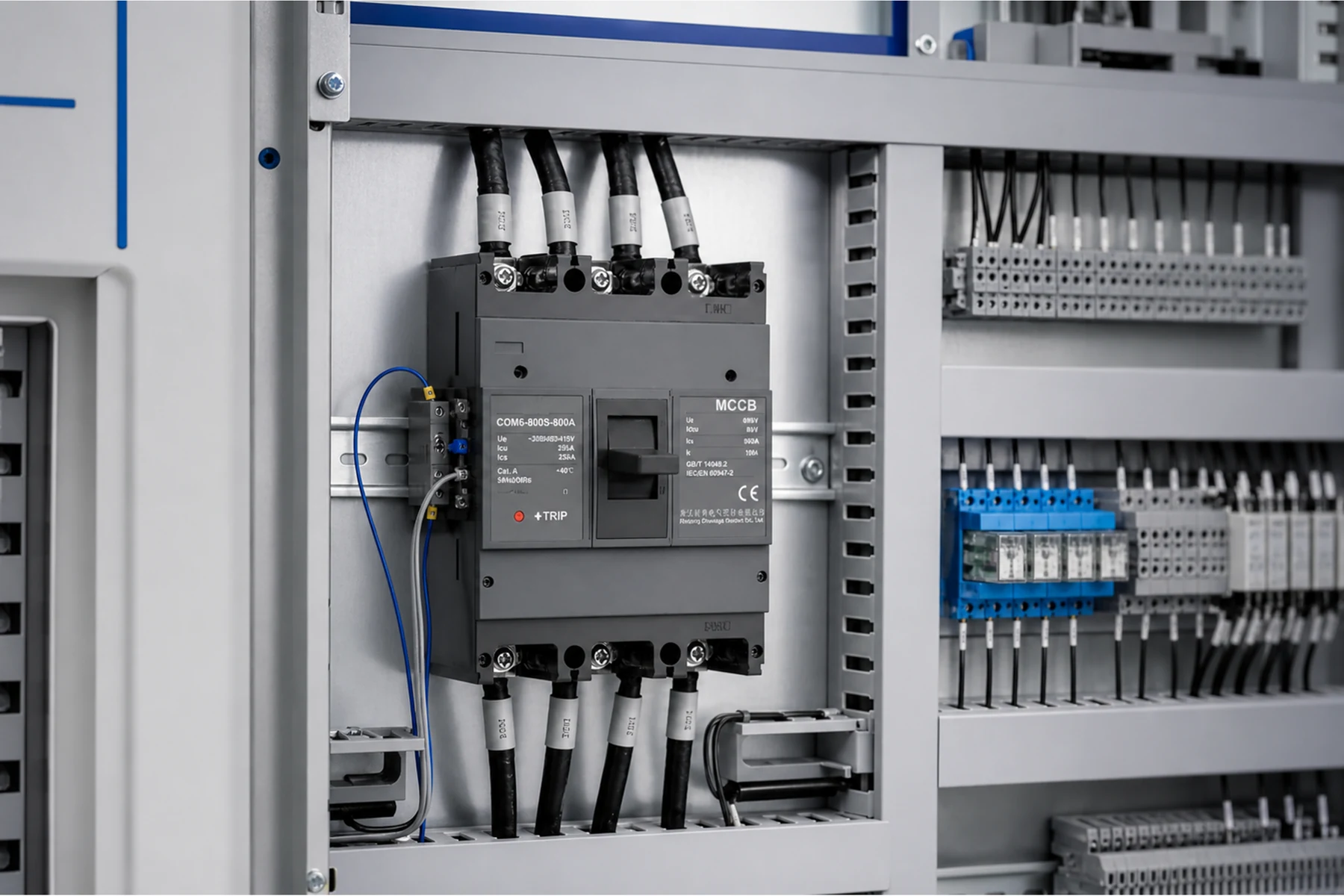
Compare the complete installed arrangement
Include mounting, busbar interface, terminal capacity, bending space, heat, clearances and access to accessories. A component that occupies fewer modules may still create an awkward wiring layout. A physically larger device may require an enclosure change whose cost exceeds the difference between the breakers.
For model-level information, review CHAC’s molded case circuit breaker range và miniature circuit breaker range. Ask for the specific voltage, poles, trip-unit details and documentation. Compare those actual offerings rather than assigning all MCBs or all MCCBs the same limits.
Include replacement and downtime in the cost comparison
Phần breaker replacement cost includes more than purchase price: isolation planning, panel modifications, commissioning, spare availability and restoration of settings can all matter. Make the comparison over the intended service period using costs the project can actually substantiate. Do not add a maintenance or lifetime saving without evidence.
If the feeder is three-phase, the 100 A three-pole MCB guide explains why current, neutral treatment and motor functions still need review. Keep the final decision tied to the circuit requirements so a later purchasing substitution does not undo the design.
What should an MCB–MCCB comparison actually compare?
| Criterion | MCB candidate | MCCB candidate |
|---|---|---|
| Overcurrent settings | Verify fixed curve and tolerances | Verify offered trip unit and settings |
| Fault interruption | Check exact voltage and declared rating | Check exact voltage and declared rating |
| Sự phối hợp | Use exact-pair manufacturer evidence | Use exact-pair manufacturer evidence |
| Installation cost | Include rail, busbar and terminals | Include mounting, connections and access |
| Thay thế | Confirm approved variant and spares | Confirm variant, accessories and settings |
Các câu hỏi thường gặp
When should I use a molded case circuit breaker?
Use an MCCB when an appropriate model meets the feeder’s current, fault-interruption, coordination, adjustment or accessory requirements better than the available suitable alternatives. The design and assembly review must support the selection; the molded case alone is not a safety advantage.
Có phải MCCB luôn an toàn hơn không?
An toàn phụ thuộc vào việc đánh giá, cài đặt, lắp đặt và thử nghiệm đúng cách. Một khung hình lớn hơn không bù đắp cho việc cài đặt sai hoặc việc bảo vệ dây dẫn không đủ.
Có thể một MCB bảo vệ một đường dây cấp điện chính không?
Điều đó có thể xảy ra khi tổng số người xem hiện tại và những lần phát sóng xen kẽ, vị trí lắp đặt và phối hợp của thiết bị đáp ứng với thiết kế. Nhiều thiết bị cấp điện lớn hơn có lợi từ các tính năng của MCCB, nhưng việc tính toán quyết định cuối cùng.
Chi phí bảo trì của các thiết bị MCCB có cao hơn không?
Bảo trì phụ thuộc vào việc tiếp cận, khoảng thời gian kiểm tra, phụ kiện và môi trường. So sánh tổng chi phí sở hữu, không chỉ bao gồm giá mua.
What are the key differences between MCCBs and MCBs?
Typical differences include frame size, available current and fault ratings, adjustable trip options and accessories. These ranges overlap. Compare the actual model data, application standard and installation requirements instead of treating a typical range as a universal boundary.
Tham khảo
- c3controls: MCB and MCCB construction and application comparison
- Schneider Electric Electrical Installation Guide: protection and tested combinations
Đối với một đánh giá cụ thể về mô hình, liên hệ Điện lực CHAC cùng với sơ đồ mạch, điện áp cung cấp, thông tin về tải và yêu cầu của thị trường đích.