Công cụ tính toán định mức cầu dao điện một chiều
Tính toán dòng điện thiết kế một chiều và kiểm tra thiết bị đóng cắt đã nhập so với khả năng tải của cáp, điện áp nguồn tối đa, khả năng chịu ngắn mạch một chiều cũng như xác nhận cách đấu dây theo số cực.
Tính toán dòng điện thiết kế một chiều và so sánh thông số của cầu dao đã nhập với khả năng tải của cáp, điện áp nguồn tối đa cũng như dòng ngắn mạch dự kiến.
Kết quả
Đánh giá dòng điện một chiều tham chiếu
50.00ACác kiểm tra số đã đạt; dây điện DC vẫn chưa được xác minh.I = P × 1,000 / V; Idesign = I × factor; In ≥ Idesign and In ≤ IzThe rounded rating is a generic reference, not a CHAC model selection. Use DC interruption data for the actual voltage and pole arrangement. Do not multiply a per-pole voltage by the number of poles without an approved diagram.
Tại sao lại có kết quả như vậy?
Công thức và phương pháp
Tính toán dòng điện thiết kế một chiều và kiểm tra thiết bị đóng cắt đã nhập so với khả năng tải của cáp, điện áp nguồn tối đa, khả năng chịu ngắn mạch một chiều cũng như xác nhận cách đấu dây theo số cực.
Cách sử dụng máy tính này
- Enter real DC electrical input power and operating voltage. Use maximum source voltage for the device voltage check.
- Enter ratings from the exact candidate breaker and corrected cable capacity.
- Confirm polarity, pole connection and DC fault duty using the manufacturer’s diagram and interruption data.
Giới hạn tính toán
Does not calculate battery/PV fault current, cold PV Voc, time constants, inrush or current-limiting let-through. The generic current series is not a statement of product availability.
DC circuit breaker sizing: current, voltage and fault duty
DC circuit-breaker selection needs more than load amperes. The maximum battery or PV source voltage can exceed nominal voltage, and the declared interruption capability applies to a particular DC voltage, pole arrangement and circuit duty.
Ghi chú nhập
| Input | Những điều cần kiểm tra |
|---|---|
| Power and operating voltage | Enter DC electrical input. The calculator divides input watts by operating voltage; it does not estimate converter or motor efficiency. |
| Điện áp nguồn tối đa | Use the maximum circuit voltage for the device voltage comparison. PV cold Voc and battery charging limits must be established separately. |
| Current, fault and wiring data | Use corrected cable capacity and actual DC device ratings. Mark the pole/polarity diagram verified only after reviewing the exact manufacturer instructions. |
Ví dụ thực tế · giá trị dạng ban đầu
2 kW DC load on a 48 V circuit
Factor 1.00 · maximum source 60 V · candidate 50 A / 125 V DC / 10 kA · cable Iz 63 A · fault 6 kA
I = 2,000 / 48 = 41.67 A; the next generic listed rating is 50 A.
41.67 A ≤ 50 A ≤ 63 A; 60 V ≤ 125 V; 6 kA ≤ 10 kA.
50.00 A
The example’s numeric checks are met. Polarity and series-pole wiring remain unverified at the initial settings, so the tool does not present a complete approval.
DC breaker sizing from watts and operating voltage
For a DC load specified by electrical input power, current is I = P / V. A 2,000 W load at 48 V draws approximately 41.67 A. Apply the sizing factor required by the actual design, then compare the resulting design current with the protective device and corrected cable capacity.
The default factor of 1.00 is an example, not a universal installation allowance. If the load specification gives output power, account for conversion losses before entering electrical input power. Inrush, continuous duty and temperature can also affect the final device choice.
Solar DC circuit breakers: nominal voltage is not enough
A solar DC circuit breaker must be assessed against the array’s maximum circuit voltage, not just its nominal operating voltage. Establish cold-condition string open-circuit voltage separately. PV circuit protection also needs array and module data, including the relevant current and reverse-current conditions.
Battery circuits need the same distinction between normal operating voltage and maximum source voltage, together with a prospective fault-current assessment. This tool accepts those established values; it does not calculate PV string voltage or battery short-circuit current.
Check the DC rating and the permitted pole connection together
DC interruption capability belongs to a stated voltage and test duty. An AC breaking rating cannot establish DC suitability, and two poles do not automatically double the allowable voltage. Use the manufacturer’s exact series-pole and polarity diagram.
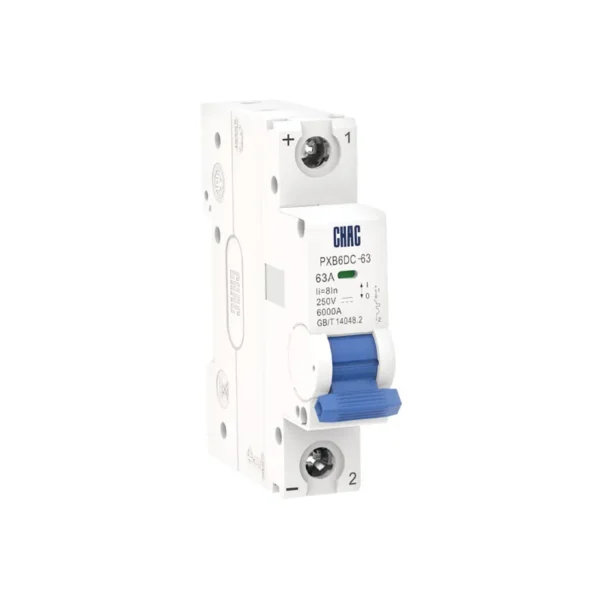
For PXB6DC-63, review the published DC voltage limits and connection requirements for the intended arrangement. The calculator’s generic ampere result is a rating reference, not a selected PXB6DC-63 model. Confirm the declared breaking capability at that voltage before accepting the numeric comparison.
Use the exact DC connection data
- Do not infer DC suitability from an AC breaking rating. Do not multiply a per-pole voltage by pole count unless the exact manufacturer diagram permits that arrangement.
- Starting current, circuit time constant, current-limiting energy, upstream/downstream coordination and maximum source voltage require the relevant circuit study and product data.
Các câu hỏi thường gặp
Why enter both operating and maximum source voltage?
Operating voltage is used for the load-current estimate. Maximum source voltage is used to check the device’s DC voltage duty.
Does the 50 A result select PXB6DC-63?
No. It is a generic rounded current reference. A product choice also needs the exact DC voltage, pole diagram, fault duty and installation data.
Can this calculate battery short-circuit current?
No. Prospective fault current is an input from a suitable study or source data. Battery impedance, state of charge and connections are not modeled here.
Does the sizing factor always need to be 1.25?
No universal multiplier is applied. Use a factor justified by the relevant circuit duty and installation rules.
Can this size a solar DC circuit breaker from panel watts alone?
No. A PV design also needs string voltage under the relevant temperature conditions, array currents, module limits and connection details. Enter verified circuit values; a watts-to-amps calculation does not establish the complete PV protection requirement.
Is a 48 V battery circuit always below 48 V?
No. Operating and charging conditions can produce a higher voltage. Use the established maximum battery-system voltage when checking the DC breaker’s voltage rating, and operating voltage for the current estimate.
Cần giúp đỡ trong việc lựa chọn sản phẩm CHAC?
Hãy gửi hệ số điện áp, dòng tải và điều kiện lắp đặt của hệ thống cùng với yêu cầu của bạn.
Ví dụ ứng dụng · Các thông tin minh họa
Reviewing a 48 V DC feeder against PXB6DC-63 data
A 3 kW DC load at 48 V draws 62.50 A, giving a 63 A reference with the factor set to 1.00. The CHAC PXB6DC-63 table includes 63 A, lists DC125V among its 1P voltage options, and declares 10 kA Icu and 7.5 kA Ics. For this example, a 60 V maximum system voltage and 5 kA fault level can be compared with those entered ratings. The result still leaves the exact voltage variant, pole diagram and source fault behavior to verify. A constant-power load operating below 48 V also needs a higher-current check.
Thông tin sản phẩm: Bộ ngắt mạch DC PXB6DC-63
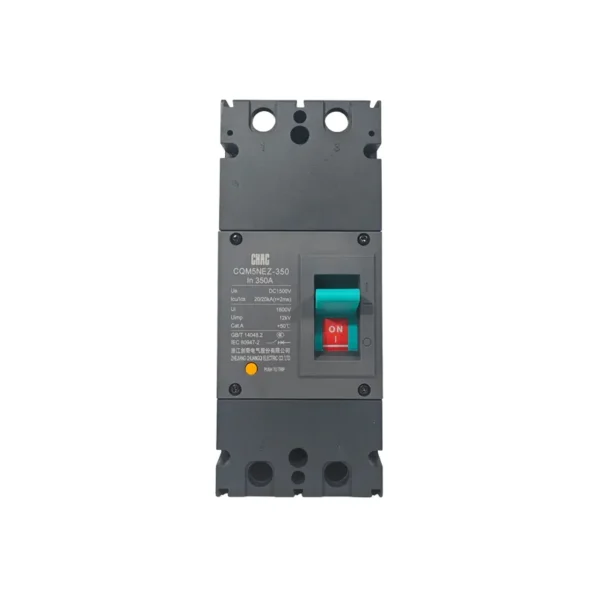
Các sản phẩm liên quan của CHAC
Compare DC breaker ratings with the circuit voltage, current, fault level and pole arrangement.