Một ổ cắm điện trong phòng tắm bị ngắt có thể trông giống như một sự cố quá tải thông thường, nhất là khi thiết bị được nối vẫn hoạt động bình thường trên một mạch khác. Việc thay thế thiết bị hoặc di chuyển thiết bị sang mạch khác có thể khôi phục nguồn điện mà không giải quyết được tận gốc vấn đề rò rỉ hoặc sự cố về dây điện. Bước đầu tiên là phải hiểu rõ chức năng bảo vệ thực sự mà thiết bị này được thiết kế để phát hiện. Từ “GFCI” mô tả chức năng bảo vệ con người, chứ không chỉ đơn thuần là một ổ cắm có thêm hai nút bấm. Hướng dẫn này giải thích ý nghĩa của cụm từ viết tắt này, nguyên lý hoạt động dựa trên sự mất cân bằng dòng điện, sự khác biệt giữa ổ cắm GFCI và aptomat GFCI, cũng như những thông tin cần thiết mà người mua cần nắm trước khi lựa chọn thiết bị phù hợp với từng thị trường cụ thể.
GFCI là viết tắt của Bộ ngắt mạch chống dòng rò. Nó giám sát sự cân bằng của dòng điện chạy qua các dây dẫn mạch và ngắt mạch được bảo vệ khi xảy ra sự mất cân bằng đủ điều kiện. Trong các ứng dụng loại A tại Hoa Kỳ, hướng dẫn của nhà sản xuất xác định dải hoạt động 4–6 mA theo UL 943. Độ nhạy đó khác với định mức dòng điện của mạch nhánh. Một ổ cắm GFCI thường không thay thế chức năng bảo vệ quá tải hoặc ngắn mạch; một cầu dao GFCI kết hợp các chức năng đó trong một thiết bị đã được phê duyệt. Hãy kiểm tra loại thiết bị, định mức mạch và các yêu cầu lắp đặt được áp dụng tại địa phương trước khi mua.
GFCI trong lĩnh vực điện có nghĩa là gì?
Từ chính xác là “interrupter”, chứ không phải “interference”. Do đó, tuyên bố “GFCI là viết tắt của ground fault circuit interference” là sai. GFI cũng được sử dụng một cách không chính thức để chỉ thiết bị bảo vệ chống dòng rò, nhưng các tài liệu mua sắm nên nêu rõ tên thiết bị và tiêu chuẩn thực tế thay vì chỉ dựa vào từ viết tắt.
Phần Ý nghĩa của GFCI Dễ hiểu nhất là bằng cách phân biệt ampe với miliampe. Định mức mạch 20 mô tả tải của nhánh mạch trong ngữ cảnh. Một vài miliampe chênh lệch còn lại liên quan đến một chức năng bảo vệ khác. Do đó, thiết bị có thể ngắt mạch do sự cố rò điện trong khi tổng tải vẫn ở mức thấp hơn nhiều so với ngưỡng quá tải thông thường của cầu dao. Hướng dẫn về an toàn cho nhân viên của Leviton xác định ngưỡng Class A và phân biệt các ngữ cảnh ứng dụng có liên quan.
Một thiết bị ngắt mạch do dòng điện rò (GFCI) phát hiện dòng điện đi theo đường không mong muốn như thế nào?
Thiết bị so sánh dòng điện trên các dây dẫn đi qua bộ cảm biến của nó. Trong điều kiện vận hành bình thường, các dòng điện này cân bằng nhau. Dòng điện trở về theo một đường khác có thể gây ra sự mất cân bằng, từ đó kích hoạt cơ chế ngắt mạch khi thiết bị đạt đến các tiêu chí hoạt động đã định. Đây là một lời giải thích về nguyên lý hoạt động, chứ không phải là sơ đồ nối dây hay khẳng định rằng mọi trường hợp giật điện đều sẽ được phát hiện.
Đặc biệt, thiết bị ngắt mạch chống dòng rò (GFCI) không thể thay thế cho việc cách ly an toàn, nối đất và liên kết đẳng thế đúng cách, cũng như sử dụng thiết bị phù hợp. Một cú sốc điện mà dòng điện đi ra và trở về qua các dây dẫn của mạch được giám sát có thể không tạo ra sự mất cân bằng cần thiết để GFCI hoạt động. Không nên coi một thiết bị là an toàn chỉ vì có lắp đặt GFCI.
Ổ cắm GFCI khác với cầu dao GFCI như thế nào?
| Thiết bị | Vai trò chính | Hạn chế quan trọng |
|---|---|---|
| Cầu dao thông thường | Chống quá tải và ngắn mạch | Không đồng nghĩa với việc cung cấp bảo vệ GFCI loại A. |
| Ổ cắm GFCI | Bảo vệ chống chạm đất cho người tại thiết bị và các kết nối phía sau được phép | Cần có thiết bị bảo vệ quá dòng phù hợp ở phía đầu nguồn. |
| Aptomat chống giật GFCI | Bảo vệ quá dòng và bảo vệ chống dòng rò trong một thiết bị được chứng nhận | Phải được phê duyệt cho bảng điều khiển và mạch điện |
| Thiết bị AFCI/GFCI đa chức năng | Hai chức năng bảo vệ riêng biệt | Xác minh rõ ràng cả chức năng và khả năng tương thích |
Một ổ cắm phía sau chỉ được bảo vệ khi mạch điện đã được đấu nối theo đúng sơ đồ quy định trong hướng dẫn sử dụng của thiết bị GFCI. Việc có nút TEST ở gần đó không đủ để xác định những ổ cắm nào được bảo vệ. Nhân viên có chuyên môn cần xác định mạch điện, kiểm tra kỹ hướng dẫn của nhà sản xuất và tiến hành kiểm tra các vị trí được bảo vệ. Bộ ngắt mạch chống dòng rò GFCI Việc định danh phải luôn gắn liền với mạch điện được bảo vệ cụ thể.
Làm thế nào để biết một thiết bị GFCI cụ thể bảo vệ những ổ cắm nào?
Turn the protection boundary into a location record. During an authorized check following the device instructions, identify the GFCI, the outlets supplied through its permitted downstream connection and the location where it can be tested and reset. Record the result by room or outlet identifier. A device in a garage may protect another location; proximity to the outlet is not a reliable way to identify that relationship.
Keep the record with the circuit schedule and repeat the relevant checks after an outlet or GFCI is replaced. Compare the actual terminal markings with the new model’s instructions, rather than copying the physical position of wires from the old device. Leviton’s support guidance specifically identifies reversed LINE and LOAD connections as a replacement problem. This verification establishes the intended protection coverage; it does not replace safe isolation or prove that every aspect of the circuit is compliant.
Why might a GFCI trip or refuse to reset?
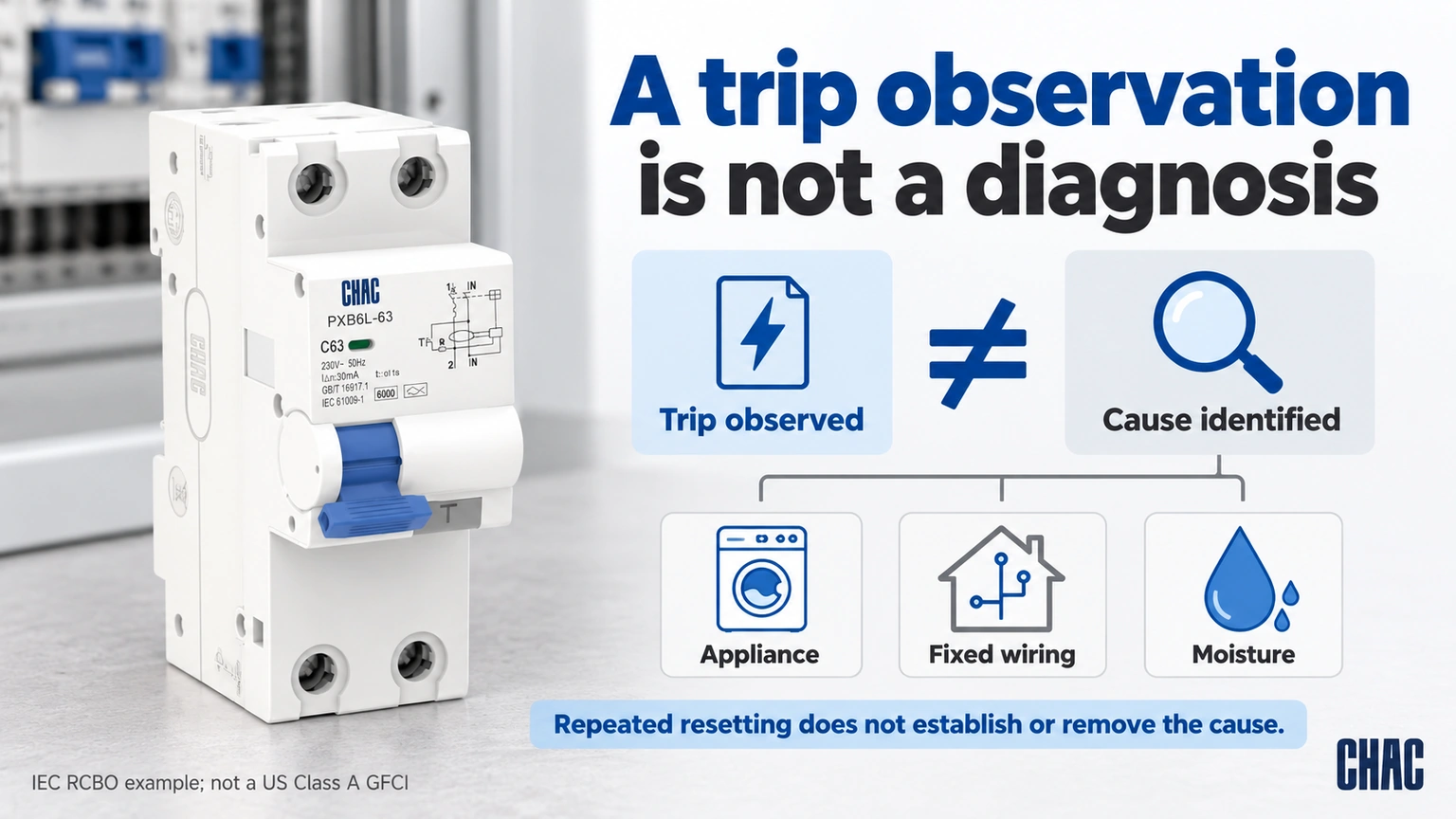
Moisture, damaged appliance insulation, cumulative equipment leakage and downstream wiring faults can all require investigation. A new installation that will not reset may also have LINE and LOAD reversed, no supply power or a device that cannot provide protection. Leviton’s GFCI support page describes reset lockout, self-testing and model-dependent indicator behavior. Do not assign the same LED meaning to every brand.
Do not repeatedly reset an unexplained trip, bypass protection or move a suspect appliance to an unprotected outlet. Disconnecting plug-in loads can help a qualified investigation distinguish the load from the fixed circuit, but opening boxes and changing wiring should follow proper isolation and verification procedures. Intermittent faults deserve attention even when the reset button appears to restore normal service.
| Quan sát | Useful question | Next verification |
|---|---|---|
| Trips with one appliance | Does the event follow that appliance? | Appliance insulation and operating conditions |
| Trips after rain or cleaning | Could moisture reach equipment or wiring? | Ingress source and suitability for location |
| New device will not reset | Is supply present and wiring correct? | Manufacturer instructions and LINE/LOAD identification |
| Trips with several loads together | Are leakage currents accumulating? | Measured leakage and circuit arrangement |
What should be planned for a GFCI serving an unattended appliance?
For an appliance that may run while nobody is present, plan how a loss of supply will be noticed and who can investigate it. Keep the required test and reset point accessible. Where appropriate, evaluate a product with an audible alert or a suitable monitoring arrangement using its actual instructions. An alarm is a notification feature, not another protective function or permission to omit required GFCI protection.
Leviton’s range includes audible-alert and connected GFCI options, but those features are model-specific. Do not promise an alert from an ordinary receptacle, or assume a network notification will remain available during a power or communications failure. The practical specification separates required personnel protection, circuit coverage and notification needs. This addresses the consequence of an unnoticed outage without treating repeated trips as a reason to move an appliance to an unprotected supply.
Where is GFCI protection required, and can an IEC device substitute?
Bathrooms, kitchens, garages, outdoor locations and other specified areas are common US code contexts, but the adopted NEC edition, occupancy, circuit and local amendments determine the exact requirement. Older manufacturer summaries are useful background, not proof of the current rule in every jurisdiction. Confirm the applicable edition with the authority having jurisdiction.
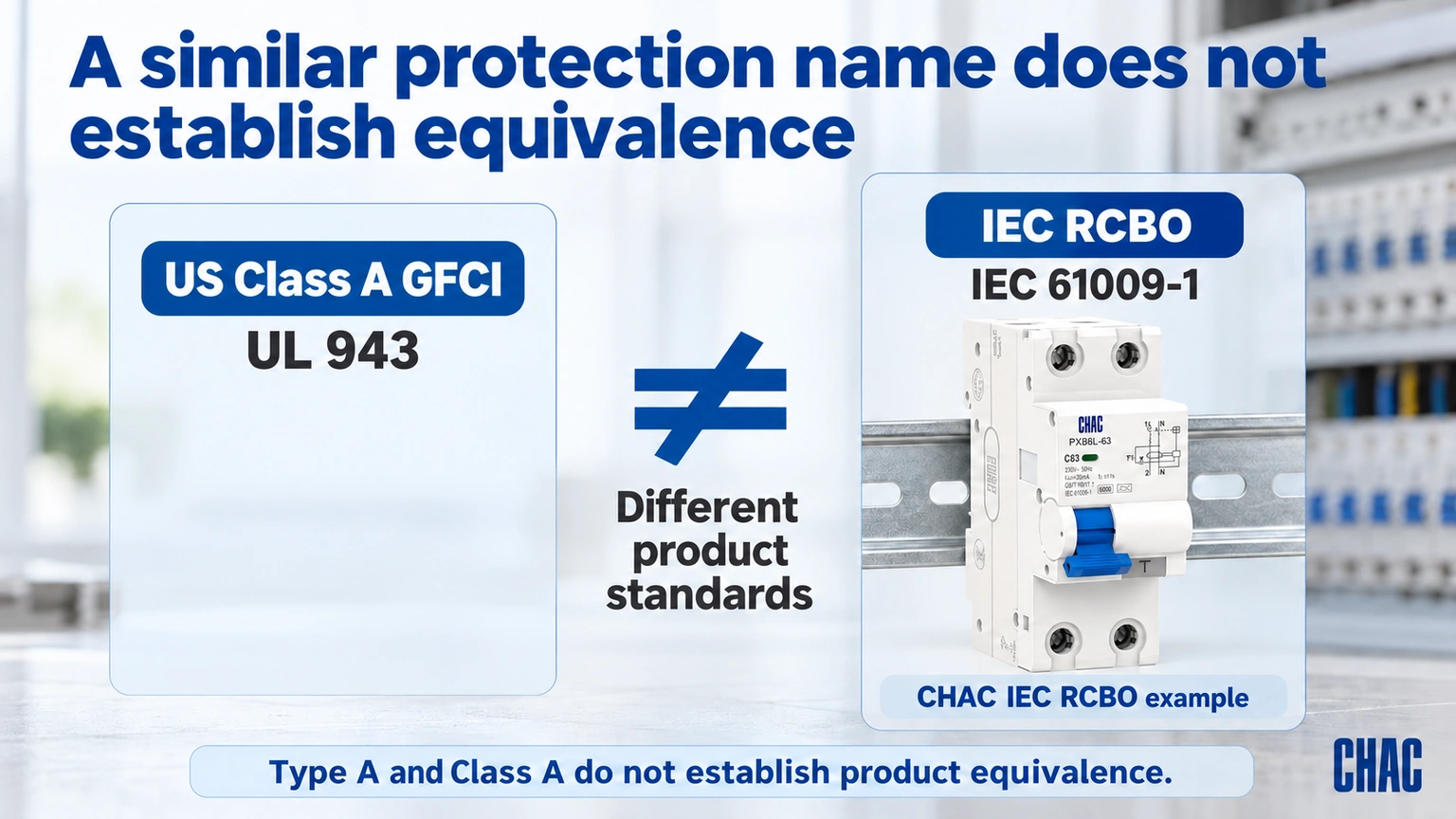
For international projects, compare the protection functions before comparing product names. CHAC publishes residual-current circuit breakers with overcurrent protection and separate Bộ ngắt mạch thu nhỏ. An IEC RCBO or a Type A residual-current device must not be described as a UL 943 Class A GFCI without the relevant product evidence. The words “Type A” and “Class A” do not establish equivalence.
What do buyers ask about GFCI protection?
What should not be plugged into a GFCI?
There is no universal appliance blacklist that justifies bypassing required GFCI protection. Check the equipment instructions, correct circuit and adopted rules; investigate repeated tripping rather than removing protection.
Do I need an electrician to replace a GFCI outlet?
Local rules determine who may perform the work, and correct isolation, LINE/LOAD identification and testing are essential. Use a qualified electrician when the circuit, supply, grounding or downstream arrangement is uncertain.
What causes GFCI outlet to trip?
A qualifying current imbalance can result from moisture, damaged insulation, leakage from connected equipment or wiring faults. A trip alone does not identify which cause is present.
What is a ground fault circuit interrupter?
It is a device that interrupts the protected circuit when its ground-fault detection conditions are met. For US personnel protection, verify the appropriate Class A device and product standard.
What is a ground fault circuit interrupter and how does it work?
It monitors the balance of current in the circuit conductors and operates when an imbalance meets its trip criteria. It does not replace all other forms of circuit or shock protection.
Where is a ground fault circuit interrupter required?
The adopted installation code and local amendments determine the required locations and circuits. Wet or damp locations are common contexts, but the answer also depends on occupancy, equipment and code edition.
Tham khảo
- Leviton GFCIs for Personnel Safety, including dated code examples; accessed October 19, 2026
- Leviton GFCI Outlets and Receptacles, self-test and troubleshooting guidance; accessed October 19, 2026
- Leviton commercial GFCI receptacles; accessed October 19, 2026
Kết luận
GFCI means ground-fault circuit interrupter, and its purpose is to detect a qualifying current imbalance rather than simply a large load. Establish the required protection function before choosing between a receptacle, breaker or dual-function device. Then verify the circuit arrangement, panel compatibility, installation instructions and locally adopted code. Do not treat a successful reset as proof that an unexplained fault has disappeared, or substitute a differently standardized device because its name sounds similar. CHAC provides published MCB and RCBO information for projects evaluating IEC distribution products. That information supports a clearly specified comparison, while US Class A GFCI suitability still requires evidence for the exact device and intended installation.
Đối với các bản vẽ mô hình và tài liệu dự án liên quan, Liên hệ CHAC về các yêu cầu của mạch điện.