قد يبدو تعطل منفذ الحمّام وكأنه مجرد مشكلة عادية تتعلق بالحمل الزائد، خاصةً عندما يظل الجهاز المتصل يعمل على دائرة أخرى. قد يؤدي استبدال الجهاز أو نقله إلى استعادة التيار دون حل المشكلة الأساسية المتعلقة بالتسريب أو الأسلاك. الخطوة الأولى هي فهم ما الذي يهدف الجهاز الوقائي فعليًا إلى اكتشافه. يشير مصطلح “GFCI” إلى وظيفة حماية الأفراد، وليس مجرد منفذ كهربائي يحتوي على زرين إضافيين. يشرح هذا الدليل المختصر المعنى الكامل للمصطلح، والاختلال في التيار الكهربائي الذي يقوم عليه عمله، والفرق بين منفذ GFCI وقاطع GFCI، بالإضافة إلى المعلومات التي يحتاجها المشتري قبل اختيار الجهاز المناسب لسوق معين.
GFCI تعني قاطع الدائرة ذو التيار المتسرب إلى الأرض. يراقب توازن التيار المار عبر موصلات الدائرة ويفصل الدائرة المحمية عند حدوث اختلال مطابق للمعايير. في التطبيقات الأمريكية من الفئة A، تحدد إرشادات الشركة المصنعة نطاق تشغيل يتراوح بين 4–6 مللي أمبير وفقًا لمعيار UL 943. تختلف هذه الحساسية عن تصنيف الأمبير للدائرة الفرعية. عادةً لا يحلّ مقبس GFCI محل حماية الزائد أو القصر؛ أما قاطع الدائرة GFCI فيجمع بين هاتين الوظيفتين في جهاز واحد معتمد. يُرجى التحقق من نوع الجهاز، وتصنيف الدائرة، والمتطلبات المحلية المعتمدة للتركيب قبل الشراء.
ماذا تعني GFCI في المصطلحات الكهربائية؟
الكلمة الصحيحة هي “interrupter”، وليس “interference”. وبالتالي فإن العبارة “GFCI ترمز إلى جهاز منع أعطال التأريض في الدائرة” غير صحيحة. كما يُستخدم مصطلح GFI بشكل غير رسمي للإشارة إلى حماية ضد أعطال التأريض، إلا أنه ينبغي في وثائق الشراء تحديد الجهاز والمعيار الفعليين بدلاً من الاعتماد على الاختصار فقط.
ال معنى GFCI يُفهم بسهولة أكبر من خلال التمييز بين الأمبيرات والملي أمبيرات. يصف تصنيف الدائرة الكهربائية 20 حمل الدائرة الفرعية في السياق. أما بضع ملي أمبيرات من عدم التوازن المتبقي فتتعلق بوظيفة حماية مختلفة. وبالتالي، يمكن أن ينقطع الجهاز بسبب مشكلة تسريب بينما يظل الحمل الكلي أقل بكثير من عتبة الحمولة الزائدة للمفتاح العادي. إرشادات ليڤيتون المتعلقة بسلامة الأفراد يحدد عتبة الفئة أ ويميز سياقات التطبيق ذات الصلة.
كيف يكتشف مفتاح التيار المتبقي (GFCI) وجود تيار يسلك مسارًا غير مقصود؟
يقارن الجهاز التيار الكهربائي في الموصلات التي تمر عبر وحدة الاستشعار الخاصة به. وفي الوضع الطبيعي، يتوازن التياران. أما التيار الذي يعود عبر مسار آخر فيمكن أن يُحدث اختلالاً في التوازن، مما يؤدي إلى فصل الدائرة عند استيفاء معايير التشغيل الخاصة بالجهاز. هذا تفسير وظيفي، وليس مخططاً للأسلاك ولا ادعاءً بأن كل صدمة كهربائية محتملة سيتم اكتشافها.
على وجه الخصوص، لا يُعدّ مفتاح التيار المتبقي (GFCI) بديلاً عن العزل الآمن، أو التأريض والربط الصحيحين، أو المعدات المناسبة. فالصدمة الكهربائية التي يمر فيها التيار من خلال موصلات الدائرة المراقبة ثم يعود عبرها قد لا تُحدث الاختلال اللازم لتشغيل الجهاز. ولا ينبغي اعتبار المعدات آمنة لمجرد وجود مفتاح التيار المتبقي.
كيف يختلف مقبس GFCI عن قاطع GFCI؟
| الآلة | الدور الأساسي | قيود مهمة |
|---|---|---|
| قاطع دائرة عادي | حماية الحمل الزائد والقصور | لا يعني توفير حماية من نوع GFCI من الفئة أ |
| مقبس GFCI | حماية الأفراد من التيار الأرضي عند الجهاز والوصلات اللاحقة المسموح بها | يتطلب حماية مناسبة ضد التيار الزائد في المراحل السابقة. |
| قاطع دائرة حماية التسرب الأرضي | Overcurrent and GFCI protection in one listed device | Must be approved for the panel and circuit |
| Dual-function AFCI/GFCI device | Two distinct protective functions | Verify both functions and compatibility explicitly |
A downstream outlet is protected only when the circuit has been connected in the arrangement permitted by the GFCI instructions. The presence of a nearby TEST button does not prove which outlets are covered. Qualified personnel should identify the circuit, verify the manufacturer instructions and test the protected locations. The GFCI ground fault interrupter designation should always be tied to the exact protected circuit.
How do you find out which outlets one GFCI actually protects?
Turn the protection boundary into a location record. During an authorized check following the device instructions, identify the GFCI, the outlets supplied through its permitted downstream connection and the location where it can be tested and reset. Record the result by room or outlet identifier. A device in a garage may protect another location; proximity to the outlet is not a reliable way to identify that relationship.
Keep the record with the circuit schedule and repeat the relevant checks after an outlet or GFCI is replaced. Compare the actual terminal markings with the new model’s instructions, rather than copying the physical position of wires from the old device. Leviton’s support guidance specifically identifies reversed LINE and LOAD connections as a replacement problem. This verification establishes the intended protection coverage; it does not replace safe isolation or prove that every aspect of the circuit is compliant.
Why might a GFCI trip or refuse to reset?
Moisture, damaged appliance insulation, cumulative equipment leakage and downstream wiring faults can all require investigation. A new installation that will not reset may also have LINE and LOAD reversed, no supply power or a device that cannot provide protection. Leviton’s GFCI support page describes reset lockout, self-testing and model-dependent indicator behavior. Do not assign the same LED meaning to every brand.
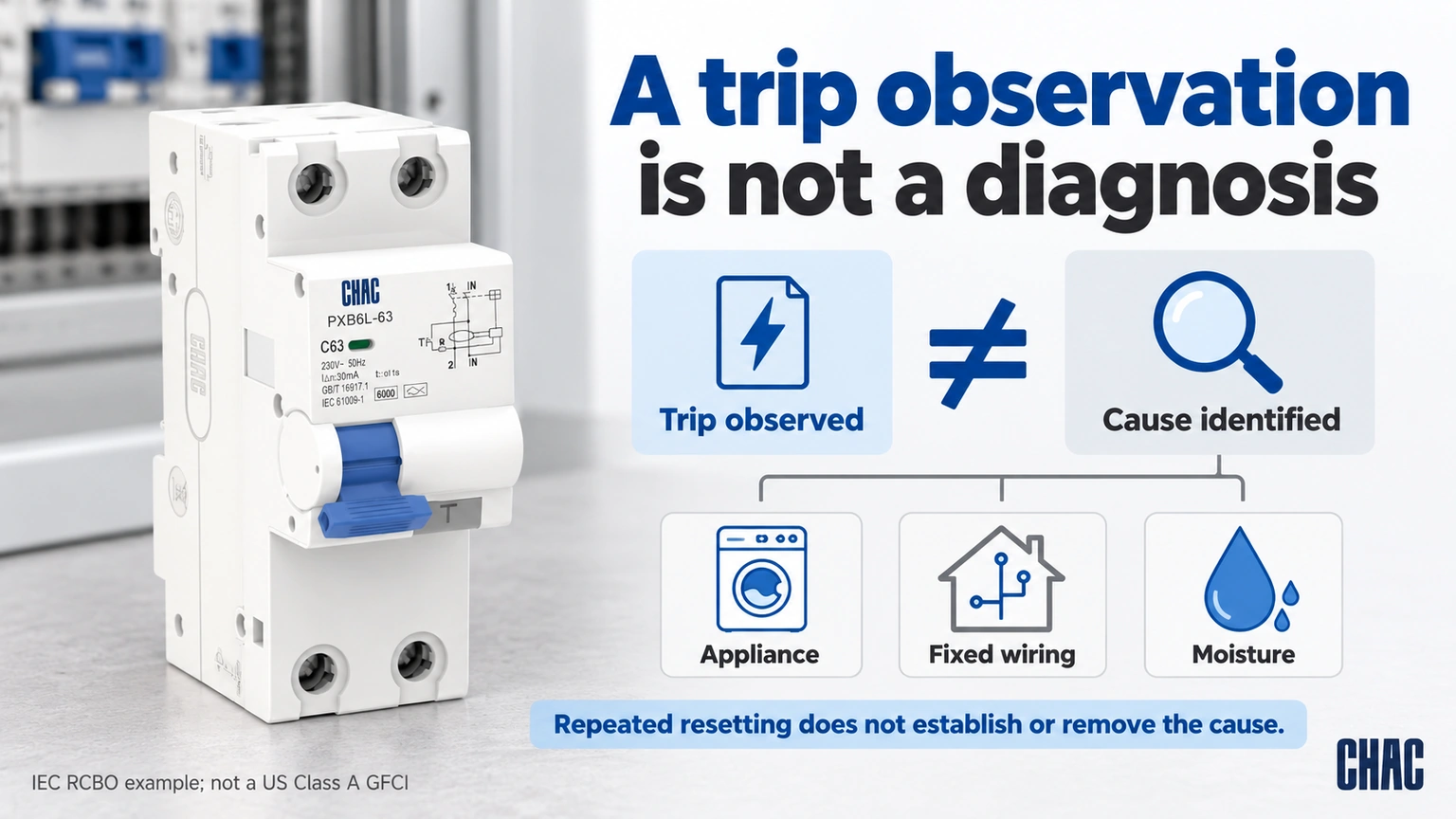
Do not repeatedly reset an unexplained trip, bypass protection or move a suspect appliance to an unprotected outlet. Disconnecting plug-in loads can help a qualified investigation distinguish the load from the fixed circuit, but opening boxes and changing wiring should follow proper isolation and verification procedures. Intermittent faults deserve attention even when the reset button appears to restore normal service.
| Observation | Useful question | Next verification |
|---|---|---|
| Trips with one appliance | Does the event follow that appliance? | Appliance insulation and operating conditions |
| Trips after rain or cleaning | Could moisture reach equipment or wiring? | Ingress source and suitability for location |
| New device will not reset | Is supply present and wiring correct? | Manufacturer instructions and LINE/LOAD identification |
| Trips with several loads together | Are leakage currents accumulating? | Measured leakage and circuit arrangement |
What should be planned for a GFCI serving an unattended appliance?
For an appliance that may run while nobody is present, plan how a loss of supply will be noticed and who can investigate it. Keep the required test and reset point accessible. Where appropriate, evaluate a product with an audible alert or a suitable monitoring arrangement using its actual instructions. An alarm is a notification feature, not another protective function or permission to omit required GFCI protection.
Leviton’s range includes audible-alert and connected GFCI options, but those features are model-specific. Do not promise an alert from an ordinary receptacle, or assume a network notification will remain available during a power or communications failure. The practical specification separates required personnel protection, circuit coverage and notification needs. This addresses the consequence of an unnoticed outage without treating repeated trips as a reason to move an appliance to an unprotected supply.
Where is GFCI protection required, and can an IEC device substitute?
Bathrooms, kitchens, garages, outdoor locations and other specified areas are common US code contexts, but the adopted NEC edition, occupancy, circuit and local amendments determine the exact requirement. Older manufacturer summaries are useful background, not proof of the current rule in every jurisdiction. Confirm the applicable edition with the authority having jurisdiction.
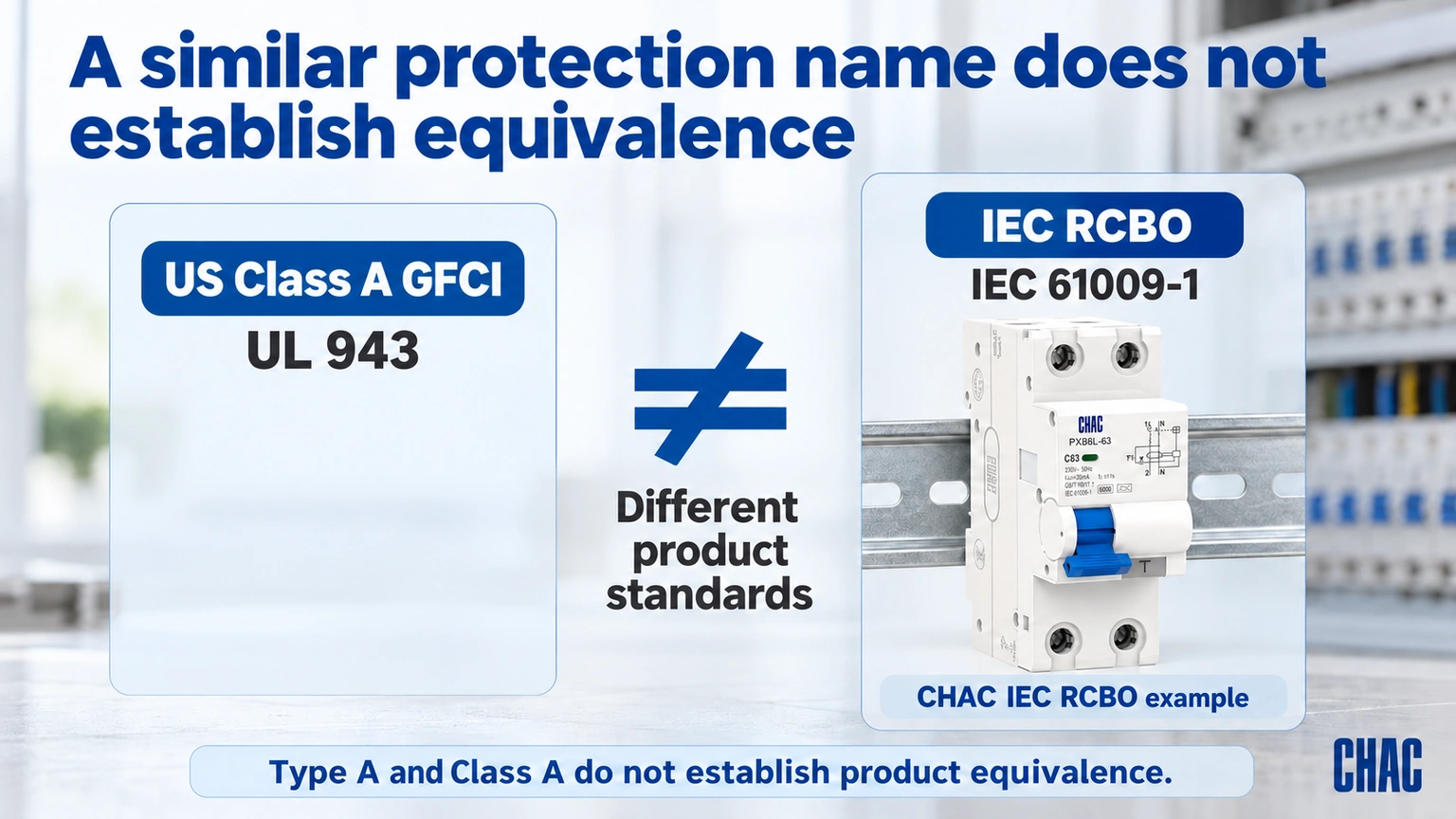
For international projects, compare the protection functions before comparing product names. CHAC publishes residual-current circuit breakers with overcurrent protection and separate محولات الدائرة الصغيرة. An IEC RCBO or a Type A residual-current device must not be described as a UL 943 Class A GFCI without the relevant product evidence. The words “Type A” and “Class A” do not establish equivalence.
What do buyers ask about GFCI protection?
What should not be plugged into a GFCI?
There is no universal appliance blacklist that justifies bypassing required GFCI protection. Check the equipment instructions, correct circuit and adopted rules; investigate repeated tripping rather than removing protection.
Do I need an electrician to replace a GFCI outlet?
Local rules determine who may perform the work, and correct isolation, LINE/LOAD identification and testing are essential. Use a qualified electrician when the circuit, supply, grounding or downstream arrangement is uncertain.
What causes GFCI outlet to trip?
A qualifying current imbalance can result from moisture, damaged insulation, leakage from connected equipment or wiring faults. A trip alone does not identify which cause is present.
What is a ground fault circuit interrupter?
It is a device that interrupts the protected circuit when its ground-fault detection conditions are met. For US personnel protection, verify the appropriate Class A device and product standard.
What is a ground fault circuit interrupter and how does it work?
It monitors the balance of current in the circuit conductors and operates when an imbalance meets its trip criteria. It does not replace all other forms of circuit or shock protection.
Where is a ground fault circuit interrupter required?
The adopted installation code and local amendments determine the required locations and circuits. Wet or damp locations are common contexts, but the answer also depends on occupancy, equipment and code edition.
المراجع
- Leviton GFCIs for Personnel Safety, including dated code examples; accessed October 19, 2026
- Leviton GFCI Outlets and Receptacles, self-test and troubleshooting guidance; accessed October 19, 2026
- Leviton commercial GFCI receptacles; accessed October 19, 2026
الخاتمة
GFCI means ground-fault circuit interrupter, and its purpose is to detect a qualifying current imbalance rather than simply a large load. Establish the required protection function before choosing between a receptacle, breaker or dual-function device. Then verify the circuit arrangement, panel compatibility, installation instructions and locally adopted code. Do not treat a successful reset as proof that an unexplained fault has disappeared, or substitute a differently standardized device because its name sounds similar. CHAC provides published MCB and RCBO information for projects evaluating IEC distribution products. That information supports a clearly specified comparison, while US Class A GFCI suitability still requires evidence for the exact device and intended installation.
للاطلاع على رسومات النموذج والمستندات الخاصة بالمشروع،, اتصل بـ CHAC للحصول على متطلبات الدائرة.