Một dòng điện một chiều cao áp contactor Yêu cầu báo giá (RFQ) đối với hệ thống sạc xe điện được bắt đầu bằng thông số kỹ thuật của hệ thống một chiều (DC) và các bằng chứng cho mẫu xe được lựa chọn, chứ không phải bằng tên thương hiệu. Hồ sơ thiết bị hoặc bộ sạc cần mô tả rõ nhiệm vụ vận hành, cách xử lý cực tính tải, nguồn cấp cho cuộn dây, yêu cầu phụ trợ, điều kiện lắp đặt, cũng như các tài liệu mà nhà cung cấp phải nộp lại.
Chương trình này bao gồm các hoạt động như:
Phần 1. Bắt đầu từ hệ thống DC thay vì một họ contactor
Việc lựa chọn contactor một chiều điện áp cao cho hệ thống sạc xe điện bắt đầu từ hồ sơ hệ thống: bối cảnh của bus một chiều, vai trò của mạch, chế độ làm việc yêu cầu và vị trí lắp đặt của contactor. Những thông tin này giúp báo giá trở nên dễ kiểm tra và ngăn chặn tình trạng chỉ dựa vào nhãn mác chung chung mà không qua thử nghiệm để thay thế thiết kế thực tế.
Bản vẽ cũng cần xác định giao diện điều khiển và mọi yêu cầu giám sát. Kết hợp lại, những thông tin đầu vào này tạo thành cơ sở cho việc rà soát theo mô hình đã chọn, thay vì dựa trên các giả định về sự phù hợp của bộ sạc.
Phần 2. Tách biệt nhiệm vụ liên tục khỏi việc xem xét gián đoạn
Các yêu cầu về vận hành liên tục và các câu hỏi liên quan đến gián đoạn cần được duy trì như những lĩnh vực đánh giá riêng biệt. Hệ thống, mô hình được lựa chọn và các yêu cầu dự án áp dụng sẽ xác định loại bằng chứng cần thiết cho từng trường hợp; một bản mô tả tiếp thị mang tính tổng quát không thể lấp đầy khoảng trống đó.
Ghi lại vai trò của mạch điện, các điều kiện vận hành được yêu cầu, cũng như hồ sơ thiết bị đã chọn phải đi kèm trong phản hồi của nhà cung cấp. Hệ thống tiêu chuẩn IEC cung cấp ngữ cảnh tài liệu, trong khi thông tin về dự án và mô hình được lựa chọn vẫn giữ vai trò quyết định.
Quan trọng: Việc ghi rõ điện áp một chiều hoặc dòng điện không tự động chứng nhận rằng một công tắc tơ phù hợp với hệ thống sạc xe điện. Hãy lưu giữ tài liệu về chế độ làm việc của hệ thống và thông số kỹ thuật của mẫu đã chọn cùng nhau trong quá trình xem xét.IEC DC switching document catalog — selected-model evidence context)
Phần 3. Ghi các yêu cầu về cực, cuộn dây và tín hiệu lên cùng một tờ đánh giá.
The RFQ becomes stronger when every control and load-side requirement has an explicit place. Avoid placing load polarity in one drawing note, coil supply in an email, and auxiliary signal needs in a later change order.
| Review field | What the buyer should state | Những gì nhà cung cấp nên trả lại |
|---|---|---|
| DC system and circuit role | Drawing reference and equipment boundary | Proposed model tied to the stated review scope |
| Required duty | Conditions that require selected-model review | Documentation addressing the requested conditions |
| Load-polarity treatment | What the drawing requires for the load connection | Selected-model polarity information |
| Coil supply | Available control supply and interface context | Coil-related information for the proposed model |
| Auxiliary requirement | Needed status or control signal | Published auxiliary-contact information where applicable |
| Mounting and thermal context | Enclosure and environment information to review | Stated installation information and limits |
Treat this sheet as an evidence index. It does not create an EV charging architecture or select a model without the exact project conditions.
Phần 4. Đọc bảng mô hình đã chọn mà không coi đó là sự phê duyệt.
The public STE3 product route presents model rows with working-voltage, working-current, load-polarity, coil-polarity, and auxiliary-contact fields. These fields are useful for narrowing a supplier conversation, but the chosen row and project conditions must still be checked before a BOM is released.
The practical rule is to compare each proposed row against the RFQ sheet, then request the documents required by the project. Do not derive a charger approval, interruption result, or local acceptance from a single published field.
For adjacent DC-selection context, see the battery and DC distribution MCB guide và DC MCB compatibility evidence guide.
Phần 5. Gửi một yêu cầu báo giá (RFQ) cho bộ tiếp xúc điện tử (EV) kèm theo bằng chứng có thể so sánh được.
Send the current system drawing, circuit role, requested duty description, polarity treatment, coil supply, auxiliary requirement, mounting context, required documents, and any branding request. Ask each supplier response to identify the selected model and the evidence used for the comparison.
Phần high-voltage DC contactor category is the upward product-family route. The broader dải thiết bị điện điều khiển công nghiệp can help when the equipment review includes related control components.
Phần 6. Sử dụng đường dẫn của công tắc tơ một chiều điện áp cao CHAC để xem xét mô hình.
After the RFQ evidence is complete, use the STE3 high-voltage DC contactor product route to begin a selected-model discussion. Its published table is a useful starting point for comparing stated model fields to the project record, not a blanket EV charger recommendation.
Đề xuất sản phẩm
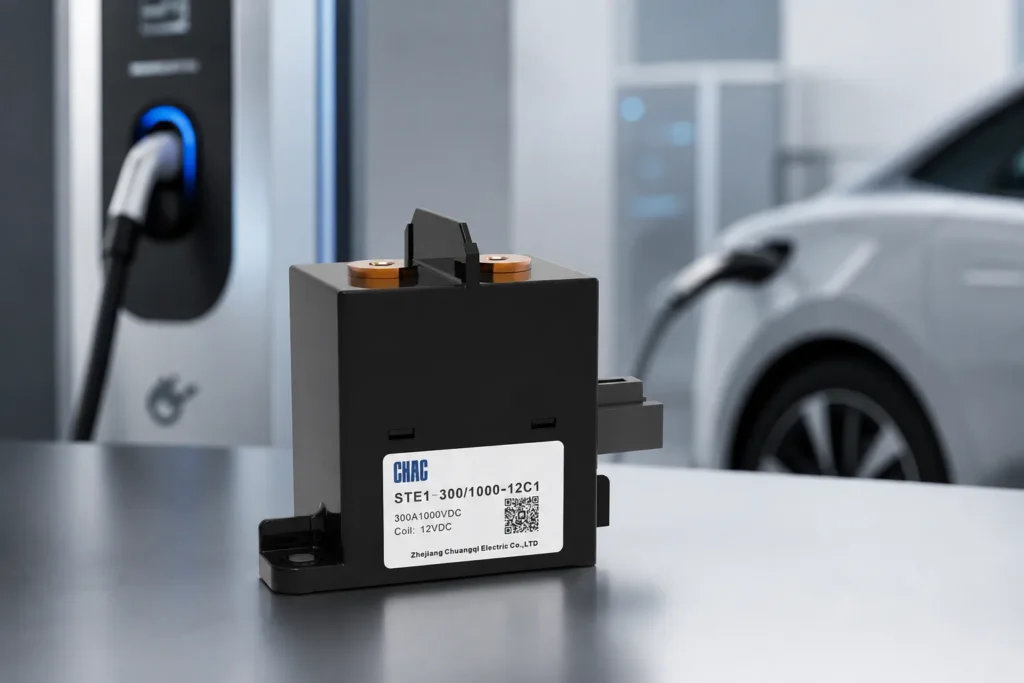
STE1 Series High-voltage DC contactor (Square Ceramic Sealing)STE1 Series High-voltage DC contactor (Square Ceramic Sealing) – CHAC Electric
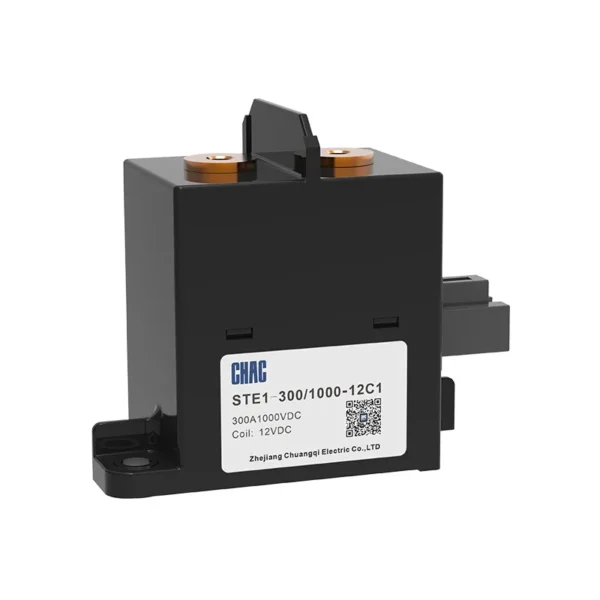
Use the STE3 route when the buyer can supply the DC system and evidence sheet. Do not choose another model merely by family name: working voltage, current, load polarity, auxiliary requirement, and project duty need confirmation for the selected row. OEM and documentation needs can be raised through the industrial-control customization page.
Phần 7. Xác định ranh giới phù hợp trước khi phát hành BOM
This guide supports early EV-charging equipment sourcing and document comparison. It does not provide charger architecture, live-work direction, protection coordination, local approval, or a final release decision for a contactor model.
Fit Boundary: retain final choice with the approved system drawing, selected-model documents, applicable project requirements, and qualified engineering review. Share the RFQ evidence with Điện CHAC when requesting a documented product route.
Which DC contactor inputs affect an EV charging design?
A Bộ phận tiếp xúc DC điện áp cao request needs more than nominal voltage and current. The RFQ should identify continuous and transient duty, load polarity, switching frequency, pre-charge sequence, auxiliary feedback, environmental conditions and the fault-management strategy. The vehicle, battery and charger documentation must agree before a model is approved.
| Nhập yêu cầu báo giá | Tại sao điều đó lại quan trọng | Bằng chứng để yêu cầu |
|---|---|---|
| DC voltage and current | Defines the electrical duty and thermal review | System limits and model ratings |
| Pre-charge sequence | Controls inrush before the main path closes | Timing, voltage criterion and failure response |
| Feedback and interlock | Prevents the controller from assuming a contact is closed | Auxiliary-contact logic and wiring diagram |
Phần EV charging contactor decision is part of the complete control sequence, not a timer copied from another system. The useful check is DC contactor pre-charge: define the voltage or diagnostic condition that permits main-contact closure. CHAC’s STE2 high-voltage DC contactor page can support a model discussion; exact switching duty remains product-specific.
Can a high-voltage DC contactor be selected from continuous current alone?
No. Interrupting and making duty, inrush, polarity, pre-charge, ambient conditions and fault response also need review.
Does a pre-charge timer prove that the DC link is ready?
No. A timer is only one control input. The system should define the voltage or diagnostic condition that permits main-contact closure and the action taken on timeout.
Câu hỏi thường gặp
What does a high-voltage DC contactor do in an EV charging system?
It is reviewed as part of a defined DC circuit role. The project drawing and selected-model documents establish the actual function and suitability.
Which voltage and current fields must be reviewed?
State the DC system requirements and requested duty, then compare them with the exact selected-model information rather than a product-family summary.
Why does load polarity need to be checked?
Load-polarity treatment is a model and system review input. Put the drawing requirement in the RFQ so the supplier can respond against the correct context.
What coil supply information should be sent to a supplier?
Provide the available control supply and interface context shown on the current design. Ask for selected-model coil information in the supplier response.
When is an auxiliary contact required?
List it whenever the charger or panel design needs a defined status or control signal. The selected model must document the requested arrangement.
What documents should accompany an EV contactor RFQ?
Include the system drawing, circuit role, duty description, polarity requirement, coil supply, auxiliary need, installation context, and the evidence expected for the proposed model.