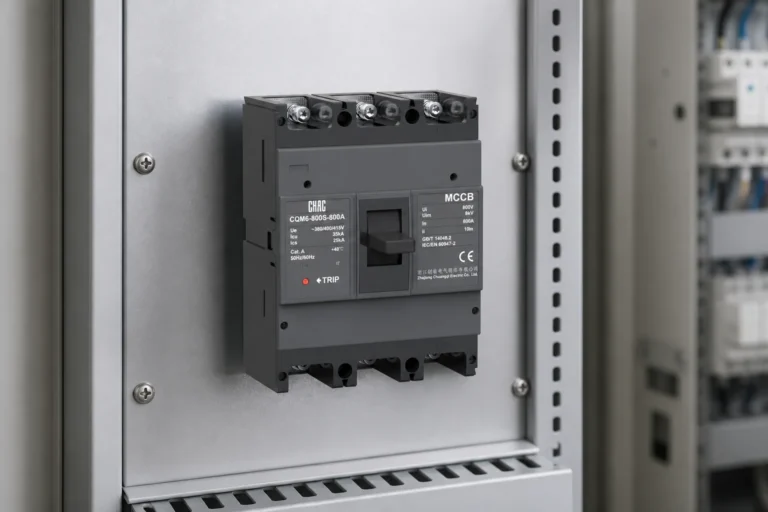
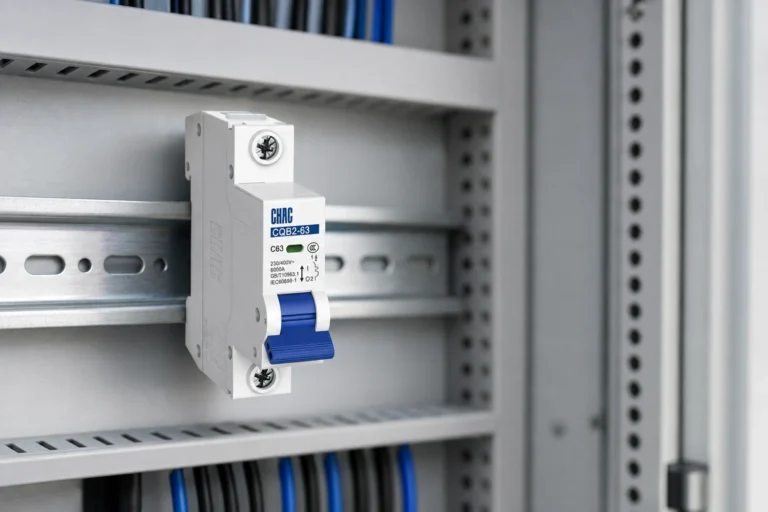
When a sourcing manager in Dallas released a hospital switchboard package, the team expected routine approval. Within two days, the electrical contractor found mismatched accessory schedules, incomplete short-circuit data, and no delivery date for replacement trip units. The hardware was not the immediate problem; supplier selection had failed to test documentation and schedule readiness.
ملخص: Lists of the largest electrical contractors in the US usually measure prior-year revenue, yet revenue does not predict whether a supplier will pass project review. Large contractors also examine prequalification evidence, submittal turnaround, product traceability, delivery confidence, and closeout support. NFPA 70 governs installation, while UL 489 is a product standard rather than a blanket project approval. Suppliers should therefore qualify the application and prepare a controlled document set before procurement begins.
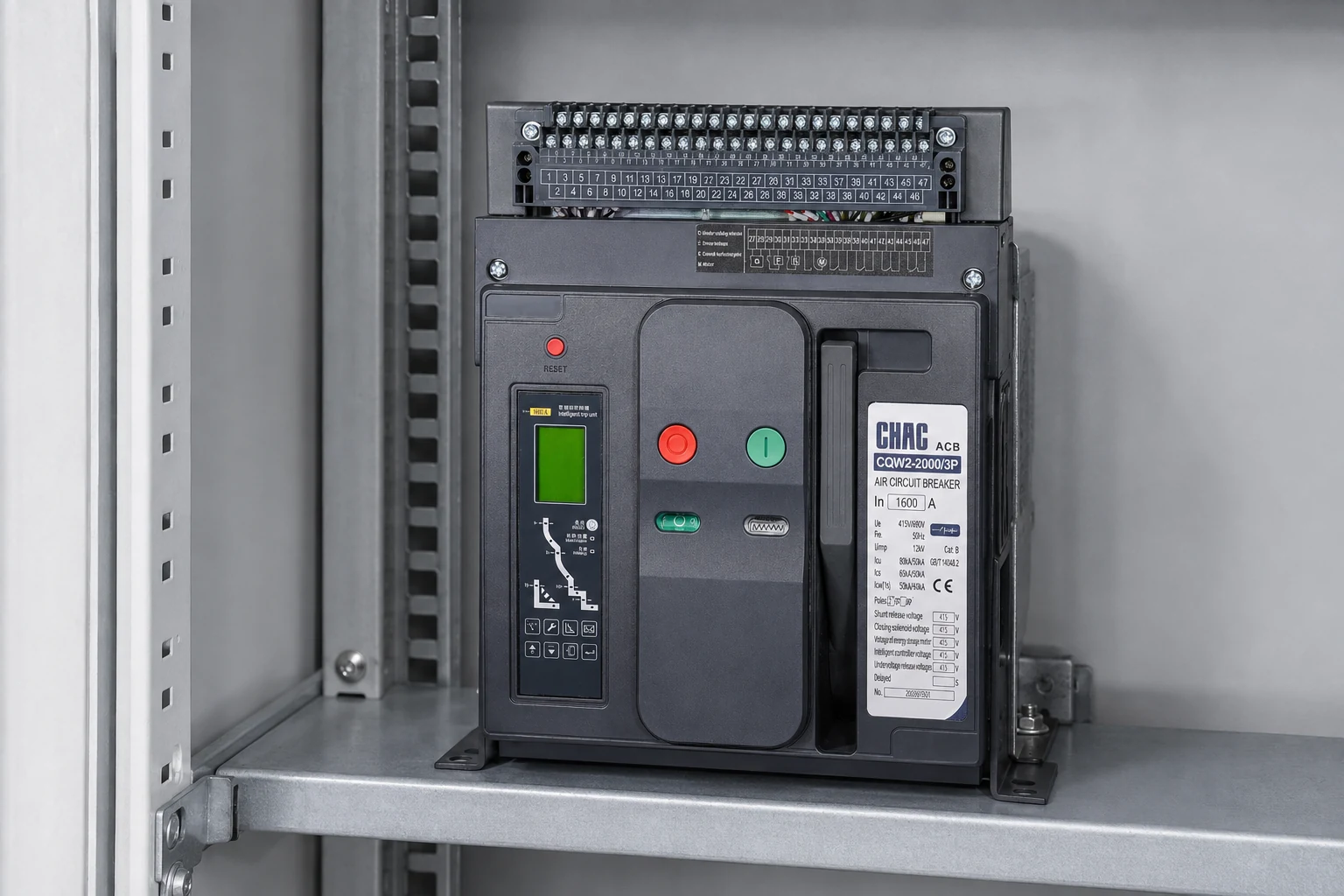
US electrical contracting covers data centers, hospitals, factories, transport facilities, public buildings, and service work. Tables from Engineering News-Record and EC&M are useful snapshots, but each has defined survey fields and reporting periods. Read the methodology and year rather than turning one edition into a permanent “top contractors” claim.
How contractor size should be measured
Revenue is the most visible measure, but reported electrical revenue may differ from total company revenue. A high figure may reflect one fast-growing sector, acquisitions, or national coverage. Backlog shows contracted future work; geographic reach, self-perform capability, workforce depth, safety performance, and service revenue reveal other forms of scale.
| Scale measure | What it indicates | Why a supplier should care |
|---|---|---|
| Prior-year electrical revenue | Completed business volume under the publisher’s definition | Useful for market mapping but not a forecast or quality score |
| Backlog and sector mix | Committed workload and exposure to data centers, healthcare, industrial, or public work | Suggests likely demand patterns and project-specific documentation pressure |
| Geographic coverage | Ability to mobilize across states or regions | Raises expectations for consistent labeling, logistics, and technical support |
| Self-perform and prefabrication capacity | How much work the contractor controls directly | Makes dimensional accuracy, kitting, and delivery sequencing more important |
| Safety and delivery record | Operational discipline beyond sales volume | Signals how rigorously vendors may be screened and monitored |
This is why a fixed ranking is unhelpful for supplier evaluation. A contractor with data-center backlog may value commissioning response and BIM-compatible data; a regional service leader may prioritize local stock. Identify firms by target sector and location, then consult the latest source year.
Supplier prequalification starts with risk
Large electrical contractors commonly screen vendors before product comparison, although criteria vary by company and contract. The review may cover legal identity, financial capacity, quality controls, manufacturing capacity, references, applicable insurance, and technical escalation. It should also identify ratings, environmental limits, drawings, supported standards, and any listing agency.
Compliance language must be exact. NFPA 70 is an installation code; Section 110.3(B) addresses installation and use according to instructions included in a listing or labeling. UL 489 sets requirements for molded-case circuit breakers and related equipment, not a blanket certificate. OSHA’s NRTL program recognizes laboratories that certify products within an approved scope. The authority having jurisdiction and project specification determine acceptable evidence.
Prequalification should test lot traceability. A contractor may need cartons and device markings connected to purchase records, production lots, inspection results, and approved revisions. This isolates an affected batch during field investigation. A process for nonconforming material and corrective action is more credible than a general quality claim.
For an electronic adjustable MCCB, reviewers may need frame size, trip settings, interrupting rating at the applicable voltage, terminals, dimensions, environmental limits, and compatible auxiliaries. Evidence must match the offered configuration; a family brochure cannot replace configuration-level project documentation.
Submittal quality protects the schedule
Submittal turnaround controls the schedule because approval often precedes production, prefabrication, and energization. Contractors need a complete first package, named response owner, and realistic resubmission time. Drawings and data sheets require revision identifiers; a response matrix should close comments without quietly changing ratings, accessories, or dimensions.
Approved-equivalent risk deserves attention. “Equivalent” should mean equal performance for the application, not a similar description. Compare voltage, current, interrupting capacity, poles, trip functions, fit, terminals, accessories, listing status, and coordination implications. The designated reviewer decides whether a substitution is acceptable; approval is never guaranteed.
Where a project uses BIM, supplier data should fit the coordination process. The National BIM Standard–United States provides a consensus framework for information exchange, not a mandate to model every breaker. For modeled assemblies, dimensions, mounting points, clearances, cable-entry zones, and identifiers matter more than decorative geometry. A 2D process still needs consistent CAD and PDF data.
Schedule certainty depends on secondary items. Accessories and spares such as auxiliary contacts, shunt trips, interlocks, handles, terminals, and replacement mechanisms need confirmed compatibility and lead times. Packaging should map material to area, panel, feeder, or installation sequence so one missing part does not stop a work package.
Change-order and closeout documentation complete the chain. A change record should show commercial, technical, and lead-time effects plus superseded files. At turnover, approved submittals, contracted as-built information, instructions, test records, warranties, spare-parts lists, and final schedules should agree. This electrical panel upgrade guide can frame related capacity and future-load questions.
Project type changes what buyers value
| Project profile | Supplier pressure point | Useful evidence |
|---|---|---|
| Data center | Commissioning response and repeatable configurations | Controlled settings data, accessory schedules, revision history, and escalation contacts |
| Healthcare | Phased turnover and inspection readiness | Traceable product records, installation guidance, and planned spares |
| تصنيع | Downtime exposure and harsh service conditions | Environmental limits, maintenance access, replacement strategy, and coordination data |
| Public project | Specification accountability and formal substitution review | Clause-by-clause comparison, conservative claims, and complete approval records |
| Commercial portfolio | Repeatability across sites and phases | Stable configurations, consistent labeling, kitting rules, and delivery forecasts |
No segment removes the need for engineering review. Disconnecting means, overcurrent protection, available fault current, enclosure conditions, and selective coordination are application questions. For related planning, CHAC’s disconnect switch selection guide explains why function and installation context should be established before a device is chosen.
A practical selection guide for major projects
- Define the application. Record voltage, load, available fault current, environment, installation method, accessories, and governing specification.
- Separate company capability from product evidence. Confirm capacity, quality controls, traceability, technical ownership, and the listing path.
- Check document readiness. Compare the bill of materials with drawings, data sheets, accessory schedules, labels, and revisions.
- Test schedule claims by component. Confirm release conditions, long-lead accessories, alternates, spares, and slippage reporting.
- Agree on change and closeout workflows. Name approvers, response targets, turnover files, and record-retention periods.
A buyer reviewing معدات التوزيع الكهربائي should apply this framework across the full assembly rather than one isolated SKU. CHAC Electric can support that review with application data and product-family information, but final selection must follow the project specification, the applicable code, and the designated approval process.
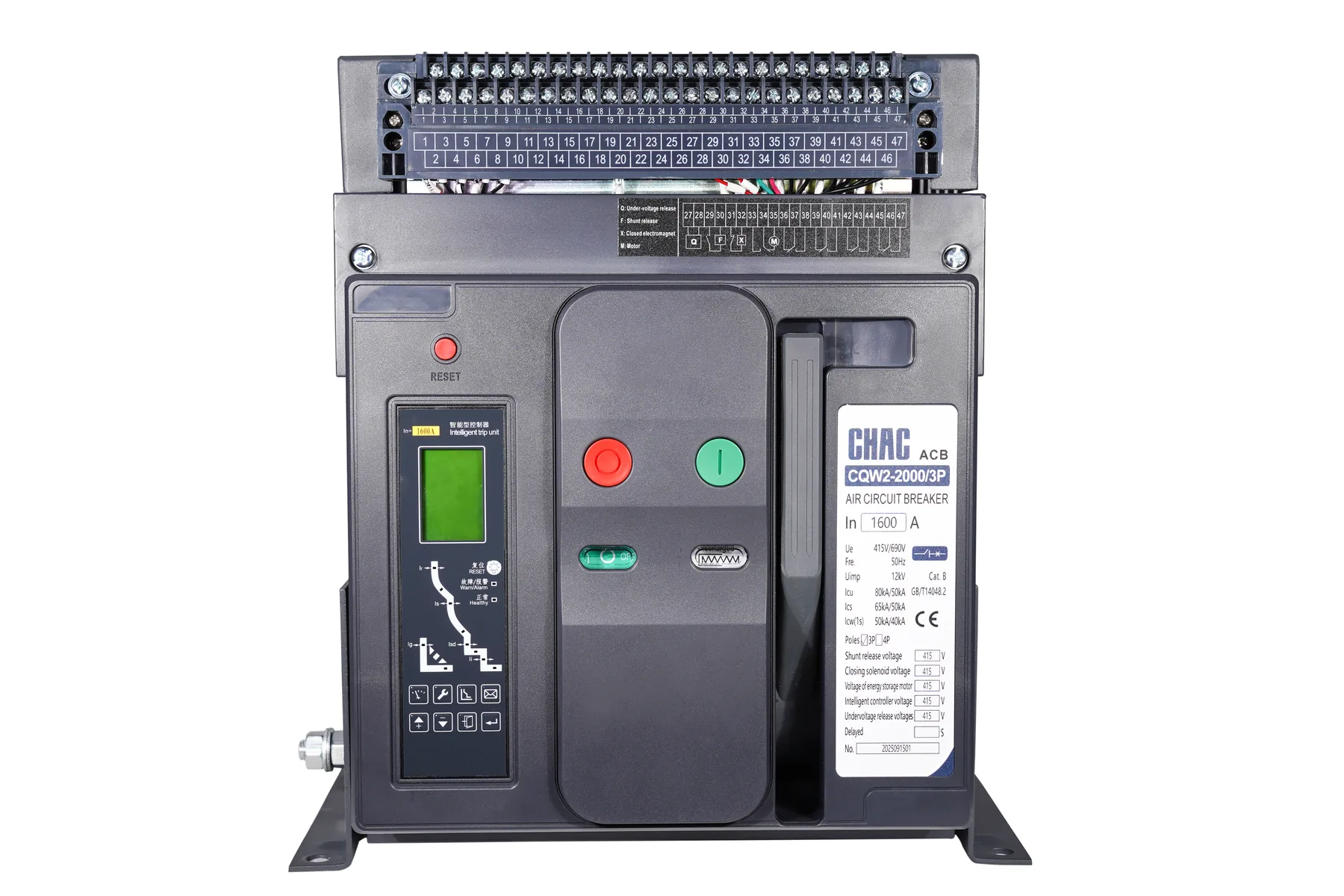
FAQ about large US electrical contractors
Who are the largest electrical contractors in the US?
The answer depends on the year and metric. ENR and EC&M publish revenue-based industry tables, but buyers should consult the current edition and its methodology rather than rely on a permanent list. Sector strength and geography may be more useful than overall revenue for market targeting.
Do large electrical contractors choose suppliers mainly on price?
No single rule applies, but major contractors typically evaluate total project risk as well as price. Approval delays, uncertain accessories, rework, missed delivery dates, and weak field support can cost more than a modest unit-price difference.
What documents matter most during supplier evaluation?
Common needs include configuration-specific data sheets, ratings, dimensional drawings, accessory schedules, installation instructions, supported listing evidence, and revision-controlled submittals. The required set comes from the contract and specification, so suppliers should confirm it at the start.
Why does lot traceability matter on a large project?
Traceability helps identify which shipment or production lot is affected by a field issue. It supports targeted investigation, replacement, and closeout records without assuming every installed device has the same condition.
Should every electrical product have a BIM object?
No. BIM detail should match the project’s coordination needs. For an assembly that is modeled, reliable dimensions, clearances, connection zones, and identifiers are usually more useful than visually complex geometry.
Can an overseas manufacturer supply a major US contractor?
Potentially, if the offered product has an acceptable project-specific compliance path and the supplier can manage documentation, lead time, traceability, accessories, spares, and technical response. The contractor, engineer, owner, and authority having jurisdiction may each have approval responsibilities.
المراجع
- Engineering News-Record, Top Lists.
- EC&M, Top 50 Electrical Contractors.
- NFPA, NFPA 70 National Electrical Code.
- OSHA, Nationally Recognized Testing Laboratory Program.
- National Institute of Building Sciences, National BIM Standard–United States Version 4.
The largest contractor is not automatically the best customer for every supplier; the best fit is the contractor whose project risk your evidence and execution can genuinely reduce.
For an upcoming commercial distribution package, review CHAC electrical distribution equipment against the required ratings, approvals, accessory plan, delivery sequence, and closeout needs. Contact CHAC Electric to discuss the application and the supporting document set.