Consider a hypothetical machinery buyer in Manchester who orders a replacement motor from its kilowatt rating alone. On arrival, the motor’s supply arrangement does not match the building. The problem was not a poor motor; the purchase specification omitted phase, voltage and the starting arrangement.
ملخص: Single-phase and three-phase supplies differ in their voltage relationships and delivery of AC power. For a balanced load, single-phase real power is V × I × power factor, while three-phase real power is √3 × line-to-line voltage × line current × power factor. Confirm the actual supply and equipment requirements before selecting conductors, poles and protection.
Voltage alone does not identify the supply arrangement
ال single phase vs three phase question begins at the supply drawing. A voltage such as 220 V or 230 V does not by itself identify the phase arrangement. Depending on the system, a stated voltage may be measured line to neutral or line to line.
Three-phase systems have three phase voltages displaced by 120 electrical degrees. A single-phase load can be supplied from an appropriate part of a three-phase system, but the voltage, neutral arrangement and available capacity must suit the equipment. Counting conductors without identifying their functions is unreliable.
A two-pole protective device does not prove that a load is three-phase. Poles describe the conductors switched or protected; the supply configuration and earthing rules determine the required arrangement. Check the complete circuit diagram and product instructions.
Use the right formula before comparing current
For a hypothetical 10 kW input load at unity power factor, single-phase current at 230 V is about 43.5 A. A balanced three-phase load at 400 V draws about 14.4 A per line. These calculations illustrate different supply arrangements; they do not show that three-phase power reduces the energy needed for identical useful work.
If the 10 kW describes motor shaft output, include motor efficiency when calculating electrical input. Power factor, starting current and operating duty also affect equipment selection. Do not use the running-current formula as a motor-starting or short-circuit calculation.
A three-phase power design must consider unbalance. Several single-phase loads connected across the phases may have unequal demand, while nonlinear loads can affect neutral current. A balanced-load calculation is an assumption to verify rather than a property guaranteed by having three phases.
Select the conductors and switching equipment as one circuit
Conductor size depends on design current, installation method, temperature, grouping, voltage drop and fault conditions. There is no universal wire size for single-phase or three-phase power. Copper and aluminum require their own ampacity and terminal checks.
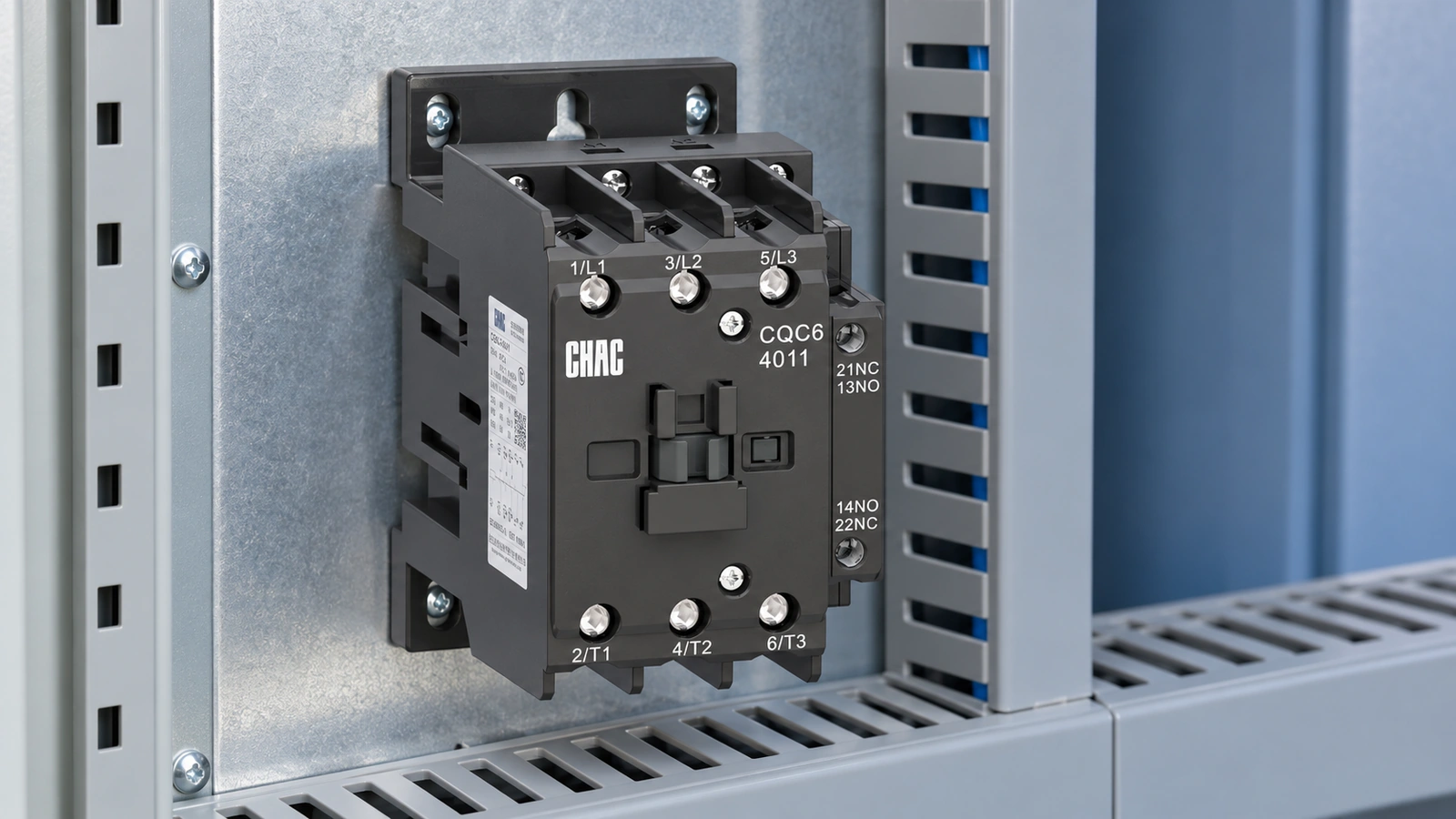
For motor circuits, coordinate the contactor, overload protection and short-circuit protective device. IEC 60947-4-1 addresses contactors and starters; IEC 60947-2 addresses industrial circuit breakers. A contactor’s pole count or motor-kilowatt table does not establish the complete assembly rating.
Include supply availability in the commercial comparison. Utility changes, transformer capacity, cabling, controls and downtime can outweigh the difference in component price. Request these costs separately so a low equipment quotation does not conceal a building-supply upgrade.
Compare the selection criteria
| Factor | Single-phase | Three-phase |
|---|---|---|
| Power relationship | V × I × PF | √3 × VLL × I × PF for a balanced load |
| Typical planning concern | Available circuit and service capacity | Phase balance and correct line voltage |
| Motor selection | Match starting method and supply | Match voltage, connection and starter |
| Energy comparison | Depends on load and efficiency | Phase count alone does not establish savings |
Check the conditions that change the selection
| Project | First check | Protection implication |
|---|---|---|
| Small commercial appliance | Nameplate voltage and supply | Suitable circuit rating and required fault functions |
| Three-phase motor | Voltage, starting duty and overload data | Coordinated contactor, overload and fault protection |
| Mixed building loads | Distribution schedule and phase allocation | Check loading and neutral requirements |
| Export machine | Destination supply and approval requirements | Verify the exact component and assembly scope |
Apply the correct standards and approval scope
Use the destination installation rules and equipment instructions. NEC conductor tables do not provide one phase-based cable answer; load calculations and the applicable motor or equipment rules are also required. IEC component standards do not establish approval for installation in a US panel.
What to confirm before placing an order
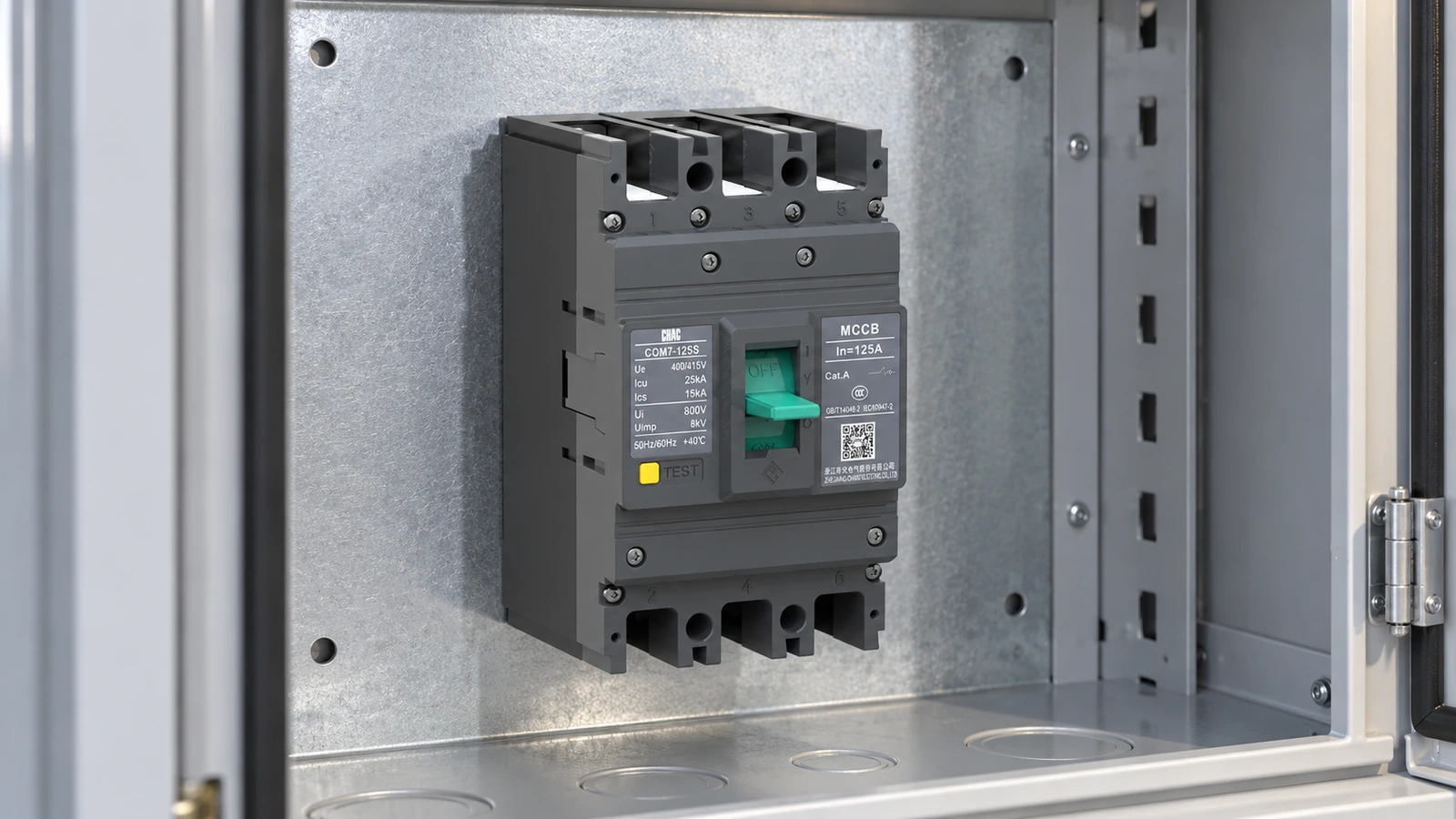
تشاك industrial AC contactors و molded-case circuit breakers can be evaluated from the actual circuit specification. Provide line and control voltages, load current, starting method, fault duty and pole requirements. A single-phase power inquiry should state the same details instead of relying on voltage alone.
For related selection details, read the guide to motor control center contactor selection.
الأسئلة الشائعة
Is 220V electricity single-phase or three-phase?
It can describe different arrangements depending on the system. Identify whether 220 V is line-to-line or line-to-neutral and confirm the supply drawing.
Is a 2 pole breaker considered single-phase?
It is often used on single-phase arrangements, but pole count alone is not a phase definition. Confirm which conductors the device switches and protects.
What wire size is normally used for single-phase or three-phase power?
There is no universal size. Calculate the load current and apply the relevant conductor, installation, terminal and protection requirements.
How does copper compare with aluminum for power distribution?
Aluminum generally requires a larger cross-section for a comparable ampacity. Check permitted terminal material, connection practice and total installed cost.
How does wire length affect single-phase and three-phase circuits?
A longer route increases impedance and voltage drop. Use the correct circuit formula and actual conductor data; also verify fault-disconnection conditions.
Which NEC table should be checked for conductor sizing?
Table 310.16 is a common starting point for many conductors, but its conditions and other applicable rules matter. Motor, service and equipment circuits can require additional calculations.
المراجع
- Southwire — conductor, voltage-drop and conduit calculation tools
- IEC standards catalogue — IEC 60947-4-1 contactors and motor-starters
- OSHA 1910.303 — electrical equipment and installation requirements
For model-specific selection, review the CHAC product details and send the application conditions, quantity and destination requirements through the contact page.