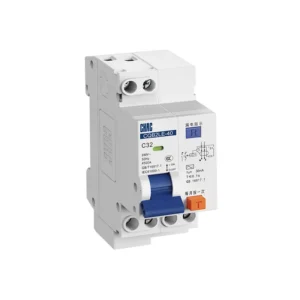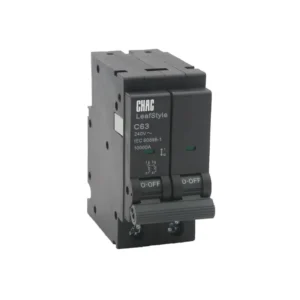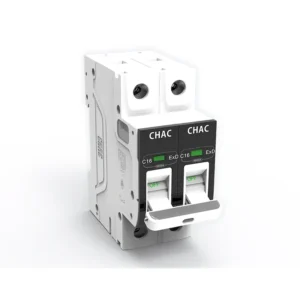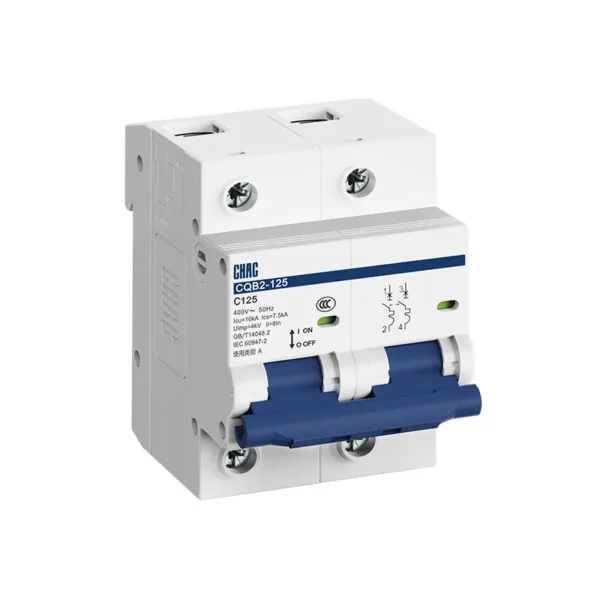
Disyuntor miniatura CQB2-125
El CQB2-125 interruptor automático en miniatura está diseñado para la protección contra sobrecargas y cortocircuitos en circuitos de distribución de corriente alterna de mayor intensidad. Está disponible en las clasificaciones 63A, 80A, 100A y 125A, con curvas de disparo C o D y configuraciones 1P, 2P, 3P o 4P. La serie tiene una capacidad de corte de cortocircuito máxima de 10kA y está especificada según IEC 60947-2. Seleccione la configuración según el diseño del circuito, la corriente de falla prevista, los requisitos de los conductores y el mercado de destino.
Descripción del producto
El CQB2-125 es un interruptor automático de corriente alterna de alta capacidad para circuitos de distribución comerciales, ligeros industriales e infraestructurales que requieren protección contra sobrecargas y cortocircuitos. Está disponible en las clasificaciones 63A, 80A, 100A y 125A, con curvas de disparo C o D y configuraciones 1P, 2P, 3P o 4P. La serie ofrece capacidades de corte de cortocircuito 10kA Icu y 7.5kA Ics y está diseñada según IEC 60947-2 y GB/T 14048.2.
La selección debe basarse en la corriente de diseño, la capacidad del conductor, la disposición de los postes, la inrush de carga, la corriente de cortocircuito prevista y los requisitos del mercado de destino. El CQB2-125 es un producto de CA y no debe considerarse como un sustituto de un interruptor automático de CC, un RCBO con protección contra corrientes residuales o un MCCB necesario para una protección ajustable y mayores capacidades de interrupción de fallas.
Características clave
Aplicaciones típicas
El CQB2-125 puede evaluarse para la protección de alimentadores y de derivaciones de mayor corriente en cuadros eléctricos comerciales, distribución en edificios de gran altura, paneles ligeros industriales y equipos de infraestructura. Es adecuado únicamente cuando la corriente seleccionada, la curva, la configuración de polos y las clasificaciones de cortocircuito coinciden con el estudio del circuito. Para circuitos a 63A y por debajo, compare el CQB2-63; cuando se requieran ajustes regulables o una mayor capacidad de interrupción, revise el Gamma de MCCB.
Guía de Solicitudes y Selección
| Elemento de selección | Cómo evaluarlo | Opciones de CQB2-125 |
|---|---|---|
| Corriente nominal | Confirme la corriente de diseño, la capacidad del conductor, el método de instalación, la temperatura ambiente, la agrupación y la coordinación. No seleccione 125A simplemente porque es la clasificación más alta disponible. | 63A, 80A, 100A, 125A |
| Curva de disparo | Compare la corriente de funcionamiento normal, la corriente de arranque o de inrush y el nivel de corriente de falta necesario para una operación magnética oportuna. | C o D |
| Número de polos | Asocie el sistema de suministro y determine qué conductores activos deben conmutarse y protegerse conjuntamente de acuerdo con las normas del proyecto. | 1P, 2P, 3P, 4P |
| Deber de cortocircuito | Verifique que la corriente de cortocircuito prevista y la coordinación de protecciones se encuentren dentro de las clasificaciones del dispositivo en el punto de instalación. | Icu 10kA; Ics 7.5kA |
| Estándar y documentos | Verifique la norma del producto, las reglas del mercado de destino y los documentos exactos requeridos por el cliente o el organismo de aprobación. | IEC 60947-2; GB/T 14048.2; CCC confirmado |
Compare el rango actual, la capacidad de corte, las curvas de disparo, las configuraciones de polos y las funciones de protección antes de seleccionar un interruptor automático en miniatura CQB2-125.
6kA vs 10kA MCB
Select breaking capacity according to the prospective short-circuit current at the installation point, not only the rated current of the circuit.
C Curve vs D Curve
Select the tripping curve according to the load’s inrush characteristics and the available fault current, not by current rating alone.
1P vs 2P vs 3P vs 4P
Choose the pole configuration from the supply arrangement and required common switching or isolation—not from panel space alone.
MCB frente a RCBO
An MCB protects against overload and short circuit, while an RCBO also provides residual-current protection.
Need Help Selecting a CQB2-125 Configuration?
Share the rated current, pole configuration, tripping curve, system voltage, available fault-current information and quantity. CHAC will review the requested configuration and applicable documents.
CQB2-125 Ordering Guide
| Required information | Buyer selection |
|---|---|
| Product series | CQB2-125 |
| Corriente nominal | 63A / 80A / 100A / 125A |
| Número de polos | 1P / 2P / 3P / 4P |
| Curva de disparo | C / D |
| Project details | System voltage, application and available fault-current information |
| Commercial details | Quantity, destination market, marking, packaging and required documents |
Installation Details to Confirm
How to Choose Between C and D Curves
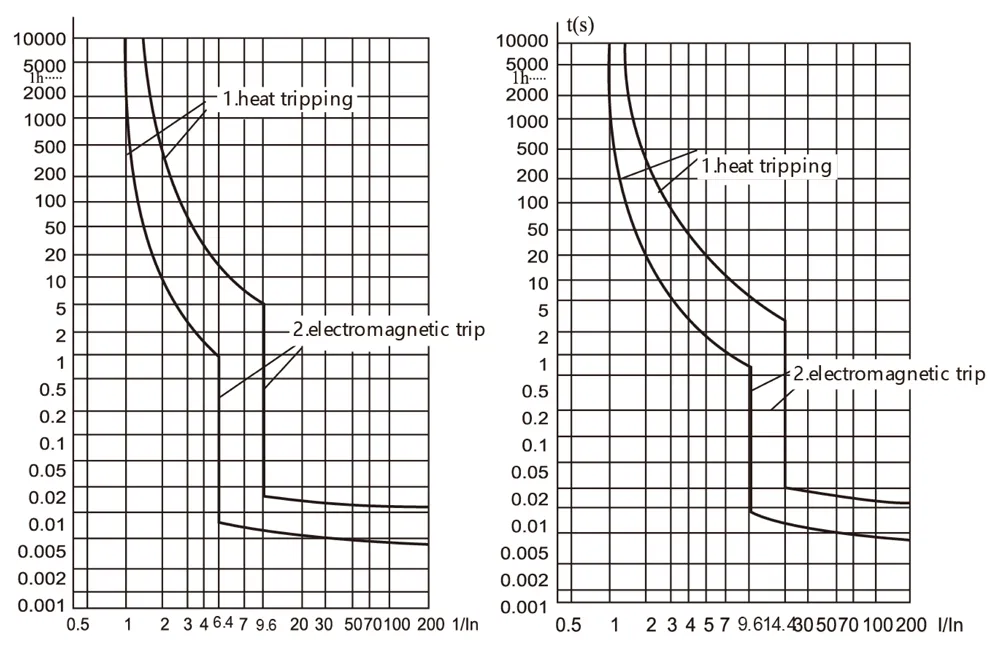
C and D curves respond differently to short-duration inrush current. C curve is commonly evaluated for general distribution loads with moderate inrush, while D curve may be considered for equipment with higher starting current. These are selection tendencies, not universal assignments. Confirm that the chosen curve tolerates normal starting current while still providing the required fault protection and disconnection time.
How to Choose the Pole Configuration
Select 1P, 2P, 3P or 4P from the actual supply and isolation requirements. The design must identify which conductors require protection and common switching. Neutral treatment, earthing arrangement and local rules vary, so the pole configuration should be confirmed against the project drawings rather than selected from enclosure space alone.
When a 10kA MCB Is Required
The 10kA Icu value describes the rated ultimate short-circuit breaking capacity, not the normal load current. Use CQB2-125 only when the prospective short-circuit current, Ics requirement and protection coordination are within its published ratings. Where the required duty exceeds these values, select a suitably rated protective device or a verified coordinated solution.
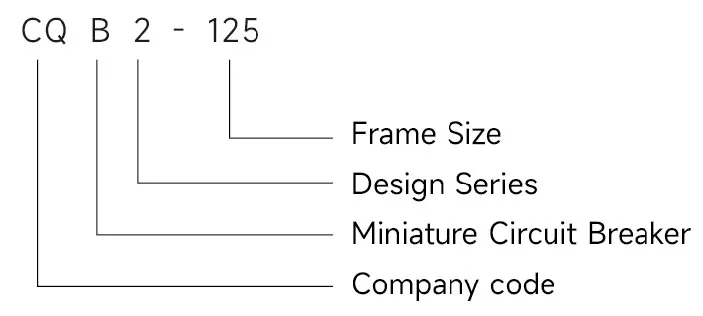
CQB2-125 Type Designation
CQB2-125 C and D Tripping Curves
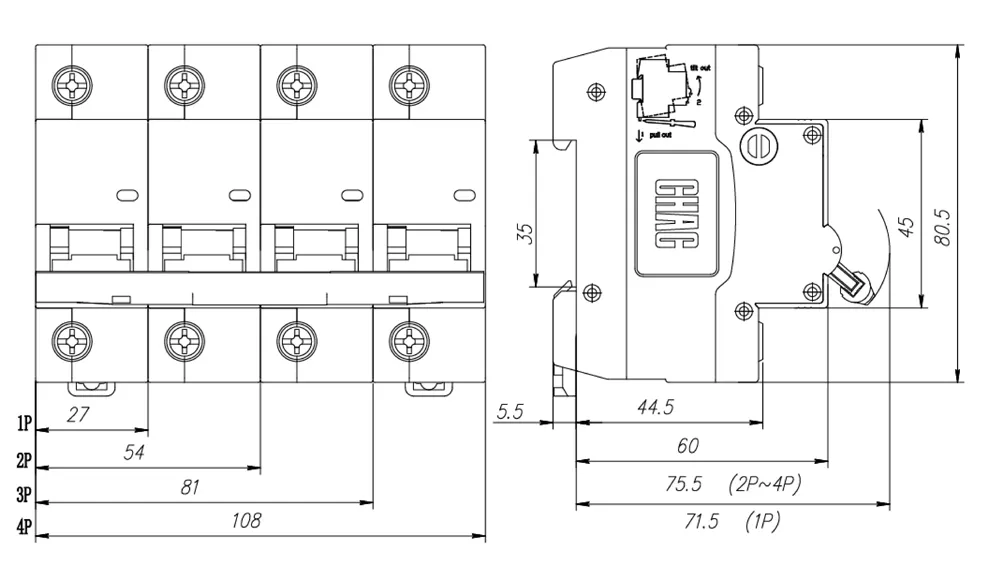
CQB2-125 Dimensions (mm)
Especificaciones técnicas
Use the table below to confirm voltage, rated current, poles, tripping curve, short-circuit duty, service life, protection degree, standard and certification for the CQB2-125 series. Final selection must be checked against the complete circuit design.
| Parámetro | CQB2-125 |
| Tensión nominal (V) | AC230V, AC400V |
| Corriente nominal (A) | 63A, 80A, 100A, 125A |
| Número de polos | 1P, 2P, 3P, 4P |
| Curvas de disparo | C, D |
| Rated short-circuit breaking capacity Icu (A) | 10000 A |
| Rated service short-circuit breaking capacity Ics (A) | 7500 A |
| Rated impulse withstand voltage Uimp (V) | 4000 V |
| Vida mecánica | ≥ 8500 operations |
| Vida eléctrica | ≥ 1500 operations |
| Grado de protección | IP20 |
| Estándares | IEC 60947-2, GB/T 14048.2 |
| Certificación | CCC |
CQB2-125 Tripping Characteristics at 30°C Reference Temperature
| Artículo | Curva de disparo | Test current ln(A) | Estado inicial | Límite de tiempo para disparar o no disparar | Resultado esperado | Observaciones |
| a | C、D | 1.05ln | Frío | 1h(In≤63A) | No desatascador | La corriente sube suavemente al valor especificado en 5s |
| b | C、D | 1.3ln | Siguiendo el ítem una prueba | 2h(ln>63A) | Tropezando | |
| c | C、D | 2ln | Frío | 1h(ln≤63A) | Tropezando | |
| d | C | 8ln×80% | Frío | 2h(In>63A) | No desatascador | Enciende la fuente de alimentación cerrando el interruptor auxiliar |
| D | 12ln×80% | 1s<t<300s | ||||
| e | C | 8In×120% | Frío | t≤0.2s | Tropezando | Enciende la fuente de alimentación cerrando el interruptor auxiliar |
| D | 12ln×120% | t<0.2s |
Test note: “Cold” means the test is carried out at the reference calibration temperature without load before the test.
Reference Copper Conductor Cross-Sections
| Sección transversal de cobre (mm²) | Corriente nominal In(A) |
| 16 | 63A |
| 25 | 80A |
| 35 | 100A |
| 50 | 125A |
Conductor note: These cross-sections are CQB2-125 product references. Final conductor sizing must follow the project design, installation method, ambient temperature, grouping, voltage-drop requirements and applicable local rules.
¿Por qué elegir CHAC?
CQB2-125 production is supported by CHAC’s low-voltage manufacturing, assembly and quality-control system. Incoming components, assembly processes, operating checks and final inspection are managed against the approved product specification. The company-scale figures below describe CHAC’s overall manufacturing capability rather than a separate performance claim for this model.

30+
AÑOS DE EXPERIENCIA
Low-voltage product engineering and manufacturing experience

1100+
EMPLEADOS
Production, engineering and quality teams support project execution

100M+
CAPACIDAD ANUAL DE LOS POLOS
Company-wide annual pole capacity across supported product ranges

90%
PRODUCCIÓN AUTOMATIZADA
Automated processes support repeatable assembly and inspection

Línea de ensamblaje automatizada

Laboratorio de pruebas
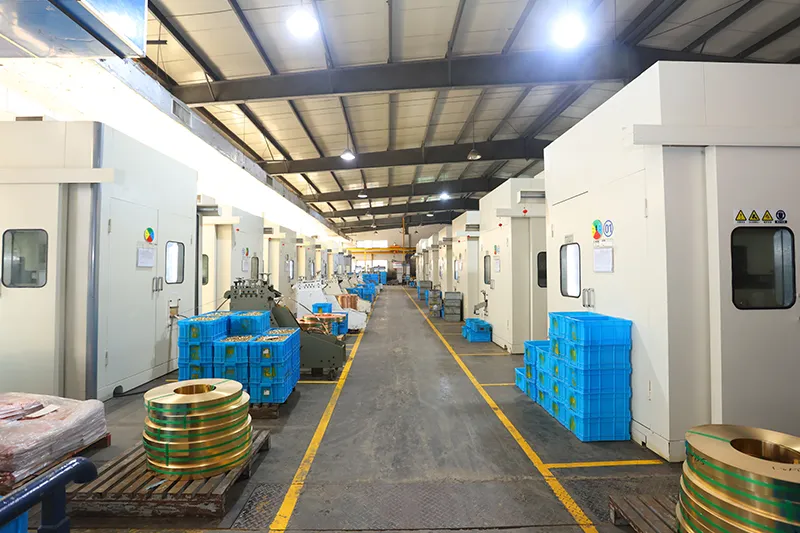
Inyección y Estampado

Inspección de calidad



Quality records and applicable product documents can be supplied for the confirmed CQB2-125 configuration. Certification and market-approval availability must be verified for the selected model.
¿Qué podemos personalizar?
For CQB2-125 projects, CHAC can assess private-label marking, packaging, appearance, existing electrical configurations and technical-document requirements. Requests outside the published product range, including new electrical ratings or market approvals, are subject to engineering evaluation, testing and project feasibility.

Logotipo y marca
Private-label marking and nameplate options are available subject to artwork review and sample approval.


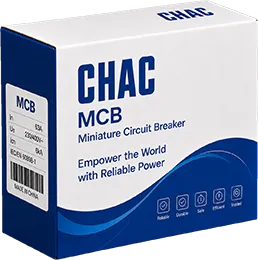
Empaquetado
Personalización
Color boxes, cartons, labels and manuals can be prepared for the destination market and approved order specification.

Eléctrico
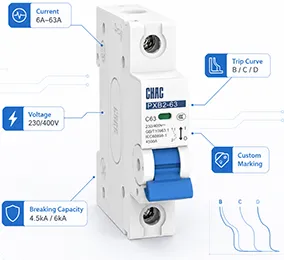
Personalización
Select from the published 63–125A, 1P–4P and C/D options; requests outside this range require technical evaluation.

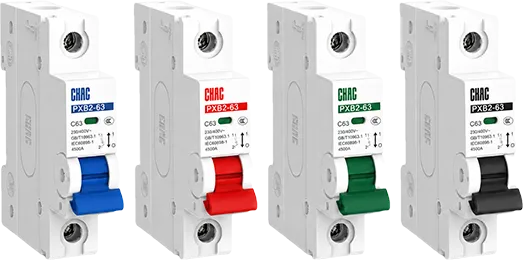
Producto
Apariencia
Housing, handle and appearance options can be reviewed subject to tooling, MOQ and technical feasibility.

Certificación
Apoyo
Se proporcionan hojas de datos, dibujos e información del certificado verificada para la configuración aprobada aplicable.


Ingeniería
Desarrollo
Project support can include drawing review, sample evaluation, testing and production planning, subject to technical approval.

Descargar
Interruptor automático en miniatura serie CQB2
Download the CQB2 series overview for product selection reference. Confirm that each specification and document applies to the CQB2-125 configuration requested for your project.
Need CQB2-125 Technical Documents?
Request the applicable datasheet, drawings, verified certificate information, selection support or OEM/ODM project review.
CQB2-125 Miniature Circuit Breaker FAQ
Q1. What does 10kA mean on the CQB2-125 miniature circuit breaker?
The CQB2-125 has a rated ultimate short-circuit breaking capacity (Icu) of 10,000A and a rated service short-circuit breaking capacity (Ics) of 7,500A. The 10kA marking does not make the breaker suitable for every installation. The prospective short-circuit current at the installation point and the complete protection design must be checked before selection.
Q2. How do I choose between a C curve and D curve MCB?
Choose the curve according to the load’s inrush characteristics and the required protection coordination. C curve is commonly evaluated for general distribution loads with moderate inrush, while D curve may be considered for loads with higher starting current. The correct choice depends on the actual load and system study, not on rated current alone.
Q3. What is the difference between Icu and Ics?
Icu is the rated ultimate short-circuit breaking capacity. Ics is the rated service short-circuit breaking capacity and indicates the short-circuit duty after which the breaker is expected to remain suitable for continued service under the applicable test conditions. For CQB2-125, the listed values are 10kA Icu and 7.5kA Ics.
Q4. Can the CQB2-125 be used as a 125A DC circuit breaker?
No. The specifications on this page describe an AC 230/400V product. AC and DC interruption duties are not interchangeable. Use a breaker that is specifically rated and verified for the intended DC system when DC protection is required.
Q5. What cable size is required for a 125 amp circuit breaker?
The CQB2-125 product reference table pairs 125A with a 50mm² copper conductor; it also lists 16mm² for 63A, 25mm² for 80A and 35mm² for 100A. These are product references, not universal wiring rules. Final conductor sizing must account for installation method, temperature, grouping, voltage drop, conductor material and local electrical requirements.
Q6. When should I choose a 125A MCB instead of a 63A MCB or MCCB?
Consider CQB2-125 when the circuit design requires a 63A to 125A modular AC breaker and its fixed C or D curve, 10kA Icu and other listed characteristics meet the project. For lower-current circuits, a 63A-range MCB may be more appropriate. If adjustable protection, higher fault duty or more advanced coordination is required, evaluate an MCCB. The final decision should be made from the complete system study.
Build the Right CQB2-125 Configuration for Your Project
Send the required current rating, C or D curve, pole configuration, system voltage, destination market and estimated quantity. CHAC will review the specification and provide the applicable technical documents and commercial proposal.