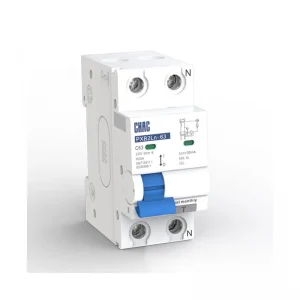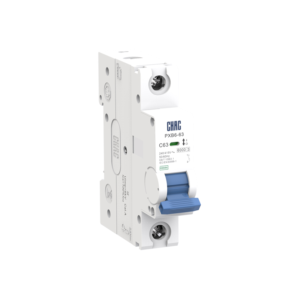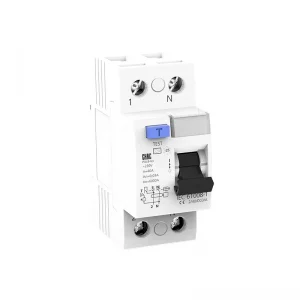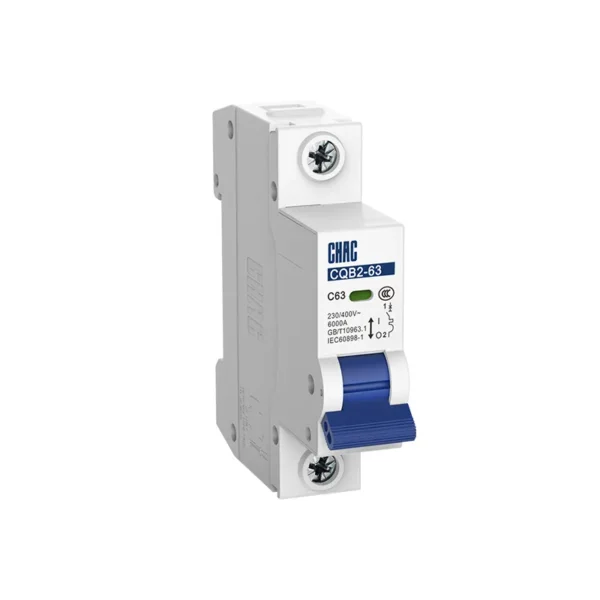
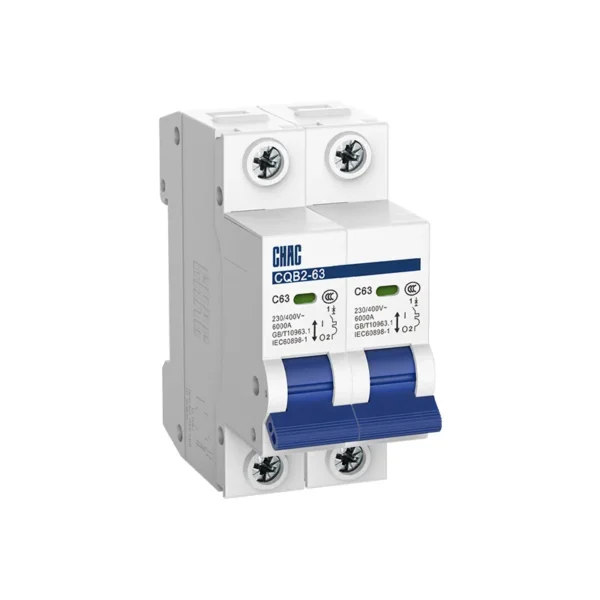
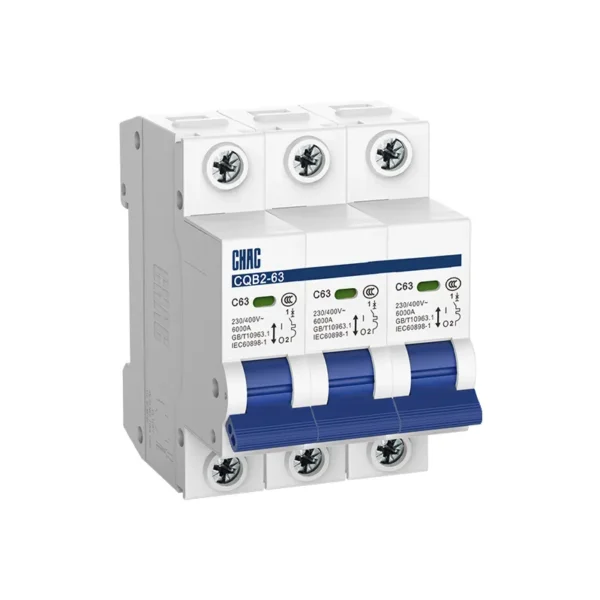
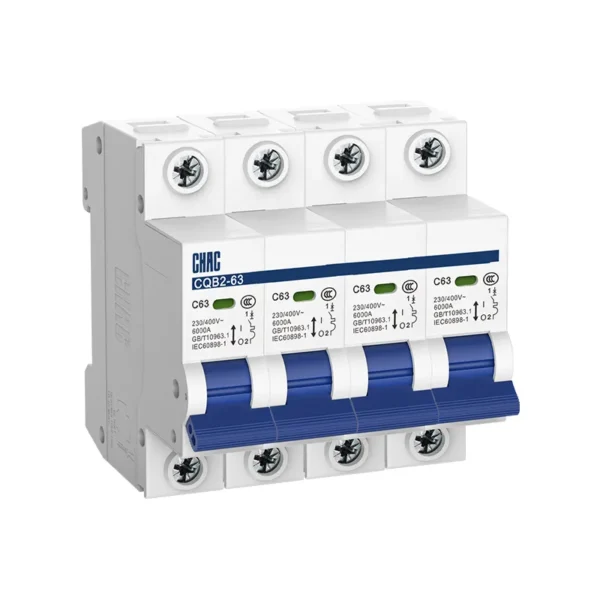
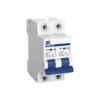
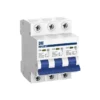
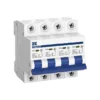
Interruptor automático miniatura CQB2-63
El interruptor automático en miniatura CQB2-63 está diseñado para la protección contra sobrecargas y cortocircuitos en sistemas de distribución final de CA 230/400V. Cubre curvas de disparo 6A a 63A, B, C y D, así como configuraciones 1P, 1P+N, 2P, 3P, 3P+N y 4P. Su capacidad nominal de corte de cortocircuito es 6kA, con Icn igual a Ics. La serie cumple con la norma IEC 60898-1 y la página del modelo indica certificación CCC. Proporciona a distribuidores, fabricantes de cuadros eléctricos y compradores OEM una plataforma claramente definida para proyectos de distribución residencial, comercial y ligero-industrial.
Descripción del producto
El CQB2-63 es un interruptor automático en miniatura de 6kA para circuitos de distribución final que requieren protección contra sobrecargas y cortocircuitos. Está clasificado para 230/400V CA a 50 o 60Hz y está disponible desde 6A hasta 63A. Los compradores pueden especificar características de disparo B, C o D y elegir configuraciones de 1P, 1P+N, 2P, 3P, 3P+N o 4P para adaptarse al circuito y a las normas locales de instalación.
Para los compradores que comparan un MCB 6kA, el interruptor automático CQB2-63 ofrece las opciones B, C y D dentro de sus curvas de disparo publicadas para MCB.
Para distribuidores, constructores de cuadros y OEMs eléctricos, la serie combina una plataforma de capacidad de corte consistente 6kA con una amplia gama de configuraciones. La selección aún debe basarse en la capacidad de corriente del conductor, el comportamiento de la carga, la corriente de cortocircuito prevista, las condiciones ambientales y el mercado de destino. El CQB2-63 está especificado según IEC 60898-1, y la certificación CCC es la que se confirma para este modelo en la página actual del producto.
Características clave
Aplicaciones típicas
El CQB2-63 está destinado a circuitos finales en sistemas de distribución residenciales, comerciales y ligeros industriales. Los usos típicos incluyen iluminación, tomas de corriente, pequeños sistemas HVAC, bombas y otros circuitos derivados cuando la clasificación seleccionada y la curva de disparo coinciden con el conductor, la carga y el estudio de corriente de falla. Un MCB protege principalmente los conductores del circuito, por lo que la selección debe tener en cuenta el tamaño del cable, el método de instalación, la temperatura ambiente, el agrupamiento y la coordinación aguas arriba, más que solo el nombre del aparato.
Guía de Solicitudes y Selección
| Elemento de selección | Cómo evaluarlo | Opciones de CQB2-63 |
|---|---|---|
| Corriente nominal | Confirme la corriente de diseño, la capacidad de carga del conductor, el método de instalación, la temperatura ambiente y el agrupamiento. No aumente la clasificación del interruptor para solucionar las desconexiones repetidas sin diagnosticar la causa. | 6A, 10A, 16A, 20A, 25A, 32A, 40A, 50A, 63A |
| Curva de disparo | Compare la corriente de funcionamiento normal, la corriente de arranque o de inrush y el nivel de corriente de falta necesario para una operación magnética oportuna. | B, C o D |
| Número de polos | Asocie el sistema de suministro y determine qué conductores activos —y, cuando sea necesario, el conductor neutro— deben desconectarse simultáneamente. | 1P, 1P+N, 2P, 3P, 3P+N, 4P |
| Capacidad de corte | Verifique que la corriente de cortocircuito prevista en el punto de instalación no supere la clasificación del dispositivo. Utilice otra solución de protección si el cálculo requiere un valor más alto. | 6kA, Icn = Ics |
| Documentos estándar y de mercado | Verifique la norma del producto, las reglas del mercado de destino y los documentos exactos requeridos por el cliente o el organismo de aprobación. | IEC 60898-1; CCC confirmado en esta página |
Compare la capacidad de desconexión, las curvas de sobrecarga, las configuraciones de polos y las funciones de protección antes de seleccionar el interruptor de circuito miniatura adecuado para su aplicación.
6kA vs 10kA MCB
Seleccione la capacidad de corte según la corriente de cortocircuito prevista en el punto de instalación, no únicamente según la corriente nominal del circuito.
Curva B frente a curva C frente a curva D
Select the tripping curve according to load inrush characteristics, not by current rating alone.
1P+N vs 2P MCB
Both options can be used in single-phase circuits, but their switching and protection arrangements are different.
MCB frente a RCBO
An MCB protects against overload and short circuit, while an RCBO also provides residual-current protection.
¿Necesita ayuda para seleccionar una configuración de MCB?
Share your pole configuration, rated current, tripping curve and quantity. Our team will help confirm a suitable CQB2-63 option for your application.
Guía de pedidos
Professional MCB product pages commonly identify operating and storage conditions, mounting format, conductor capacity, tightening torque, dimensions and weight. These values vary by product family, rated current and pole configuration, so figures from another brand or series should not be applied to the CQB2-63. Confirm the following items on the approved CQB2-63 datasheet, installation instructions or project quotation before final selection:
For a project-specific confirmation, send CHAC the rated current, trip curve, pole configuration, destination market, expected quantity and panel or conductor constraints.
How to choose between B, C and D curves
The curve identifies the instantaneous magnetic-trip range, not a general quality grade. The CQB2-63 tripping table gives 3–5 × In for B curve, 5–10 × In for C curve and 10–20 × In for D curve. B curve is commonly considered for low-inrush circuits, C curve for moderate inrush, and D curve for higher-inrush equipment. The final choice must still provide adequate fault protection; selecting a slower curve only to avoid nuisance trips can delay operation when fault current is limited.
How to choose the pole configuration
Select the pole arrangement from the actual supply and isolation requirements rather than from panel space alone. A 1P device switches one conductor, while multi-pole versions provide mechanically linked operation for the specified conductors. Neutral switching and isolation rules vary by system and market, so 1P+N, 3P+N and 4P options should be confirmed against the project drawings and local requirements.
When 6kA is not enough
A 6kA marking means the breaker is rated to interrupt a prospective short-circuit current of up to 6,000A under the applicable test conditions; it is not the normal load-current rating. If the calculated or measured prospective fault current at the installation point exceeds 6kA, use equipment with a suitable rating or a verified coordinated solution rather than assuming every MCB is interchangeable.
Designación del tipo
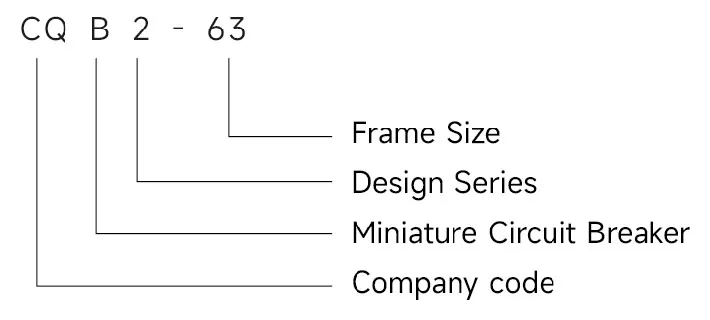
Curvas de disparo

Dimensiones (unidad: mm)

Especificaciones técnicas
| Parámetro | |
| Rated insulation voltage | 500 V |
| Tensión soportada de impulso nominal (Uimp) | 4000 V |
| Corriente nominal | 6A, 10A, 16A, 20A, 25A, 32A, 40A, 50A, 63A |
| Frecuencia nominal | 50 Hz / 60 Hz |
| Número de polos | 1P, 1P+N, 2P, 3P, 3P+N, 4P |
| Poder de corte nominal (Icn = Ics) | 6000 A |
| Vida mecánica | ≥ 10,000 operations |
| Vida eléctrica | ≥ 6,000 operations |
| Características de los trips | B, C, D |
| Distancia entre centros del terminal | 45 mm |
| Grado de protección | IP20 |
| Estándares | IEC 60898-1, GB/T 10963.1 |
| Certificación | CCC |
Table 1 Tripping characteristics (Reference temperature 30°C)
| Artículo | Curva de disparo | Prueba corriente en (A) | Estado inicial | Límite de tiempo para disparar o no disparar | Resultado esperado | Observaciones |
| a | B, C, D | 1,13 ln | Frío | t ≤ 1 h | No desatascador | La corriente sube suavemente al valor especificado en 5s |
| b | B, C, D | 1.45ln | Siguiendo el ítem una prueba | t<1h | Tropezando | |
| c | B, C, D | 2,55 ln | Frío | 1s<t<60s(ln≤32A) 1s<t<120s(ln>32A) |
Tropezando | |
| d | B | 3En | Frío | t ≤ 0,1 s | No desatascador | Enciende la fuente de alimentación cerrando el interruptor auxiliar |
| C | 5In | |||||
| D | 10ln | |||||
| e | B | 5In | Frío | t<0,1s | Tropezando | Enciende la fuente de alimentación cerrando el interruptor auxiliar |
| C | 10ln | |||||
| D | 20ln |
Nota: El término “en frío” significa que la prueba se realiza a una temperatura de calibración de referencia sin carga antes de la prueba.
Requisitos del conductor y sección transversal
| Sección transversal de cobre (mm²) | Corriente nominal In(A) |
| 1 | En≤6 |
| 1.5 | 6 In≤13 |
| 2.5 | 13 In≤20 |
| 4 | 20 In≤25 |
| 6 | 25 In≤32 |
| 10 | 32 In≤50 |
| 16 | 50 In≤63 |
¿Por qué elegir CHAC?
Con más de 30 años de experiencia en fabricación, más de 1100 empleados, más de 100 millones de postes
Con una capacidad anual y un proceso de producción automatizado 90%, CHAC ofrece una capacidad de producción estable y un estricto
control de calidad para clientes OEM/ODM globales. Nuestro sistema de fabricación interno respalda a largo plazo
Cooperación para marcas eléctricas, importadores y distribuidores.

30+
AÑOS DE EXPERIENCIA
Especializado en fabricación eléctrica de bajo voltaje

1100+
EMPLEADOS
Equipo profesional garantiza calidad y entrega estables

100M+
CAPACIDAD ANUAL DE LOS POLOS
Capacidad de producción a gran escala para satisfacer la demanda mundial

90%
PRODUCCIÓN AUTOMATIZADA
Automatización avanzada para alta eficiencia y consistencia

Línea de ensamblaje automatizada

Laboratorio de pruebas
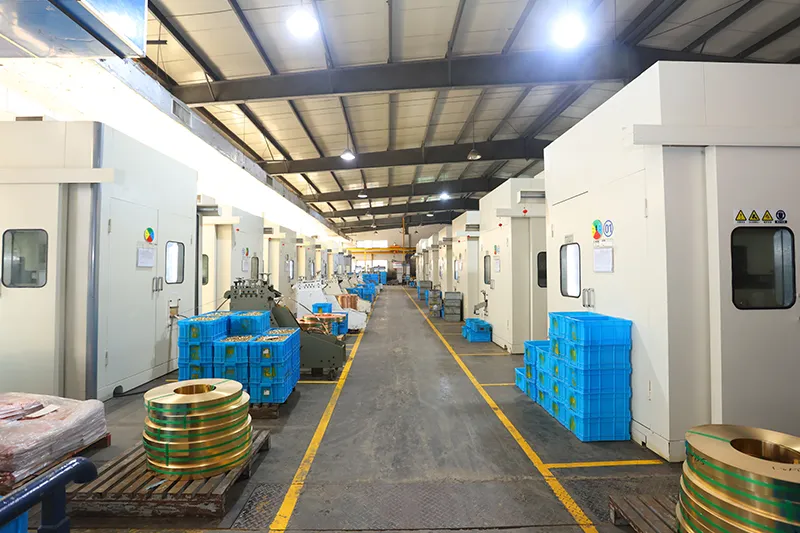
Inyección y Estampado

Inspección de calidad



Un estricto sistema de control de calidad garantiza que cada producto cumpla con los estándares mundiales.
¿Qué podemos personalizar?
CQB2-63 OEM/ODM options are reviewed per project rather than assumed to be available for every configuration. The published 6–63A ratings, B/C/D curves and listed pole arrangements are the starting platform. Marking, packaging, labels, manuals, appearance requests, engineering work and certification support depend on technical feasibility, order quantity, tooling requirements and the destination market. Changes to internal construction, breaking capacity, terminals, dimensions or certified ratings require separate engineering and compliance confirmation.

Logotipo y marca
Logo and marking requests are reviewed against the available print area, required regulatory markings and approved artwork.


Empaquetado
Personalización
Color boxes, cartons, labels and manuals can be reviewed by language, destination market and order quantity.
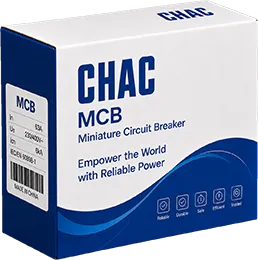

Eléctrico
Personalización
Available rated-current, pole and B/C/D curve combinations are reviewed within the validated CQB2-63 platform.
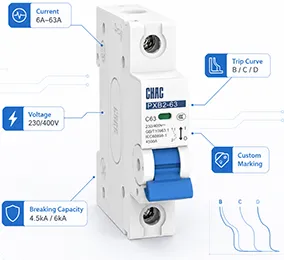

Producto
Apariencia
Housing or handle color requests require technical, material, tooling and compliance review before sampling.
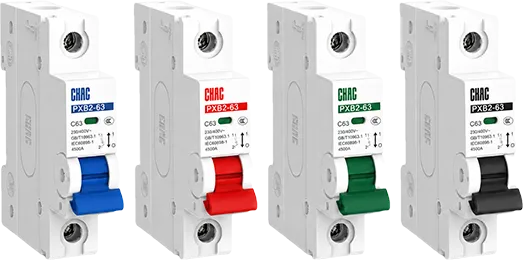

Certificación
Apoyo
Destination-market documents and certification requirements are reviewed for the exact model and configuration before sample approval.


Ingeniería
Desarrollo
Drawing, prototype and validation support is scoped per project; internal construction or rating changes are not assumed.

Descargar
Interruptor automático en miniatura serie CQB2
Descripción general completa de componentes eléctricos de bajo voltaje y referencia para la selección de productos.
¿Necesita documentos técnicos?
Contáctenos para obtener hojas de datos, certificados, planos, orientación de selección o soporte para proyectos OEM/ODM.
CQB2-63 Miniature Circuit Breaker FAQ
How to choose the correct MCB?
Start with the conductor ampacity and circuit design current, then check the supply voltage, pole configuration, load inrush, ambient conditions and prospective short-circuit current. For the CQB2-63, select within 6–63A, match the B/C/D curve to the load and fault conditions, and verify that the installation point does not exceed the 6kA breaking-capacity rating.
What are the different types of poles in an MCB?
MCBs may switch one or several conductors together. The CQB2-63 is offered in 1P, 1P+N, 2P, 3P, 3P+N and 4P configurations; the correct option depends on the single- or three-phase system and whether the neutral must be switched or isolated under the applicable rules.
What does kA mean on circuit breakers?
kA indicates short-circuit breaking capacity, not continuous load current. The CQB2-63 has a 6kA rating, meaning it is designed to interrupt up to 6,000A of prospective short-circuit current under the stated IEC 60898-1 test conditions; the installation must be checked to confirm that this rating is sufficient.
¿Cuál es la diferencia entre un MCB de 1 polos y un MCB de 2 polos?
A 1-pole MCB operates one conductor, while a 2-pole MCB provides linked operation across two conductors. The choice depends on the supply arrangement and disconnection rules; two unrelated single-pole breakers should not be assumed to provide the same common operation as a purpose-designed 2P device.
What is the C curve and D curve in an MCB?
For the CQB2-63, the published instantaneous magnetic-trip ranges are 5–10 × In for C curve and 10–20 × In for D curve. D curve tolerates more starting current, but it should only be used when the load profile and available fault current allow the protective device to operate within the required disconnection time.
When should a B-curve MCB be used?
B curve is generally considered for circuits with relatively low starting or inrush current. The CQB2-63 data gives a B-curve magnetic-trip range of 3–5 × In; engineers should still confirm conductor protection, normal transients and fault-loop conditions rather than choosing the curve from the load label alone.
Build the Right CQB2-63 Configuration for Your Market
Send us your required current rating, B/C/D curve, pole configuration, destination market and estimated quantity. CHAC will review the specification and provide the relevant technical documents and commercial proposal.