La valutazione tra un differenziale di tipo AC e uno di tipo A inizia dalle caratteristiche della corrente residua previste per il circuito, e non da un’immagine del prodotto o da un marchio noto. Un registro dei carichi, lo schema elettrico approvato del quadro, la sensibilità richiesta e la documentazione del modello selezionato forniscono al team addetto alla distribuzione elettrica le informazioni necessarie per confrontare i due tipi, senza considerare alcuno di essi come scelta automatica per il progetto.
Parte 1. Inizia dalle caratteristiche della corrente residua del circuito
La prima domanda non è quale denominazione appaia più esaustiva. Si tratta piuttosto di quali caratteristiche relative alle correnti residue la documentazione del circuito prevede che il dispositivo debba soddisfare. L’elenco dei carichi, la tabella dei circuiti, la configurazione dell’alimentazione e la scheda del dispositivo selezionato trasformano tale questione in una richiesta tecnica verificabile.
Per un acquirente di quadri elettrici, ciò significa mantenere visibile l’ambito dell’impianto elettrico prima di avviare il confronto dei prezzi. Una richiesta che si limita a indicare “Tipo A” o “Tipo AC” lascia al fornitore il compito di dedurre il carico, la sensibilità e i limiti del circuito. Il disegno e la descrizione del carico dovrebbero invece chiarire le motivazioni alla base della scelta di quel tipo specifico.
Parte 2. Cosa fanno le etichette di tipo AC e di tipo A in una recensione
Il tipo AC e il tipo A identificano diverse caratteristiche di rilevamento della corrente differenziale residua. Il tipo A è associato a circuiti in cui è presente una corrente continua pulsante. corrente residua Va tenuto in considerazione; il modello selezionato, le prove di circuito e i requisiti progettuali applicabili continuano a determinare ciò che dovrà essere incluso nella progettazione finale.
L’etichetta costituisce pertanto uno dei componenti di un più ampio insieme di prove, e non una semplice abbreviazione per l’approvazione dell’installazione. La documentazione del produttore e il sistema di norme IEC rappresentano punti di riferimento utili per individuare la scheda tecnica del dispositivo selezionato, mentre il progetto approvato resta il riferimento per il circuito stesso.
Importante: Un’etichetta di tipo AC/tipo A non deve mai sostituire i requisiti documentati del circuito. Prima di confermare il tipo, verificare la scheda dei carichi e la documentazione tecnica esatta del prodotto.Pubblicazioni del Webstore IEC — contesto del documento normativo)
Parte 3. Confronta le prove prima di selezionare un tipo
Posizionare entrambe le opzioni accanto alle stesse domande di verifica impedisce che una descrizione generale della famiglia di prodotti si trasformi in un’ipotesi di progetto. La tabella costituisce uno strumento di confronto, e non un diagramma di cablaggio né una regola definitiva per la selezione del tipo.
| Input di revisione | Tipo di percorso di revisione AC | Tipo di percorso di revisione A |
|---|---|---|
| Descrizione del circuito e del carico | Individuare le caratteristiche di corrente residua indicate nel disegno e nel registro dei carichi. | Individuare le caratteristiche di corrente residua indicate nel disegno e nel registro dei carichi. |
| Richiesta del tipo di dispositivo | Registrare la marcatura di tipo AC richiesta e le prove relative al modello selezionato. | Registrare la marcatura di tipo A richiesta e le prove relative al modello selezionato. |
| Sensibilità | Indicare la sensibilità alla corrente residua richiesta per la verifica. | Indicare la sensibilità alla corrente residua richiesta per la verifica. |
| Supply and poles | Match the supply arrangement and pole requirement to the model record | Match the supply arrangement and pole requirement to the model record |
| Supplier documents | Ask for the exact product identification and documentation | Ask for the exact product identification and documentation |
An evidence-led comparison also keeps product fields in their proper place. The residual-current type request needs to stay beside sensitivity, supply arrangement, and pole requirement, because a type label does not answer those other questions on its own.
Parte 4. Collega il registro del carico alla richiesta del fornitore
Give the supplier the circuit record that made the type comparison necessary. A current drawing revision, load description, requested residual-current type, requested sensitivity, supply arrangement, and current requirement let the response be checked against the same information used by the panel team.
| Prove da fornire | Why it matters to the quote | Risposta da confrontare |
|---|---|---|
| Panel drawing and revision | Shows the circuit boundary and supply arrangement | Proposed model matched to the identified circuit |
| Load description | Makes the residual-current-type question explicit | Type marking and selected-model documentation |
| Requested sensitivity | States the protection field to be reviewed | Product record matching the request |
| Pole and current requirement | Connects the device route to the panel record | Published selected-model fields |
| Contesto di installazione | Identifies conditions that need confirmation | Stated limits and documentation requested |
For sensitivity-specific context, use the related 30mA versus 10mA RCCB selection guide. Disposizione dei pali is a separate drawing review, covered in the two-pole versus four-pole RCCB panel review.
Parte 5. Rendere una quotazione RCCB revisionabile
A supplier request should name the information to return, not only the product family to search. Ask for the proposed model, its residual-current type marking, the documents used for comparison, and a response tied to the current drawing revision.
| Includi con la richiesta di offerta | Cosa risolve | Risposta del fornitore alla richiesta di |
|---|---|---|
| Current panel drawing | Circuit boundary and supply arrangement | Proposed model identified against the drawing |
| Load record and requested type | Reason for the Type AC or Type A comparison | Selected-model type documentation |
| Sensitivity and current requirement | Electrical fields that must be reviewed | Published fields for the proposed product |
| Pole requirement | Device arrangement to compare | Model-specific pole information |
| Required documentation | A traceable technical response | Product identification and requested records |
Il Categoria RCCB is the appropriate upward product-family context, while the terminal electrical appliances range helps when the panel includes related components. The choice between an RCCB and an RCBO remains a different function question, discussed in the RCBO versus RCCB selection boundary article.
Parte 6. Utilizzare il percorso CHAC RCCB dopo che gli input sono stati completati.
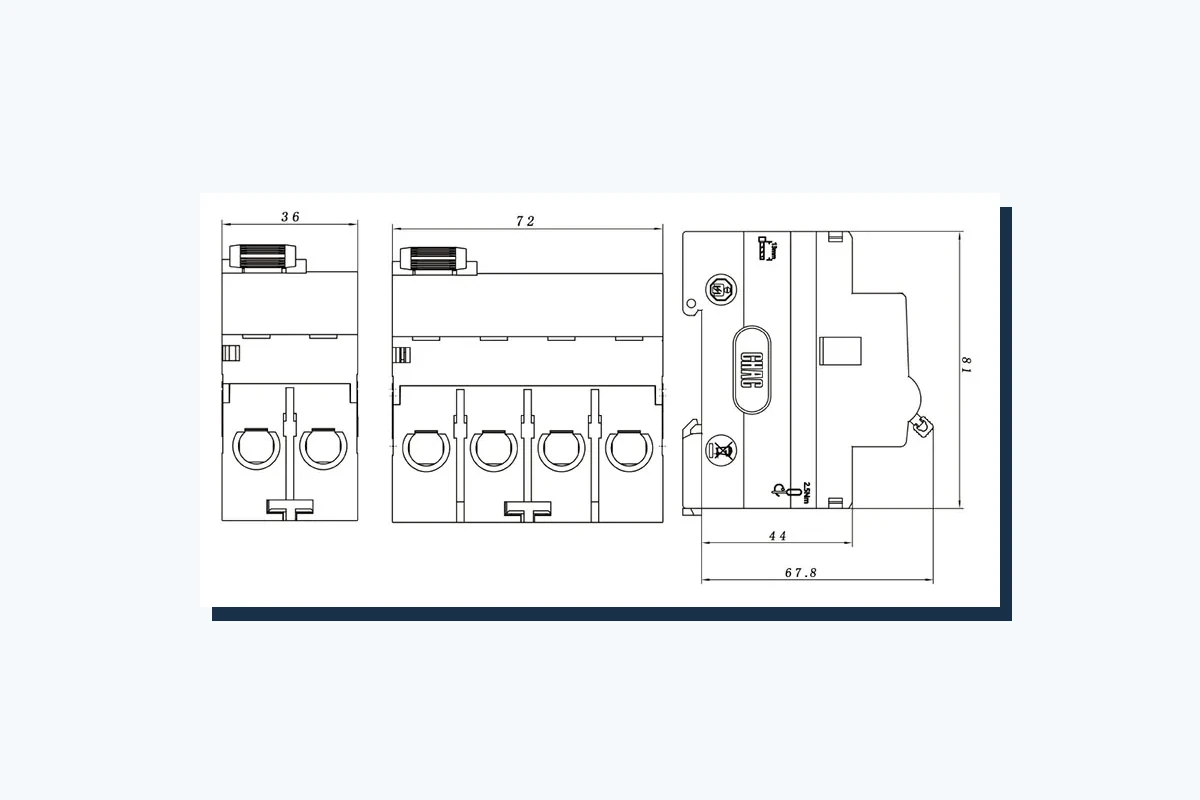
Il PXL6a-100 RCCB product route publicly lists AC Type and A Type, 2P/4P, 230/400V AC, 25A–100A, 30/100/300mA, and IEC 61008-1. Use those published fields to start a selected-model discussion after the RFQ has organised the circuit evidence, rather than using them to decide a panel by themselves.
Consiglio di acquisto
Interruttore differenziale elettromagnetico serie PXL9-63 RCBO | CHAC Electric

Use this PXL6a-100 RCCB product route when the request already identifies the residual-current type, sensitivity, supply arrangement, pole requirement, and required documents. Do not exchange it for an RCBO or an image-only match: the functional boundary, selected-model fields, and project fit still need their own confirmation. A request that needs branded product presentation or tailored documentation can use the pagina di personalizzazione elettrica del terminale.
Parte 7. Mantieni la selezione del tipo all'interno del suo limite di adattamento
This article supports early panel review and a clearer supplier conversation. It does not provide live-work guidance, local installation interpretation, final protection coordination, or approval of a device type for a named installation.
Fit Boundary: retain final type selection with the approved drawing, load record, selected-model documentation, applicable project requirements, and qualified engineering review. Send the circuit evidence and documentation request to CHAC Electric when asking for a product route.
What does the connected load tell you about RCCB type?
A Type AC RCCB e un Type A RCCB are selected by the residual-current waveform expected from the installation, not by preference for a familiar label. Type AC is associated with sinusoidal AC residual current within its scope; Type A is intended for the additional pulsating-DC conditions defined by the applicable standard and product documentation.
| Review question | Perché è importante | Cosa verificare |
|---|---|---|
| What load is connected? | Power electronics can change the residual-current waveform | Equipment manufacturer and installation requirements |
| What protection function is needed? | Sensitivity and waveform type are separate decisions | Rated residual operating current and type marking |
| What local rule applies? | National adoption can change the permitted arrangement | Current installation requirements |
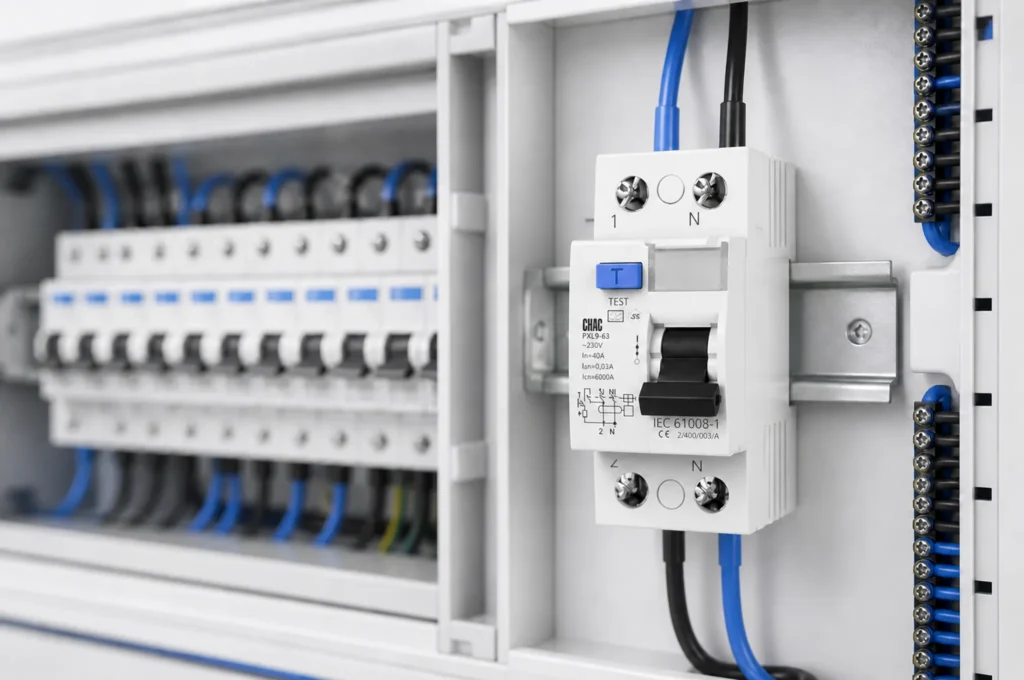
The key selection field is the residual current waveform, alongside sensitivity, pole arrangement and rated current. Review CHAC’s PXL9-63 leakage breaker documentation for the exact model rather than generalizing from the family name.
Is Type A always better than Type AC?
No. Choose the type that matches the residual-current waveform and the applicable installation requirements. A higher category is not a substitute for checking the actual load.
Are RCCB sensitivity and type the same decision?
No. Sensitivity describes the residual-current operating level; type describes the waveform conditions the device is designed to detect within its scope.
FAQ
What is the difference between Type AC and Type A RCCB?
They represent different residual-current detection characteristics. The circuit evidence and selected-model documentation establish which type should be reviewed for the panel.
Does Type A RCCB detect pulsating DC residual current?
Type A is associated with review of pulsating DC residual current characteristics. Confirm the exact selected-model documentation and the project circuit requirements before making a final choice.
Can Type AC be replaced by Type A without a drawing review?
No automatic replacement should be assumed. Keep the load record, residual-current type request, sensitivity, and current drawing revision together for review.
Which RCCB type should be specified for electronic loads?
Describe the loads and their residual-current characteristics in the project record, then request the selected-model evidence that addresses the stated type requirement. A generic label does not replace that review.
What information should be included in an RCCB RFQ?
Include the panel drawing, load description, requested type, sensitivity, pole and current requirements, supply arrangement, installation context, and the documentation required for the proposed model.
Is an RCCB the same as an RCBO?
No. Their protection-function boundary needs a separate review with the project requirements and selected-model documentation.