Porównanie wyłączników różnicowoprądowych typu AC z wyłącznikami typu A rozpoczyna się od analizy charakterystyki prądu resztkowego oczekiwanej dla danego obwodu, a nie od wizerunku produktu czy znanej etykiety. Zapis obciążenia, zatwierdzony rysunek tablicy rozdzielczej, wymagana czułość oraz dokumentacja wybranego modelu dostarczają zespołowi zajmującemu się tablicą rozdzielczą niezbędnych danych, które pozwalają na porównanie tych dwóch typów bez traktowania żadnego z nich jako automatycznego wyboru projektowego.
Część 1. Zacznij od charakterystyk prądu resztowego obwodu
Pierwsze pytanie nie brzmi, które oznaczenie wydaje się bardziej wszechstronne. Stanowi ono raczej: jakie właściwości prądu resztowego dokumentacja obwodu przewiduje dla danego urządzenia? Lista obciążeń, harmonogram obwodów, układ zasilania oraz karta danych wybranego urządzenia przekształcają to pytanie w podlegający weryfikacji wymóg techniczny.
Dla nabywcy rozdzielni oznacza to, że zakres elektryczny powinien być widoczny jeszcze przed rozpoczęciem porównania cen. Zapytanie, w którym podano jedynie “Typ A” lub “Typ AC”, pozostawia dostawcy swobodę interpretacji obciążenia, czułości oraz granic obwodu. Zamiast tego rysunek i opis obciążenia powinny wyraźnie określać, dlaczego bierze się pod uwagę właśnie ten typ.
Część 2. Jakie zadania mają etykiety typu AC i typu A w recenzji?
Typ AC i typ A odróżniają się charakterystyką detekcji prądu różnicowego. Typ A jest stosowany w obwodach, w których występuje pulsujący prąd stały. prąd resztkowy Należy to wziąć pod uwagę; wybrany model, dowody dotyczące obwodu oraz obowiązujące wymagania projektowe nadal decydują o tym, co znajdzie się w finalnym projekcie.
Etykieta stanowi zatem jeden z elementów szerszego zestawu dowodów, a nie skrót oznaczający zatwierdzenie instalacji. Dokumentacja producenta oraz system norm IEC są przydatnymi źródłami do znalezienia zapisu dotyczącego wybranego urządzenia, podczas gdy zatwierdzony projekt pozostaje referencją dla samego obwodu.
Ważne: Oznaczenie typu AC/typu A nigdy nie powinno nadpisywać udokumentowanego wymogu obwodu. Przed ostatecznym ustaleniem typu należy przejrzeć rejestr obciążenia oraz dokładną dokumentację produktu.Publikacje ze Sklepu Internetowego IEC — kontekst dokumentu standardów)
Część 3. Porównaj dowody przed wyborem typu
Putting both routes beside the same review questions prevents a broad product family description from becoming a project assumption. The table is a comparison aid, not a wiring diagram or a final type-selection rule.
| Wprowadzenie uwag | Type AC review route | Type A review route |
|---|---|---|
| Circuit and load description | Identify the stated residual-current characteristics in the drawing and load record | Identify the stated residual-current characteristics in the drawing and load record |
| Device type request | Record the requested Type AC marking and selected-model evidence | Record the requested Type A marking and selected-model evidence |
| Sensitivity | State the required residual-current sensitivity for review | State the required residual-current sensitivity for review |
| Zaopatrzenie i słupy | Match the supply arrangement and pole requirement to the model record | Match the supply arrangement and pole requirement to the model record |
| Supplier documents | Ask for the exact product identification and documentation | Ask for the exact product identification and documentation |
An evidence-led comparison also keeps product fields in their proper place. The residual-current type request needs to stay beside sensitivity, supply arrangement, and pole requirement, because a type label does not answer those other questions on its own.
Część 4. Połącz rekord załadunku z żądaniem dostawcy
Give the supplier the circuit record that made the type comparison necessary. A current drawing revision, load description, requested residual-current type, requested sensitivity, supply arrangement, and current requirement let the response be checked against the same information used by the panel team.
| Dowody do przedstawienia | Why it matters to the quote | Odpowiedź do porównania |
|---|---|---|
| Panel drawing and revision | Shows the circuit boundary and supply arrangement | Proposed model matched to the identified circuit |
| Load description | Makes the residual-current-type question explicit | Type marking and selected-model documentation |
| Requested sensitivity | States the protection field to be reviewed | Product record matching the request |
| Pole and current requirement | Connects the device route to the panel record | Publikowano pola z wybranymi modelami |
| Kontekst instalacji | Identifies conditions that need confirmation | Stated limits and documentation requested |
For sensitivity-specific context, use the related Przewodnik doboru przekaźnika RCCB o mocy 30 mA wobec 10 mA. Układ pól is a separate drawing review, covered in the two-pole versus four-pole RCCB panel review.
Część 5. Umożliwienie przeglądu wyceny RCCB
A supplier request should name the information to return, not only the product family to search. Ask for the proposed model, its residual-current type marking, the documents used for comparison, and a response tied to the current drawing revision.
| Dołączyć do zapytania ofertowego | Co rozwiązuje | Odpowiedź dostawcy na prośbę o |
|---|---|---|
| Current panel drawing | Circuit boundary and supply arrangement | Proposed model identified against the drawing |
| Load record and requested type | Reason for the Type AC or Type A comparison | Selected-model type documentation |
| Sensitivity and current requirement | Electrical fields that must be reviewed | Published fields for the proposed product |
| Pole requirement | Device arrangement to compare | Model-specific pole information |
| Required documentation | A traceable technical response | Product identification and requested records |
The Kategoria RCCB is the appropriate upward product-family context, while the Zakres urządzeń elektrycznych terminalowych helps when the panel includes related components. The choice between an RCCB and an RCBO remains a different function question, discussed in the Artykuł o granicy wyboru między RCBO a RCCB.
Część 6. Użyj trasy CHAC RCCB po ukończeniu wprowadzania danych.
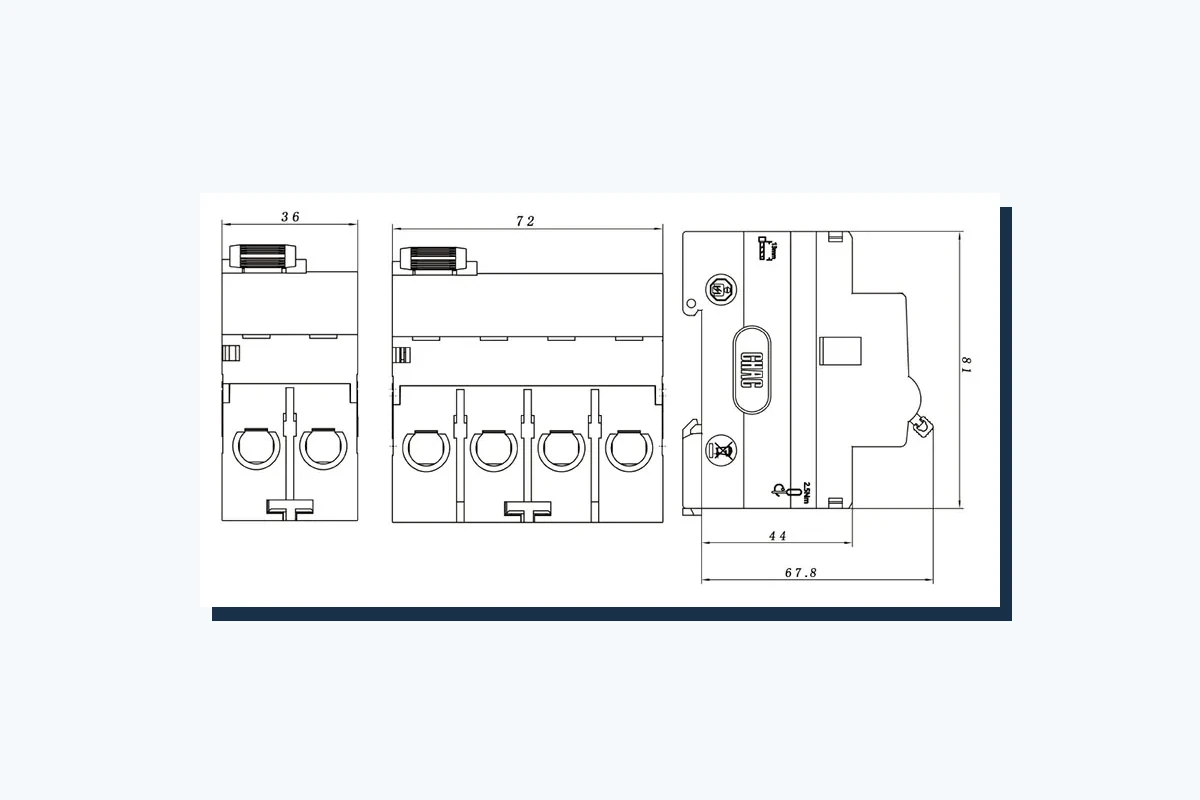
The Trasa produkcji produktu PXL6a-100 RCCB publicly lists AC Type and A Type, 2P/4P, 230/400V AC, 25A–100A, 30/100/300mA, and IEC 61008-1. Use those published fields to start a selected-model discussion after the RFQ has organised the circuit evidence, rather than using them to decide a panel by themselves.
Zalecenie produktu
Przerzutnik magnetyczny typu PXL9-63 RCBO | CHAC Electric

Use this PXL6a-100 RCCB product route when the request already identifies the residual-current type, sensitivity, supply arrangement, pole requirement, and required documents. Do not exchange it for an RCBO or an image-only match: the functional boundary, selected-model fields, and project fit still need their own confirmation. A request that needs branded product presentation or tailored documentation can use the strona z personalizacją terminalu elektrycznego.
Część 7. Zachowaj wybór typu wewnątrz jego granicy dopasowania.
This article supports early panel review and a clearer supplier conversation. It does not provide live-work guidance, local installation interpretation, final protection coordination, or approval of a device type for a named installation.
Fit Boundary: retain final type selection with the approved drawing, load record, selected-model documentation, applicable project requirements, and qualified engineering review. Send the circuit evidence and documentation request to CHAC Electric when asking for a product route.
What does the connected load tell you about RCCB type?
A Type AC RCCB i a Type A RCCB are selected by the residual-current waveform expected from the installation, not by preference for a familiar label. Type AC is associated with sinusoidal AC residual current within its scope; Type A is intended for the additional pulsating-DC conditions defined by the applicable standard and product documentation.
| Review question | Dlaczego to ma znaczenie | Czego należy zweryfikować |
|---|---|---|
| What load is connected? | Power electronics can change the residual-current waveform | Equipment manufacturer and installation requirements |
| What protection function is needed? | Sensitivity and waveform type are separate decisions | Rated residual operating current and type marking |
| What local rule applies? | National adoption can change the permitted arrangement | Current installation requirements |
The key selection field is the residual current waveform, alongside sensitivity, pole arrangement and rated current. Review CHAC’s Przerwanie wycieków PXL9-63 documentation for the exact model rather than generalizing from the family name.
Is Type A always better than Type AC?
No. Choose the type that matches the residual-current waveform and the applicable installation requirements. A higher category is not a substitute for checking the actual load.
Are RCCB sensitivity and type the same decision?
No. Sensitivity describes the residual-current operating level; type describes the waveform conditions the device is designed to detect within its scope.
FAQ
What is the difference between Type AC and Type A RCCB?
They represent different residual-current detection characteristics. The circuit evidence and selected-model documentation establish which type should be reviewed for the panel.
Does Type A RCCB detect pulsating DC residual current?
Type A is associated with review of pulsating DC residual current characteristics. Confirm the exact selected-model documentation and the project circuit requirements before making a final choice.
Can Type AC be replaced by Type A without a drawing review?
No automatic replacement should be assumed. Keep the load record, residual-current type request, sensitivity, and current drawing revision together for review.
Which RCCB type should be specified for electronic loads?
Describe the loads and their residual-current characteristics in the project record, then request the selected-model evidence that addresses the stated type requirement. A generic label does not replace that review.
What information should be included in an RCCB RFQ?
Include the panel drawing, load description, requested type, sensitivity, pole and current requirements, supply arrangement, installation context, and the documentation required for the proposed model.
Is an RCCB the same as an RCBO?
No. Their protection-function boundary needs a separate review with the project requirements and selected-model documentation.