Type AC versus Type A RCCB review starts with the residual-current characteristics expected from the circuit, not a product image or a familiar label. A load record, the approved panel drawing, the requested sensitivity, and selected-model documentation give a distribution-panel team the evidence needed to compare the two types without treating either as an automatic project choice.
Part 1. Start with the residual-current characteristics of the circuit
The first question is not which label sounds more comprehensive. It is what residual-current characteristics the circuit documentation expects the device to address. The load list, circuit schedule, supply arrangement, and the selected-device record turn that question into a reviewable technical request.
For a panel buyer, that means keeping the electrical scope visible before price comparison begins. A request that only says “Type A” or “Type AC” leaves the supplier to infer the load, sensitivity, and circuit boundary. The drawing and load description should instead establish why that type is being considered.
Part 2. What Type AC and Type A labels do in a review
Type AC and Type A identify different residual-current detection characteristics. Type A is associated with circuits where pulsating DC residual current needs to be considered; the selected model, circuit evidence, and applicable project requirements still determine what belongs in the final design.
The label is therefore one field in a wider evidence set, not a shorthand for installation approval. Manufacturer documentation and the IEC standards system are useful places to locate the selected-device record, while the approved design remains the reference for the circuit itself.
Important: A Type AC/Type A label should never override the documented circuit requirement. Review the load record and the exact product documentation before the type is finalised. (IEC Webstore publications — standards-document context)
Part 3. Compare the evidence before selecting a type
Putting both routes beside the same review questions prevents a broad product family description from becoming a project assumption. The table is a comparison aid, not a wiring diagram or a final type-selection rule.
| Review input | Type AC review route | Type A review route |
|---|---|---|
| Circuit and load description | Identify the stated residual-current characteristics in the drawing and load record | Identify the stated residual-current characteristics in the drawing and load record |
| Device type request | Record the requested Type AC marking and selected-model evidence | Record the requested Type A marking and selected-model evidence |
| Sensitivity | State the required residual-current sensitivity for review | State the required residual-current sensitivity for review |
| Supply and poles | Match the supply arrangement and pole requirement to the model record | Match the supply arrangement and pole requirement to the model record |
| Supplier documents | Ask for the exact product identification and documentation | Ask for the exact product identification and documentation |
An evidence-led comparison also keeps product fields in their proper place. The residual-current type request needs to stay beside sensitivity, supply arrangement, and pole requirement, because a type label does not answer those other questions on its own.
Part 4. Connect the load record to the supplier request
Give the supplier the circuit record that made the type comparison necessary. A current drawing revision, load description, requested residual-current type, requested sensitivity, supply arrangement, and current requirement let the response be checked against the same information used by the panel team.
| Evidence to provide | Why it matters to the quote | Response to compare |
|---|---|---|
| Panel drawing and revision | Shows the circuit boundary and supply arrangement | Proposed model matched to the identified circuit |
| Load description | Makes the residual-current-type question explicit | Type marking and selected-model documentation |
| Requested sensitivity | States the protection field to be reviewed | Product record matching the request |
| Pole and current requirement | Connects the device route to the panel record | Published selected-model fields |
| Installation context | Identifies conditions that need confirmation | Stated limits and documentation requested |
For sensitivity-specific context, use the related 30mA versus 10mA RCCB selection guide. Pole arrangement is a separate drawing review, covered in the two-pole versus four-pole RCCB panel review.
Part 5. Make an RCCB quotation reviewable
A supplier request should name the information to return, not only the product family to search. Ask for the proposed model, its residual-current type marking, the documents used for comparison, and a response tied to the current drawing revision.
| Include with the RFQ | What it resolves | Supplier response to ask for |
|---|---|---|
| Current panel drawing | Circuit boundary and supply arrangement | Proposed model identified against the drawing |
| Load record and requested type | Reason for the Type AC or Type A comparison | Selected-model type documentation |
| Sensitivity and current requirement | Electrical fields that must be reviewed | Published fields for the proposed product |
| Pole requirement | Device arrangement to compare | Model-specific pole information |
| Required documentation | A traceable technical response | Product identification and requested records |
The RCCB category is the appropriate upward product-family context, while the terminal electrical appliances range helps when the panel includes related components. The choice between an RCCB and an RCBO remains a different function question, discussed in the RCBO versus RCCB selection boundary article.
Part 6. Use the CHAC RCCB route after inputs are complete
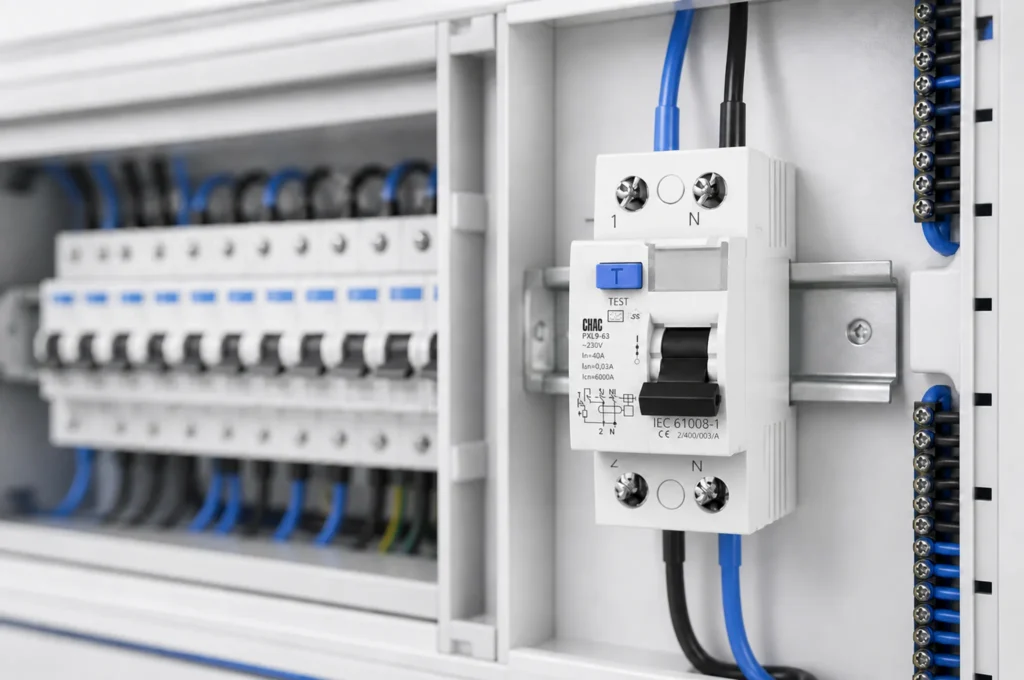
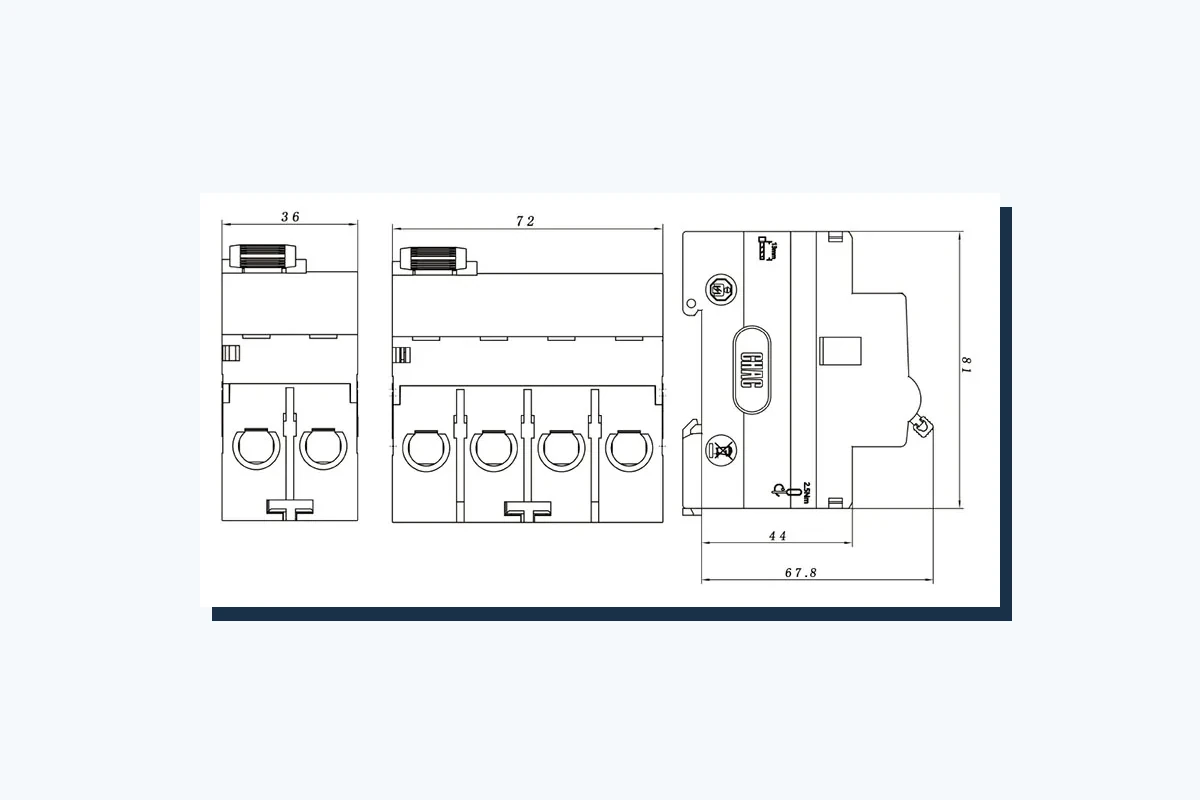
The PXL6a-100 RCCB product route publicly lists AC Type and A Type, 2P/4P, 230/400V AC, 25A–100A, 30/100/300mA, and IEC 61008-1. Use those published fields to start a selected-model discussion after the RFQ has organised the circuit evidence, rather than using them to decide a panel by themselves.
Product recommendation
PXL9-63 Series Electromagnetic Leakage Circuit Breaker RCBO | CHAC Electric

Use this PXL6a-100 RCCB product route when the request already identifies the residual-current type, sensitivity, supply arrangement, pole requirement, and required documents. Do not exchange it for an RCBO or an image-only match: the functional boundary, selected-model fields, and project fit still need their own confirmation. A request that needs branded product presentation or tailored documentation can use the terminal-electrical customization page.
Part 7. Keep type selection inside its fit boundary
This article supports early panel review and a clearer supplier conversation. It does not provide live-work guidance, local installation interpretation, final protection coordination, or approval of a device type for a named installation.
Fit Boundary: retain final type selection with the approved drawing, load record, selected-model documentation, applicable project requirements, and qualified engineering review. Send the circuit evidence and documentation request to CHAC Electric when asking for a product route.
What does the connected load tell you about RCCB type?
A Type AC RCCB and a Type A RCCB are selected by the residual-current waveform expected from the installation, not by preference for a familiar label. Type AC is associated with sinusoidal AC residual current within its scope; Type A is intended for the additional pulsating-DC conditions defined by the applicable standard and product documentation.
| Review question | Why it matters | What to verify |
|---|---|---|
| What load is connected? | Power electronics can change the residual-current waveform | Equipment manufacturer and installation requirements |
| What protection function is needed? | Sensitivity and waveform type are separate decisions | Rated residual operating current and type marking |
| What local rule applies? | National adoption can change the permitted arrangement | Current installation requirements |
The key selection field is the residual current waveform, alongside sensitivity, pole arrangement and rated current. Review CHAC’s PXL9-63 leakage breaker documentation for the exact model rather than generalizing from the family name.
Is Type A always better than Type AC?
No. Choose the type that matches the residual-current waveform and the applicable installation requirements. A higher category is not a substitute for checking the actual load.
Are RCCB sensitivity and type the same decision?
No. Sensitivity describes the residual-current operating level; type describes the waveform conditions the device is designed to detect within its scope.
FAQs
What is the difference between Type AC and Type A RCCB?
They represent different residual-current detection characteristics. The circuit evidence and selected-model documentation establish which type should be reviewed for the panel.
Does Type A RCCB detect pulsating DC residual current?
Type A is associated with review of pulsating DC residual current characteristics. Confirm the exact selected-model documentation and the project circuit requirements before making a final choice.
Can Type AC be replaced by Type A without a drawing review?
No automatic replacement should be assumed. Keep the load record, residual-current type request, sensitivity, and current drawing revision together for review.
Which RCCB type should be specified for electronic loads?
Describe the loads and their residual-current characteristics in the project record, then request the selected-model evidence that addresses the stated type requirement. A generic label does not replace that review.
What information should be included in an RCCB RFQ?
Include the panel drawing, load description, requested type, sensitivity, pole and current requirements, supply arrangement, installation context, and the documentation required for the proposed model.
Is an RCCB the same as an RCBO?
No. Their protection-function boundary needs a separate review with the project requirements and selected-model documentation.