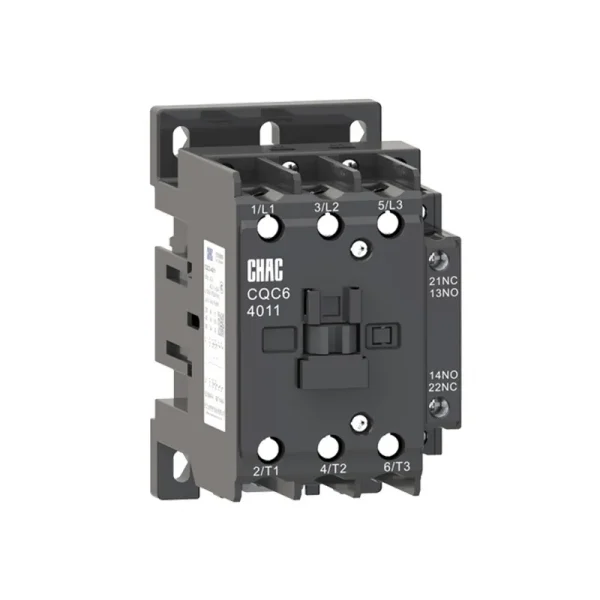
Licznik doboru kontaktorów — AC-1 / AC-3
Szacuj prąd kontaktora AC i porównuj obciążenia trójfazowe AC-3 z tabelami prądu i mocy silnika CHAC CQC6 przy napięciach 230, 400 lub 690 V.
Porównaj trójfazowe obciążenie AC-3 z opublikowanymi kolumnami prądu i mocy silnika CQC6. AC-1 stanowi referencję prądową do osobistej kontroli w danych technicznych.
Wynik
AC-3 tabela lista kandydatów
CQC6-25Tylko mecz na stole; nie zweryfikowano koordynacji starterów.CQC6-25 jest pierwszym wymienionym modelem, który spełnia zarówno wymagania dotyczące prądu AC-3, jak i mocy silnika przy napięciu 400 V.
I = Pwał × 1,000 / (√3 × V × PF × η); porównaj AC-3 Ie z kW silnikaCQC6 odnosi się do porównania wykorzystującego zarówno opublikowane aktualne, jak i kolumny kW przy wybranym napięciu. Przed złożeniem zamówienia należy potwierdzić rzeczywisty prąd znamionowy, napięcie cewki, tryb pracy podczas rozruchu, częstotliwość przełączania oraz koordynację.
Dlaczego ten wynik?
Wymagane AC-3 Ie ≥ 20.75 A; moc silnika ≥ 11 kW. Prąd jest szacowany na podstawie mocy wału, współczynnika mocy i sprawności.
Wybrane opcje referencyjne i sąsiednie, wpisane w listę. Wartości są zaokrąglone do wyświetlania; weryfikacje wykorzystują wartości niezaokrąglone.
| Kontaktor | AC-3 aktualny | Wydajność silnika przy 400 V | Powód |
|---|---|---|---|
| CQC6-18 | 18.00 A · Poniższy wymóg | 7.5 kW · Poniższy wymóg | AC-3 prąd poniżej wymagania; moc silnika poniżej wymagania |
| CQC6-25Wybrany odnośnik | 25.00 A · Spełnia wymagania | 11 kW · Spełnia wymagania | Pierwszy zapisany mecz dla tych sprawdzeń |
| CQC6-32 | 32.00 A · Spełnia wymagania | 15 kW · Spełnia wymagania | Czeki zrealizowane; opcja dodana później |
Wyświetl wszystkie zaznaczone opcje 12
| Kontaktor | AC-3 aktualny | Wydajność silnika przy 400 V | Powód |
|---|---|---|---|
| CQC6-6 | 6.00 A · Poniższy wymóg | 2.2 kW · Poniższy wymóg | AC-3 prąd poniżej wymagania; moc silnika poniżej wymagania |
| CQC6-9 | 9.00 A · Poniższy wymóg | 4 kW · Poniższy wymóg | AC-3 prąd poniżej wymagania; moc silnika poniżej wymagania |
| CQC6-12 | 12.00 A · Poniższy wymóg | 5.5 kW · Poniższe wymagania | AC-3 prąd poniżej wymagania; moc silnika poniżej wymagania |
| CQC6-18 | 18.00 A · Poniższy wymóg | 7.5 kW · Poniższy wymóg | AC-3 prąd poniżej wymagania; moc silnika poniżej wymagania |
| CQC6-25Wybrany odnośnik | 25.00 A · Spełnia wymagania | 11 kW · Spełnia wymagania | Pierwszy zapisany mecz dla tych sprawdzeń |
| CQC6-32 | 32.00 A · Spełnia wymagania | 15 kW · Spełnia wymagania | Czeki zrealizowane; opcja dodana później |
| CQC6-38 | 38.00 A · Spełnia wymagania | 18.5 kW · Spełnia wymagania | Czeki zrealizowane; opcja dodana później |
| CQC6-40 | 40.00 A · Spełnia wymagania | 18.5 kW · Spełnia wymagania | Czeki zrealizowane; opcja dodana później |
| CQC6-50 | 50.00 A · Spełnia wymagania | 22 kW · Spełnia wymagania | Czeki zrealizowane; opcja dodana później |
| CQC6-65 | 65.00 A · Spełnia wymagania | 30 kW · Spełnia wymagania | Czeki zrealizowane; opcja dodana później |
| CQC6-80 | 80.00 A · Spełnia wymagania | 37 kW · Spełnia wymagania | Czeki zrealizowane; opcja dodana później |
| CQC6-95 | 95.00 A · Spełnia wymagania | 45 kW · Spełnia wymagania | Czeki zrealizowane; opcja dodana później |
Jeszcze do potwierdzenia
- Potwierdź zasilanie cewki, rzeczywiste dane z tabliczki znamionowej oraz charakterystykę pracy przełączania.
- Nie zweryfikowano deratyngu środowiskowego, wytrzymałości oraz koordynacji przeciążeniowej i zwarciowej.
Źródło danych: Tabela ocen CHAC CQC6 AC-3 (otwiera się w nowej karcie)
Formuła i metoda
Szacuj prąd kontaktora AC i porównuj obciążenia trójfazowe AC-3 z tabelami prądu i mocy silnika CHAC CQC6 przy napięciach 230, 400 lub 690 V.
Jak używać tego kalkulatora
- Wybierz AC-3 do normalnego uruchamiania/zatrzymywania silnika klatkowego, lub AC-1 do odpowiedniego obciążenia nieindukcyjnego.
- Użyj podanego napięcia sieciowego i mocy wału dla AC-3. Wprowadź rzeczywisty prąd z tabliczki znamionowej, gdy jest dostępny.
- Porównaj wybraną tabelę z dokładną wersją, napięciem cewki sterującej i wymaganym trybem pracy.
Granice obliczeniowe
Tylko referencja trójfazowa. Nie są oceniane AC-4, cofanie, hamowanie wstrząsowe, częste przesuwanie o małą odległość, przełączanie kondensatorów, redukcja mocy oraz sprawdzona koordynacja rozruchu. AC-1 podaje numeryczne porównanie Ie bez doboru modelu.
Dobór rozmiaru kontaktora dla obciążeń AC-1 i AC-3
Prąd roboczy kontaktora AC-3 zależy od napięcia i charakterystyki pracy. To narzędzie odczytuje opublikowany prąd CQC6 oraz wartości w kolumnach dla silników trójfazowych w kW przy napięciu 230, 400 lub 690 V. Sprawdza obie kolumny; samodzielne dopasowanie wartości amperowej jest niewystarczające.
Notatki wprowadzane
| Wprowadzenie | Czego należy się zorientować |
|---|---|
| AC-3 or AC-1 | AC-3 uses shaft output and efficiency. AC-1 uses electrical input and gives an operational-current reference without selecting a model. |
| Nameplate current | A positive entry overrides the calculated current. The entered shaft kW still remains part of the AC-3 table check. |
| Voltage and allowance | Select the table’s line-voltage column. A user allowance changes the current reference; it is not a universal required margin. |
Przykładowe rozwiązanie · wartości początkowe
11 kW three-phase motor at 400 V
AC-3 · PF 0.85 · efficiency 90% · no current override · allowance 1.00
I = 11,000 / (√3 × 400 × 0.85 × 0.90) = 20.75 A
At 400 V, CQC6-25 lists AC-3 Ie 25 A and motor output 11 kW.
CQC6-25
This is the first loaded table row meeting both entered conditions. Confirm the actual motor nameplate, coil supply, switching rate and installation duty.
Contactor sizing: motor current, voltage and duty
Start with the motor nameplate current at the intended supply voltage. When only shaft output is known, estimate three-phase current as I = P × 1,000 / (√3 × V × PF × η), using efficiency η as a decimal. A lower power factor or efficiency increases the estimated current for the same shaft kW.
For an AC-3 shortlist, compare that current and the motor output with the same voltage column in the contactor table. At 400 V, an 11 kW motor in this example draws 20.75 A; CQC6-25 meets both the 25 A operational-current rating and the 11 kW motor rating. A current-only comparison would miss the second requirement.
AC-1 vs AC-3: choose the utilization category first
AC-1 covers non-inductive or slightly inductive loads, such as resistance heating. AC-3 applies to starting squirrel-cage motors and switching them off while running. These duties impose different making and breaking demands, so one contactor can have different ratings for each category.
For AC-1, compare the load with an operational Ie rating explicitly declared for the application. Conventional thermal current Ith describes a different test condition. This calculator does not turn an Ith value into an AC-1 model recommendation.
An AC contactor’s coil voltage is a separate choice
The main contacts carry the load; the coil belongs to the control circuit. A 400 V motor supply does not by itself specify the coil voltage. Check the available control supply, AC or DC coil type, frequency where applicable, auxiliary contacts and mounting arrangement.
Use the model result to open the CQC6 technical data and complete those checks. Frequent jogging, plugging, reversing or capacitor switching needs its own duty assessment rather than the normal AC-3 selection used here.
What the table match does not decide
- Conventional thermal current Ith is not interchangeable with operational current Ie. The published AC-1-labelled thermal row is deliberately not used to choose AC-1 models.
- Starting/stopping duty, AC-4 operation, electrical endurance, ambient derating and short-circuit coordination still require the exact product instructions.
Często zadawane pytania
Why can the same contactor have a lower current at 690 V?
Operational current is voltage- and duty-specific. The CQC6 table lists separate AC-3 columns; the calculator does not carry a 400 V current value into the 690 V column.
Does AC-3 cover reversing or frequent inching?
Do not assume so. Plugging, inching and some reversing duties require a different utilization assessment. This tool is limited to normal AC-3 motor starting and stopping.
Can I enter the actual motor current?
Yes. Enter a positive nameplate current to replace the power-based estimate. Keep the correct shaft kW so the motor-power column is also checked.
Why is there no AC-1 model result?
The available source row is conventional free-air thermal current. The tool instead compares your current with an entered, independently verified AC-1 operational Ie.
What is a contactor used for in a motor circuit?
A contactor switches the motor supply through electrically operated main contacts. Its coil is controlled by the control circuit. It does not replace the overload relay or the short-circuit protective device.
Does the motor voltage determine the contactor coil voltage?
No. Main-circuit voltage and coil supply are separate specifications. Check the actual control voltage, coil type and frequency where applicable when ordering the selected contactor.
Potrzebujesz pomocy przy wyborze produktu CHAC?
W swoim zapytaniu należy podać napięcie zasilania, prąd obciążenia oraz warunki montażu.
CQC6 AC contactor ratings
Published AC-3 operational current and controlled three-phase squirrel-cage motor power. The voltage groups below retain the labels used in the CHAC product table.
Reference data. Calculate to highlight the matching row.
Scroll horizontally on small screens to read all columns.
| Numer modelu | 220V/230V | 380V/400V | 660V/690V | |||
|---|---|---|---|---|---|---|
| AC-3 Ie (A) | Motor power (kW) | AC-3 Ie (A) | Motor power (kW) | AC-3 Ie (A) | Motor power (kW) | |
| CQC6 -6Current reference | 6 | 1.5 | 6 | 2.2 | 4.8 | 3 |
| CQC6 -9Current reference | 9 | 2 | 9 | 4 | 6.6 | 5.5 |
| CQC6 -12Current reference | 12 | 3.5 | 12 | 5.5 | 8.9 | 7.5 |
| CQC6 -18Current reference | 18 | 4 | 18 | 7.5 | 12 | 10 |
| CQC6 -25Current reference | 25 | 6 | 25 | 11 | 18 | 15 |
| CQC6 -32Current reference | 32 | 7.5 | 32 | 15 | 20.2 | 18.5 |
| CQC6 -38Current reference | 38 | 9 | 38 | 18.5 | 20.2 | 18.5 |
| CQC6 -40Current reference | 40 | 11 | 40 | 18.5 | 34 | 30 |
| CQC6 -50Current reference | 50 | 15 | 50 | 22 | 39 | 33 |
| CQC6 -65Current reference | 65 | 18.5 | 65 | 30 | 42 | 37 |
| CQC6 -80Current reference | 80 | 22 | 80 | 37 | 49 | 45 |
| CQC6 -95Current reference | 95 | 25 | 95 | 45 | 49 | 45 |
Reading this reference
- The calculator uses the 230, 400 or 690 V selection within the corresponding published voltage group.
- This table covers AC-3 only. The separate conventional free-air thermal current row is not an AC-1 operational Ie selection table.
- Confirm the exact coil supply, switching duty and installation conditions in the product documentation.
Source: CHAC CQC6 product technical table (otwiera się w nowej karcie)
Source checked: . This is the retrieval date, not a standard edition or product revision date.
Przykład zastosowania · Wykresowe dane wejściowe
Matching a 15 kW motor to both CQC6 AC-3 columns
For a pump-control example, enter 15 kW shaft output, 400 V, AC-3 duty and an illustrative 28 A nameplate current, with no added current allowance. The calculator shortlists CQC6-32: the CHAC table lists 32 A and 15 kW in the 380V/400V group. CQC6-25 is below both requirements at 25 A and 11 kW. This is why checking only the model’s ampere value can be misleading. Use the table match to continue the selection, then confirm the coil supply, switching duty, installation conditions and required protection for the actual motor circuit.
Dane produktu: Producent zintegrowanych kontaktorów AC serii CQC6
Powiązane produkty CHAC
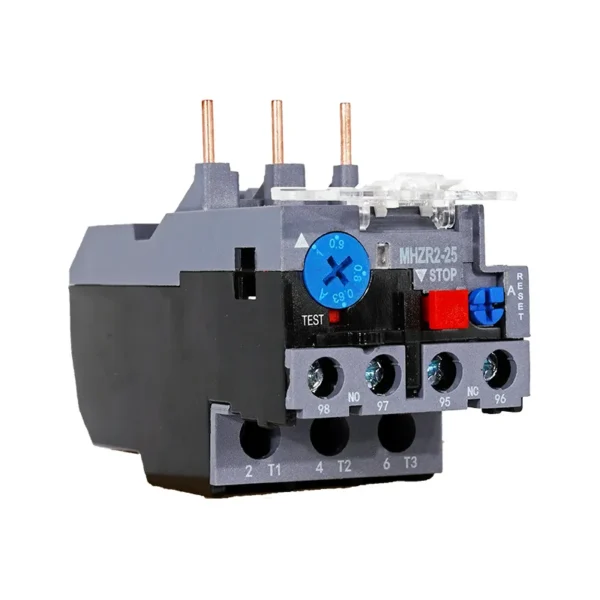
Open the CQC6 ratings and CQR2 pairing tables to continue the motor-circuit selection.