A replacement breaker can match the old unit’s amperage and pole count and still be wrong for the panel. For Square D equipment, the family name, mounting system, neutral arrangement and approved assembly matter as much as the electrical rating. Ordering from appearance alone can mean a returned part or an installation that lacks supporting approval. The useful question is not simply whether the device fits: it is whether the exact panel-and-breaker combination is covered by manufacturer instructions or a specific replacement classification.
The short answer is that QO, QOB and Homeline are not interchangeable merely because they share a current rating or appear to fit. NEC 110.3(B) requires listed or labeled equipment to be installed and used according to its instructions. Before ordering, record the complete panel catalog number and series, permitted breaker types, voltage, short-circuit rating, neutral arrangement and circuit-position restrictions. A third-party classification is a separate, limited evidence route, not blanket permission to mix brands.
Square D is a Schneider Electric brand. In North American residential and light-commercial work, buyers most often encounter QO and Homeline load centers; QOB devices are associated with bolt-on QO-family panelboard applications. Older facilities may also contain series that are no longer active. Schneider Electric publishes separate product material for these families, which is the first warning against brand-level assumptions. The exact assembly label and current documentation, not the logo alone, establish Square D breaker compatibility.
How do QO, QOB and Homeline breakers mount?
QO and QOB share elements of the same broader product lineage, but their mounting methods are not the same. Standard QO branch breakers generally plug onto the bus in identified QO load centers and assemblies. QOB breakers use a bolt-on connection in panelboards designed and labeled for that construction. The retaining hardware is part of the installation; removing or improvising it does not turn a QOB into a plug-on substitute. Consult Schneider Electric’s Square D QO and QOB Miniature Circuit Breakers information, then check the exact panel instructions.
Homeline is a separate residential family with its own load centers, bus interface, breaker geometry, accessories and catalog structure. It is not a lower-priced QO breaker that can be moved into a QO panel. Schneider Electric’s Homeline Miniature Circuit Breakers information should be used with the actual assembly label. Conventional and plug-on-neutral variants may use different neutral interfaces even within a familiar family. Match both the bus connection and the neutral arrangement required by the panel and protective function.
Visible features can help with identification but cannot close the case. Many QO breakers have a Visi-Trip indicator, while Homeline products follow different case and handle conventions. Those clues do not replace the type designation molded or printed on the device. Buyers must also distinguish standard thermal-magnetic breakers from GFCI, AFCI, dual-function, shunt-trip and other variants whose neutral connections, accessories and installation instructions differ.
| Dimensão da seleção | QO | QOB | Homeline |
|---|---|---|---|
| Typical mounting method | Plug-on branch breaker in identified QO load centers or assemblies | Bolt-on branch breaker in identified QO-family panelboards | Plug-on breaker in identified Homeline load centers |
| Common application context | Residential and light-commercial distribution | Commercial or institutional panelboard applications | Primarily residential distribution |
| Useful visual clue | Many models include Visi-Trip | Bolt-on terminal and retaining arrangement | Family-specific case and bus engagement |
| What the clue does not prove | Exact rating, neutral type or approved assembly | Suitability for every QO-labeled panel | Interchangeability with QO products |
| Controlling evidence | Panel label, circuit-position diagram, full catalog number, manufacturer instructions and applicable listing or classification | ||
Tandem and quad breakers require a position-by-position check. A tandem places two overcurrent devices in one physical space, but it is allowed only when the panel is designed and labeled for that device and location. Many labels use a diagram or type list to identify the permitted positions. Older equipment may also contain rejection features or replacement-only devices whose scope is easy to misunderstand. If the approved layout cannot support the required circuits, electrical panel upgrade planning is more appropriate than treating available physical space as an approved circuit position.
How can you confirm a replacement breaker is approved for the panel?
A defensible replacement decision follows an evidence chain. First, identify the assembly from its full nameplate rather than from a breaker already installed in it; a previous installer may have used the wrong device. Second, compare the panel catalog number, series, voltage, phase, bus rating, short-circuit rating and approved breaker-type list with current Schneider Electric literature. Third, match the proposed breaker’s complete catalog number, not a shortened marketplace description. Finally, preserve the supporting pages in the maintenance record.
The panel label remains the anchor. A purchasing note such as “20 A Square D single-pole” omits the family, mounting method, interrupting rating, neutral interface, trip function, conductor range and terminal details. If the label is painted over, damaged or unreadable, stop the substitution process and obtain reliable identification from the manufacturer or a qualified electrical professional. Guessing from enclosure color, handle shape or an online photograph does not restore the missing evidence.
What limits apply to a UL Classified replacement breaker?
UL Solutions’ Panelboard Application Guide, under “Field-installed units or equipment,” describes a specific exception for classified molded-case replacement breakers: 15-60 A, 120/240 V ac, used in named listed panelboards rated 225 A or less at 120/240 V ac, on circuits with maximum available system short-circuit current of 10 kA. These are the limits of the exception described there, not universal ratings for all breakers or all replacement programs. Being inside those limits is necessary for that route but does not by itself establish compatibility.
The guide requires the specific panelboard application to be identified on the breaker or in the publication supplied with it. Ask for that document and match the actual panel designation, breaker catalog number, ratings and all stated conditions. A seller’s brand list or a generic UL mark cannot fill in a missing model-specific match. Conversely, a valid classification is not proved or disproved simply by whether a competitor’s name appears on the original panel label: the classification’s exact replacement scope is the evidence to review with the authority having jurisdiction.
UL Listed and UL Classified also describe different evaluation scopes, not interchangeable marketing terms. The guide explains that classification may address specific properties, a limited range of hazards or limited use conditions; an enhanced UL Certified mark can represent either listing or classification. Read the certification details and installation conditions rather than inferring unrestricted approval from the word “Certified.” No specific third-party replacement model is approved by this article.
Does replacement classification preserve a series rating?
Not automatically. UL Solutions’ Circuit Breaker and Supplementary Protector Services states that replacement-breaker investigation covers the breaker and associated parts, and that the end application or any series-combination application has not been investigated. A classification match therefore cannot stand in for separate evidence of a tested series combination.
A series-rated system depends on a documented combination of upstream and downstream overcurrent devices. Confirm the paired catalog numbers, system voltage, available fault current and required field marking before retaining that rating. The Panelboard Application Guide’s short-circuit-current-rating section explains that panel ratings can vary with voltage and specific protective devices, and that marked special conditions must be followed when devices are added or replaced. Keep both the panel label and the applicable series-rating table in the asset record; do not carry forward the previous rating from appearance alone.
Accessories can break an otherwise plausible substitution. Handle ties, shunt trips, undervoltage releases, auxiliary contacts, alarm contacts, barriers, neutral pigtails and plug-on-neutral connections can be family- or generation-specific. Record the accessory catalog numbers alongside the breaker. A device that cannot support a required interlock, remote trip or signaling function is not a complete replacement.
How should legacy Square D breakers be handled?
Obsolescence changes the sourcing problem but not the evidence standard. Begin with the original panel designation and breaker type, then ask Schneider Electric whether a current replacement, documented retrofit or assembly-replacement path exists. “New old stock” does not automatically resolve storage history, authenticity, warranty or aging concerns. Used or reconditioned units introduce additional condition questions and should not be accepted solely because the markings look correct.
Traceability is especially important when scarcity attracts relabeled or counterfeit products. An auditable record should identify the supplier, manufacturer and catalog number, condition, quantity, date or lot information when available, warranty, packaging, inspection results and the asset in which the part was installed. Compare molded case details, labels, terminal hardware and markings with reliable manufacturer information. A marketplace photograph is not provenance.
| Verification checkpoint | Evidence to collect | Escalate when | Risk addressed |
|---|---|---|---|
| Assembly identity | Full panel label, catalog number, series and position diagram | The decision relies on brand or appearance | Wrong-family orders and unsupported installations |
| Breaker identity | Complete catalog number, poles, ratings, trip function and markings | The seller provides only amperage and width | Returns, rework and functional mismatch |
| Corrente de defeito | Available fault current, interrupting rating and separate series-rating evidence if used | A replacement classification is offered as proof of a series combination | Unsupported short-circuit performance |
| Approved use | Manufacturer instructions or exact classification scope and limitations | “Compatible” is unsupported by a named document | Rejected submittals and field rework |
| Lifecycle and condition | Lifecycle status, source, condition, traceability, warranty and spares plan | An obsolete part has no provenance or continuity strategy | Counterfeit exposure and repeat sourcing delays |
| Custo total | Verification labor, outage time, freight, returns, spares and migration options | Decisions compare unit prices alone | Emergency purchases and avoidable downtime |
A practical maintenance strategy classifies panels by criticality and remaining life. For high-consequence loads, hold verified spares under controlled storage, record where each part can be used and review the stock when manufacturer status changes. For a fleet of aging panels, compare repeated searches and outages with a planned platform migration. Include verification labor, expedited freight, return cycles, inspection delay and future availability in the comparison, rather than assuming that the lowest unit price is the lowest total cost.
When is a breaker substitution allowed?
NFPA 70: National Electrical Code is an installation code adopted and often amended by local jurisdictions. Section 110.3(B) addresses installation and use in accordance with listing or labeling instructions, while Article 408 contains requirements for panelboards. The locally adopted edition and the authority having jurisdiction determine what is enforceable. A data sheet cannot waive code requirements, and a code citation cannot create a product listing.
UL 489 addresses molded-case circuit breakers and related products within its scope; UL 67 addresses panelboards. These product standards are not brand-compatibility charts. A general statement that a component was “designed to” or “tested to” a standard does not establish certification of a panel-and-breaker combination. Procurement documents should request the applicable mark, exact scope, ratings, installation instructions and any replacement classification sheet.
Cross-brand questions require the same discipline. GE THQP and THQL, for example, are GE family designations rather than alternative names for QO, QOB or Homeline. The exact GE panel label determines the permitted types and positions. The guide to GE circuit breaker letter designations helps decode the names without implying that they fit Square D equipment.
There is no dependable answer to “which brands fit Square D?” at the brand level. Use the Square D types identified for the exact assembly, or consider a third-party device only when current classification documentation explicitly covers that panel and application. Unsupported substitutions leave the installer without evidence for the installed combination.
What should a Square D breaker selection record include?
Collect the full panel label, circuit-position diagram, installed breaker markings and overall assembly identification. Have qualified personnel obtain any information that requires access to exposed electrical parts using appropriate isolation and safe work practices. Reconcile the details with current manufacturer documents, then specify the exact breaker and accessories. Confirm voltage, poles, trip function, conductor range, torque, interrupting rating, available fault current, any series-rated combination and tandem-position limits. Keep the approval evidence with the asset record.
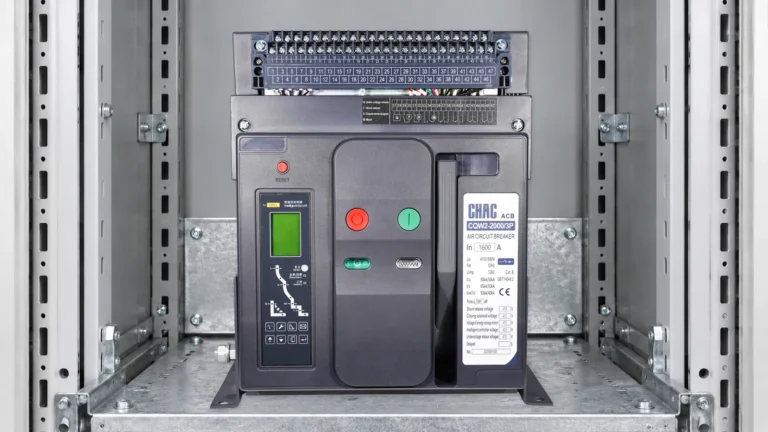
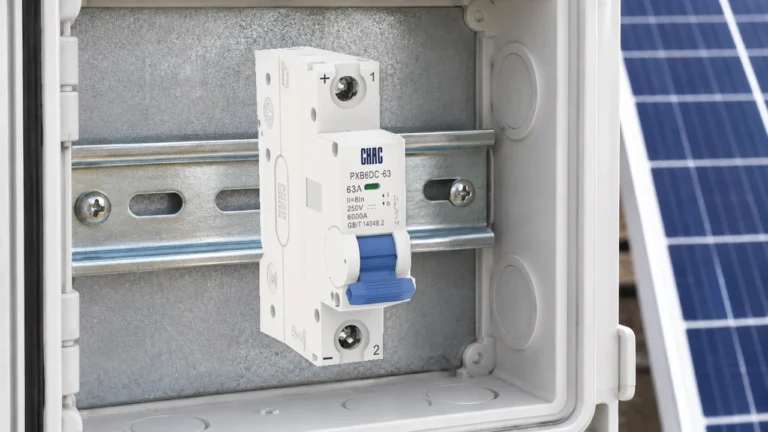
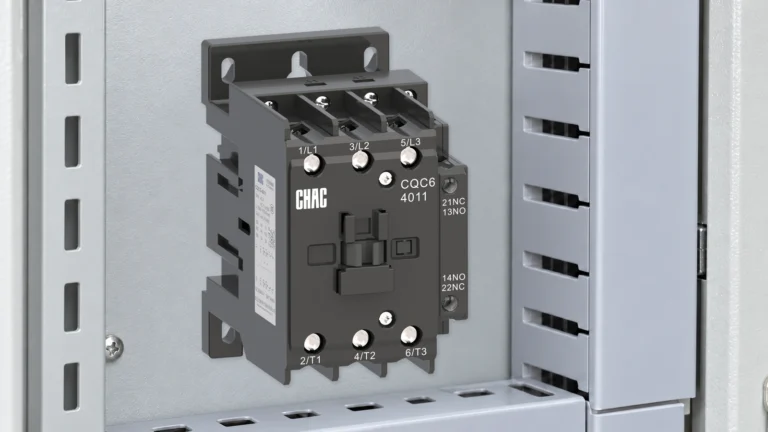
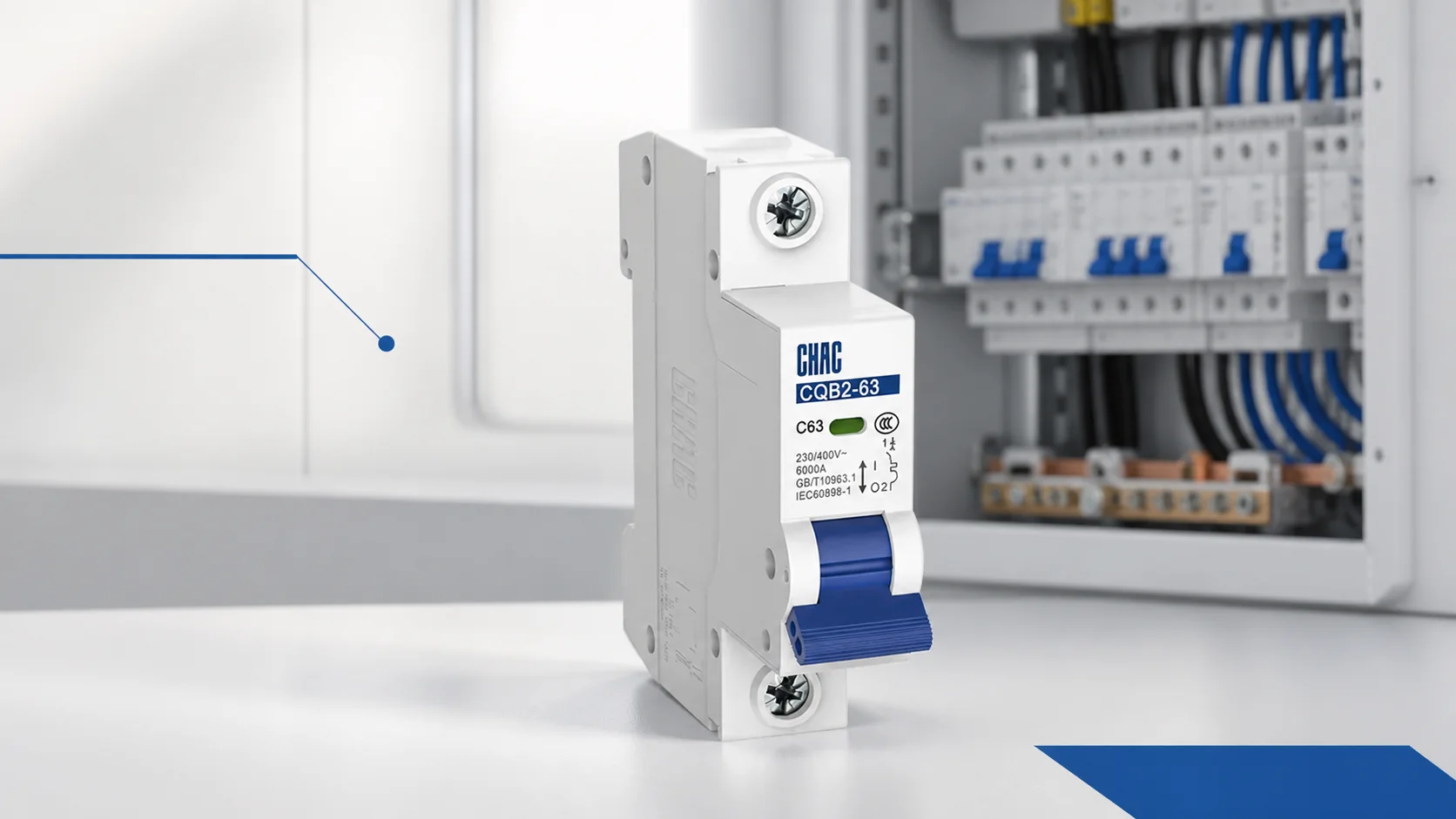
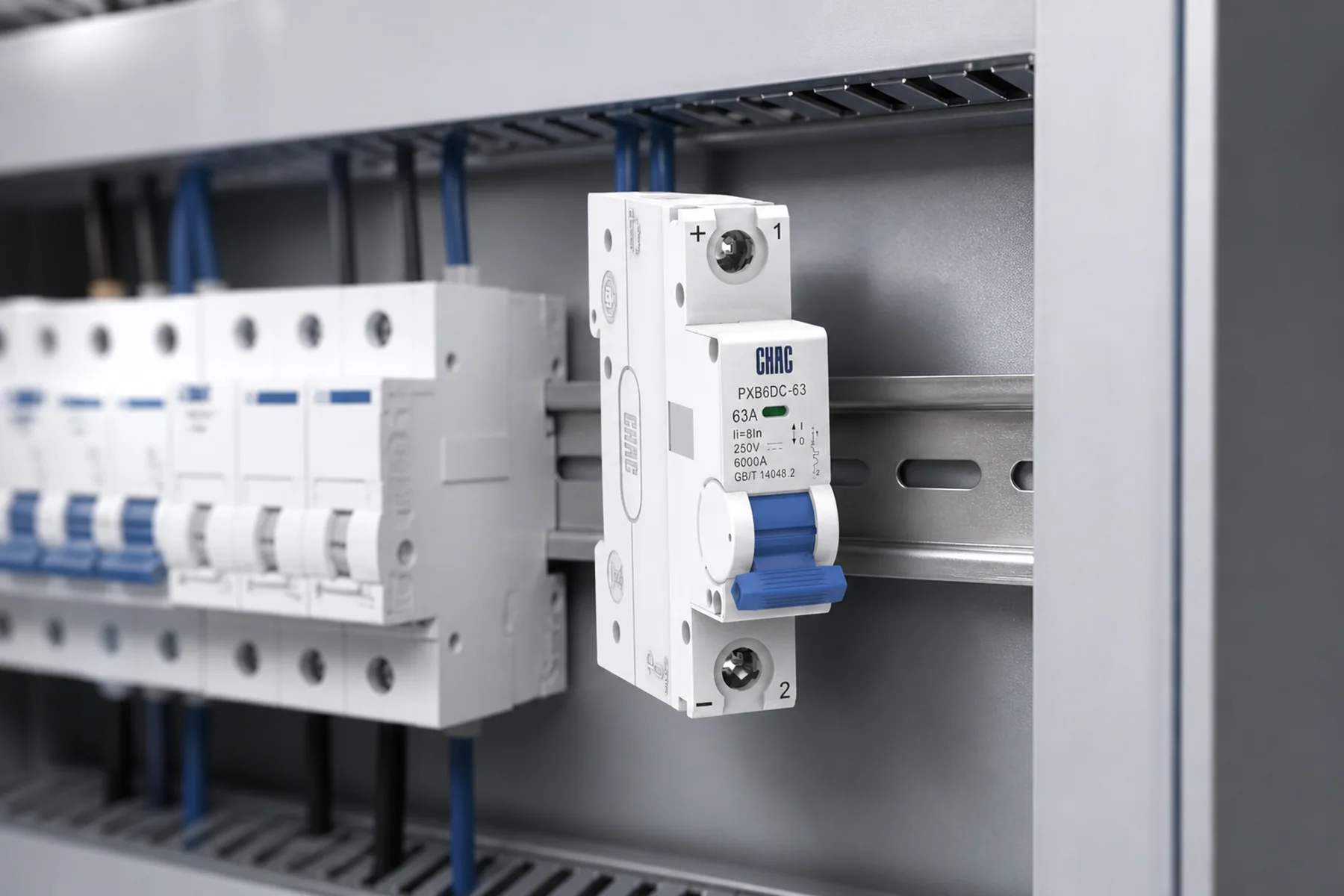
Keep electrical function separate from panel approval. A guide to single-pole and double-pole breaker selection can clarify poles, circuit voltage and load requirements, but functional similarity does not establish interchangeability. CHAC’s disjuntores em miniatura are a separate product-selection topic: any IEC-based assembly route must be assessed against its own model documentation and destination-market requirements, not treated as approval for a US proprietary panel.
CHAC products are not presented here as Square D replacement breakers or retrofit options. Comparing a CHAC DIN-rail product with a QO, QOB or Homeline device does not establish matching bus connections, certification scope or panel approval.
What else should you know about Square D breaker compatibility?
What are the main types of Square D breakers?
QO and Homeline are major branch-breaker families encountered in residential and light-commercial projects, while QOB is the bolt-on form used in identified QO-family panelboards. Each name covers multiple ratings and functions, so the panel label and complete catalog number are still required.
Are Square D QO and Homeline breakers interchangeable?
No. QO and Homeline use distinct panel and breaker systems; matching amperage, poles or apparent width does not make them interchangeable. Select the breaker type identified for the exact panel and confirm the neutral and special-function requirements.
Can a QOB breaker replace a QO breaker?
Not simply because both names begin with QO. QOB is a bolt-on construction, while standard QO branch breakers are generally plug-on devices. Use each only in an assembly identified for that type and mounting method.
Can I install a tandem breaker anywhere it fits?
No. The panel label or circuit-position diagram must permit the specific tandem type in that location. An open space or a breaker that can be inserted physically does not establish an approved installation.
Can another brand of breaker be used in a Square D panel?
A third-party UL Classified replacement may be considered only when its current classification specifically covers the exact panel and installation conditions. Check the supplied classification publication, ratings and limitations, then confirm local code and AHJ requirements. This article does not establish any particular third-party breaker as a replacement.
Can I use a classified replacement if my panel is series rated?
A replacement classification alone does not establish a series combination. Obtain separate evidence for the exact upstream and downstream devices at the applicable voltage and fault duty, and retain the required field marking. If that evidence is missing, do not assume the old series rating remains valid after the replacement.
Which official sources support the compatibility check?
- Schneider Electric, Square D QO and QOB Miniature Circuit Breakers: family information; exact panel and breaker instructions remain controlling.
- Schneider Electric, Homeline Miniature Circuit Breakers: separate family information, not a cross-brand substitution approval.
- UL Solutions, Panelboard Application Guide, particularly “Field-installed units or equipment” and “Short-circuit current ratings”: replacement scope, ratings and panel markings; reviewed October 7, 2026.
- UL Solutions, Circuit Breaker and Supplementary Protector Services: replacement investigation does not include the end application or a series combination; reviewed October 7, 2026.
- NFPA, NFPA 70: National Electrical Code: confirm the locally adopted edition and amendments before applying section numbers.
The right replacement is the one supported by the panel identity, evaluated combination and documented installation conditions, not the one that merely looks right. Confirm the assembly first, then its permitted device or specific replacement classification, and finally the fault-duty and series-rating evidence. For a new, separate project, CHAC’s equipamento de distribuição elétrica can be reviewed against the intended assembly and local approval route. That review is separate from US Square D replacement approval; neither an IEC standard reference nor a similar current rating establishes interchangeability.