In a hypothetical repair shop in Atlanta, a buyer sees 30 A in a 90°C wire table and orders a larger breaker for an existing 12 AWG circuit. The review stops the change because the ordinary small-conductor protection rule was overlooked. Reading a larger table number did not authorize a larger breaker.
Resumo: For 12 AWG copper, familiar Table 310.16 ampacities are 20 A at 60°C, 25 A at 75°C and 30 A at 90°C under the stated table conditions. NEC 240.4(D) normally limits ordinary 12 AWG copper branch-circuit protection to 20 A. Specific equipment exceptions require their own applicable rule; THHN insulation alone is not an exception.
The three table values describe temperature conditions
O 12 AWG wire ampacity question cannot be answered by quoting only the highest column. The table value depends on conductor material and temperature basis, while the installed circuit has additional limitations. These familiar values concern copper; do not transfer them to another material.
THHN and other insulation designations describe particular conductor uses and temperature capabilities. Verify all markings on the exact product, especially for wet locations. Do not assume a THHN-only marking automatically establishes the wet-location suitability of a dual-rated product.
Southwire’s published conductor specifications explicitly flag the small-conductor protection limits associated with NEC 240.4(D). That note is important: a manufacturer’s ampacity table can show a higher thermal number while also reminding the reader that ordinary overcurrent protection remains limited.
Ordinary circuit protection remains a separate limit
For ordinary 12 AWG copper branch circuits, a 20 A protective-device limit is the familiar starting point. A 25 A or 30 A table ampacity does not authorize fitting a 25 A or 30 A breaker to a general-purpose circuit. Check any specific exception against the actual equipment and adopted code.
A 12 AWG ampacity rating also needs a load check. Under common ordinary continuous-load sizing rules, a 20 A circuit supports 16 A of continuous load. That relationship concerns load and circuit sizing; it does not redefine every possible equipment duty.
Motor and HVAC provisions can create different conductor and overcurrent relationships. Those provisions need the exact load data, nameplate instructions and applicable code section. The existence of an exception somewhere does not establish it for a receptacle circuit or an unidentified appliance.
Installed conditions can require a larger conductor
Hot ambient conditions and conductor grouping can reduce usable ampacity. Where permitted, use the appropriate insulation-temperature value for correction or adjustment, then respect final terminal, wiring-method and protection limits. Do not assume 12 AWG always supports the nominal circuit current in every route.
Voltage drop can require a larger conductor on a long circuit. Calculate it using actual length, load and conductor data rather than a fixed internet distance rule. A larger conductor selected for voltage drop does not itself permit increasing the breaker rating.
During purchasing, specify the complete wire marking, material, solid or stranded construction, insulation and environmental use. Check the terminal’s conductor range and stranding acceptance. Ordering only 12 gauge THHN can omit details that matter during installation and inspection.
Compare the selection criteria
| 12 AWG copper reference | Value under stated conditions | What it establishes |
|---|---|---|
| 60°C Table 310.16 column | 20 A | Temperature-based table ampacity |
| 75°C Table 310.16 column | 25 A | Temperature-based table ampacity |
| 90°C Table 310.16 column | 30 A | Temperature-based table ampacity |
| Ordinary NEC 240.4(D) protection | Normally 20 A maximum | Separate overcurrent limitation |
Check the conditions that change the selection
| Pergunta | Necessary check | Não assuma |
|---|---|---|
| Wet route | Exact insulation and wet-location marking | THHN-only means wet-rated |
| Hot or grouped route | Correction and adjustment | The base table current always applies |
| Long route | Voltage-drop calculation | A larger breaker solves low voltage |
| Special equipment | Applicable motor or HVAC provisions | Every circuit qualifies for an exception |
Apply the correct standards and approval scope
Use the adopted NEC Table 310.16 conditions, 240.4(D), 110.14 and relevant wiring-method rules. Equipment-specific provisions must be applied only to their stated scope. A conductor specification or IEC breaker data sheet is not approval of a complete US branch circuit.
What to confirm before placing an order
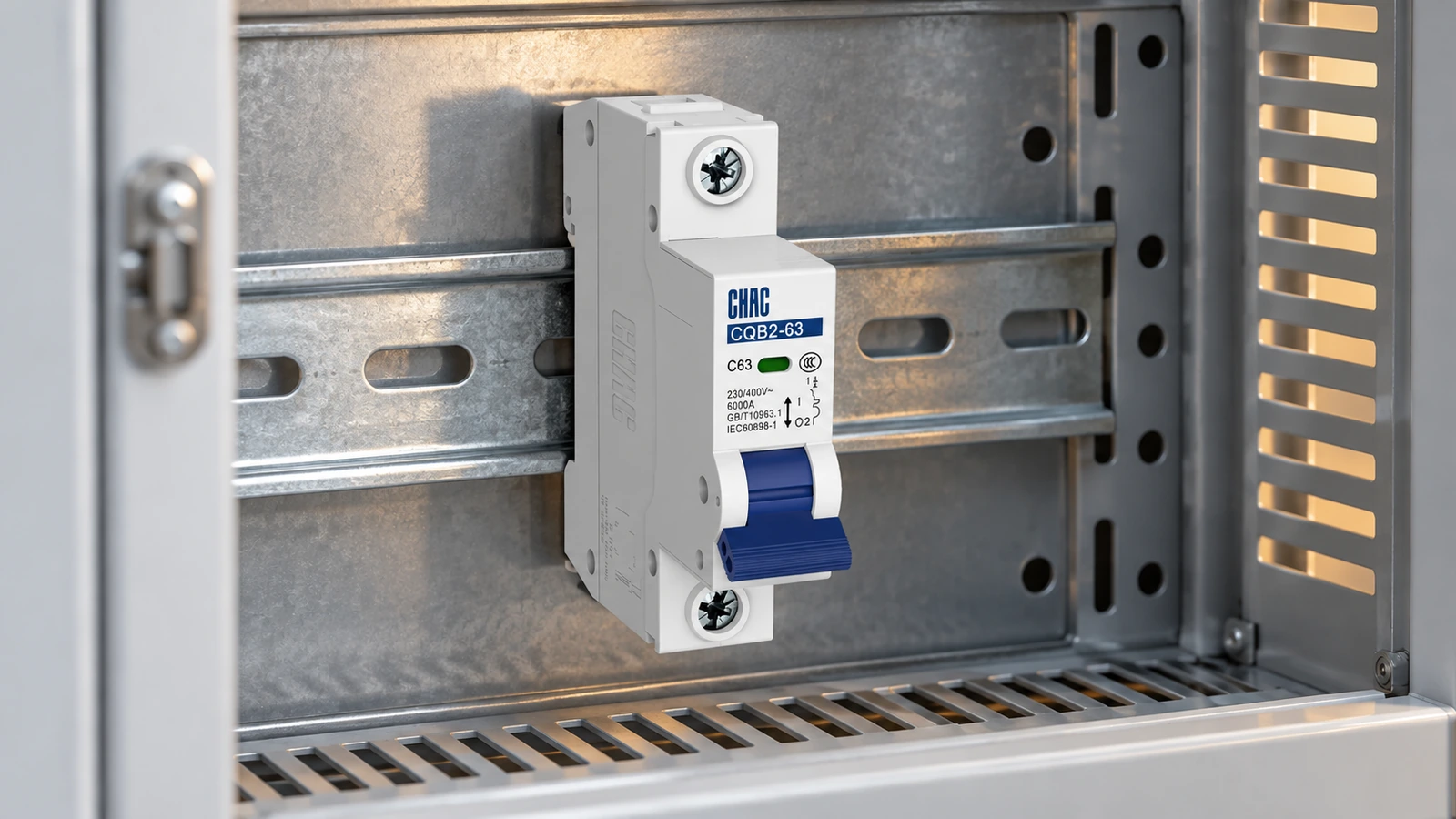
Coordinate approved cable data with CHAC MCB options ou RCBO options only after confirming required functions, terminal range and destination approvals. The ampacity of #12 THHN does not establish a particular CHAC model’s suitability for a US panel or its listing as a branch-circuit device.
For related selection details, read the guide to 20 amp circuit wattage.
Perguntas frequentes
How many amps can 12 AWG handle?
For copper, familiar table values vary with the temperature column. Ordinary branch-circuit overcurrent protection is normally limited to 20 A under NEC 240.4(D), with final installation checks still required.
Can 12 AWG handle 60 amps?
It is not an ordinary 60 A branch-circuit conductor under the conditions discussed here. Do not fit a 60 A breaker to such a circuit on the basis of a generic chart.
Can 12 AWG handle 25 amps?
A 75°C table value of 25 A does not authorize ordinary 25 A branch-circuit protection. A specific applicable equipment exception must be established separately.
Can 12 AWG handle 40 amps?
Not as a general-purpose 40 A branch circuit. Any special equipment relationship requires the actual nameplate, applicable rules and qualified design review.
What wire size is normally used for a 20 A circuit?
12 AWG copper is a familiar starting point under ordinary conditions. Temperature, grouping, voltage drop, wiring method and equipment terminals can require a different selection.
How does copper compare with aluminum for 12 AWG ampacity?
Copper values must not be applied to aluminum. Material-specific ampacity, minimum-size rules, permitted uses and terminal compatibility require separate verification.
Referências
- Southwire CableTechSupport — conductor specifications and ampacity notes
- NFPA 70 — National Electrical Code
- Southwire — conductor, voltage-drop and conduit calculation tools
For model-specific selection, review the CHAC product details and send the application conditions, quantity and destination requirements through the página de contacto.