When a facilities engineer in Houston replaced a tripping receptacle during a tenant fit-out, she reset the breaker, verified voltage, and returned the circuit to service. The GFCI tripped again within seconds, shutting down a row of workstations. The reversal came after tracing the neutral: a downstream load neutral had been mixed with the line-side neutral, so the protection device sensed an imbalance. The root cause was coordination and wiring specification, not a defective product.
ملخص: An overcurrent circuit breaker and ground-fault protection answer different hazards. A breaker responds to overloads and short circuits; a GFCI/RCD compares outgoing and returning current and opens quickly when leakage exceeds its trip threshold. NEC/NFPA 70 Article 210.8 identifies locations that require GFCI protection in covered installations, while product standards such as UL 489 and UL 943 address device construction and testing. Map the fault risk, system voltage, neutral arrangement, and authority-having-jurisdiction (AHJ) rules before choosing a coordinated breaker, GFCI, AFCI, RCD, or RCBO.
What each protective function actually senses
A thermal-magnetic breaker measures current through its poles. A thermal element reacts to sustained overload heating; a magnetic element reacts to a high-amplitude short circuit. Its time-current curve allows a motor inrush or transformer energization to pass while clearing a dangerous fault. The breaker does not know whether current is leaving the intended circuit through a person, wet surface, or damaged insulation if the total current remains below its overcurrent setting. That is the essential distinction behind a circuit breaker and ground-fault circuit interrupter specification.
A GFCI (called an RCD in many IEC markets) uses a differential current transformer. Line and neutral conductors pass through the sensor; in a healthy circuit their vector sum is near zero. Leakage to protective earth, a bonded enclosure, or a person creates residual current, and the electronics or relay trips when the measured value and time meet the applicable product requirement. The sensing path is why line/load orientation, polarity, and a separated load neutral matter.
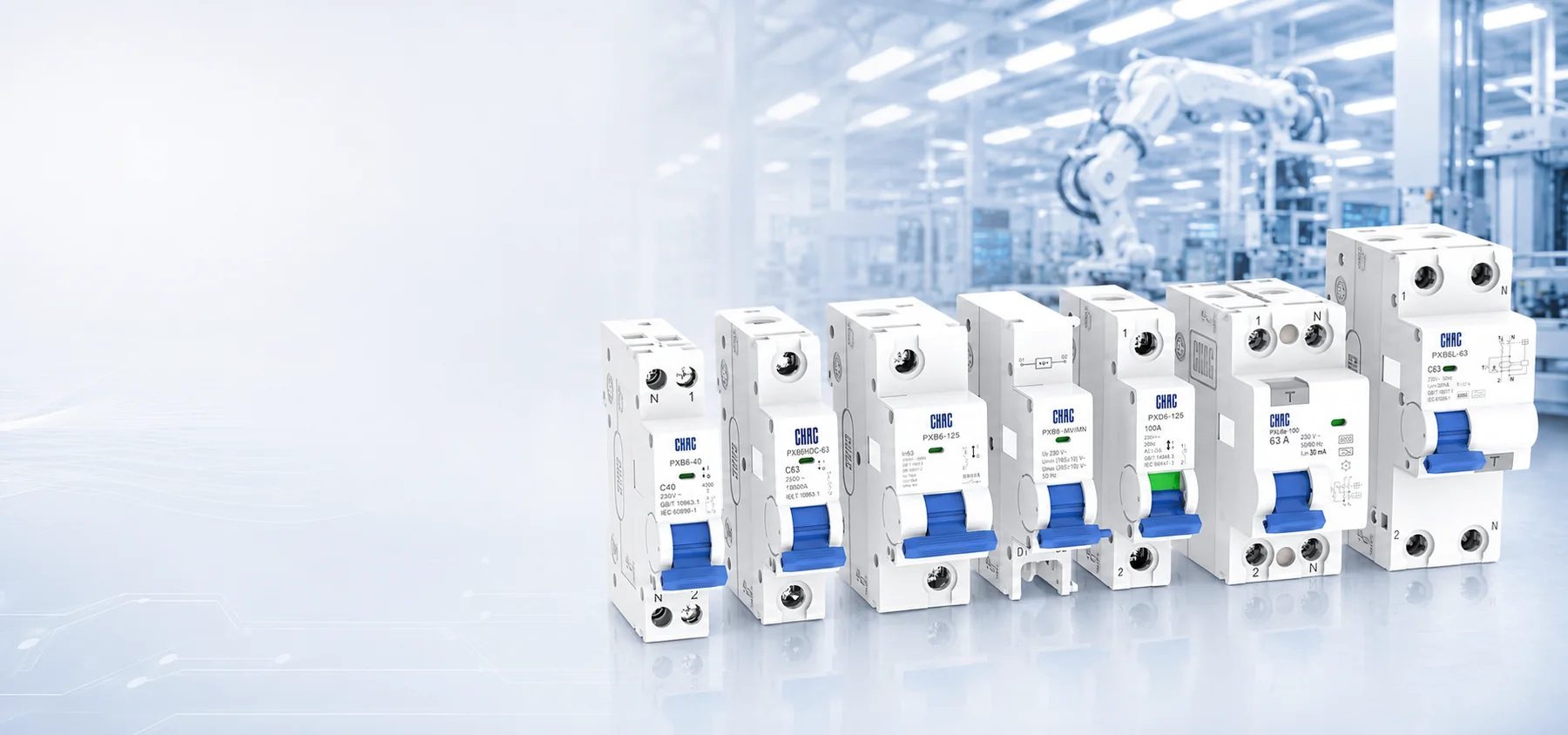
Ground-fault protection can be built into a receptacle, a breaker, or a switchboard relay. An AFCI looks for electrical signatures associated with arcing, including series and parallel arc patterns; it is not a substitute for GFCI shock protection. An RCBO combines overcurrent and residual-current functions in one pole assembly, but it still must be selected for the installation’s earthing system, interrupting rating, and local rules.
Coordination: breaker, GFCI, AFCI, RCD and RCBO
The practical question is not which device is “best,” but which hazards must be covered at each point in the circuit. A feeder breaker protects the conductor from overcurrent. A GFCI or RCD adds personnel or equipment leakage protection. An AFCI adds arc-fault detection where required. Selective coordination then sets ratings, trip curves, and residual-current delays so the closest device clears first, limiting downtime and unwanted upstream outages.
| Device | Primary sensing | Typical role | What it does not replace |
|---|---|---|---|
| Overcurrent circuit breaker | Thermal and magnetic current | Overload and short-circuit protection for conductors and equipment | GFCI/RCD leakage or AFCI arc detection |
| GFCI / RCD | Residual (differential) current and time | Shock and leakage protection at receptacles, final circuits, or feeders | Overcurrent protection unless the model is an RCBO |
| AFCI | Arc-current waveform and pattern | Arc-fault mitigation in locations required by the adopted code | GFCI/RCD protection or normal breaker interruption |
| قاطع دائرة معد مع حماية تسريب أرضي | Overcurrent plus residual current | One device for both functions where system and standards permit | Every AFCI requirement, surge function, or upstream selectivity need |
Terminology varies by market. In North America, “GFCI” commonly describes a 120 V receptacle or breaker device; IEC practice uses RCD for residual-current devices and RCBO when overcurrent is integrated. Confirm whether a project specification means personnel protection, equipment ground-fault protection, or both. A device with a test button is not automatically AFCI-capable, and a breaker label alone does not prove the required residual-current sensitivity. Buyers comparing a circuit breaker ground fault circuit interrupter pairing should ask the supplier to state each sensing function separately.
Wiring, trip behavior and nuisance-trip diagnosis
Follow the manufacturer’s marked line and load terminals. Feed and load conductors should not be reversed unless the device is specifically listed for that arrangement. Route every current-carrying conductor that belongs to the protected circuit through the sensing core; a neutral borrowed from another circuit creates an apparent imbalance. Keep downstream neutrals isolated from grounding conductors and bond neutral to ground only at the permitted service or separately derived system point.
Trip behavior provides clues. A magnetic breaker trip during a fault is nearly instantaneous; a thermal trip may take seconds or minutes depending on magnitude. A GFCI/RCD trip can occur at low residual current within the standard’s specified time, often before a breaker sees enough total current to operate. An AFCI trip may follow a repeatable appliance or cable movement pattern. Record which device opened, the load state, moisture conditions, and whether the test button operates; this history is more useful than repeatedly resetting the circuit.
Common nuisance causes include wet enclosures, insulation damage, EMI filters with cumulative leakage, shared neutrals, reversed polarity, and a downstream neutral-to-earth contact. Disconnect loads one at a time, inspect junctions, and measure insulation and residual current with calibrated instruments. Never defeat a GFCI by removing its equipment grounding conductor or tying neutral to earth downstream. If an installation includes variable-speed drives, medical equipment, or long cable runs, ask the designer whether a different RCD type, time delay, or leakage budget is required.
Standards, testing and AHJ boundaries
NEC/NFPA 70 Article 210.8 is an installation rule that identifies many dwelling, commercial, and special-use locations where GFCI protection is required; the adopted edition and local amendments control. The AHJ may require an inspection, field test, or documented coordination study. Article 210.8 does not certify a particular brand or make a product suitable for every environment.
UL 943 covers ground-fault circuit interrupters, including construction and performance tests for listed devices. UL 489 covers molded-case circuit breakers and circuit-breaker enclosures. IEC 61008 addresses residual-current circuit-breakers without integral overcurrent protection; IEC 61009 addresses RCBOs; IEC 60947-2 covers circuit-breakers used in low-voltage switchgear and controlgear. These are product standards and test frameworks, not a blanket installation approval. Verify the exact edition, marking, environmental rating, and certification scope in the destination market.
At commissioning, press the device test button at the interval required by the manufacturer and site procedure, then verify that the protected circuit de-energizes and resets correctly. A button test checks the internal test circuit; it does not replace an instrumented trip-time and residual-current test when the project specification or AHJ calls for one. Keep records of serial or circuit identifiers, test date, measured values, and corrective actions.
Selection scenarios for procurement teams
Use the following decision matrix as a first pass, then confirm fault levels, conductor ampacity, earthing arrangement, enclosure environment, and local code with the responsible designer.
| Scenario | Starting configuration | Key checks before release |
|---|---|---|
| General feeder or branch overload risk | Thermal-magnetic breaker sized to conductor ampacity | Available short-circuit current, voltage, poles, curve, and downstream coordination |
| Wet area or personnel shock risk | GFCI/RCD at the required point, with overcurrent device upstream | Trip sensitivity/time, line-load neutral routing, enclosure and environmental rating |
| Branch circuit with both residual and overcurrent needs | RCBO where permitted by the panel and local standard | Neutral pole arrangement, interrupting rating, RCD type, and selectivity |
| Locations with arc-fault requirement | AFCI plus the required overcurrent and GFCI functions | Compatibility with multi-wire circuits, electronic loads, and adopted code text |
| High-leakage or sensitive electronic equipment | Engineered RCD type/time delay and coordinated breaker | Measured standing leakage, inrush, EMC filters, and documented nuisance-trip plan |
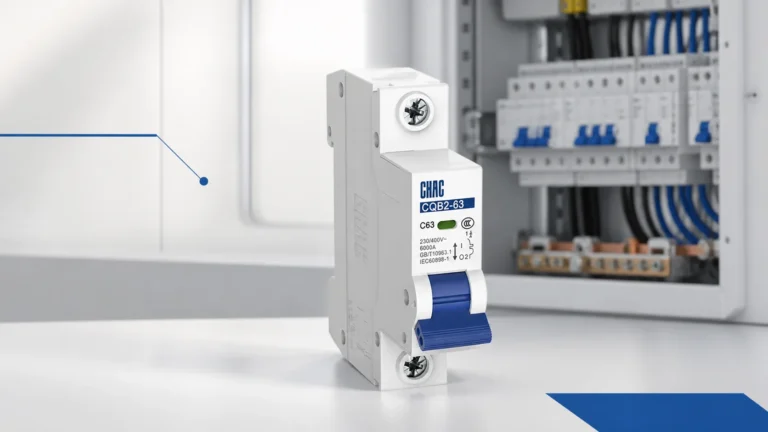
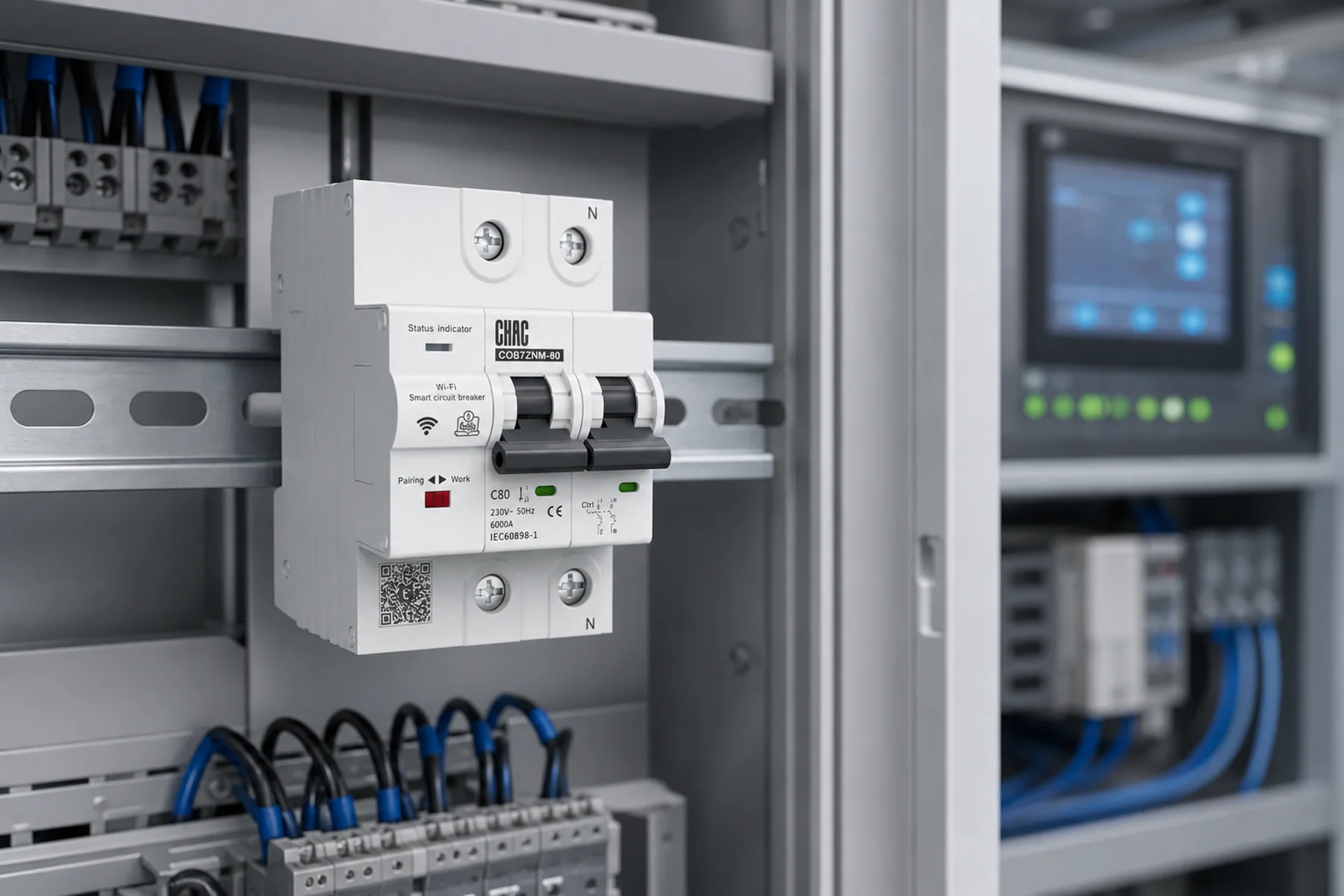
For buyers comparing suppliers, request a single-line diagram review, terminal and neutral instructions, trip-curve data, routine-test records, and a clear replacement policy. CHAC Electric’s circuit breaker product page can be used as a verified reference for an MCB option; confirm the exact rating and approvals for your project rather than assuming that a catalog family covers every market.
أسئلة متكررة
What is the difference between circuit breaker and interrupter?
A circuit breaker is a resettable protective device that interrupts current during overloads or short circuits. “Interrupter” is a broader term for a device that opens a circuit; a ground-fault circuit interrupter opens on residual-current imbalance. Some products combine both functions, but the names alone do not establish the sensing functions or certification.
Is a GFCI the same as a breaker?
No. A receptacle GFCI can interrupt leakage without providing the branch circuit’s full overcurrent protection. A GFCI breaker combines residual-current and overcurrent functions, while an RCBO is the IEC term for a comparable combined device. Check the product marking and the panel’s listing before treating one device as both.
What is a ground fault interrupter?
It is a device that senses current leaving the intended circuit path and disconnects the circuit when the residual current reaches its specified trip condition. The path may be through protective earth, equipment, or a person. Correct wiring, a suitable earthing system, and periodic testing are still required. In a buyer brief, the phrase define ground fault circuit interrupter should be followed by the required trip sensitivity, time, and product standard.
How do I know if my outlet is GFCI or AFCI?
Look for the device marking and buttons: GFCI receptacles normally have “TEST” and “RESET” buttons and identify ground-fault protection; AFCI devices are marked AFCI and may include an arc-fault indicator. A combination device can carry both labels. If markings are unclear, have a qualified electrician identify the upstream breaker and test the circuit with approved equipment. For teams asking what gfci stand for on a schedule, it means ground-fault circuit interrupter, not arc-fault circuit interrupter.
What is ground fault protection?
Ground fault protection limits the duration or magnitude of current flowing from an energized conductor to earth or exposed conductive parts. It can be provided at receptacle, branch, feeder, or switchgear level, with settings chosen for personnel safety, equipment protection, or both. It complements, rather than replaces, overcurrent and arc-fault protection.
For a broader enclosure and connection context, see CHAC Electric’s distribution-box installation guide and the practical notes in its smart breaker buyer article. Use those references to align the protective device with the box, conductor routing, and monitoring approach.
المراجع
- NFPA 70 (National Electrical Code) — official code page.
- UL 943 — Ground-Fault Circuit-Interrupters.
- UL 489 — Molded-Case Circuit Breakers and Circuit-Breaker Enclosures.
- IEC Webstore catalogue for IEC 61008, IEC 61009, and IEC 60947-2 residual-current and circuit-breaker standards.
The durable rule is simple: let each protective function sense the hazard it was designed to clear, then coordinate the devices and wiring around it. When you are ready to specify a low-voltage distribution or connection solution, review the CQMG03 Series distribution and junction-box connection solutions and contact CHAC Electric with your voltage, poles, fault level, earthing system, destination code, and documentation requirements.