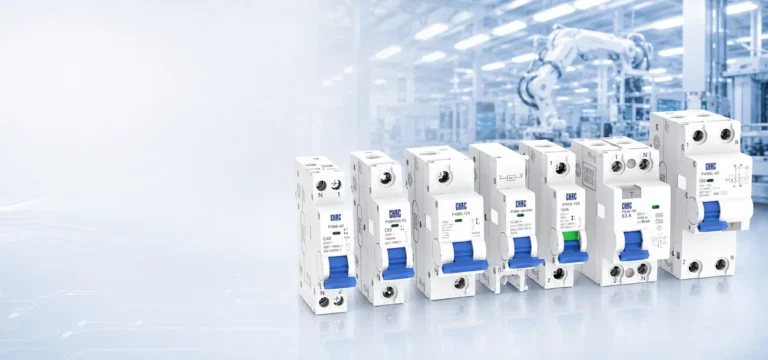
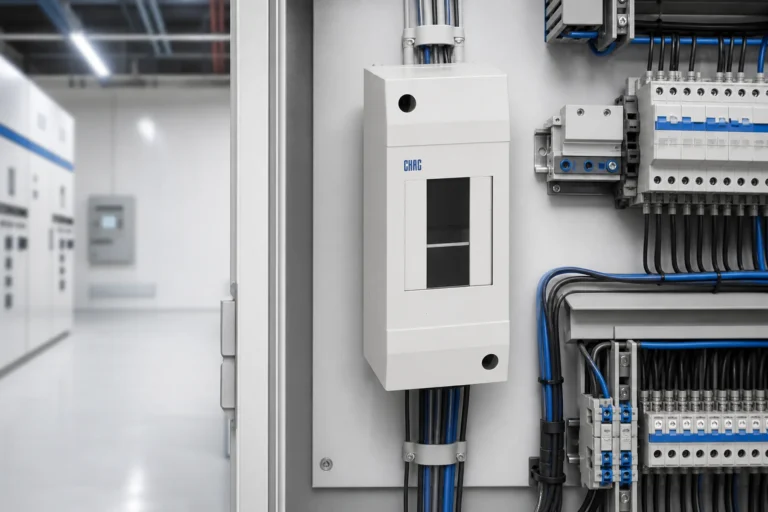
When Elena, a facilities engineer in Rotterdam, increased a packaging line, she replaced a tripping branch breaker with a higher-current device and restarted the machine. The new breaker held, but a downstream fault then opened the main protective device and stopped the entire line. The visible failure was not proof that the old product was bad; the root cause was an uncoordinated selection, fault level, and enclosure decision.
ملخص: An MCB is generally a compact circuit-breaker for household and similar final circuits, while an MCCB is a larger, configurable breaker for higher loads, fault duties, and industrial distribution. IEC 60898-1 and IEC 60947-2 address different product scopes, so the first action is to document system voltage, prospective short-circuit current, load profile, poles, and selectivity before choosing a frame or ampere rating.
The terms are often used as if they describe two sizes of the same switch. They do not. Both devices detect abnormal current and open a circuit, but their construction, adjustment range, interrupting capability, accessories, installation method, and evidence requirements can be very different. A sound specification treats the breaker as part of a system that includes conductors, busbars, terminals, upstream protection, an enclosure, and the authority having jurisdiction (AHJ).
What do MCB and MCCB mean in a real installation?
MCB full form is miniature circuit-breaker. It is commonly used on final circuits in homes, offices, light commercial premises, and machines where a standardized, relatively compact device is appropriate. The reference point for household and similar applications is IEC 60898-1; that standard defines ratings and test conditions for breakers intended for ordinary persons to operate, within its stated scope.
MCCB electrical definition is molded-case circuit-breaker. The molded insulating case houses a mechanism and trip unit that can serve feeders, motors, generators, and distribution sections. IEC 60947-2 is the industrial circuit-breaker standard, with broader equipment assumptions and verification duties than IEC 60898-1. “MCCB” does not automatically mean a particular current, voltage, or certification; those values belong to the product’s marked ratings and test report.
In everyday searches, “mcb meaning” and “full form of mccb” are useful starting terms, not design criteria. A purchaser still needs the manufacturer’s datasheet, wiring diagram, terminal limits, and declared short-circuit rating at the intended voltage. If the breaker will be incorporated into a low-voltage assembly, the assembly design and verification may also fall under IEC 61439.
How do the trip mechanisms protect a circuit?
Both families typically combine thermal and magnetic behavior, but the implementation and adjustment options matter for mccb electrical protection. A thermal element responds to sustained overload: a bimetal heats, bends, and releases the mechanism after a time delay. A magnetic or instantaneous element responds to a high fault current and opens rapidly. The time-current curve, ambient-temperature correction, and tolerances determine whether a nuisance trip or an unsafe delay is likely.
An MCB normally has a factory-defined curve and limited field adjustment. Curves are often labelled B, C, or D, but the applicable threshold and test conditions must be taken from the product documentation and local rules. A motor’s inrush may require a different curve or a motor-protection strategy; simply selecting a D-curve without checking conductor capacity and fault current can create a coordination problem.
An MCCB may use a thermal-magnetic trip or an electronic trip unit. Electronic units can provide adjustable long-time, short-time, instantaneous, and ground-fault functions, with settings selected against conductor ampacity, motor starting, and the available short-circuit current. Adjustment is a design responsibility: a high instantaneous setting can reduce nuisance trips while also delaying clearing of a severe fault if the system study is incomplete. Commissioning should record actual settings and test results.
Trip performance is demonstrated by standardized tests, not by a marketing label. IEC 60898-1 and IEC 60947-2 prescribe different test sequences, including overload, short-circuit, temperature, and endurance checks within their scopes. In North America, a circuit-breaker evaluated to UL 489 is not the same as a statement that an entire panel is certified; the exact listing, voltage, interrupting rating, and installation conditions must match the project.
How do ratings, poles, and breaking capacity differ?
Current and voltage ranges are product- and configuration-dependent. MCB families are commonly offered in lower rated currents for branch circuits, while MCCB families extend into higher feeder and service duties, but there is overlap. Never infer suitability from the word “miniature” or “molded.” Check the rated operational voltage, insulation voltage, frequency, continuous current, and derating at the actual ambient temperature and enclosure.
Breaking capacity is the current the breaker can interrupt under specified conditions. It must be at least the prospective short-circuit current at its installation point, with the correct power factor, voltage, and backup arrangement. An MCB with a modest interrupting rating may suit an impedance-limited branch but fail beside a transformer. An MCCB can offer higher fault duty or an adjustable trip, but only the marked value and test evidence are defensible.
Poles describe how many live conductors the device opens. One-, two-, three-, and four-pole versions appear in different systems; a neutral pole may be switched or only passed through depending on the design. Do not use a protective-earth conductor as a switched pole. For DC, arc extinction, polarity, series-pole arrangements, and voltage limits can differ from AC. A breaker marked for AC is not automatically acceptable on a photovoltaic string, battery bus, or control circuit. Confirm DC test scope and polarity instructions.
Terminals and enclosure interfaces are part of the rating. Conductor material, cross-section, torque, lug type, busbar compatibility, creepage, clearance, and heat dissipation influence performance. A DIN-rail fit can still be wrong if terminals reject the cable, heat cannot escape, or assembly short-circuit withstand is lower than the breaker claim.
MCB vs MCCB: which choice fits the application?
| Dimension | قاطع دائرة مصغر | قاطع الدائرة المصبوب |
|---|---|---|
| Typical role | Final circuits and smaller distribution ways | Feeders, incomers, motors, generators, and larger distribution sections |
| Trip unit | Usually fixed thermal-magnetic curve | Thermal-magnetic or adjustable electronic options |
| Current and voltage | Lower-duty families are common; verify each frame | Broader frame and rating choices; verify each catalogue variant |
| Breaking capacity | Selected against the branch fault level | Often suited to higher fault duties when the marked rating supports it |
| Poles and accessories | Standardized one to four-pole formats and common auxiliaries | More options for shunt trip, undervoltage release, motor operator, and auxiliaries |
| Installation | Often DIN-rail mounted in a consumer unit or machine panel | Fixed, plug-in, or withdrawable mounting depending on frame and assembly |
| تنسيق | Curve and upstream device must be checked | Adjustable settings can support selective coordination when studied and tested |
| Total-cost tendency | Lower device and space cost for suitable branch duties | Higher initial cost can be justified by reduced downtime, serviceability, and feeder protection |
The right answer is not “MCCB for anything industrial” or “MCB because it is cheaper.” Use the smallest device that meets the fault, duty, and coordination requirements with documented margin. Oversizing a breaker to stop nuisance trips can leave a cable under-protected; undersizing can cause production interruptions and premature contact wear.
Selection and application dimensions buyers should write into an RFQ
| Selection dimension | Questions to answer | أدلة مطلوبة |
|---|---|---|
| System | AC or DC? Line-to-line and line-to-neutral voltage? Frequency? Earthing arrangement? | Single-line diagram and system data |
| تحميل | Resistive, motor, transformer, heater, power electronics, or mixed? | Load schedule, inrush or starting profile |
| Fault duty | What is the prospective short-circuit current where the device is installed? | Short-circuit study and marked interrupting rating |
| Conductors | Material, cross-section, insulation, ambient, grouping, and termination method? | Conductor ampacity calculation and torque data |
| تنسيق | Should the branch clear while the feeder stays energized? | Time-current curves, selectivity or backup tables |
| بيئة | Dust, moisture, vibration, altitude, temperature, UV, or corrosive atmosphere? | Enclosure IP/NEMA requirement and derating guidance |
| Operations | Local reset, remote trip, lockout, metering, or maintenance isolation? | Accessory schedule and sequence-of-operation test |
Coordination is a system property. Check overload, short-time, instantaneous, and ground-fault regions where applicable; also check let-through energy and backup protection. Selectivity may be ampere-based, time-based, or limited to a declared fault-current window. Ask for the manufacturer’s coordination tables rather than assuming that two devices from one brand will be selective at every current.
Enclosure and terminals deserve the same attention as the trip unit. Confirm busbar pitch, cable bending space, lug kits, terminal shields, touch protection, and heat-rise limits. For IEC 61439 assemblies, the panel builder remains responsible for the assembly’s design verification and routine verification; a compliant breaker does not transfer that responsibility.
Standards, certification, and the AHJ
IEC 60898-1 covers circuit-breakers for overcurrent protection in household and similar installations within its defined voltage and operating conditions. IEC 60947-2 covers circuit-breakers for industrial applications and specifies performance and verification requirements appropriate to professional operation. IEC 61439 addresses low-voltage switchgear and controlgear assemblies; use it when the breaker is installed as part of a panel or distribution assembly that falls within its scope.
For U.S. projects, NEC/NFPA 70 Article 240 addresses overcurrent protection, while Article 110 includes requirements for examinations, identification, and equipment installation. UL 489 is a product standard for molded-case and circuit-breakers and circuit-breaker enclosures in its stated scope; it is not a universal substitute for NEC compliance, panel evaluation, or AHJ approval. Destination market, intended use, and the wording of the purchase specification determine which evidence is required.
Standards are not interchangeable with certification marks. A supplier may test to a standard, hold a listing for a specific model, or provide a declaration for a defined market; each claim has a boundary. Unsupported claims can trigger rejected submittals, re-testing, field modifications, warranty disputes, or delayed energization. Put the exact standard edition, rating, certificate or report identifier, and responsible approval body into the project file.
Five procurement actions that reduce risk
- Map the electrical system: voltage, frequency, earthing, fault current, load duty, conductor ampacity, and ambient conditions.
- Choose the device family and pole arrangement from function and coordination, then verify the marked ratings for the exact catalogue variant.
- Request time-current curves, short-circuit test evidence, terminal drawings, accessory compatibility, and any backup or selectivity tables.
- Approve the enclosure and installation details, including busbar, cable torque, heat rise, clearances, lockout, and maintenance access.
- Record trip settings, test results, batch traceability, and the AHJ or engineer’s acceptance before the equipment enters service.
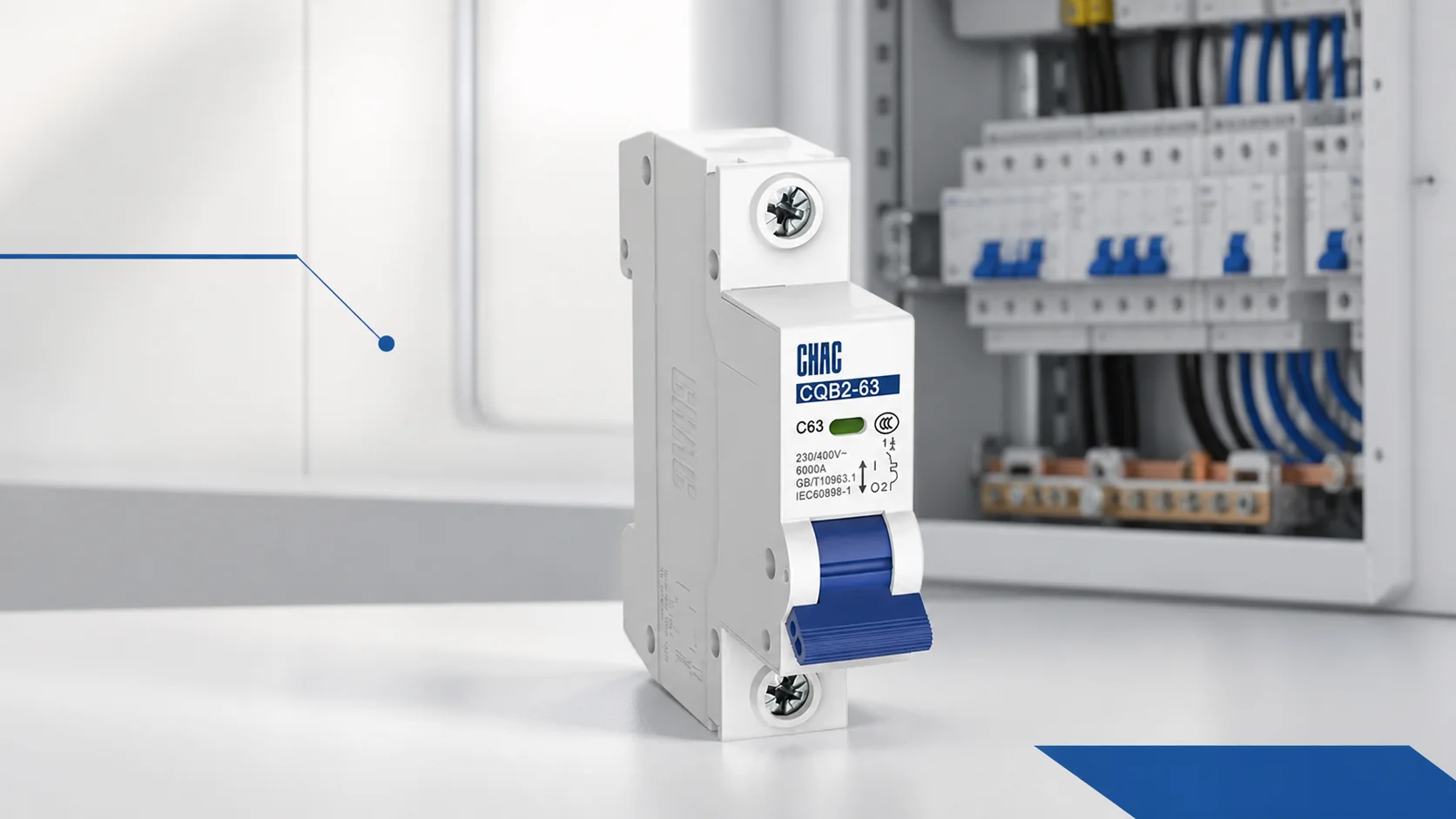
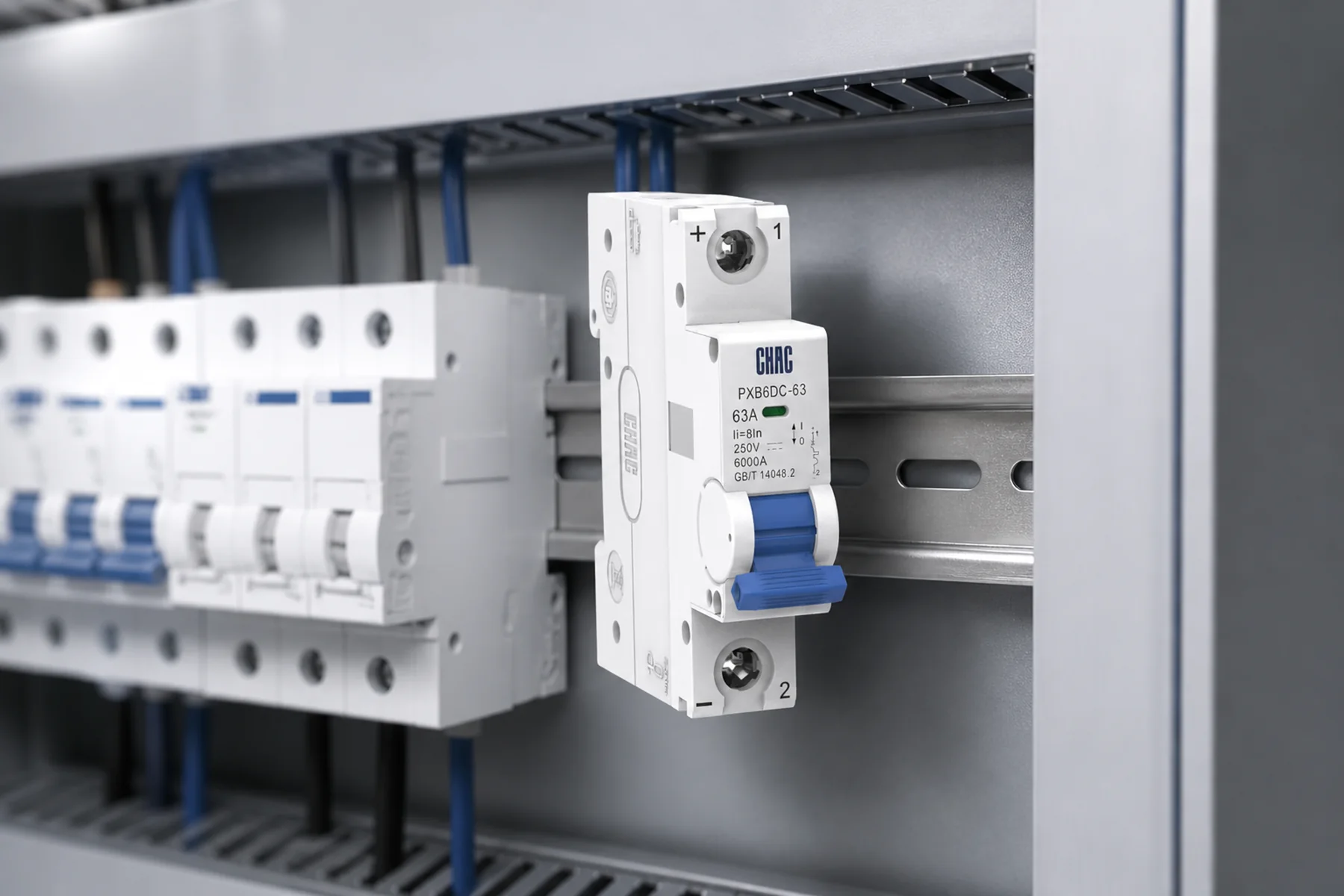
CHAC Electric is a low-voltage manufacturer and sourcing partner. Buyers can review the publicly listed CQB2-63 miniature circuit-breaker and compare the application brief with their own system data. The useful question is not whether a catalogue item looks similar; it is whether the documented ratings, installation, and coordination match the project.
FAQ: MCB and MCCB
what is electrical mcb?
An electrical MCB is a miniature circuit-breaker that opens a low-voltage circuit when overload or short-circuit current exceeds its defined trip characteristics. It is commonly used on final circuits, but the correct choice still depends on voltage, fault level, conductor capacity, curve, and local requirements.
What is the mcb full form and when is it used?
MCB means miniature circuit-breaker. It is used where a compact, standardized protective device suits the branch circuit and its available fault current; confirm the product’s declared application scope before installation.
What is an MCCB electrical device used for?
An MCCB protects feeders and other higher-duty circuits using a molded case and a thermal-magnetic or electronic trip unit. It can support adjustable settings and accessories, but its suitability depends on the exact frame, voltage, breaking capacity, and coordination study.
Can an MCB replace an MCCB?
Only when the MCB’s interrupting rating, continuous current, poles, terminals, enclosure, and coordination all meet the design. In many feeder or industrial applications, an MCB lacks the adjustment, fault duty, or accessory functions required; have the substitution reviewed by the responsible engineer or AHJ.
Are MCCB and MCB ratings the same on AC and DC?
No. DC arcs behave differently, and the allowed voltage, polarity, series-pole arrangement, and tested interruption duty can change. Use a breaker with explicit DC ratings and follow its wiring instructions rather than transferring an AC rating.
Is a higher ampere rating always safer?
No. The breaker must protect the conductor and equipment while carrying the intended load without nuisance trips. A higher setting can increase un-cleared fault energy and defeat selectivity; verify the complete time-current and short-circuit design.
References and final decision
Use primary sources when preparing a specification, test plan, or submittal:
- IEC 60898-1: circuit-breakers for household and similar installations (current IEC standards catalogue)
- IEC 60947-2: low-voltage switchgear and controlgear circuit-breakers (IEC Webstore)
- IEC 61439 series: low-voltage switchgear and controlgear assemblies (IEC standards portal)
- NFPA 70 (National Electrical Code) information
- UL 489: molded-case circuit-breakers and circuit-breaker enclosures
The dependable principle is simple: select the protection around the system’s evidence, not around a familiar acronym. When current, fault duty, trip behavior, poles, enclosure, and compliance are aligned, an MCB or MCCB can do its intended job and remain serviceable as the installation changes. For a project-specific review, contact CHAC about distribution and connection solutions; you can also compare the smart breaker selection guide when monitoring or remote operation is part of the brief.