Flush-mounted and surface-mounted distribution boxes should be compared as two RFQ descriptions, not as a generic promise that either form will fit a site. State the requested mounting form, the assembly constraints, required layout and size, and the named product record so the supplier can review a defined request.

Contents
Part 1. Compare mounting forms as RFQ inputs
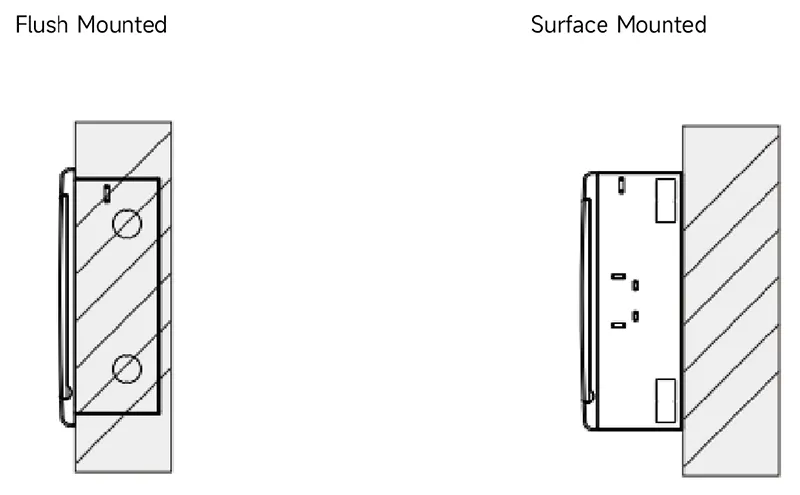
Flush mounting and surface mounting describe how a distribution box is intended to relate to its surrounding assembly or wall. Neither phrase is enough on its own for a quotation because the buyer still needs to state what is being mounted, what space is available, and which published product record is being considered.
The comparison should begin with the intended form, not with an assumption that one approach is universally better. That keeps this subject separate from a distribution-box versus junction-box decision, which addresses a product-category boundary rather than a mounting-form record.
| RFQ concept | Flush-mounted request | Surface-mounted request |
|---|---|---|
| Core question | What form is requested for the assembly? | What form is requested for the assembly? |
| Evidence needed | Product record and assembly constraints | Product record and assembly constraints |
| Not determined by the label | Wall condition, cut-out, approval | Wall condition, fixings, approval |
| Quote response | Confirm against selected documentation | Confirm against selected documentation |
The relevant product family belongs under CHAC’s electrical distribution equipment range. This article narrows the task to how a buyer can state a mounting choice without treating a product image or label as a complete installation answer.
Part 2. Name the assembly constraints before the box
An RFQ becomes reviewable when the mounting choice is accompanied by the conditions that make it relevant. Identify the intended assembly role, the required layout, approximate size needs, and the document that describes the surrounding equipment. These are request inputs, not a substitute for the project review.
VIOX’s distribution-box buying guidance presents product selection as a multi-input decision. The practical implication is simple: a supplier needs more than “flush” or “surface” to locate an appropriate record and respond without filling gaps with assumptions.
Use a concise condition statement. For example, “requested mounting form: ; required layout: ; assembly dimensions supplied in: ; product record requested for review: .” This wording makes the unknowns visible and keeps the quotation focused on evidence that the buyer can provide.
Part 3. Read the named product record at the right scope
CHAC’s CQMG20B distribution box product page lists both flush-mounted and surface-mounted versions. It also describes a double-row layout, internal space for component arrangement, and multiple sizes.
These published fields help a buyer name what must be reviewed. They do not establish a wall condition, prescribe a recess, or demonstrate that a particular project has the necessary clearances.
Important: Treat a mounting option as a product-record field, not a site approval. VIOX’s distribution-box overview likewise places enclosure selection within a broader documented context.
| CQMG20B page statement | Appropriate RFQ use | Excluded inference |
|---|---|---|
| Flush and surface variants | State the requested form for record review | Fit for a specific wall or enclosure |
| Double-row layout | Identify layout requirement | Capacity for unspecified components |
| Multiple sizes | Ask for the selected size record | Clearance or dimensional approval |
Part 4. Put mounting choice into a reviewable quote table
The buyer’s objective is not to write a long installation note. It is to give the reviewer enough information to distinguish the requested mounting form from missing project facts.
| Send with the RFQ | Why it matters | Controlled wording |
|---|---|---|
| Requested mounting form | Defines flush or surface record to review | “State flush-mounted or surface-mounted request” |
| Assembly role | Explains the equipment context | “Describe intended assembly function” |
| Layout and size need | Connects the request to the selected record | “Provide required layout and size information” |
| Product page / configuration | Keeps the answer traceable | “Attach CQMG20B record or selected configuration” |
| Project drawing or condition note | Identifies information outside the product page | “Provide when available for project review” |
The distribution-board way-count RFQ article is related because capacity must often be recorded too. It does not answer the mounting-form question, so a buyer should retain both inputs instead of letting one stand in for the other.
Part 5. Where CQMG20B helps the documentation
CQMG20B offers a named page for requests that need both flush-mounted and surface-mounted options considered against a double-row distribution-box record. The CQMG20B product record can be attached to an RFQ so the reviewer knows which family and stated feature set are under discussion.
That documentation role is deliberately limited. A buyer still needs to provide the requested mounting form, layout and size need, and relevant assembly information before asking whether a configuration can be reviewed.
Where an OEM or distribution program requires further discussion, CHAC’s power-distribution customization page is the suitable next step. Bringing the selected record and the defined inputs to that discussion avoids vague comparisons.
Part 6. Leave site approval to the project review
A product page can show that a named series has published mounting variants. It cannot determine the condition of a wall, a recess, fastening, clearance, or the approval of a completed assembly. Those matters belong to the project documentation and responsible review.
Send the product reference and the RFQ table through the CHAC contact page when the inputs are ready. If the buyer cannot yet state flush or surface mounting, it is better to resolve that design input first than ask for a final product conclusion.
Product recommendation
CQMG05 Series Garage/Workshop Distribution Box | CHAC Electric
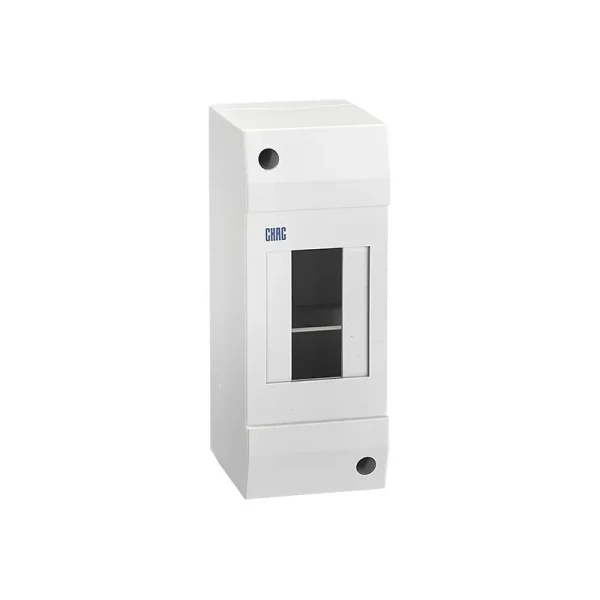
Flush versus surface mounting is primarily a coordination decision: compare wall build-up, available recess depth, access to cable entries, service clearance, and the finished appearance required by the project. Neither mounting form is automatically suitable for every wall or enclosure condition.
Mounting coordination For a CQMG20B request, provide the intended mounting form, overall dimensions, circuit arrangement, entry direction, material, door or cover needs, quantity, and destination-market requirements. The CHAC distribution-equipment range and the box-selection guide provide useful context before the drawing review.
Distribution box mounting should be confirmed against the actual wall construction and maintenance space. A product page can describe a configuration; it cannot approve an unseen installation condition.
For a related selection reference, see What Should a Distribution Box.
Frequently Asked Questions: Distribution Box Mounting
What is the difference between flush and surface mounting?
They are different mounting descriptions for a distribution-box request. Each should be stated with the relevant assembly constraints and the product record to be reviewed.
Which mounting form should the RFQ state?
State the mounting form required by the buyer’s assembly documentation. Do not ask the product page to infer it from a photograph or an incomplete description.
What details need to accompany the mounting choice?
Include the intended assembly role, required layout, size need, named product record, and any drawing or condition note available for review.
What does the CQMG20B page list?
The named page lists flush-mounted and surface-mounted versions, a double-row layout, internal space for arrangement, and multiple sizes. Confirm the selected configuration before applying those statements to a request.
Does a mounting option approve a wall condition?
No. A mounting option describes published product availability. Site conditions and completed-assembly approval require the relevant project evidence and review.
Why record internal layout and size?
Layout and size keep the RFQ tied to the intended assembly. They help the reviewer identify the correct product record without turning a general mounting phrase into an unsupported selection claim.