Blog

Which RCCB Pole Arrangement Fits the Panel Drawing?

Which RCCB Pole Arrangement Fits the Panel Drawing?

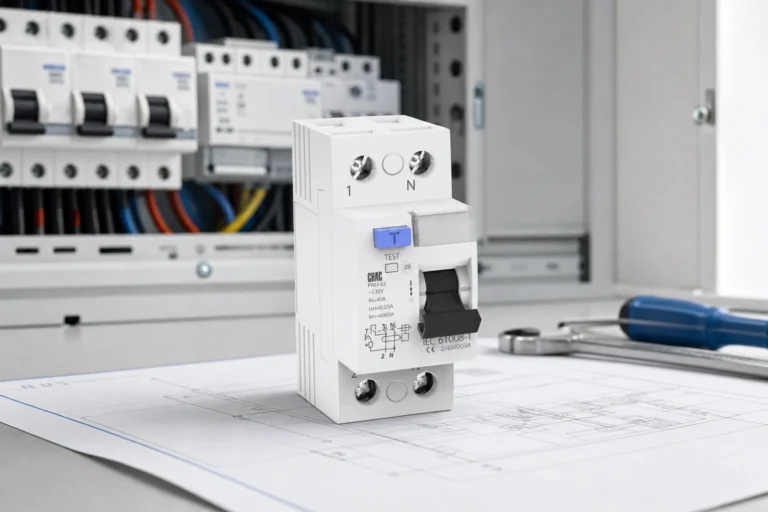
A two-pole or four-pole RCCB starts with the conductors and supply arrangement shown on the approved panel drawing. The selected model, voltage, residual-current fields, and project documents then determine whether the proposed option belongs in the final panel review. Contents…
How Should a Panel RFQ Compare Fused and Non-Fused Disconnects?

How Should a Panel RFQ Compare Fused and Non-Fused Disconnects?

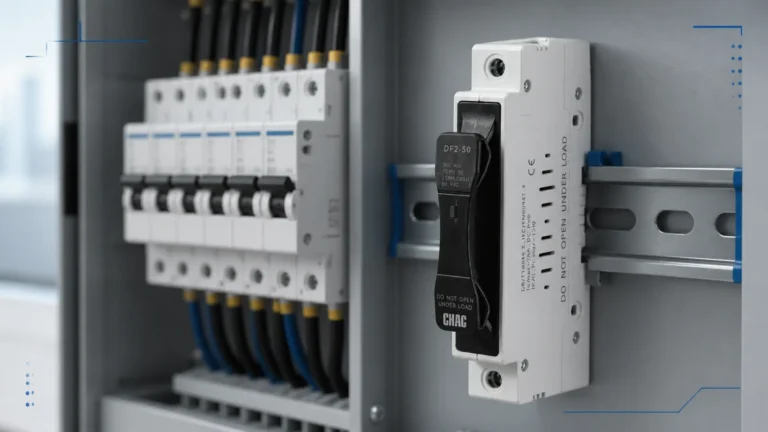
A fused or non-fused disconnect cannot be selected from an enclosure photo or a familiar product family. The panel drawing must show the protection arrangement, the isolation point, and the circuit conditions; selected-device documentation then confirms whether the quoted route…

How Should Panel Teams Specify an MPCB Auxiliary Contact?

How Should Panel Teams Specify an MPCB Auxiliary Contact?

An MPCB auxiliary contact should be specified as a panel-signal interface, not assumed from a motor-protector family name. The drawing needs to identify the status or control signal required, the contact state, the intended interface, and the selected device/accessory evidence.…

Over-Under Voltage Protector RFQ Questions for Panel Programs

Over-Under Voltage Protector RFQ Questions for Panel Programs

An over-under voltage protector monitors supply voltage and initiates the action declared by its design. It is not automatically an MCB, an undervoltage release or a surge protective device. A responsible selection records thresholds, delay, reset behaviour, output ratings and…

DIN-Rail Modular Socket RFQ Checks for Panel Builders

DIN-Rail Modular Socket RFQ Checks for Panel Builders

A DIN-rail modular socket is a service interface inside a panel, not automatically a protective device. Selection should match the feeding circuit, socket standard, mounting format, enclosure access and intended user. The panel drawing must also state whether the outlet…

RCBO vs RCCB: How Panel Builders Separate Combined and Split Protection

RCBO vs RCCB: How Panel Builders Separate Combined and Split Protection

RCBO and RCCB selection is a protection-boundary decision. An RCBO combines residual-current and overcurrent protection in one documented device arrangement. An RCCB provides residual-current protection, while suitable overcurrent protection must be provided elsewhere. The right choice depends on how the…

Distribution Board Way-Count RFQ Guide for Panel Programs

Distribution Board Way-Count RFQ Guide for Panel Programs

Way count is the physical space and circuit-capacity decision behind a distribution-board request. It is not simply the number of outgoing circuits. Module widths, incomers, residual-current devices, accessories, busbars, neutral terminals, cable entries and future expansion can all change the…

Type B MCB Selection Questions for Distribution Panels

Type B MCB Selection Questions for Distribution Panels

Type B MCB selection is a trip-curve decision tied to the load, cable and fault conditions. Under IEC 60898-1, Type B describes a magnetic tripping range of 3–5 times rated current for products within that standard’s scope; it is not…