

Type 1 and Type 2 SPD labels are useful only when they are tied to the installation position, expected surge environment and the product test method. A distribution panel cannot choose a device from the label alone. This revision explains the service-entrance versus downstream boundary, adds the coordination questions that appear in current search results, and keeps model claims tied to the quoted SPD documentation.
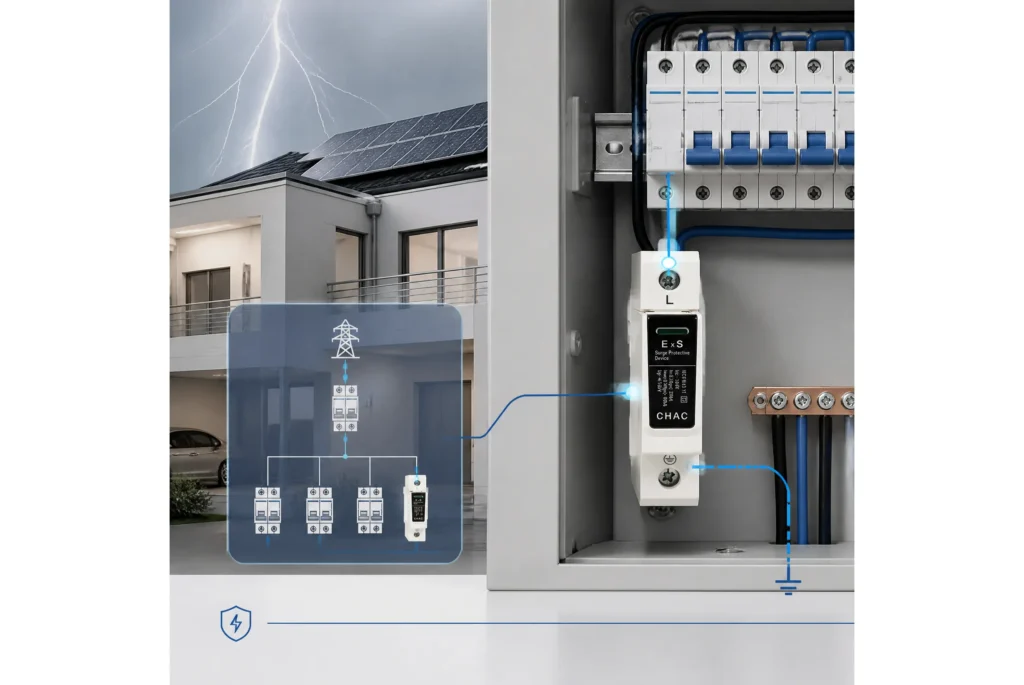
Part 1. What decision does this guide support?
Type 1 vs Type 2 Surge Protective Devices: Selection Boundaries for Distribution Panels is a pre-purchase specification decision guide for panel builders, OEM teams, and distributors. It helps teams separate the equipment role, the installation context, and the information that must be confirmed before a model is selected.
Start with the published Terminal Electrical Appliances category and treat model documentation as controlling. A product name, a generic feature list, or a similar-looking device is not sufficient evidence for a project decision.
Part 2. Which project inputs should be confirmed first?
Collect the circuit diagram, supply and load context, installation environment, required control functions, applicable project standard, and the desired documentation. Record the expected operating sequence as well as the physical assembly constraints.
| Input | Why it matters | Do not assume |
|---|---|---|
| Circuit role | Defines the device function to review | A related device has the same duty |
| Installation context | Affects assembly and environmental review | Bench conditions match the installed panel |
| Control interface | Defines command and feedback needs | Every coil, signal, or accessory is interchangeable |
| Project documentation | Supports the final selection | A category page is a model datasheet |
Part 3. Where is the selection boundary?
This topic is useful for scoping an purchase specification, but it is not a substitute for protection coordination, installation instructions, or a model-specific data sheet. Engineers should confirm the final circuit values, wiring arrangement, required standards, and any safety function from the selected product documentation.
A comparison can clarify the questions to ask; it cannot establish that a particular model is suitable for every installation.
Part 4. How should the control and assembly context be reviewed?
Review the single-line diagram and control diagram together. Identify what starts, stops, signals, isolates, protects, or monitors the circuit, then assign each function to the device that is documented for that role.
Ask the panel team to document terminals, auxiliary feedback, enclosure layout, service access, labeling, and commissioning checks. This avoids turning a generic component request into an unreviewable specification.
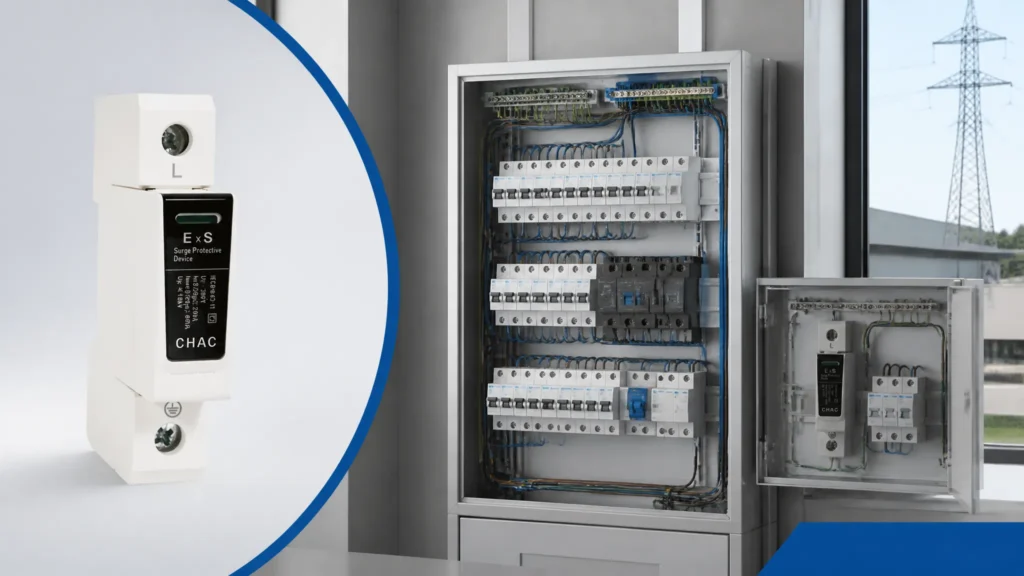
CHAC SPD Recommended:
ExS-T1T2-AC Series Single-Pole Pluggable Surge Protector | CHAC Electric
Part 5. What should the purchase specification contain?
A usable purchase specification names the application, circuit role, installation conditions, required interfaces, target market, requested documentation, branding needs, and the drawing or bill-of-material reference. Where ratings or certifications are required, ask for the exact model evidence rather than inferring it from a category.
For an OEM route, include packaging and labeling requirements with the engineering inputs at CHAC Electric’s customization page.
Part 6. Which CHAC route should buyers use?
Which product evidence should buyers request?
Use the published Cqm5 Series Molded Case Circuit Breakers 2 as a product-route starting point after the purchase specification inputs are confirmed. It is a route to review with CHAC Electric, not a claim that the product fits every system.
The Terminal Electrical Appliances category provides the broader product-family context. Buyers who need branding or packaging discussion can send their confirmed inputs through CHAC Electric’s OEM/ODM route.
Why not recommend a generic substitute: the final selection depends on the project diagram and the exact model documentation.
Part 7. What are the fit boundaries?
Fit Boundary: this guide supports early specification and supplier communication for type 1 vs type 2 surge protective device. It is not suitable for live work instructions, final protection coordination, a safety assessment, or selection without verified project and model data.
For a project review or product-route discussion, contact CHAC Electric with the drawings and required documentation.
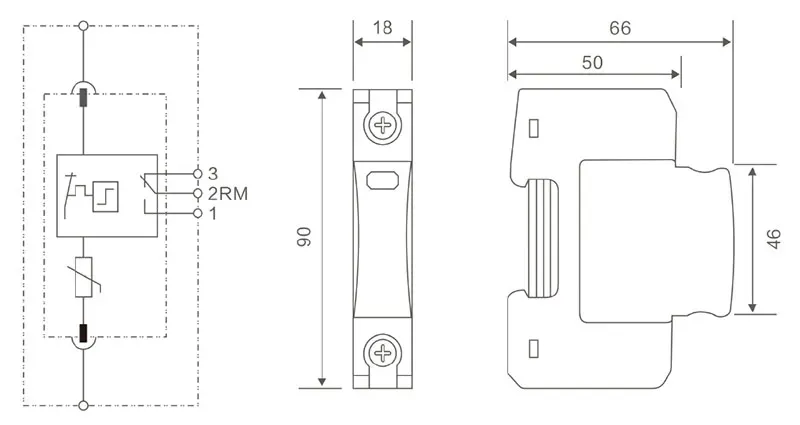
Where should Type 1 and Type 2 SPDs sit in the protection plan?
Type is a coordination decision, not a ranking. The service entrance, the main distribution board and sensitive downstream equipment can see different surge exposure and residual voltage. Record the installation point, lightning-protection arrangement, earthing system, nominal voltage, short-circuit conditions, maximum continuous operating voltage and the upstream overcurrent device before comparing candidates.
| Selection question | Why it matters |
|---|---|
| What surge environment is expected? | It determines which test class and installation position need to be considered. |
| Is protection coordinated? | Lead length, backup protection and residual voltage affect the downstream result. |
| What does the indicator mean? | A status indicator is not a substitute for an inspection or replacement plan. |
Google PAA questions currently include “Can a Type 1 SPD be used as a Type 2?” and “Does a Type 1 SPD require a breaker?” Those questions are useful content gaps, but the answer depends on the standard, system and manufacturer instructions. Review the CHAC SPD reference only after those inputs are recorded.
FAQs
What is the first step in a type 1 vs type 2 surge protective device review?
Start by defining the circuit role and collecting the drawing, operating sequence, and installation conditions.
Can a category page replace a model datasheet?
No. A category page is a navigation aid; the selected model documentation governs the final review.
Which drawings should a panel builder provide?
Provide the single-line diagram, control diagram, assembly constraints, and the documentation requirements.
Why should buyers separate protection and control functions?
Each device must be reviewed for its documented role instead of being treated as an interchangeable substitute.
What belongs in an OEM electrical product purchase specification?
Include the application, interfaces, conditions, drawings, requested documentation, branding, and packaging requirements.
When should an engineer review the final selected model?
Review it after the purchase specification data is complete and before the design team approves the final specification.
Can a Type 1 SPD automatically replace a Type 2 SPD?
No. The installation position, test class, system conditions and coordination requirements must match the exact device and project design.
Does an SPD always need a separate backup breaker?
Not always in the same way. Follow the product instructions and the adopted installation standard for the required backup protection and conductor arrangement.
References
- IEC Webstore
- International Electrotechnical Commission
- IEC Webstore search: IEC 61643-11 Confirm the edition and scope for low-voltage surge protective devices.
- IEC: IP ratings overview Use only for enclosure ingress-protection terminology; it does not determine SPD class.


