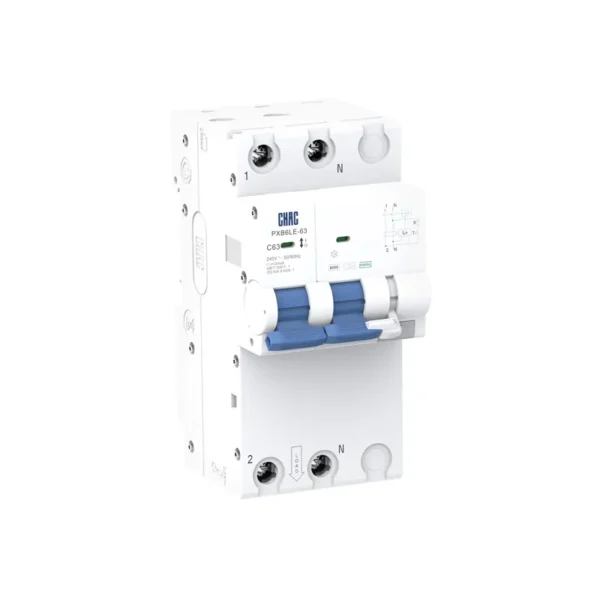
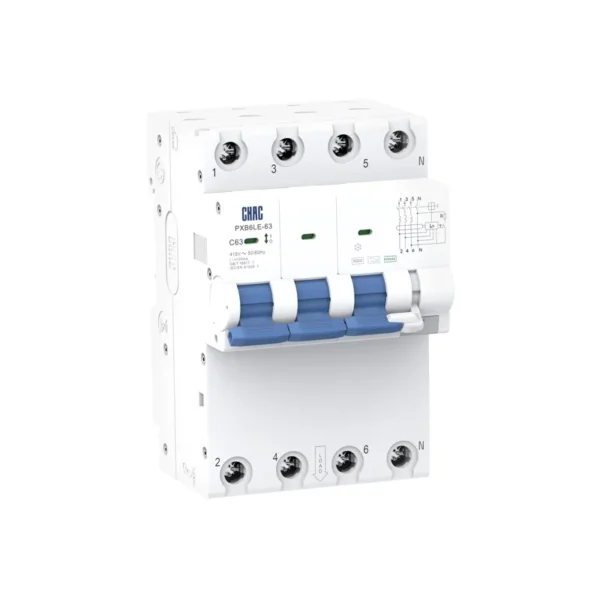
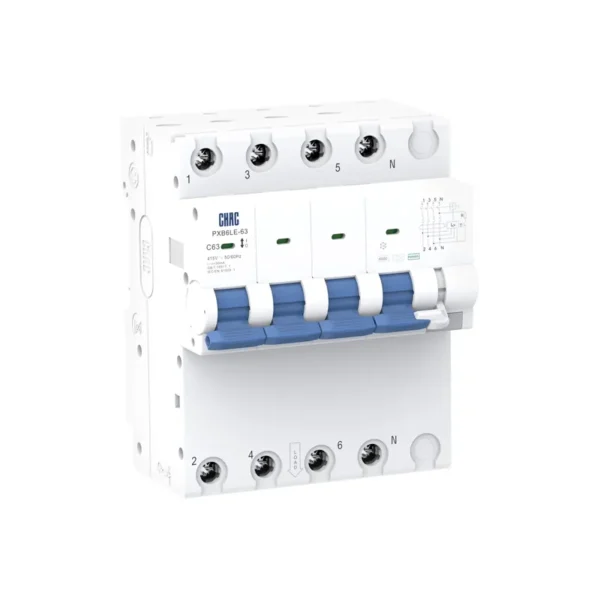
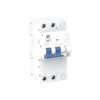
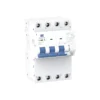
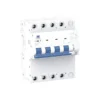
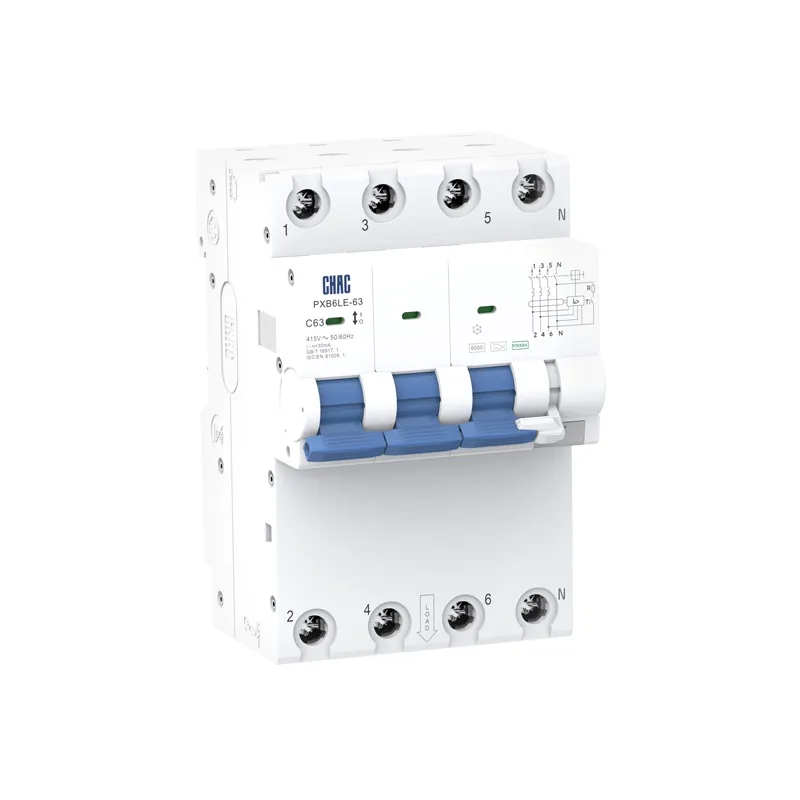
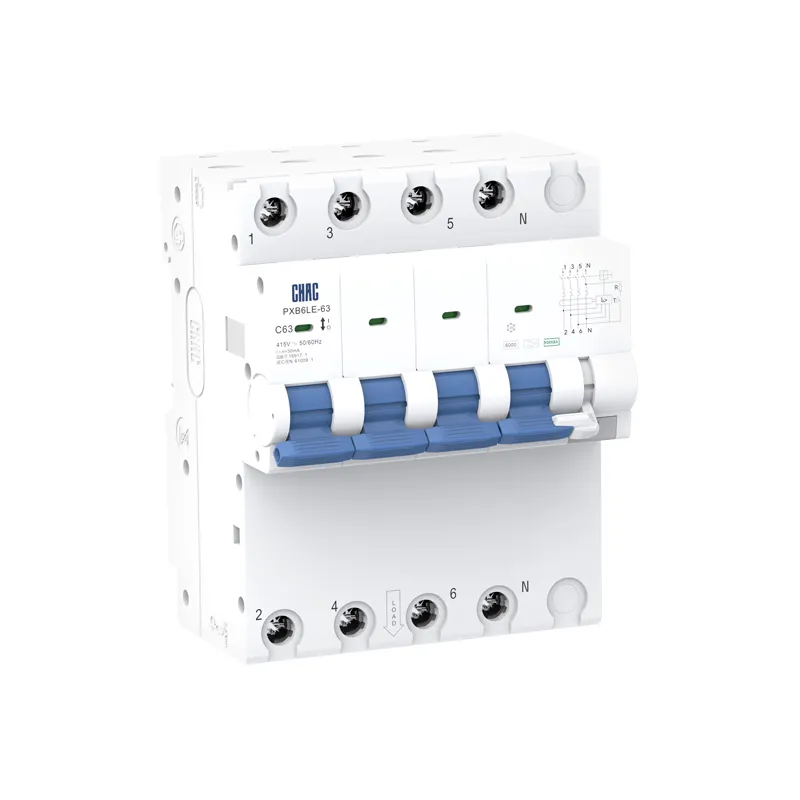
PXB6LE-63 Disjoncteur électronique à courant résiduel avec protection contre les surintensités
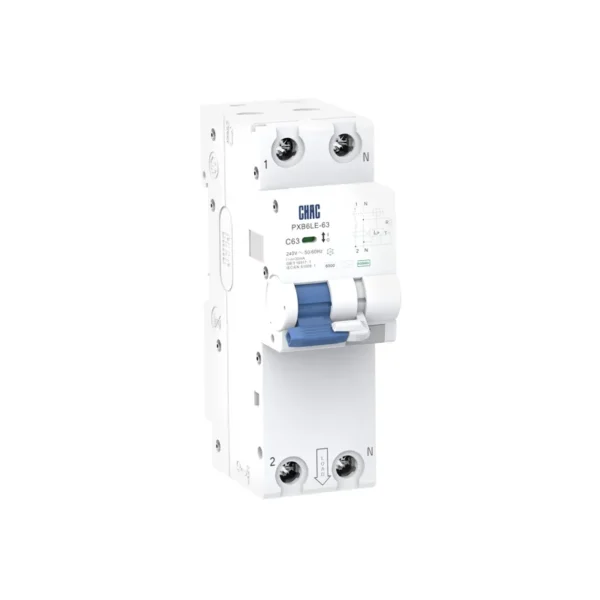
Le CHAC PXB6LE-63 électronique de protection contre les surtensions, les courts-circuits et les courants résiduels combine en un seul appareil les fonctions de protection contre les surtensions, les courts-circuits et les courants résiduels. Choisissez parmi quatre configurations de broches, des courbes B/C/D et des sensibilités Type AC/A pour adapter la protection au circuit, avec des courants nominals allant de 6 A à 63 A.
Vue d'ensemble du produit
The CHAC PXB6LE-63 electronic RCBO combines overcurrent and residual-current protection. Choose Type AC or Type A detection, the required residual-current sensitivity and a B/C/D overcurrent curve as separate order details.
For importers, distributors and equipment manufacturers, CHAC can review the requested configuration against the circuit requirements and destination-market documents. Agree the exact model, drawings and marking requirements before sample approval or a repeat order.
Key Selection Points
Applications typiques
Consider PXB6LE-63 for AC final circuits that require both earth-leakage and overcurrent protection. Type selection depends on load electronics, expected fault waveforms and the installation rules; the highest current or sensitivity value is not automatically the right choice.
Demandes d’admission et guide de sélection
| Selection item | PXB6LE-63 configuration | What to verify |
|---|---|---|
| Courant nominal | 6–63A | Match the load and conductor ampacity, including enclosure temperature and grouping. |
| Poles and voltage | 1P+N / 2P: 240V AC; 3P+N / 4P: 415V AC | Confirm the required neutral-switching and protection arrangement. |
| Protection contre les courants résiduels | Type AC or A; 10/30/50/100/300mA | Specify detection type and sensitivity independently from rated current. |
| Overcurrent characteristic | B/C/D; listed Ics 6000A | Coordinate inrush and fault level rather than changing curve solely to avoid trips. |
Use these checks to compare the protection function, configuration and related CHAC products before specifying PXB6LE-63. Related products are selection alternatives or system components, not automatic replacements.
Specify the leakage type separately from the trip curve
Type A describes the residual-current waveform coverage; a C curve describes the overcurrent trip characteristic.
Investigate leakage before increasing sensitivity settings
Repeated residual-current trips may come from insulation defects, accumulated equipment leakage or wiring errors.
Compare PXB6Ln-40 for the required function
The CHAC PXB6Ln-40 electronic RCBO brings overcurrent and residual-current protection together in a compact 1P+N configuration. It offers 6–40A ratings, B/C curves and Type AC/A options for circuits operating at 230/240V AC.
Compare PXB6LE-63B for the required function
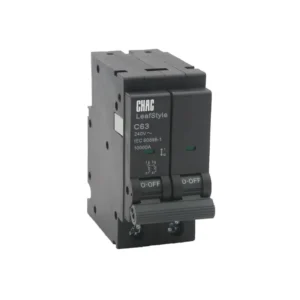
The CHAC PXB6LE-63B electronic RCBO combines overload and short-circuit protection with Type B residual-current protection. Available in 6–63A ratings and four pole arrangements, it offers B/C/D curves and residual-current sensitivities from 30mA to 300mA.
Need Help Specifying PXB6LE-63?
Send the circuit requirements, selected configuration, destination market and quantity for a model-specific review.
Specify the leakage type separately from the trip curve
Type A describes the residual-current waveform coverage; a C curve describes the overcurrent trip characteristic. An order such as Type A, C curve still needs a rated current, sensitivity and pole arrangement. Keeping these fields separate prevents ambiguous distributor orders.
Investigate leakage before increasing sensitivity settings
Repeated residual-current trips may come from insulation defects, accumulated equipment leakage or wiring errors. A higher mA threshold is not a routine cure. Have the circuit assessed and select protection that still meets the application and local requirements.
How to Specify a PXB6LE-63 Order
Use the configuration details below in the purchase specification. Keep the approved drawing revision and product identification with the order so repeat deliveries can be checked consistently.
| Order detail | Information to include |
|---|---|
| Courant nominal | 6–63A — Match the load and conductor ampacity, including enclosure temperature and grouping. |
| Poles and voltage | 1P+N / 2P: 240V AC; 3P+N / 4P: 415V AC — Confirm the required neutral-switching and protection arrangement. |
| Protection contre les courants résiduels | Type AC or A; 10/30/50/100/300mA — Specify detection type and sensitivity independently from rated current. |
| Overcurrent characteristic | B/C/D; listed Ics 6000A — Coordinate inrush and fault level rather than changing curve solely to avoid trips. |
| Project and documents | Supply the application, installation conditions and destination-market document requirements. |
| Quantity and identification | State the quantity, sample requirement, packaging language and any proposed branding; confirm feasibility before approval. |
Check Installation Fit Before Approval
Caractéristiques techniques
| Paramètre | |
| Tension nominale (V) | 240V~(1P+N、2P)/415V~(3P+N、4P) |
| Courant nominal (A) | 6、10、16、20、25、32、40、50、63 |
| Nombre de Polonais | 1P+N、2P、3P+N、4P |
| Rated Short-Circuit Breaking Capacity Ics(A) | 6000A |
| Rated Residual Operating Current IΔn(mA) | 10、30、50、100、300 |
| Rated Residual Non-Operating Current IΔno(mA) | 0.5IΔn |
| Rated Residual Make and Break Capacity IΔm(A) | 3000A |
| Residual Current Tripping Threshold | ≤0.1s |
| Residual Current Trip Type | AC Type、A Type |
| Durabilité mécanique | ≥6000 |
| Durabilité électrique | ≥4000 |
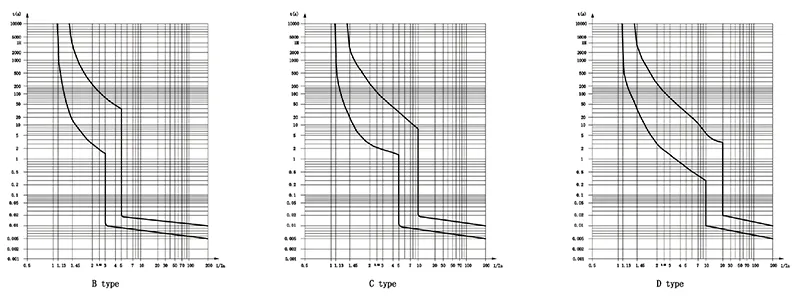
| Des courbes en virage | B, C, D |
| Pollution Degree | 2 |
| Classe de protection | IP 20 |
| Catégorie d'installation | Ⅲ |
| Normes | IEC61009-1, GB/T16917.1 |
| Certification | CE CB CCC|DEKRA Certified |
Tripping Characteristics (Reference Temperature: 30℃)
| Article | Curve de Triche | Test de courant (A) | État initial | Temps de déclenchement ou non-déclenchement | Résultat attendu | Commentaires |
| Delay | ≤63 | Froid | 1.13Dans | ≤1h | Non-chocant | |
| Delay | ≤63 | Following previous test | 1.45In | <1h | Desperance | Current smoothly rises to specified value in 5s |
| Delay | ≤32 | Froid | 2,55 en | 1<t<60s | Desperance | |
| Delay | >32 | Froid | 2,55 en | 1<t<120s | Desperance | |
| Instantaneous | Any value | Froid | 3、5、10In | ≤0.1s | Non-chocant | B, C, D |
| Instantaneous | Any value | Froid | 5、10、20In | <0.1s | Desperance | B, C, D |
Note: The term “cold” means that the test is carried out at a reference calibration temperature without load before the test.
Règles relatives aux conducteurs et section de la conduite
| Section de cuivre (mm²) | Courant nominal (A) |
| 1 | En ≤6 |
| 1.5 | 6<Dans≤13 |
| 2.5 | 13<Dans les 20 jours |
| 4 | 20<En≤25 |
| 6 | 25<Dans la limite de 32 |
| 10 | 32<Dans ≤50 |
| 16 | 50<In≤63 |
Designation de type
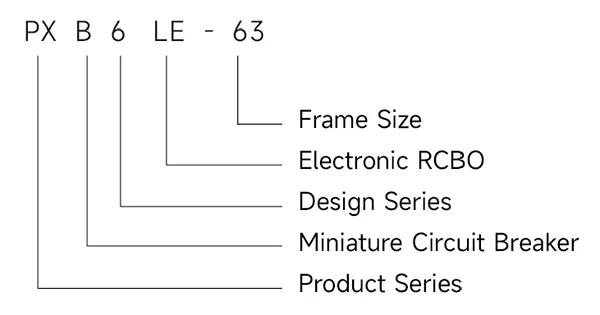
Des courbes en virage
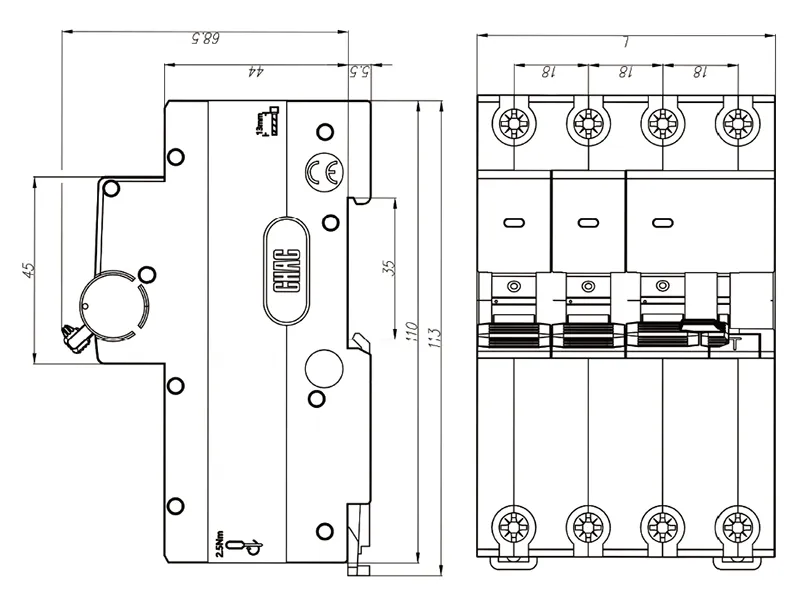
Dimensions (mm)
Pourquoi choisir CHAC
CHAC Electric supplies electrical protection and control products for importers, distributors and equipment brands. For PXB6LE-63, agree the configuration, technical documents, approved sample and identification requirements before production. The company facilities shown below provide company context, not a claim that every model uses the same production or test process.

01
CONFIRM THE SPECIFICATION
Agree the PXB6LE-63 configuration, circuit duty and installation requirements.

02
REVIEW THE DOCUMENTS
Confirm model-specific drawings and destination-market requirements.

03
APPROVE THE SAMPLE
Record the accepted configuration and marking requirements.

04
DEFINE ORDER CHECKS
Agree packaging, identification and delivery requirements in the quotation.

Ligne de montage automatisée

Laboratoire d'essai

Injection et estampage

Inspection de qualité
Qu'est-ce que nous pouvons personnaliser ?
Discuss PXB6LE-63 product identification, packaging and documentation with CHAC. Each proposed change is subject to technical feasibility, marking rules and approval of the exact order; no altered rating or certification is implied.

Logo et identité visuelle
Submit logo artwork and marking requirements for review against the available print area and mandatory product markings.
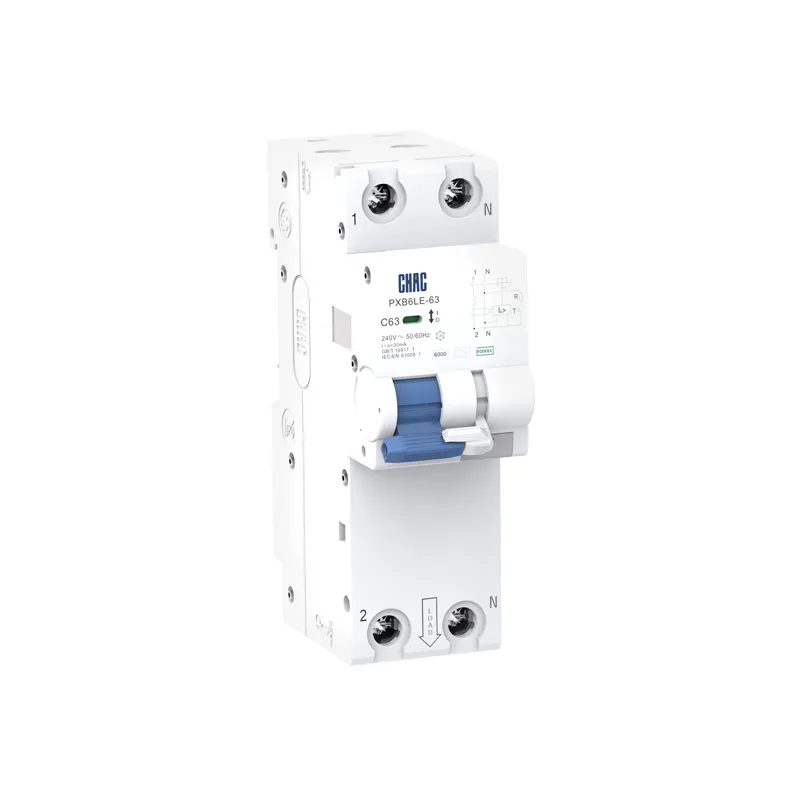

Packaging & Manuals
Define carton labels, packaging language, product identification and instruction requirements for the destination market.
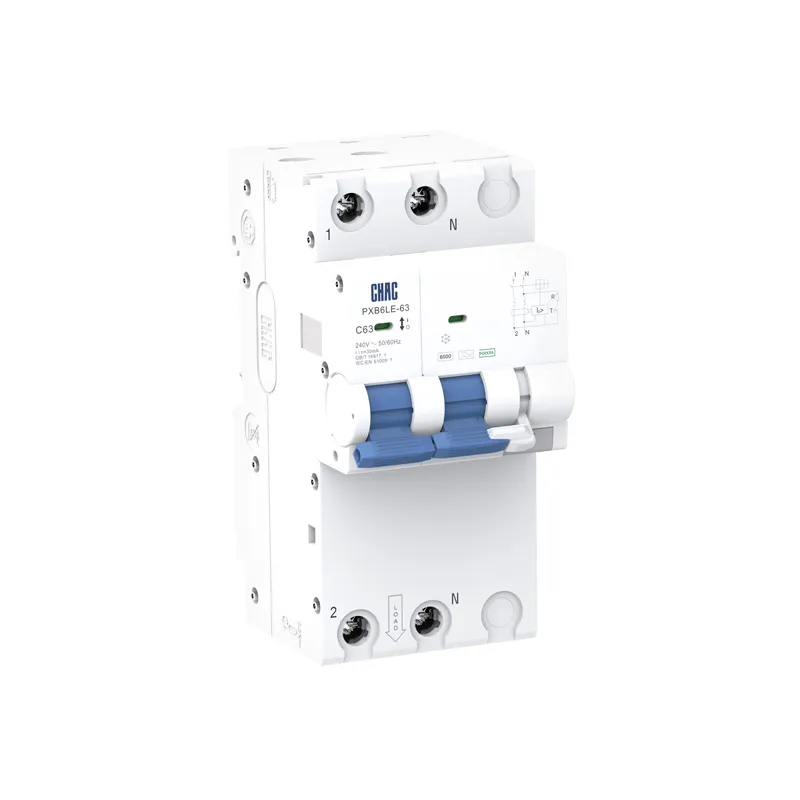

Configuration Selection
Specify PXB6LE-63 with the required rated current, operating conditions and protection duty. Confirm the complete order combination.

Assembly Requirements
Provide the mounting and connection requirements for review. Changes to the housing, terminals or operating arrangement require engineering approval.

Market Documentation
Request documents covering the exact PXB6LE-63 model and destination market. A standard reference alone is not evidence of certification.

Sample Approval
Agree the sample specification, drawing revision and acceptance criteria before confirming a production order.
Technical Documents and Support
PXB6LE-63 Technical Documents
Request the PXB6LE-63 datasheet, configuration drawing, installation instructions and available model-specific market documents.Request Datasheet
Dois-je avoir des documents techniques ?
Send the application, electrical requirements, assembly layout and destination market for configuration and document review.Contactez-nous
PXB6LE-63 Product FAQ
What is the difference between Type A and Type AC RCBOs?
Type AC is intended for sinusoidal AC residual currents, while Type A also covers specified pulsating DC residual currents. PXB6LE-63 offers both options. Select for the connected equipment and local rules, not simply the lower purchase price.
Does a Type A RCBO mean it has a B or C tripping curve?
No. Residual-current type and overcurrent curve are separate specifications. PXB6LE-63 offers Type AC/A detection with B/C/D curves; state both in the order.
Is a 100mA RCBO a direct substitute for a 30mA RCBO?
Not automatically. The sensitivity changes the residual-current protection level and may no longer satisfy the circuit requirements. Confirm the application and local rules before substituting any sensitivity.
How should I choose the PXB6LE-63 residual-current sensitivity?
Select the mA rating from the circuit purpose, equipment instructions and local requirements. Rated current in amperes is a separate specification. Confirm the exact PXB6LE-63 sensitivity variant and its operating-time data rather than using a larger threshold to mask recurring trips.
Why can a PXB6LE-63 installation trip repeatedly?
Possible causes include insulation faults, accumulated equipment leakage, incorrect neutral connections or an unsuitable protection type. Have a qualified person investigate the circuit and follow the device test instructions before changing the rating or replacing protection.
What should an importer include in a PXB6LE-63 inquiry?
Specify poles, AC supply, rated current, residual-current type and sensitivity, plus the overcurrent curve if ordering an RCBO. Add the destination market, required documents, quantity and marking requirements so the quotation identifies the exact configuration.
Specify the Right PXB6LE-63 Configuration
Send CHAC your required configuration, application, destination market and estimated quantity. We will review the requested specification and provide the relevant technical documents and commercial proposal.