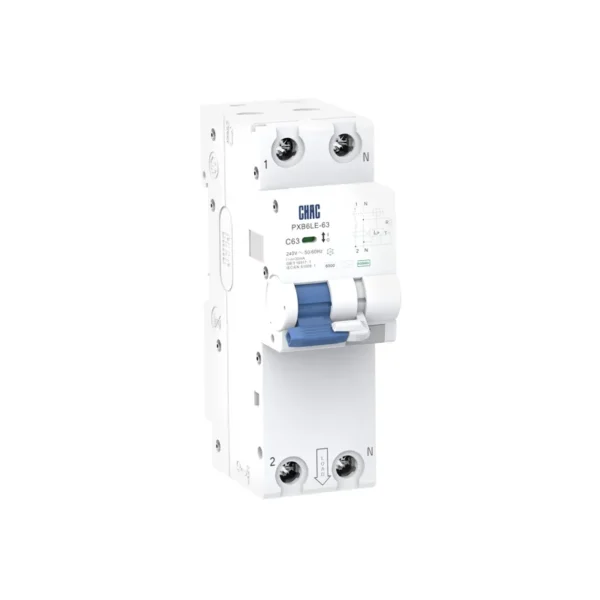
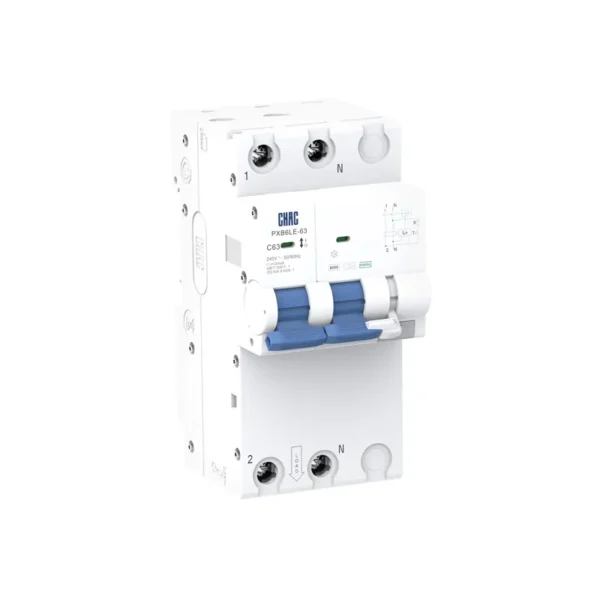
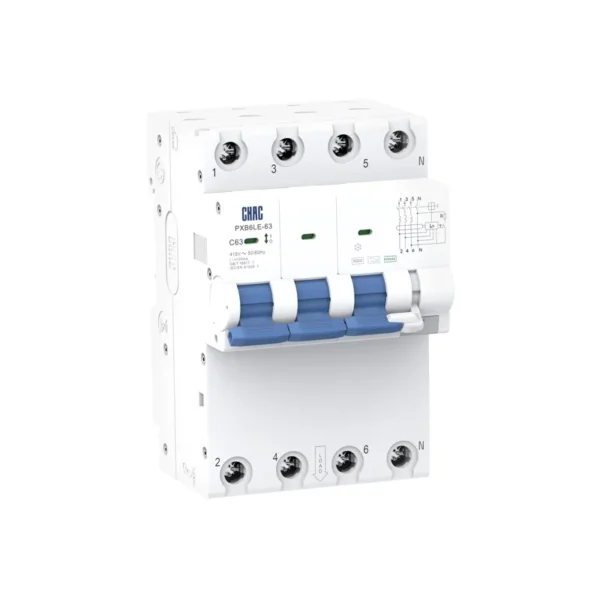
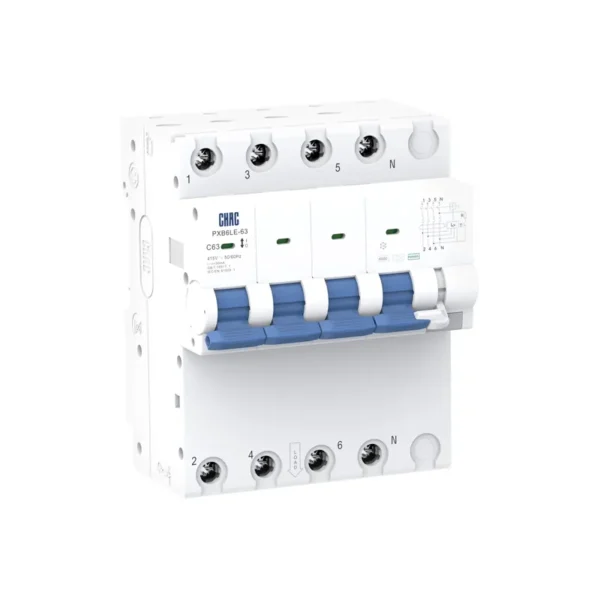
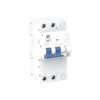
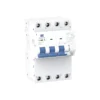
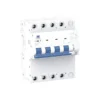
PXB6LE-63 Elektroniczny wyłącznik zwarciowy z funkcją ochrony przed przeciążeniem
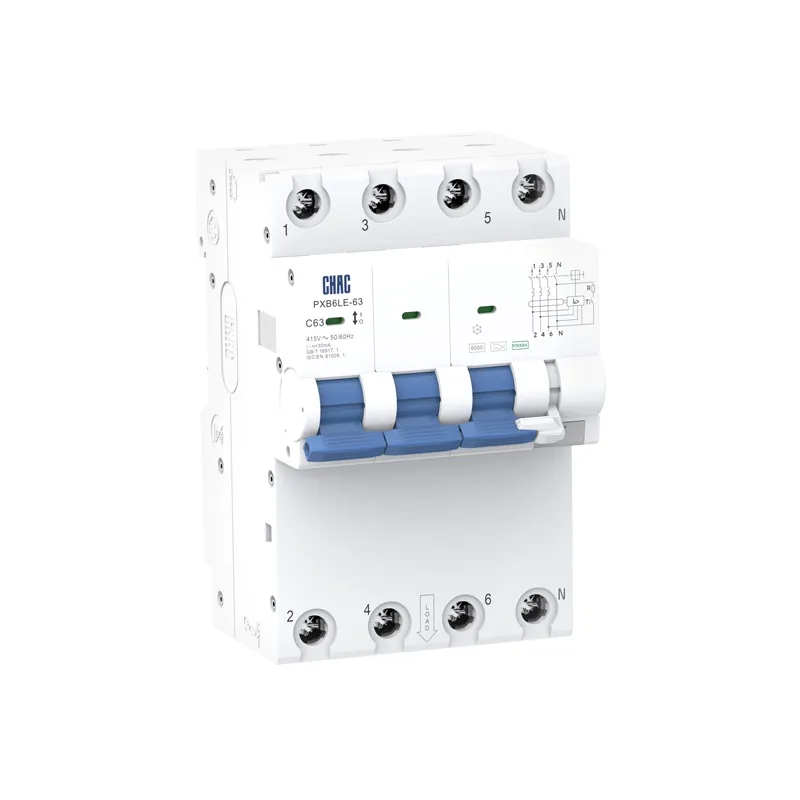
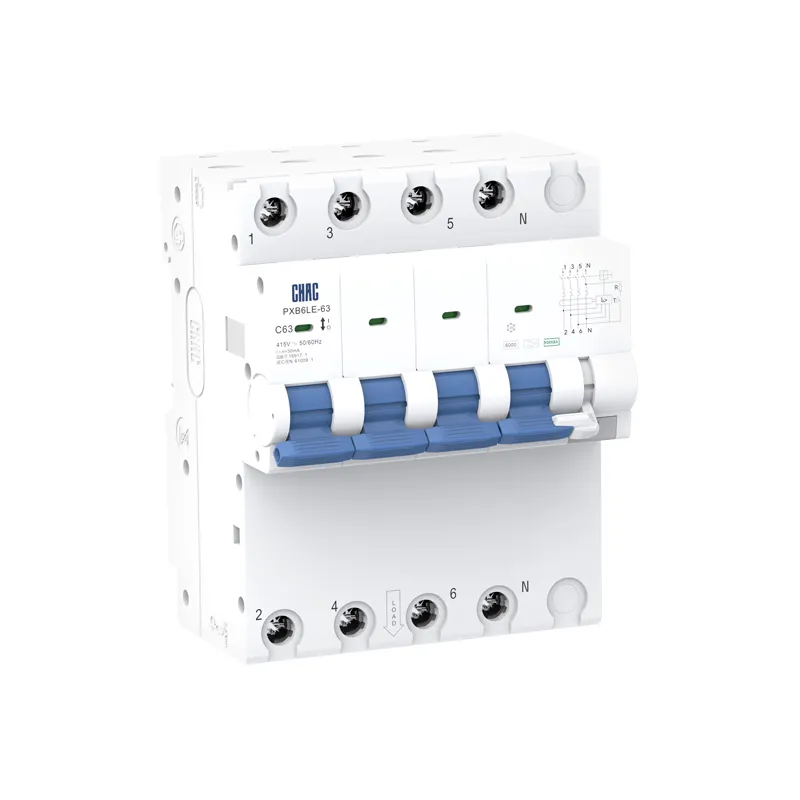
Elektroniczny RCBO CHAC PXB6LE-63 łączy w jednym urządzeniu zabezpieczenie przeciążeniowe, przeciwwrzutowe oraz przed prądem resztowym. Wybierz spośród czterech układów biegunowych, charakterystyk B/C/D oraz czułości typu AC/A, aby dopasować go do obwodu, przy prądach znamionowych od 6A do 63A.
Oversight produktu
CHAC PXB6LE-63 elektroniczny RCBO Łączy zabezpieczenie przeciwprzepięciowe i przeciwzakłóceniowe. Wybierz typ detekcji AC lub A, wymaganą czułość prądu różnicowego oraz charakterystykę przeciążeniową B/C/D jako odrębne szczegóły zamówienia.
Dla importerów, dystrybutorów i producentów urządzeń CHAC może skonfrontować żądaną konfigurację z wymaganiami dotyczącymi obwodów oraz dokumentacją rynku docelowego. Przed zatwierdzeniem próbki lub złożeniem kolejnego zamówienia należy uzgodnić dokładny model, rysunki oraz wymagania dotyczące oznakowania.
Kluczowe punkty wyboru
Typowe zastosowania
Rozważ PXB6LE-63 dla obwodów końcowych zasilania AC, które wymagają zarówno zabezpieczenia przed prądami zwarcia do ziemi, jak i zabezpieczenia przeciążeniowego. Wybór typu zależy od elektroniki obciążenia, oczekiwanych kształtów przebiegów awaryjnych oraz przepisów instalacyjnych; najwyższa wartość prądu lub czułości nie jest automatycznie najlepszym wyborem.
Wnioski i przewodnik po procesie rekrutacji
| Element wyboru | Konfiguracja PXB6LE-63 | Czego należy zweryfikować |
|---|---|---|
| Prąd znamionowy | 6–63A | Dopasuj obciążenie do przewodności prądowej przewodu, uwzględniając temperaturę w obudowie i grupowanie przewodów. |
| Przewodniki i napięcie | 1P+N / 2P: 240V AC; 3P+N / 4P: 415V AC | Potwierdź wymagane rozwiązanie dotyczące przełączania neutralnego przewodu i zabezpieczeń. |
| Ochrona przed prądem rezystancyjnym | Type AC or A; 10/30/50/100/300mA | Specify detection type and sensitivity independently from rated current. |
| Overcurrent characteristic | B/C/D; listed Ics 6000A | Coordinate inrush and fault level rather than changing curve solely to avoid trips. |
Use these checks to compare the protection function, configuration and related CHAC products before specifying PXB6LE-63. Related products are selection alternatives or system components, not automatic replacements.
Specify the leakage type separately from the trip curve
Type A describes the residual-current waveform coverage; a C curve describes the overcurrent trip characteristic.
Investigate leakage before increasing sensitivity settings
Repeated residual-current trips may come from insulation defects, accumulated equipment leakage or wiring errors.
Compare PXB6Ln-40 for the required function
The CHAC PXB6Ln-40 electronic RCBO brings overcurrent and residual-current protection together in a compact 1P+N configuration. It offers 6–40A ratings, B/C curves and Type AC/A options for circuits operating at 230/240V AC.
Compare PXB6LE-63B for the required function
Elektroniczny sterownik RCBO CHAC PXB6LE-63B łączy ochronę przed przeciążeniem i zwarciem z ochroną przed prądem rezystancyjnym typu B. Dostępny w klasach znamionowych od 6 do 63 A oraz w konfiguracjach czterech biegunów, oferuje krzywe B/C/D oraz czułości na prąd rezystancyjny w zakresie od 30 mA do 300 mA.
Need Help Specifying PXB6LE-63?
Prześlij wymagania dotyczące obwodu, wybraną konfigurację, rynek docelowy oraz ilość w celu przeprowadzenia przeglądu dostosowanego do danego modelu.
Specify the leakage type separately from the trip curve
Type A describes the residual-current waveform coverage; a C curve describes the overcurrent trip characteristic. An order such as Type A, C curve still needs a rated current, sensitivity and pole arrangement. Keeping these fields separate prevents ambiguous distributor orders.
Investigate leakage before increasing sensitivity settings
Repeated residual-current trips may come from insulation defects, accumulated equipment leakage or wiring errors. A higher mA threshold is not a routine cure. Have the circuit assessed and select protection that still meets the application and local requirements.
How to Specify a PXB6LE-63 Order
Użyj poniższych danych konfiguracyjnych w specyfikacji zakupu. Zachowaj zatwierdzoną wersję rysunku oraz identyfikator produktu razem z zamówieniem, aby umożliwić spójną kontrolę kolejnych dostaw.
| Szczegóły zamówienia | Informacje do uwzględnienia |
|---|---|
| Prąd znamionowy | 6–63A — Match the load and conductor ampacity, including enclosure temperature and grouping. |
| Przewodniki i napięcie | 1P+N / 2P: 240V AC; 3P+N / 4P: 415V AC — Confirm the required neutral-switching and protection arrangement. |
| Ochrona przed prądem rezystancyjnym | Type AC or A; 10/30/50/100/300mA — Specify detection type and sensitivity independently from rated current. |
| Overcurrent characteristic | B/C/D; listed Ics 6000A — Coordinate inrush and fault level rather than changing curve solely to avoid trips. |
| Projekt i dokumenty | Zapewnij wymagania dotyczące dokumentacji dotyczącej zastosowania, warunków instalacji oraz rynku docelowego. |
| Ilość i identyfikacja | Podaj ilość, wymagania dotyczące próbek, język opakowania oraz wszelkie proponowane elementy identyfikacji wizualnej; przed zatwierdzeniem potwierdź realizowalność. |
Sprawdź dopasowanie instalacji przed zatwierdzeniem.
Specyfikacje techniczne
| Parametr | |
| Napięcie znamionowe (V) | 240V~(1P+N、2P)/415V~(3P+N、4P) |
| Prąd znamionowy (A) | 6、10、16、20、25、32、40、50、63 |
| Liczba Polaków | 1P+N、2P、3P+N、4P |
| Rated Short-Circuit Breaking Capacity Ics(A) | 6000A |
| Rated Residual Operating Current IΔn(mA) | 10、30、50、100、300 |
| Rated Residual Non-Operating Current IΔno(mA) | 0.5IΔn |
| Rated Residual Make and Break Capacity IΔm(A) | 3000A |
| Residual Current Tripping Threshold | ≤0.1s |
| Residual Current Trip Type | AC Type、A Type |
| Wytrzymałość mechaniczna | ≥6000 |
| Wytrzymałość elektryczna | ≥4000 |
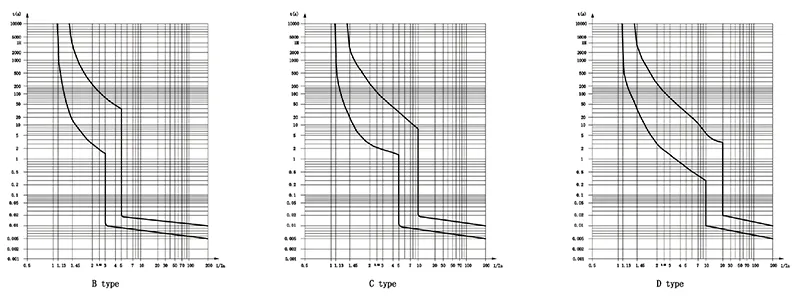
| Krzywe spalania | B, C, D |
| Stopień zanieczyszczenia | 2 |
| Klasa ochrony | IP 20 |
| Kategoria instalacji | Ⅲ |
| Standardy | IEC61009-1, GB/T16917.1 |
| Certyfikacja | CE CB CCC|DEKRA Certified |
Tripping Characteristics (Reference Temperature: 30℃)
| Przedmiot | Krzywa wyłączania | Prąd testowy (A) | Początkowy status | Limit czasu na zadziałanie lub brak zadziałania | Oczekiwany wynik | Uwagi |
| Delay | ≤63 | Zimno | 1.13In | ≤1h | Nieprzypadkowy | |
| Delay | ≤63 | Following previous test | 1.45In | <1h | Potknięcie | Prąd wzrasta płynnie do określonej wartości w 5s. |
| Delay | ≤32 | Zimno | 2.55In | 1<t<60s | Potknięcie | |
| Delay | >32 | Zimno | 2.55In | 1<t<120s | Potknięcie | |
| Instantaneous | Any value | Zimno | 3、5、10In | ≤0.1s | Nieprzypadkowy | B, C, D |
| Instantaneous | Any value | Zimno | 5、10、20In | <0.1s | Potknięcie | B, C, D |
Uwaga: Termin “na zimno” oznacza, że test przeprowadzany jest w referencyjnej temperaturze kalibracji bez obciążenia przed rozpoczęciem badania.
Wymagania dotyczące przewodników i przekrój poprzeczny
| Przekrój miedziany (mm²) | Prąd znamionowy In (A) |
| 1 | W≤6 |
| 1.5 | 6<In≤13 |
| 2.5 | 13<In≤20 |
| 4 | 20<In≤25 |
| 6 | 25<In≤32 |
| 10 | 32<In≤50 |
| 16 | 50<In≤63 |
Oznaczenie typu
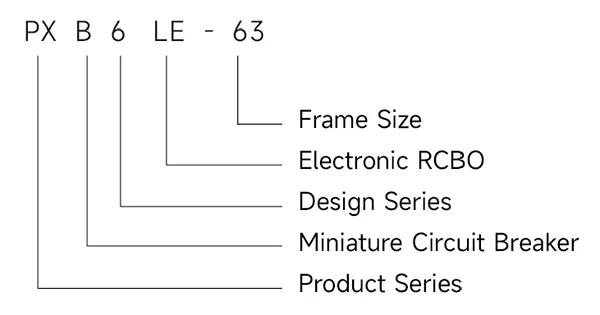
Krzywe spalania
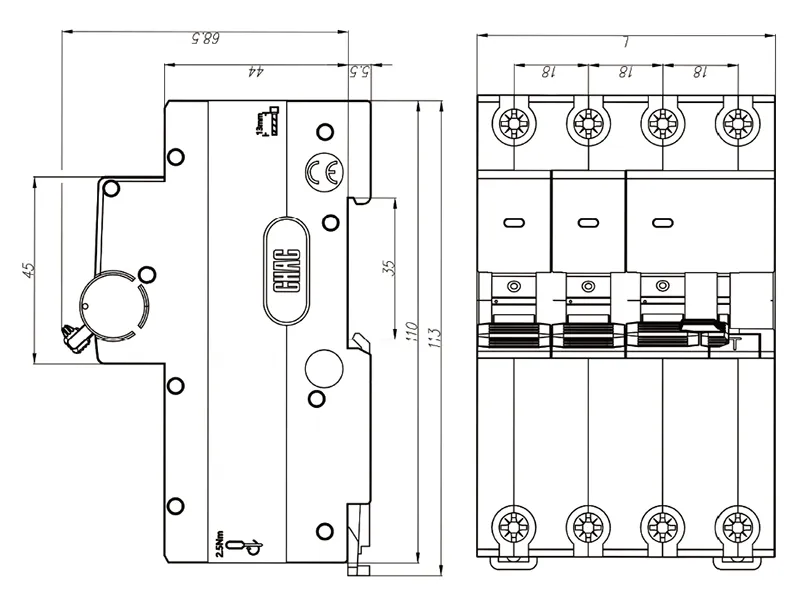
Wymiary (mm)
Dlaczego wybrać CHAC
CHAC Electric supplies electrical protection and control products for importers, distributors and equipment brands. For PXB6LE-63, agree the configuration, technical documents, approved sample and identification requirements before production. The company facilities shown below provide company context, not a claim that every model uses the same production or test process.

01
Potwierdź specyfikację
Agree the PXB6LE-63 configuration, circuit duty and installation requirements.

02
PRZEJRZYJ DOKUMENTY
Potwierdź wykresy dotyczące konkretnego modelu oraz wymagania rynku docelowego.

03
ZATWIERDŹ PRÓBKĘ
Zarejestruj zaakceptowane wymagania dotyczące konfiguracji i oznaczeń.

04
Zdefiniuj kontrole zamówienia
Zgadnij wymagania dotyczące opakowania, identyfikacji i dostawy w ofercie.

Automatyczna linia montażowa

Laboratorium Badawcze

Wtrysk i tłoczenie

Inspekcja jakości
Czego możemy się dostosować?
Discuss PXB6LE-63 product identification, packaging and documentation with CHAC. Each proposed change is subject to technical feasibility, marking rules and approval of the exact order; no altered rating or certification is implied.

Logo i branding
Prześlij projekt logotypu i wymagania dotyczące znakowania w celu ich weryfikacji pod kątem dostępnej powierzchni do nadruku oraz obowiązkowych oznaczeń produktowych.
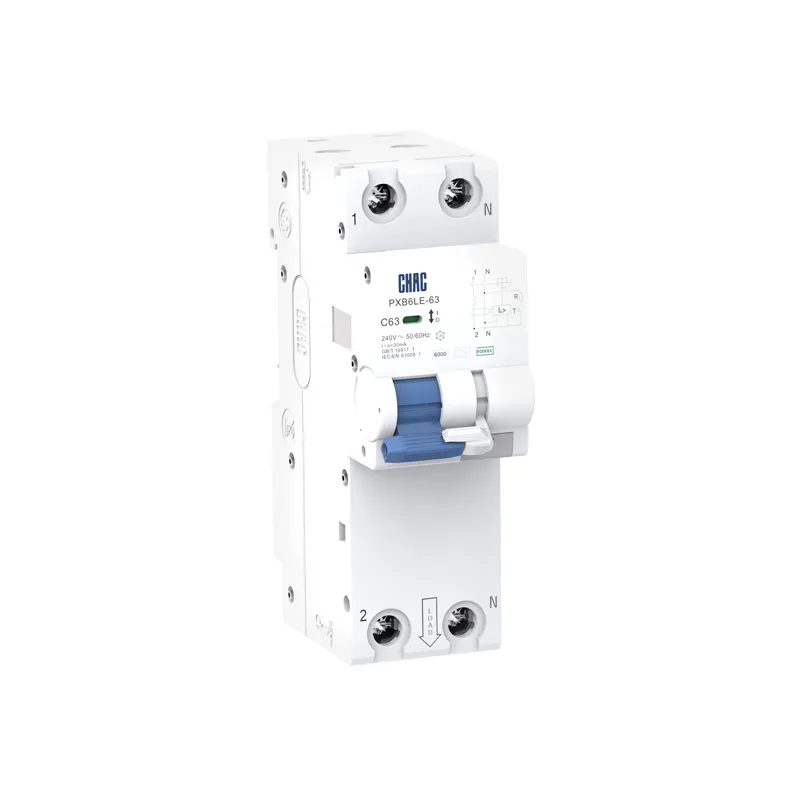

Opakowanie i instrukcje
Określ wymagania dotyczące etykiet kartonowych, języka na opakowaniach, identyfikacji produktu oraz instrukcji dla rynku docelowego.
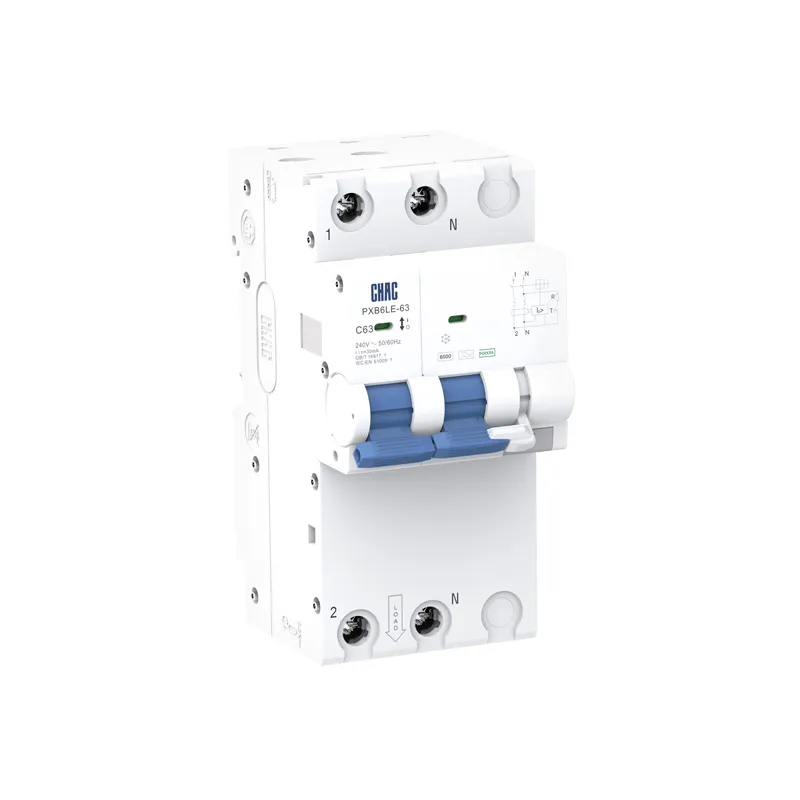

Wybór konfiguracji
Specify PXB6LE-63 with the required rated current, operating conditions and protection duty. Confirm the complete order combination.

Wymagania dotyczące montażu
Przedstaw wymagania dotyczące montażu i podłączenia do weryfikacji. Zmiany w obudowie, zaciskach lub układzie działania wymagają zgody działu inżynieryjnego.

Dokumentacja rynkowa
Request documents covering the exact PXB6LE-63 model and destination market. A standard reference alone is not evidence of certification.

Zatwierdzenie próbki
Zgódź specyfikację próbki, wersję rysunku oraz kryteria akceptacji przed potwierdzeniem zamówienia produkcyjnego.
Dokumenty techniczne i wsparcie
PXB6LE-63 Technical Documents
Request the PXB6LE-63 datasheet, configuration drawing, installation instructions and available model-specific market documents.Zażądaj karty danych
Potrzebujesz dokumentów technicznych?
Prześlij wniosek, wymagania elektryczne, wykres układu oraz rynek docelowy w celu weryfikacji konfiguracji i dokumentów.Kontakt
PXB6LE-63 Product FAQ
What is the difference between Type A and Type AC RCBOs?
Type AC is intended for sinusoidal AC residual currents, while Type A also covers specified pulsating DC residual currents. PXB6LE-63 offers both options. Select for the connected equipment and local rules, not simply the lower purchase price.
Does a Type A RCBO mean it has a B or C tripping curve?
No. Residual-current type and overcurrent curve are separate specifications. PXB6LE-63 offers Type AC/A detection with B/C/D curves; state both in the order.
Is a 100mA RCBO a direct substitute for a 30mA RCBO?
Not automatically. The sensitivity changes the residual-current protection level and may no longer satisfy the circuit requirements. Confirm the application and local rules before substituting any sensitivity.
How should I choose the PXB6LE-63 residual-current sensitivity?
Select the mA rating from the circuit purpose, equipment instructions and local requirements. Rated current in amperes is a separate specification. Confirm the exact PXB6LE-63 sensitivity variant and its operating-time data rather than using a larger threshold to mask recurring trips.
Why can a PXB6LE-63 installation trip repeatedly?
Possible causes include insulation faults, accumulated equipment leakage, incorrect neutral connections or an unsuitable protection type. Have a qualified person investigate the circuit and follow the device test instructions before changing the rating or replacing protection.
What should an importer include in a PXB6LE-63 inquiry?
Specify poles, AC supply, rated current, residual-current type and sensitivity, plus the overcurrent curve if ordering an RCBO. Add the destination market, required documents, quantity and marking requirements so the quotation identifies the exact configuration.
Specify the Right PXB6LE-63 Configuration
Prześlij do CHAC wymaganą konfigurację, zastosowanie, rynek docelowy oraz szacowaną ilość. Przejrzymy zgłoszoną specyfikację i dostarczymy odpowiednie dokumenty techniczne oraz ofertę handlową.