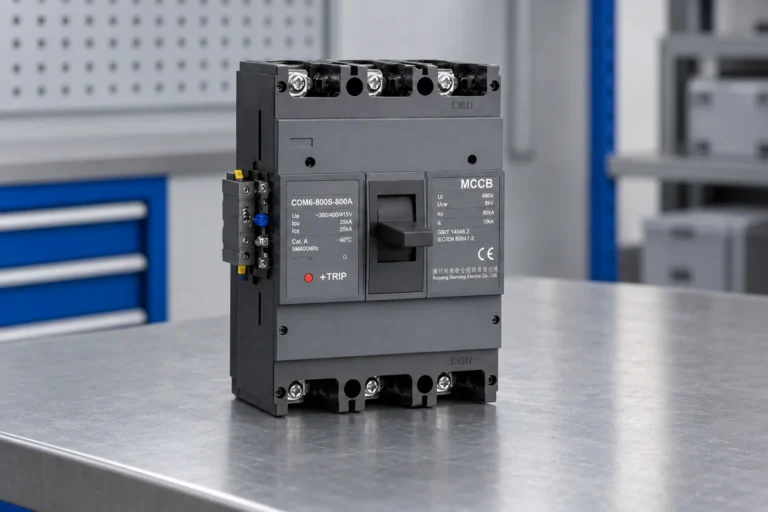
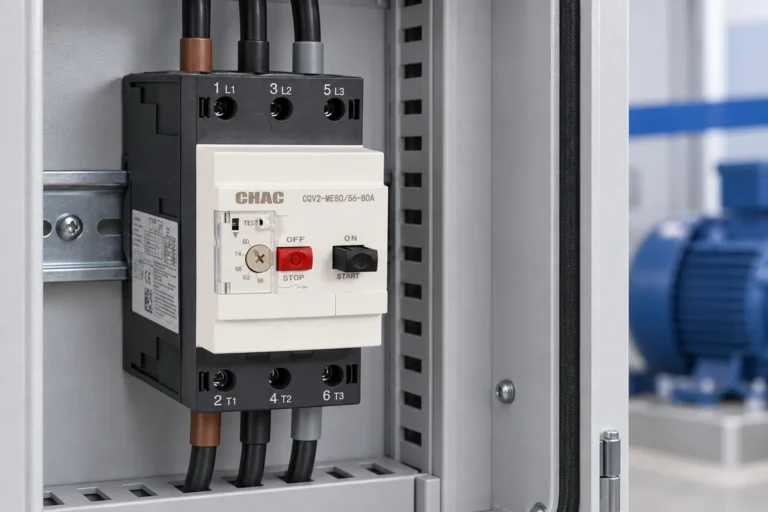
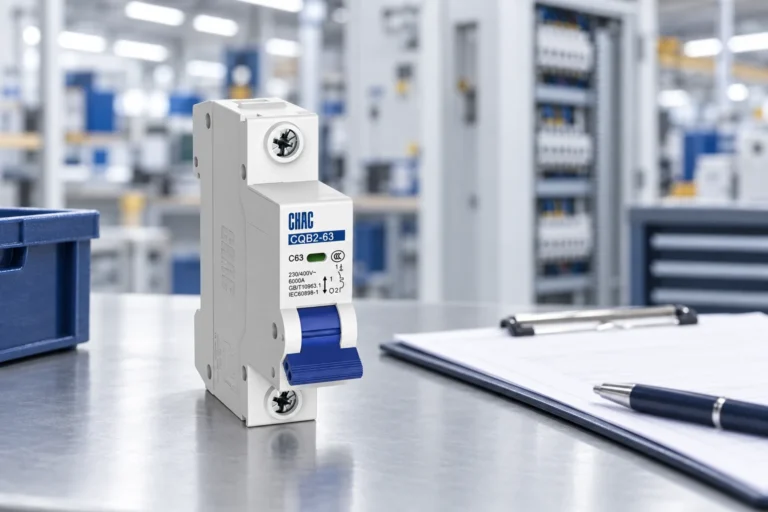
When a project role faced a selection problem, the visible failure often appeared before the real cause was understood. Priya, an electrical contractor in Bengaluru, sketched a compact home board from room names alone. When the homeowner added an induction hob and heat-pump water heater, the incomer and spare ways disappeared. Rebuilding the proposal around a load schedule and diversity assumptions solved the issue before procurement.
Summary: A sound residential circuit breaker proposal starts with a load schedule, supply characteristics and future capacity—not a list of rooms. Group circuits by function, protect conductors, reserve ways, and confirm local rules for RCDs, isolation and labeling. The board should make inspection and future maintenance straightforward. This article keeps the decision evidence-led and separates product capability from installation responsibility.
Build the load schedule
The right answer starts with the application boundary. Define the source, load, conductors, fault level and operating environment before comparing catalogues. A device that looks suitable by ampere rating can still fail on arc duty, selectivity, temperature or installation method. Use the manufacturer time-current curve and the adopted wiring standard as the common language between design, procurement and commissioning.
Document assumptions and test them at the panel. For example, a protection study should state prospective short-circuit current, expected inrush, conductor ampacity and the required disconnection time. Named methods such as primary-injection testing, insulation-resistance testing or a coordination study are more useful than a generic statement that a product is “industrial grade.”
If the answer changes with the destination market, voltage system or utilization category, state that assumption in the specification and obtain written confirmation before release.
Group circuits and reserve capacity
The right answer starts with the application boundary. Define the source, load, conductors, fault level and operating environment before comparing catalogues. A device that looks suitable by ampere rating can still fail on arc duty, selectivity, temperature or installation method. Use the manufacturer time-current curve and the adopted wiring standard as the common language between design, procurement and commissioning.
Document assumptions and test them at the panel. For example, a protection study should state prospective short-circuit current, expected inrush, conductor ampacity and the required disconnection time. Named methods such as primary-injection testing, insulation-resistance testing or a coordination study are more useful than a generic statement that a product is “industrial grade.”
If the answer changes with the destination market, voltage system or utilization category, state that assumption in the specification and obtain written confirmation before release.
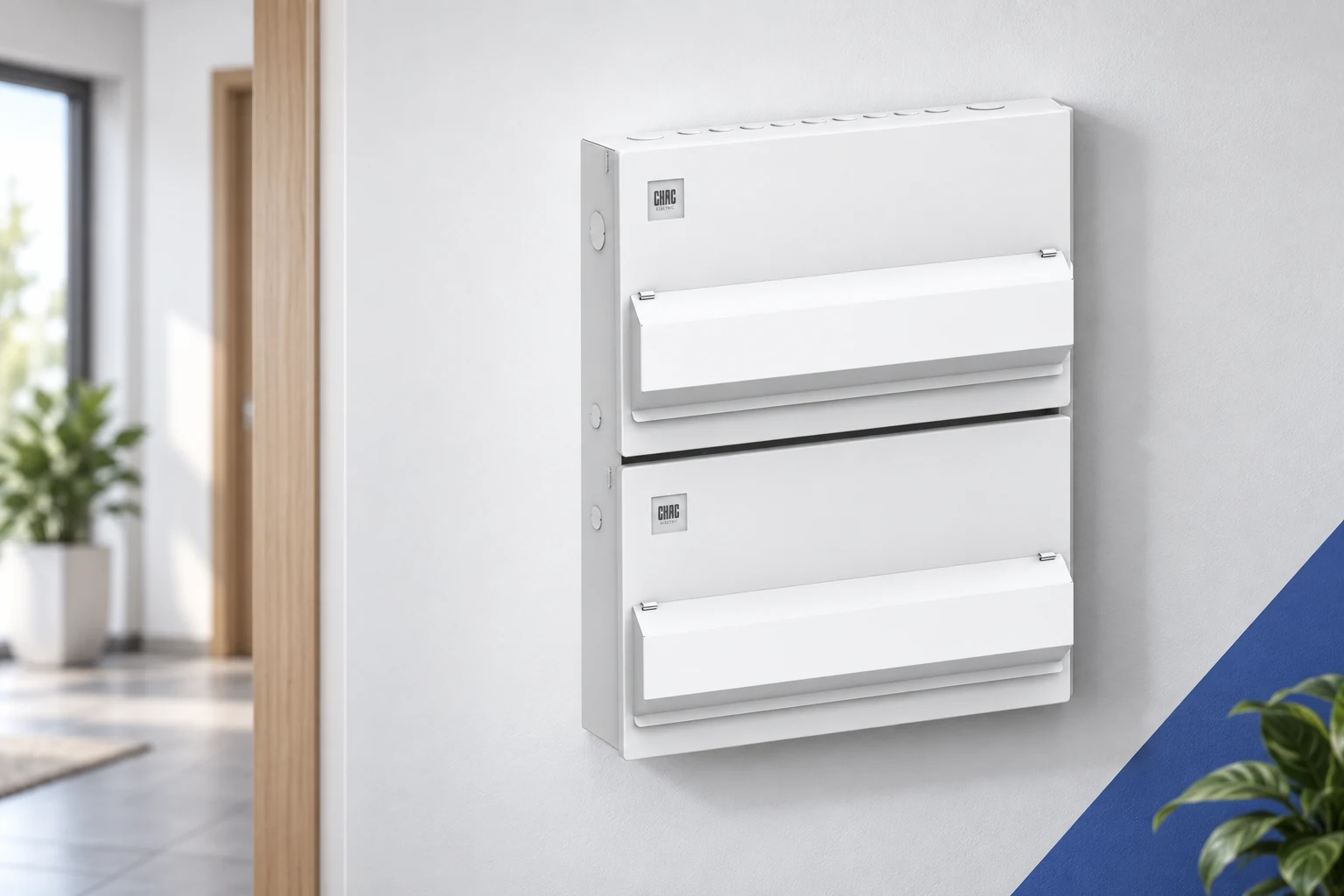
Specify the distribution board and protection
The right answer starts with the application boundary. Define the source, load, conductors, fault level and operating environment before comparing catalogues. A device that looks suitable by ampere rating can still fail on arc duty, selectivity, temperature or installation method. Use the manufacturer time-current curve and the adopted wiring standard as the common language between design, procurement and commissioning.
Document assumptions and test them at the panel. For example, a protection study should state prospective short-circuit current, expected inrush, conductor ampacity and the required disconnection time. Named methods such as primary-injection testing, insulation-resistance testing or a coordination study are more useful than a generic statement that a product is “industrial grade.”
If the answer changes with the destination market, voltage system or utilization category, state that assumption in the specification and obtain written confirmation before release.
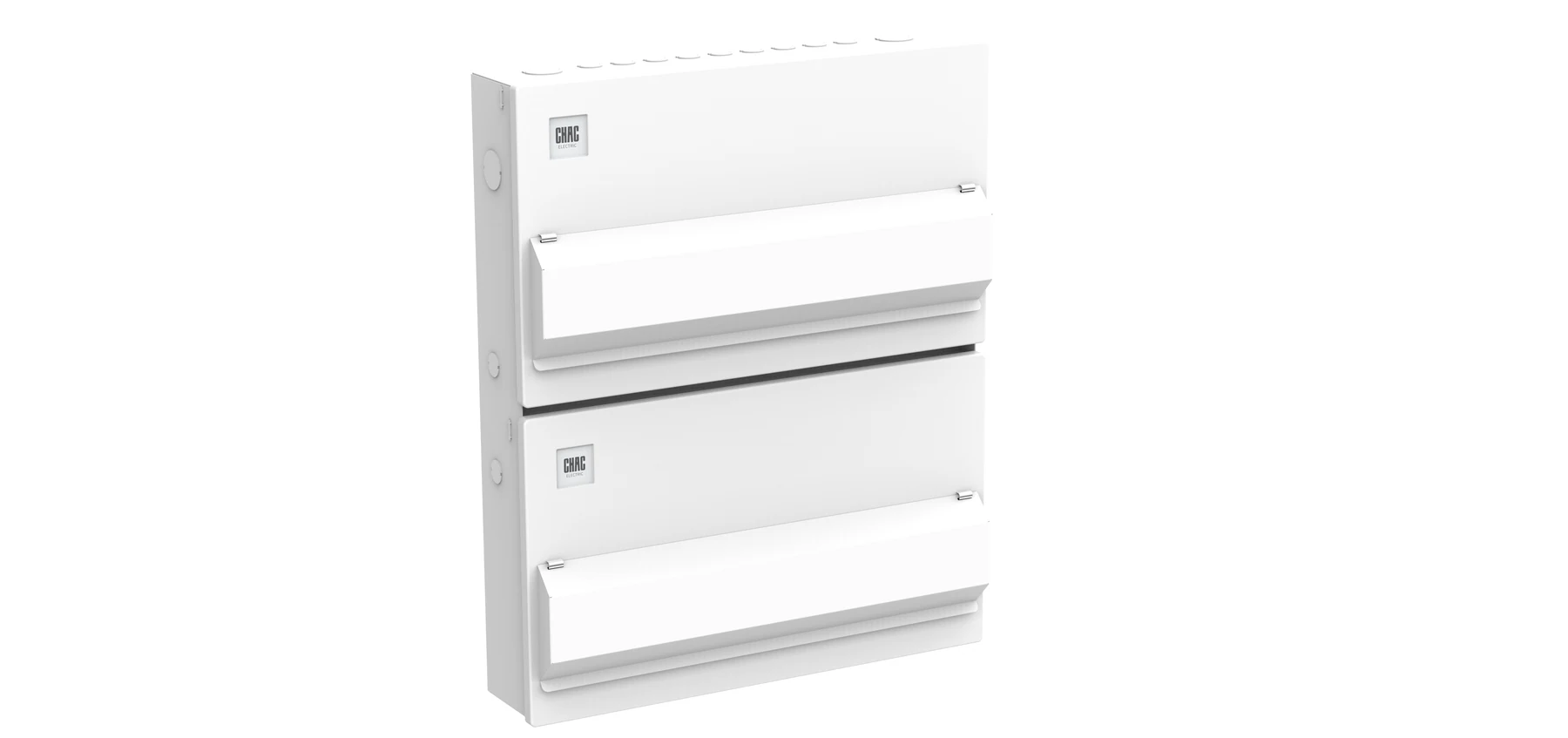
Comparison for a defensible specification
| Dimension | Option A | Option B |
|---|---|---|
| Connected load | Sets feeder and board basis | Nameplate watts, duty cycle and diversity |
| Circuit grouping | Limits nuisance trips and simplifies isolation | One-line diagram and labels |
| Future space | Avoids replacement during expansion | Reserved ways and busbar rating |
Selection and procurement actions
- Freeze the electrical assumptions: system voltage, poles, load current, conductor method, fault current and ambient limits.
- Request model-specific data: standard edition, trip curve, breaking capacity, terminal limits, dimensions and test evidence.
- Review coordination with upstream and downstream devices; do not infer selectivity from brand or frame size.
- Approve a sample or first article, record torque and inspection points, and define who performs commissioning tests.
- Plan spares and change control so a later substitution cannot silently alter safety performance.
For buyers comparing configurable protection families, CHAC Electric provides public information on electrical distribution equipment and modular accessories. Treat these pages as a starting point and confirm the exact model data for your project.
Use a load schedule to leave usable spare ways
A residential circuit breaker proposal becomes more reliable when each circuit is tied to a load, conductor method and isolation need. Combine that schedule with distribution board planning so the enclosure has practical spare ways, not just theoretical capacity. The third decision is future capacity: reserve space for likely heat-pump, EV-charging or kitchen loads without assuming today’s diversity factor will remain unchanged.
Before procurement, show which circuits need residual-current protection, which loads have inrush and who will verify torque, labeling and final tests. This turns a room-by-room sketch into a checkable design record.
Related reading: What is miniature circuit breaker explains the device-level decisions inside the board schedule.
Frequently asked questions
How many circuits should a home distribution board have?
There is no universal number. Split lighting, socket outlets, wet areas, cooking, HVAC and high-load appliances according to local code, load diversity and practical isolation. Leave spare ways for foreseeable additions.
Should every residential circuit use an RCD?
Many jurisdictions require additional protection for socket outlets and wet locations, but the exact arrangement varies. Follow the adopted wiring rules and coordinate RCD ratings with the breaker and earthing system.
How do I size the main breaker?
Use the service capacity, calculated maximum demand, conductor ampacity and utility requirements. The main breaker must protect the feeder and have adequate interrupting rating for the available fault current.
What belongs in a circuit breaker proposal?
Include a load schedule, single-line diagram, board layout, device ratings, enclosure details, labeling plan, test responsibilities and assumptions about supply voltage and earthing.
Authoritative references
- IEC 60364 series (consult the current edition and national adoption).
- IEC 61439-3 (consult the current edition and national adoption).
- NFPA 70 (NEC) (consult the current edition and national adoption).
The durable principle is simple: specify the circuit and the evidence together, then test the assembled result. For a model review, application question or documented quotation, contact CHAC Electric and share the duty, voltage and destination-market requirements.