When a project role faced a selection problem, the visible failure often appeared before the real cause was understood. Maya, a controls engineer in Rotterdam, started a conveyor upgrade by swapping a general branch breaker for a motor circuit protector. The first start looked fine; on the next jam, the drive tripped before the starter could coordinate and the line stopped. A wiring review showed the root cause was protection selection and coordination, not a defective device.
Summary: A motor circuit protector is optimized for short-circuit protection around a motor starter, while a general circuit breaker may also provide overload protection. In IEC practice, designers coordinate the breaker, overload relay and contactor so the motor can start without nuisance trips and still clear faults quickly. Map the motor’s locked-rotor current, cable ampacity and required fault level before choosing a device. This article keeps the decision evidence-led and separates product capability from installation responsibility.
Separate short-circuit and overload duties
The right answer starts with the application boundary. Define the source, load, conductors, fault level and operating environment before comparing catalogues. A device that looks suitable by ampere rating can still fail on arc duty, selectivity, temperature or installation method. Use the manufacturer time-current curve and the adopted wiring standard as the common language between design, procurement and commissioning.
Document assumptions and test them at the panel. For example, a protection study should state prospective short-circuit current, expected inrush, conductor ampacity and the required disconnection time. Named methods such as primary-injection testing, insulation-resistance testing or a coordination study are more useful than a generic statement that a product is “industrial grade.”
If the answer changes with the destination market, voltage system or utilization category, state that assumption in the specification and obtain written confirmation before release.
Coordination with contactors and overload relays
The right answer starts with the application boundary. Define the source, load, conductors, fault level and operating environment before comparing catalogues. A device that looks suitable by ampere rating can still fail on arc duty, selectivity, temperature or installation method. Use the manufacturer time-current curve and the adopted wiring standard as the common language between design, procurement and commissioning.
Document assumptions and test them at the panel. For example, a protection study should state prospective short-circuit current, expected inrush, conductor ampacity and the required disconnection time. Named methods such as primary-injection testing, insulation-resistance testing or a coordination study are more useful than a generic statement that a product is “industrial grade.”
If the answer changes with the destination market, voltage system or utilization category, state that assumption in the specification and obtain written confirmation before release.
Motor starter applications and verification
The right answer starts with the application boundary. Define the source, load, conductors, fault level and operating environment before comparing catalogues. A device that looks suitable by ampere rating can still fail on arc duty, selectivity, temperature or installation method. Use the manufacturer time-current curve and the adopted wiring standard as the common language between design, procurement and commissioning.
Document assumptions and test them at the panel. For example, a protection study should state prospective short-circuit current, expected inrush, conductor ampacity and the required disconnection time. Named methods such as primary-injection testing, insulation-resistance testing or a coordination study are more useful than a generic statement that a product is “industrial grade.”
If the answer changes with the destination market, voltage system or utilization category, state that assumption in the specification and obtain written confirmation before release.
Does the quotation describe an MCP or a complete motor-protection breaker?
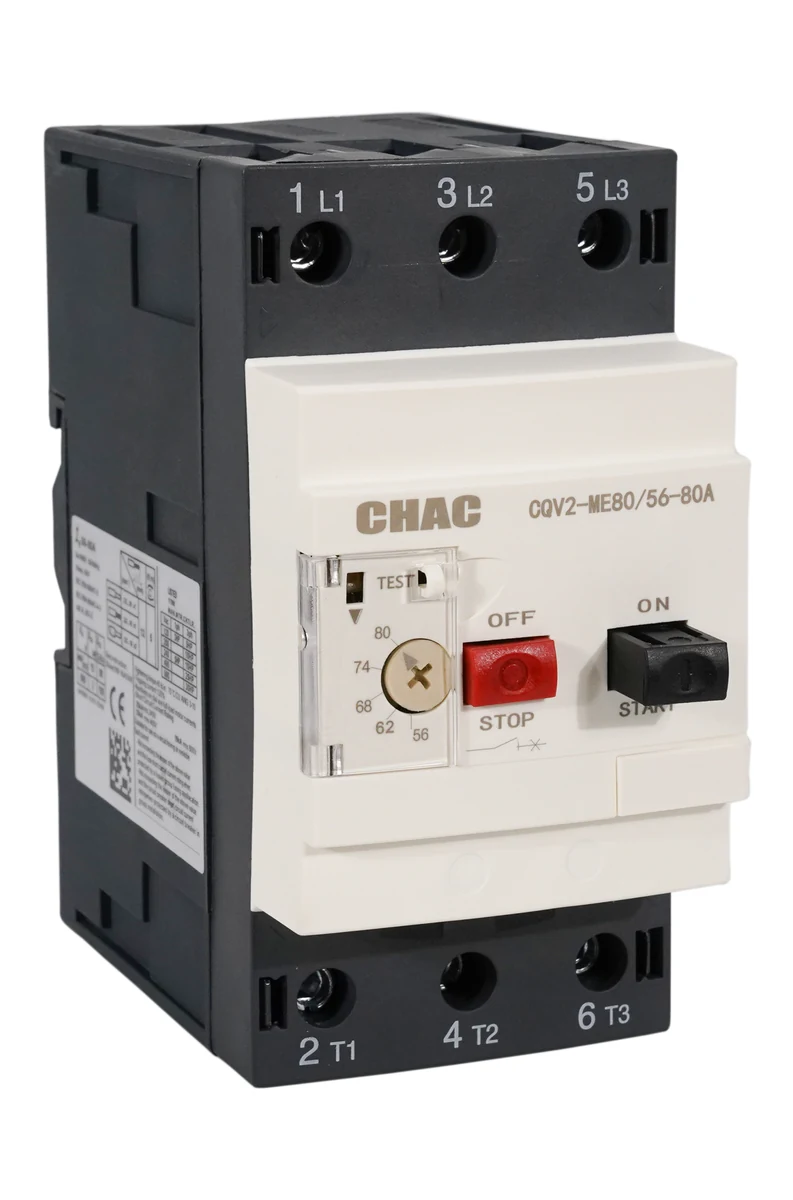
Before comparing prices, ask the supplier what motor circuit protector means in the offered configuration. An instantaneous-only MCP relies on the specified surrounding overload and starter arrangement. A device described as an MPCB may combine different functions, but the name alone is not a sufficient specification. Request the actual trip characteristics, adjustment ranges and permitted assembly.
For a replacement, compare the installed overload relay and contactor with the supplier’s documented combination rather than replacing only the device with the matching ampere number. Check the motor starting duty and the available fault level separately. A successful start does not establish the short-circuit capability of the complete starter.
The motor starter and contactor guide explains the division of functions. The inverse-time and instantaneous-trip comparison helps clarify why adding an instantaneous device does not automatically supply the missing overload response.
Compare the devices by the duty they must perform
| Dimension | Option A | Option B |
|---|---|---|
| Fast fault clearing | Magnetic protection sized for motor inrush | Thermal-magnetic curve for feeder duty |
| Overload handling | Usually relies on a separate overload relay | May include thermal overload function |
| Best fit | Motor branch with starter | Mixed-purpose feeder or distribution circuit |
Record the details a motor-protection supplier must confirm
- Freeze the electrical assumptions: system voltage, poles, load current, conductor method, fault current and ambient limits.
- Request model-specific data: standard edition, trip curve, breaking capacity, terminal limits, dimensions and test evidence.
- Review coordination with upstream and downstream devices; do not infer selectivity from brand or frame size.
- Approve a sample or first article, record torque and inspection points, and define who performs commissioning tests.
- Plan spares and change control so a later substitution cannot silently alter safety performance.
For buyers comparing configurable protection families, CHAC Electric provides public information on MCB products and electrical distribution equipment. Treat these pages as a starting point and confirm the exact model data for your project.
Match motor starting current with the protection plan
A motor circuit protector is selected from the motor’s starting profile, while short-circuit protection must still match the available fault level. The useful design question is not which device has the highest ampere number, but whether the overload setting, magnetic response and upstream coordination cover the motor’s normal start without masking a stalled-rotor fault. Treat motor overload coordination as a documented check with the motor data sheet and the manufacturer’s time-current information.
A practical review should record starting current, start duration, duty class, phase-loss requirements and the reset policy. If those inputs are missing, mark the selection as conditional instead of calling a protector universally suitable.
Related reading: Molded case circuit breaker vs miniature circuit breaker explains how frame size and fault level affect the wider protection architecture.
Use starting current and coordination data to select the motor branch
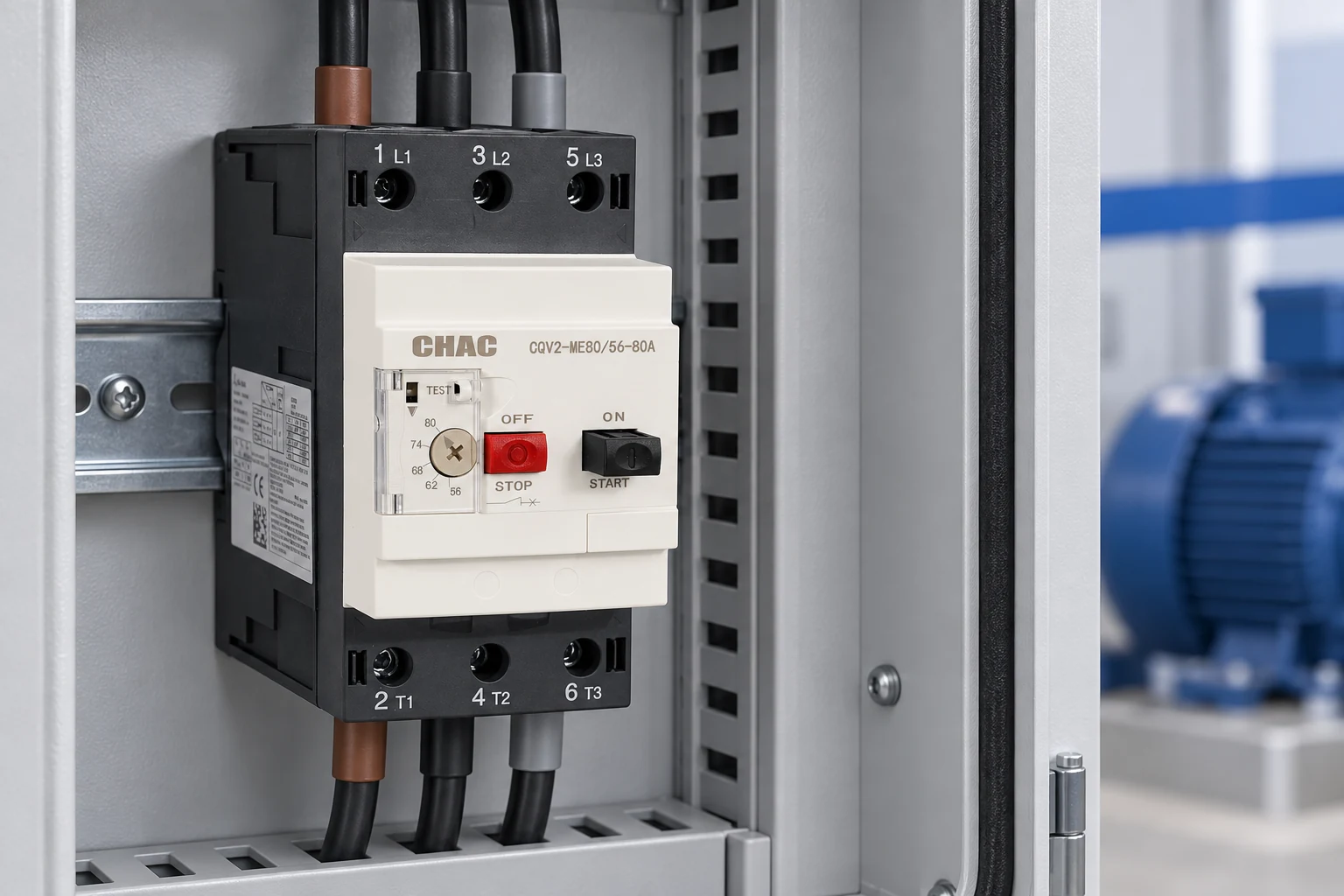
A motor branch is a coordinated set, not a single breaker choice. Record the motor’s full-load current, locked-rotor or starting current, conductor ampacity, starter type and prospective fault current. Then verify that the motor circuit protector, contactor and overload relay clear a fault while allowing the expected start without nuisance operation.CHAC’s motor protection circuit breaker and thermal overload relay pages can support a model review. Keep motor starter coordination tied to the approved time-current and coordination evidence; an MCP is not automatically a substitute for an overload relay.A frequently missed procurement field is the reset and test method after a jam or phase-loss event. Ask who can reset each device, what inspection is required before restart and which record is retained. That operational detail often determines whether the selected protection is workable on a production line.
Frequently asked questions
Can a motor circuit protector replace an overload relay?
Usually no. An MCP normally addresses short-circuit and ground-fault protection, while an overload relay protects the motor from sustained overcurrent. Use the manufacturer’s coordination tables and the motor nameplate data before omitting any component.
Why does a motor trip a standard breaker during starting?
Starting current can be several times full-load current, so an instantaneous or thermal setting may be too low. Select a curve and magnetic threshold that tolerate documented inrush while remaining within cable and fault-duty limits.
What is the difference between an MCP and an MCCB?
An MCP is a motor-branch protective device intended to work with a starter; an MCCB is a broader molded-case platform with larger frame and interrupting options. The correct choice depends on current, short-circuit level and coordination study.
How is overload coordination verified?
Compare motor full-load current, service factor, overload setting and breaker trip curve, then verify using the starter maker’s published coordination or Type 1/Type 2 test data. Field-test the assembled panel before handover.
Is a motor circuit protector a breaker?
An MCP is a circuit-breaker type device intended for a defined motor branch duty, commonly focused on short-circuit protection around a starter. It does not automatically provide the overload function required for every motor, so the complete starter coordination must be checked.
Authoritative references
- IEC 60947-4-1 (consult the current edition and national adoption).
- IEC 60947-2 (consult the current edition and national adoption).
- NFPA 70 (NEC) Article 430 (consult the current edition and national adoption).
- OSHA 1910.303 electrical safety requirements
- Mike Holt MCP versus circuit breaker discussion
The durable principle is simple: specify the circuit and the evidence together, then test the assembled result. For a model review, application question or documented quotation, contact CHAC Electric and share the duty, voltage and destination-market requirements.