A commercial panel with no spare ways does not necessarily need a larger electrical service. Equally, an empty breaker position does not prove that the building can support another large load. Electrical panel upgrade planning begins by separating circuit space, calculated demand and the capacity of the supply feeding the panel.
A commercial electrical panel upgrade should follow a load assessment, equipment-condition review and fault-current check. The resulting scope may be a replacement panel, a subpanel, load management or a coordinated service upgrade. Before selecting equipment, establish which constraint actually limits the project and confirm the utility, permit and outage requirements.
How can you tell whether capacity or circuit space is the problem?
Commercial electrical panel upgrade decisions should distinguish four limits: the number of usable circuit positions, the panel bus rating, the feeder or service capacity, and the calculated demand. Adding up every branch-breaker handle rating is not a load calculation. Loads have different operating profiles, and the permitted demand treatment depends on the adopted code and actual application.
| Finding | Possible project direction | What still needs verification |
|---|---|---|
| No spare ways, but adequate supply capacity | Approved circuit expansion or a suitable subpanel | Feeder, panel limits, working space and circuit arrangement |
| Demand exceeds available feeder capacity | Load management, feeder changes or a service review | Demand calculation, control behavior and utility constraints |
| Damaged or obsolete equipment | Replacement even if demand is unchanged | Condition, replacement support and assembly compatibility |
| Available fault current exceeds equipment rating | Revised protection or equipment specification | Short-circuit study and approved combinations |
The panel’s rating is one link in a supply chain. Upgrading its nameplate current does not automatically upgrade the utility transformer, service conductors, meter equipment or upstream switchgear. Resolve those interfaces before treating a panel replacement as a capacity increase.
What information should the load assessment include?
Build a load schedule that identifies existing equipment, proposed loads, voltage, phase arrangement, operating hours and any relevant starting characteristics. Separate continuous loads from intermittent ones under the local rules. Record the method used to determine existing demand, including the period covered by any measurements, so seasonal HVAC or production peaks are not silently omitted.
The electrical load calculation should also address phase balance. A three-phase panel can have acceptable overall demand while one phase is heavily loaded. Loads such as single-phase office equipment, lighting and chargers need to be placed and reviewed accordingly. A neutral assessment is also important where the load mix creates conditions that a simple balanced-load assumption does not capture.
How do EV chargers, heat pumps and PV change the upgrade plan?
EV charging can introduce long operating periods and a group of loads that run together. Establish the required charging service, connected charger ratings and permitted demand assumptions. If energy management is proposed, document its approved current limit, response to communication loss and operating responsibility. A software setting or hoped-for charging diversity is not, by itself, evidence that the feeder is protected.
Heat-pump conversion can change both electrical demand and starting behavior. Compare the proposed equipment data with the existing supply rather than relying on the rating of the equipment being removed. For PV or storage, the review must also address source interconnection, bus loading, isolation and any alternative supply paths; spare breaker positions do not resolve those requirements.
These considerations explain why an upgrade plan should include a defined future-load allowance. It is more useful to identify a likely next tenant or charging stage than to request an unexplained percentage of spare capacity.
Why should fault current be checked again after a service change?
A new transformer, revised supply route or shorter feeder can change the prospective short-circuit current. The new panel and its protective devices need suitable ratings at their actual installation points. The OSHA 1910.303 electrical requirements address sufficient interrupting ratings and coordination of circuit characteristics with protective equipment in US workplaces.
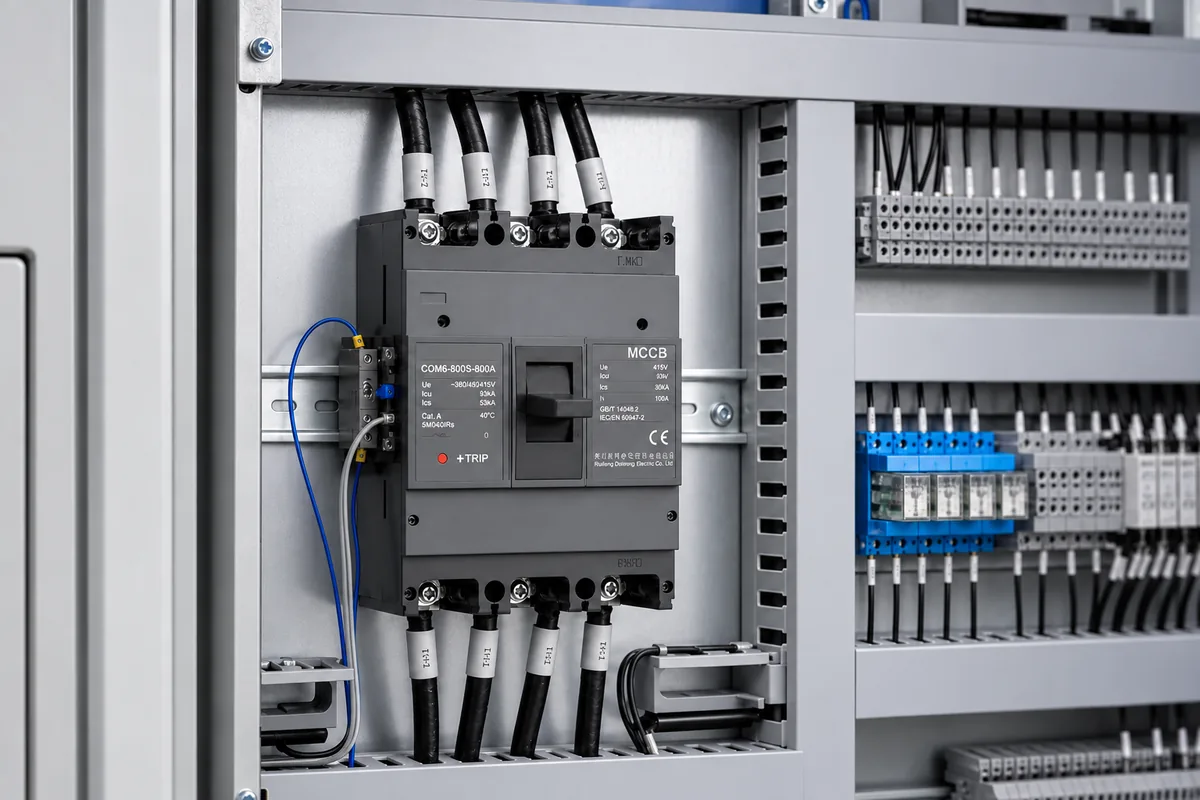
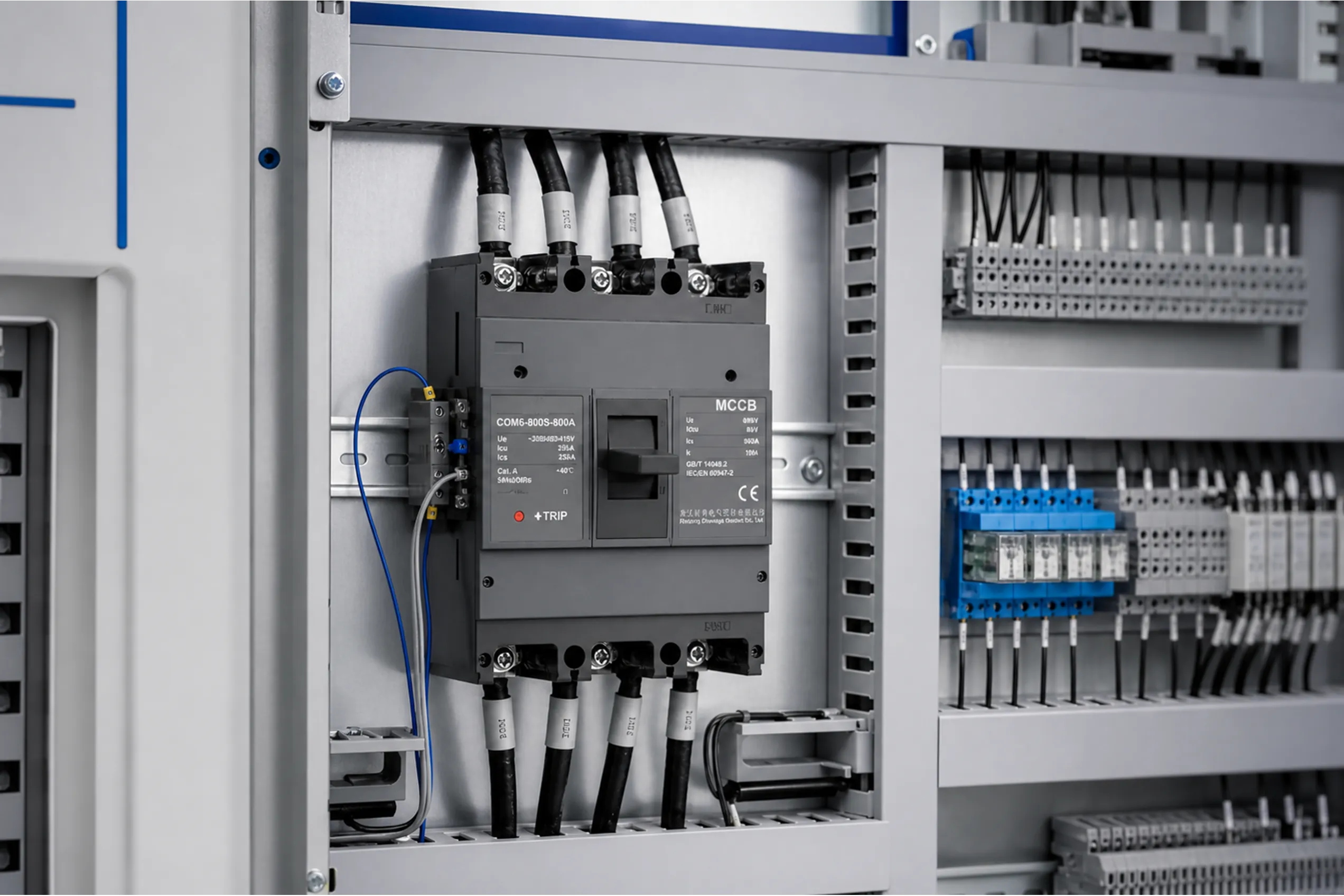
A high-rated main breaker does not automatically raise the rating of the entire assembly. Any series-rated or backup combination must be supported for the exact devices and conditions. The MCB and MCCB comparison explains the distinction between a component’s current rating and its fault-interruption duty.
What can make a planned shutdown take longer than expected?
Unidentified circuits, undocumented backup supplies and missing utility coordination can expand an otherwise straightforward outage. Before work, identify critical loads, shutdown permissions, temporary-supply arrangements, inspections and the restoration sequence. Assess emergency and life-safety systems separately; their requirements cannot be assumed to match ordinary tenant loads.
Survey the physical installation as well. Cable length, termination condition, bending space, enclosure dimensions and required working access can determine whether existing circuits can be reconnected without alterations. The OSHA requirements also address listed installation instructions, wire-bending space and working space. A drawing that fits on paper may still fail the site-access review.
How should commercial panel upgrade costs be compared?
| Cost item | Why it varies | What the scope should state |
|---|---|---|
| Design and approvals | Load study, utility involvement and local permits | Responsible parties and included submissions |
| Equipment | Assembly rating, poles, ways, protection and enclosure | Exact configuration and approved alternatives |
| Installation | Cable alterations, access and termination work | Survey assumptions and remedial-work exclusions |
| Outage and commissioning | Operating constraints and required tests | Shutdown window, temporary supply and acceptance steps |
No single price for a “200 A upgrade” describes this scope reliably. Compare itemized offers against the same approved design. Where the project requires a new enclosure, review distribution box options as components of the proposed arrangement, not as evidence that the complete commercial panel is approved.
What else should building owners clarify before an upgrade?
Can a commercial panel be upgraded without rewiring the whole building?
Sometimes. Existing circuits may remain if their condition, conductors, grounding, terminations and protection are suitable for the revised design. A site survey determines the actual alterations required.
Does adding a subpanel increase service capacity?
No. A subpanel can add circuit positions and reorganize distribution, but its load is still supplied through the existing upstream system unless that system is also upgraded.
Does every EV charger require a panel upgrade?
No. The decision depends on the load assessment, available supply capacity and any permitted load-management arrangement. The charger rating alone cannot decide the upgrade scope.
How much does a commercial electrical panel upgrade cost?
Obtain an itemized project quote after the survey and load review. Utility changes, access, permits, equipment ratings and business interruption can materially change the total.
What permits are needed?
The local authority and utility determine the required permits, submissions and inspections. Confirm them before ordering equipment or booking an outage; requirements vary by jurisdiction and scope.
What records should be handed over?
Keep the approved drawings, load calculations, circuit schedule, protection settings, installation instructions and commissioning results. Include the basis for any managed-load limit and the equipment actually installed.
References
- OSHA 29 CFR 1910.303: electrical equipment, ratings, installation and working space.
- UL Solutions: Molded Case Circuit Breaker – Marking and Application Guide — assembly ratings, terminals and approved applications.
- NFPA 70: official National Electrical Code information — consult the adopted edition for load and installation rules.
What makes a panel upgrade plan ready for procurement?
A workable plan identifies the capacity constraint and shows how the proposed work resolves it. Establish the demand, examine the supply path and confirm the fault rating before selecting the panel. Then coordinate approvals, physical installation and the outage so that the equipment can be commissioned and maintained as designed. Keep expansion assumptions explicit, especially where EV charging or other managed loads are involved. An empty way, a larger main breaker or a different enclosure is not a substitute for those checks. CHAC’s power distribution customization provides a relevant route for discussing the documented equipment requirements once the project’s design and approval boundaries are clear.