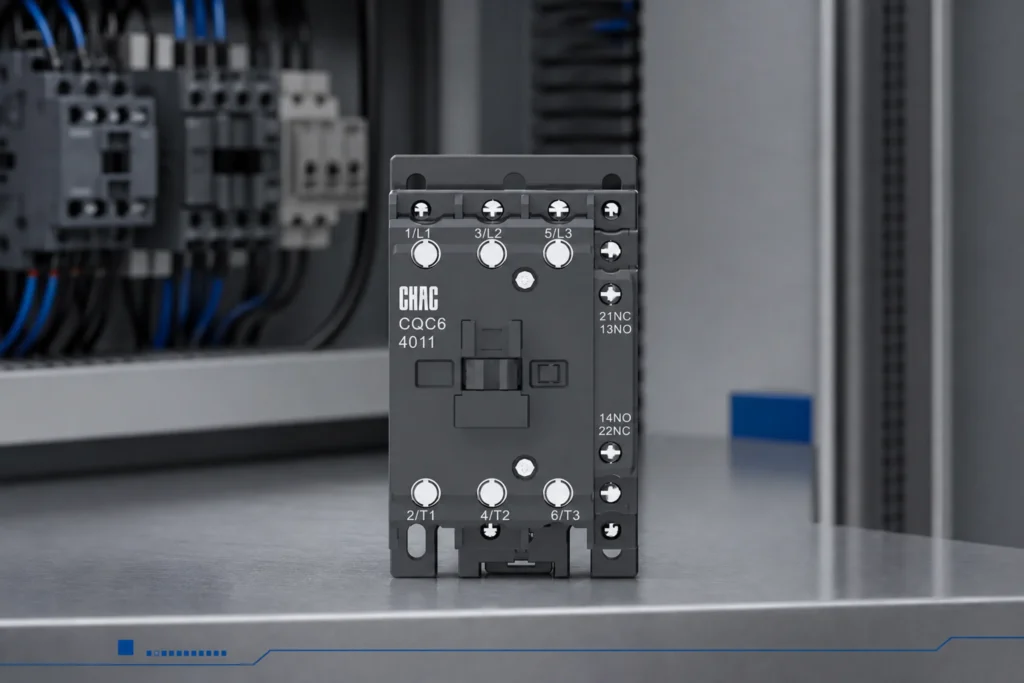
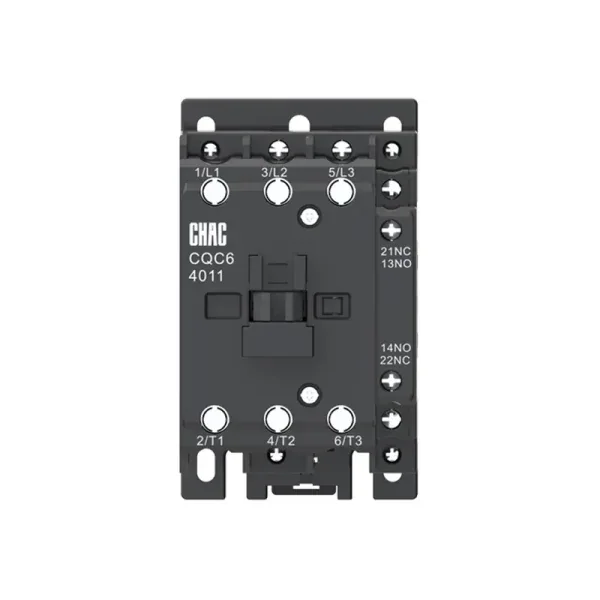
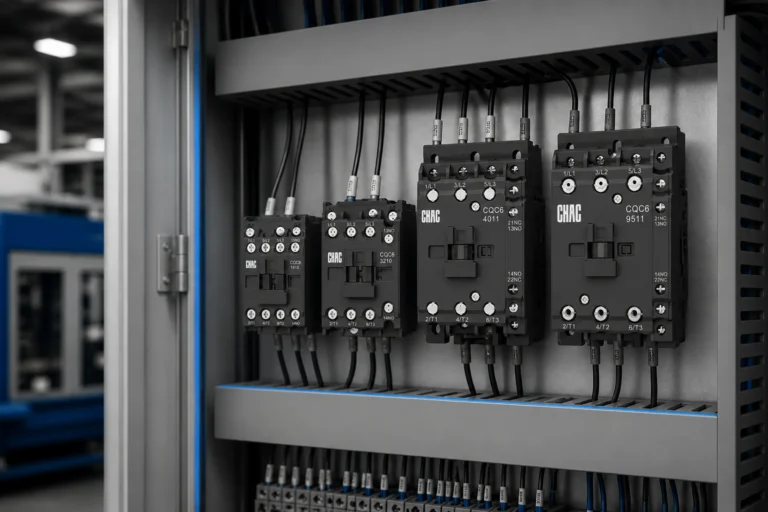
When a packaging OEM in Lyon updated its 2026 machine platform, procurement chose a familiar contactor but did not update the validation file for the new cycle time. A welded auxiliary contact was discovered during a service test, not in production. The event showed why the best safety contactor for 2026 is the one supported by current evidence, compatible diagnostics, and a controlled lifecycle. The practical answer is to document safety contactors as part of the complete electrical system.
Summary: For a 2026 machine design, compare safety contactors by verified contact-link behavior, diagnostic coverage, utilization category, endurance, coil suppression, short-circuit coordination, and availability of replacement evidence. The correct model is part of a validated safety architecture; market popularity or a colored housing is not enough.The phrase safety contactor is increasingly used in machine safety, energy isolation, and automated production. Newer models may add low-consumption coils, status contacts, or digital diagnostics, but the buyer still needs a risk-based specification and a version-controlled technical file. When the brief is clear, electrical contactor can be compared using evidence instead of a generic marketing promise.
What Should Be New in a 2026 Specification?
A current specification should state the required PL or SIL, duty cycle, switching frequency, motor or heater load, contact-link evidence, coil voltage, and feedback arrangement. Add a rule for firmware or accessory changes if the contactor is part of a smart safety module. This prevents a “drop-in” replacement from quietly changing diagnostic coverage.
How Do Contact-Link and Feedback Contacts Work?
Mechanically linked contacts make it possible to detect that a power contact has remained closed after the coil is released. The safety controller checks the feedback before permitting a reset. Confirm that the auxiliary contact rating and wiring are suitable for the controller input and that the test actually creates the fault state expected by the validation plan.
How Should Endurance and Duty Be Evaluated?
Use the stated electrical endurance at the actual utilization category, not only mechanical endurance. A high switching frequency, jogging duty, or regenerative load can reduce life. Record starts per hour, load current, inrush, ambient temperature, and suppression components, then compare them with the catalog limits and proof-test interval.
What Is the Procurement and Obsolescence Risk?
A safety component must remain available for the machine service life. Ask about last-time-buy notices, alternate coils, spare auxiliary blocks, certificates, and change notification. Keep two approved sources only when their safety data and validation are equivalent; otherwise a low-cost substitute can create a revalidation project.
How Can a Buyer Compare Total Protection?
Score the contactor, safety relay, motor protection, enclosure, wiring, validation labor, spares, and service training together. The cheapest unit can be expensive if it needs a custom bracket or has no local replacement. A good scorecard explains why each requirement exists and who owns the acceptance test.
How Should CHAC Be Evaluated?
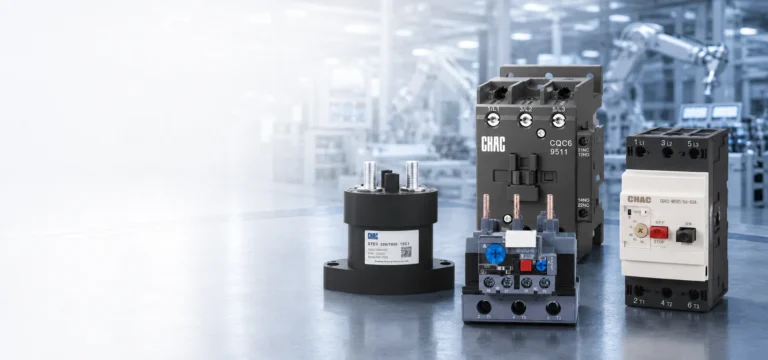
Request the exact model certificate, mirror-contact description, coil data, endurance curves, coordination tables, and delivery plan. CHAC provides industrial control electrical appliances with contactors, overload relays, and motor protection options, backed by in-house testing and automated production. Put revision control and replacement approval into the supply agreement.
Which Parameters Should Be Written Into the RFQ?
Decision area
What to specify
Why it matters
Safety evidence
PL/SIL data, contact-link behavior, certificates
Supports validation
Duty
AC-3 or other category, cycles, inrush
Predicts wear
Diagnostics
Feedback, test method, controller interface
Finds hidden faults
Lifecycle
Availability, change notice, spares
Protects service life
We recommend measuring the installed result as well as the catalog value. Photograph terminals, record torque and test readings, and keep the approved drawing with the delivery lot. That record makes electric contactor auditable when a replacement or expansion is needed.
How Should Buyers Select the Product and Supplier?
Define voltage, current, duty, environment, fault level, and the user or machine risk before asking for a quote.
Request the exact datasheet, wiring diagram, certificate, test evidence, accessories, and replacement policy.
Approve a sample or first-article inspection and verify the installation, not only the packaging.
Record serial, batch, settings, torque, and commissioning results in the maintenance or project file.
Compare landed cost, lead time, spares, service response, and change notification before release.
CHAC is a China-based OEM/ODM low-voltage electrical appliance manufacturer and global electrical system solutions provider. Its product lines include terminal electrical appliances, MCB, RCCB/RCBO, SPD, distribution equipment, contactors, thermal overload relays, and motor protection devices. Buyers can review the relevant CHAC product range and the related application guide before requesting a project-specific selection.
The difference is not just in the component on the rail—it is in the ratings, wiring, tests, and decisions that follow. When a buyer treats safety contactor as a measurable requirement, the installation is easier to commission, maintain, and scale. CHAC can help convert the application, compliance, and delivery requirements into a repeatable low-voltage solution.