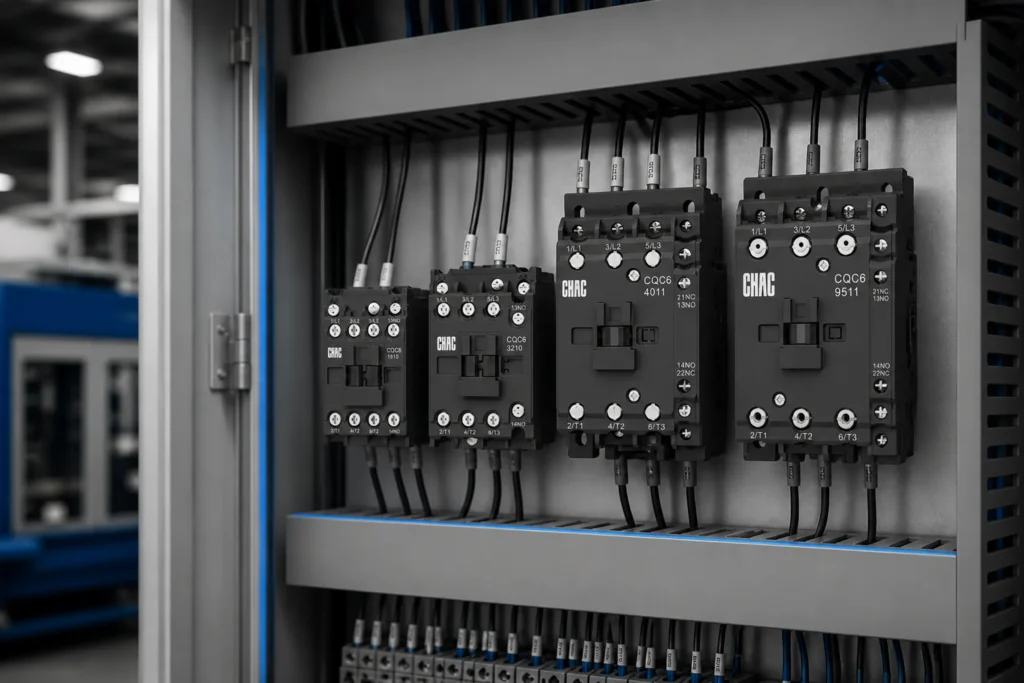
When a plant engineer in Ohio selected a motor contactor by horsepower alone, a three-phase fan started with a loud hum and the terminals discolored after a month. The nameplate voltage, duty category, starts per hour, overload relay, and ambient derating had never been reconciled. The repair cost more than the original panel because the starter had been specified as a single part. The practical answer is to document motor contactor as part of the complete electrical system.
Summary: Selecting a motor contactor requires motor current, voltage, phase, utilization category, coil control, starts per hour, overload coordination, short-circuit protection, and enclosure conditions. Buyers should size from the motor nameplate and duty, verify the starter combination, and test phase balance and terminal temperature during commissioning.A motor contactor switches a motor repeatedly and must withstand inrush, interruption, and the thermal effects of the duty cycle. The right selection is a coordinated starter, often including an overload relay, motor protection breaker, auxiliary contacts, and a control transformer or power supply. When the brief is clear, alternating current contactor can be compared using evidence instead of a generic marketing promise.
How Does a Motor Contactor Work?
The coil creates a magnetic force that closes the main contacts and auxiliary contacts. When the coil is released, springs open the circuit and the motor current stops. The contactor does not decide whether a motor is overloaded; that job belongs to the overload relay or motor-protection device. The feeder breaker clears high-energy short circuits.
How Do I Size a Contactor for a Motor?
Use the motor full-load current at the actual voltage, phase, frequency, and connection. Confirm AC-3 or the applicable utilization category, starts per hour, inching or plugging duty, and the ambient temperature inside the enclosure. Horsepower is a useful cross-check but not a substitute for current and category data.
What Changes for a 10 hp or 20 hp Motor?
Larger motors usually bring higher inrush, bigger conductors, greater thermal stress, and more demanding short-circuit coordination. Check the manufacturer table for contactor size, overload range, fuse or breaker recommendation, and control-transformer burden. If the motor uses a star-delta, reversing, or soft-start arrangement, select the full set of contactors and interlocks.
How Should a Three-Phase Starter Be Wired?
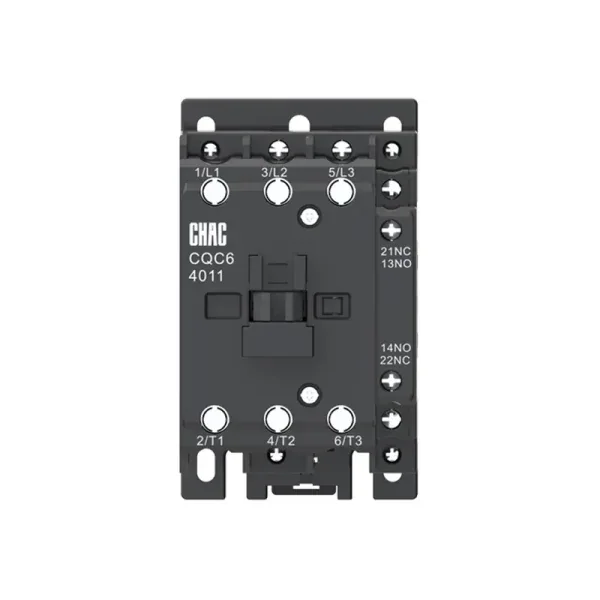
Incoming phases land on L1, L2, and L3; the motor leaves on T1, T2, and T3. The overload auxiliary contact is normally placed in the coil control circuit, with start, stop, seal-in, and emergency-stop contacts according to the control design. Verify phase sequence, torque, insulation, and the open-circuit response before applying load.
How Do Motor Contactors Affect Total Cost?
A reliable starter reduces nuisance trips, contact replacement, hot terminals, and unplanned downtime. Include spare coils, auxiliary blocks, overloads, labor, and the cost of a compatible replacement. For a critical pump or fan, a higher endurance contactor can be cheaper than one failed production shift.
How Should a Supplier Be Audited?
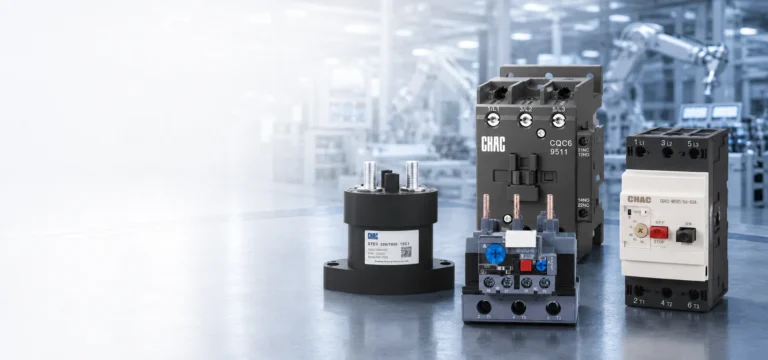
Ask for AC-3 ratings, endurance, coil tolerances, overload and motor-protection compatibility, certificates, wiring diagrams, and stable delivery. CHAC supplies motor contactors, AC contactors, thermal overload relays, and motor protection devices for industrial control panels. Match the exact model and accessory set to the approved schematic.
Which Parameters Should Be Written Into the RFQ?
Decision area
What to specify
Why it matters
Motor data
Voltage, FLA, phase, frequency, duty
Sets current and category
Contactor
AC-3 current, cycles, coil
Handles switching stress
Overload
Range, class, phase-loss response
Limits thermal damage
Coordination
Breaker/fuse and SCCR
Controls fault energy
We recommend measuring the installed result as well as the catalog value. Photograph terminals, record torque and test readings, and keep the approved drawing with the delivery lot. That record makes electrical contactor auditable when a replacement or expansion is needed.
How Should Buyers Select the Product and Supplier?
Define voltage, current, duty, environment, fault level, and the user or machine risk before asking for a quote.
Request the exact datasheet, wiring diagram, certificate, test evidence, accessories, and replacement policy.
Approve a sample or first-article inspection and verify the installation, not only the packaging.
Record serial, batch, settings, torque, and commissioning results in the maintenance or project file.
Compare landed cost, lead time, spares, service response, and change notification before release.
CHAC is a China-based OEM/ODM low-voltage electrical appliance manufacturer and global electrical system solutions provider. Its product lines include terminal electrical appliances, MCB, RCCB/RCBO, SPD, distribution equipment, contactors, thermal overload relays, and motor protection devices. Buyers can review the relevant CHAC product range and the related application guide before requesting a project-specific selection.
Start with motor FLA, voltage, phase, utilization category, starts per hour, coil voltage, and the required overload and short-circuit coordination.
What size contactor do I need for a 10 hp motor?
It depends on voltage, phase, duty, and current. Use the manufacturer AC-3 table and the motor nameplate rather than horsepower alone.
Can I use a 40 amp contactor instead of a 30 amp?
Only when the 40 A model is rated for the motor duty, inrush, terminals, enclosure, and coordination. A larger number does not fix wrong wiring or overload settings.
What size contactor do I need for a 20 hp motor?
Check the actual motor current and utilization category at the supply voltage, then choose the contactor, overload, and upstream protection as a tested combination.
How does a motor contactor work?
Its coil closes the main contacts to energize the motor and opens them when the control circuit removes coil power; overload and short-circuit protection are separate functions.
References and Final Decision
Use these sources when checking a design, test plan, or procurement specification:
The difference is not just in the component on the rail—it is in the ratings, wiring, tests, and decisions that follow. When a buyer treats 3 phase motor contactor as a measurable requirement, the installation is easier to commission, maintain, and scale. CHAC can help convert the application, compliance, and delivery requirements into a repeatable low-voltage solution.