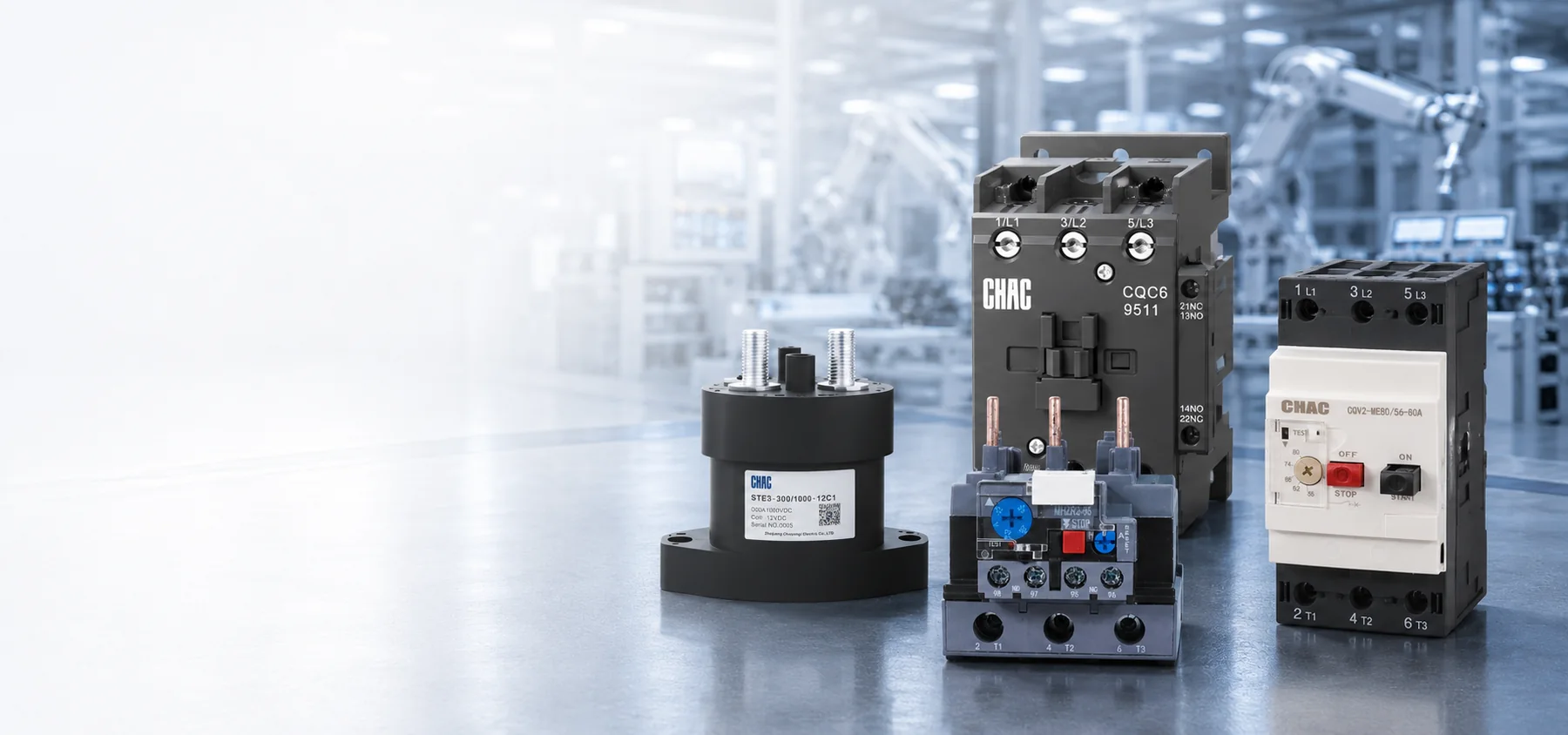
When a maintenance supervisor in Monterrey replaced a motor starter after repeated trips, the new contactor pulled in cleanly but the conveyor still overheated after ten minutes. The overload setting was copied from the motor nameplate without checking service factor, phase loss, ambient temperature, or the control contact. The failed project showed why an overload contactor must be treated as a coordinated starter, not a single catalog number. The practical answer is to document overload contactor as part of the complete electrical system.
Summary: A contactor switches the motor circuit; an overload relay detects sustained overcurrent and opens the control circuit before heat damages the motor. Buyers should match coil voltage, utilization category, motor current, overload range, trip class, auxiliary contacts, short-circuit coordination, and reset policy. Correct wiring and settings matter as much as the component brand.
Application view: AC Contactor in a low-voltage installation.
The search term overload contactor usually describes a contactor paired with a thermal or electronic overload relay. The two devices have different jobs and different limits. A practical selection begins with the motor duty, starts per hour, acceleration time, control voltage, and required coordination type rather than with the contactor frame size. When the brief is clear, AC contactors can be compared using evidence instead of a generic marketing promise.
How Does an Overload Contactor Work?
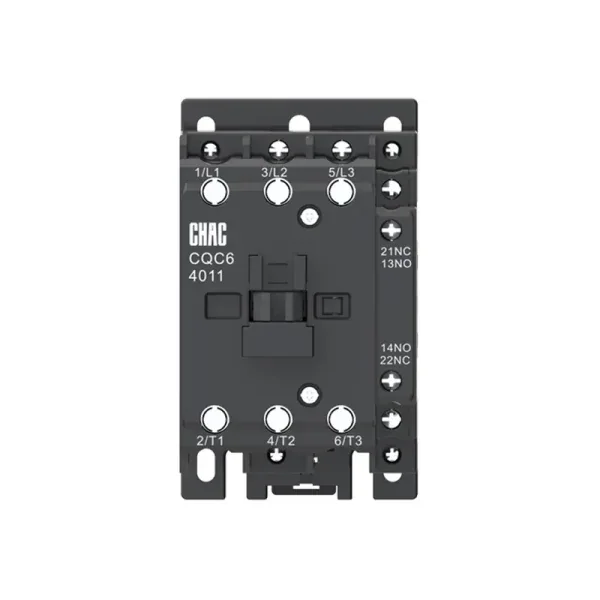
The contactor closes the power path when its coil is energized. The overload relay monitors motor current and, after a time-current delay, changes its auxiliary contact state. That auxiliary contact is wired in series with the coil, so the contactor drops out while the motor conductors remain protected by an upstream short-circuit device. The relay does not replace a breaker or fuse.
What Do L1, L2, L3 and T1, T2, T3 Mean?
L terminals are the incoming line side and T terminals are the outgoing load side. The motor phase conductors leave on T1, T2, and T3; reversing starters change two phases through a second contactor. Confirm the manufacturer diagram, tightening torque, conductor size, and auxiliary 95-96 normally closed contact. A control wire on the wrong auxiliary terminal can defeat the intended trip response.
How Should the Overload Range Be Set?
Set the relay to the motor full-load current shown for the actual voltage and connection. Check service factor, ambient temperature, altitude, locked-rotor current, and the required trip class. An electronic relay may need phase-loss or earth-fault settings as well. After commissioning, record measured current in each phase and verify that the reset and test functions operate without bypassing the control circuit.
What Protection Is Still Required Upstream?
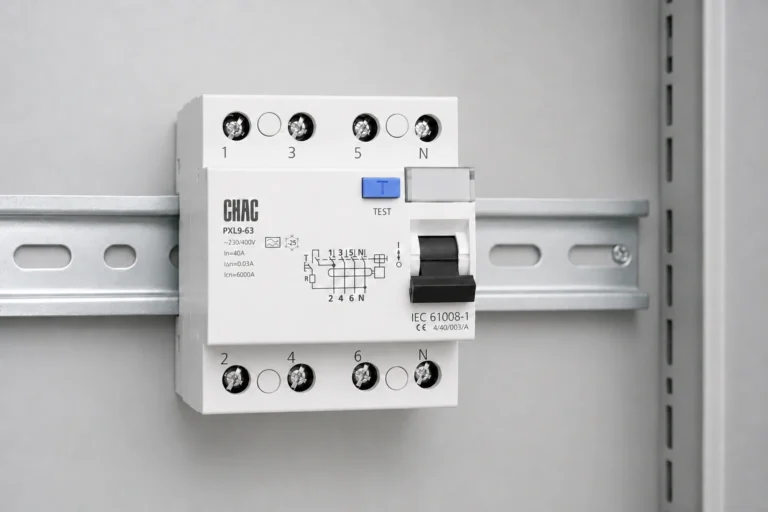
Short-circuit protection and overload protection are separate. Use the manufacturer coordination table to select a fuse or circuit breaker, contactor, and overload combination. Type 1 and Type 2 coordination have different damage allowances after a fault. A higher-rated contactor cannot compensate for an incorrectly sized feeder, weak terminals, or a breaker with insufficient interrupting capacity.
When Is an Electronic Relay Better Than Thermal?
Thermal relays are simple and economical for steady motor duties. Electronic relays provide a wider adjustment range, phase-loss sensitivity, communication, and more precise timing, which can help with critical pumps or variable loads. The choice should reflect the motor, environment, maintenance capability, and required diagnostics; extra features are not a substitute for a correct setting.
How Should Buyers Verify a Contactor Supplier?
Ask for utilization category, coil consumption, mechanical and electrical endurance, overload curve, coordination tables, certificates, and replacement availability. CHAC combines AC contactors, thermal overload relays, and motor protection devices in an industrial control range. A purchase order should identify the exact coil, auxiliary block, overload range, and approved wiring diagram.
Which Parameters Should Be Written Into the RFQ?
Decision area
What to specify
Why it matters
Contactor duty
AC-3 motor current and starts/hour
Controls contact wear and heating
Coil
AC or DC voltage and tolerance
Ensures reliable pull-in
Overload
Adjustment range and trip class
Protects against sustained heat
Coordination
Breaker/fuse combination and Type 1/2
Limits fault damage
We recommend measuring the installed result as well as the catalog value. Photograph terminals, record torque and test readings, and keep the approved drawing with the delivery lot. That record makes contactor and overload auditable when a replacement or expansion is needed.
How Should Buyers Select the Product and Supplier?
Define voltage, current, duty, environment, fault level, and the user or machine risk before asking for a quote.
Request the exact datasheet, wiring diagram, certificate, test evidence, accessories, and replacement policy.
Approve a sample or first-article inspection and verify the installation, not only the packaging.
Record serial, batch, settings, torque, and commissioning results in the maintenance or project file.
Compare landed cost, lead time, spares, service response, and change notification before release.
CHAC is a China-based OEM/ODM low-voltage electrical appliance manufacturer and global electrical system solutions provider. Its product lines include terminal electrical appliances, MCB, RCCB/RCBO, SPD, distribution equipment, contactors, thermal overload relays, and motor protection devices. Buyers can review the relevant CHAC product range and the related application guide before requesting a project-specific selection.
It detects sustained motor overcurrent and opens its control contact so the contactor releases. It is not the same as a short-circuit breaker.
Can AC work without a contactor?
Some small loads can be switched directly, but motors and frequent-control loads usually need a properly rated contactor or starter.
What is the three-minute rule for AC?
A delay before compressor restart is an application control practice, not a universal contactor rule. Follow the equipment maker and local code requirements.
Can I use a DC contactor for AC?
Only if the device is specifically rated for the AC voltage, current, and utilization category. DC and AC arc interruption behavior differs.
How do I test an overload relay?
Use the built-in test function or the manufacturer procedure, verify the auxiliary contact changes state, and restore the correct setting after the test.
References and Final Decision
Use these sources when checking a design, test plan, or procurement specification:
The difference is not just in the component on the rail—it is in the ratings, wiring, tests, and decisions that follow. When a buyer treats electrical contactor as a measurable requirement, the installation is easier to commission, maintain, and scale. CHAC can help convert the application, compliance, and delivery requirements into a repeatable low-voltage solution.