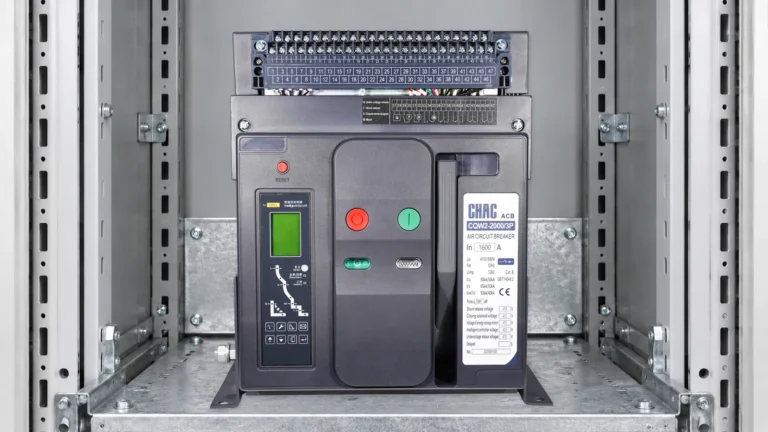
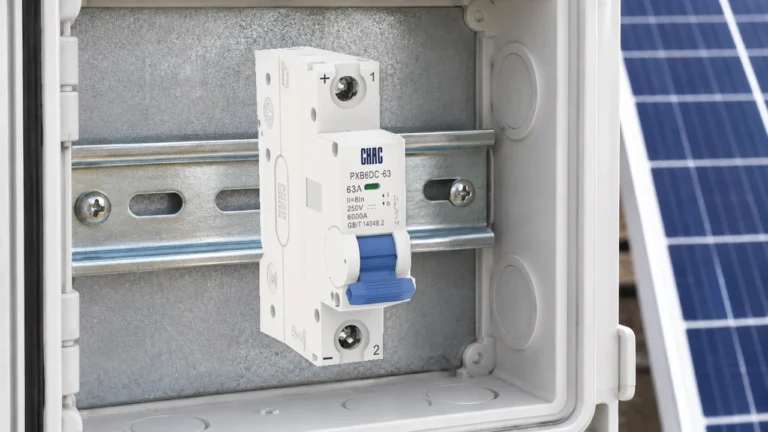
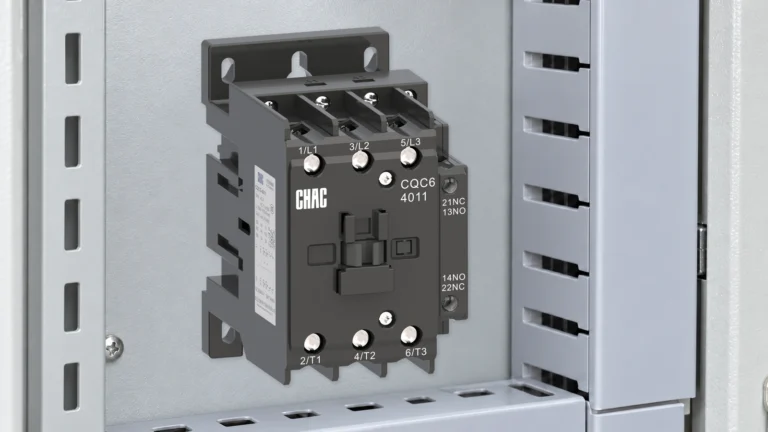
When a project role faced a selection problem, the visible failure often appeared before the real cause was understood. Omar, a switchboard engineer in Doha, selected a three-pole 100 A MCB for a pump feeder based only on the motor’s nominal current. A short-circuit calculation later showed the board fault level exceeded the device capacity. The design was corrected by checking three-phase load, curve, cable and interrupting rating together.
Summary: A three-pole 100 A MCB switches three live phases and is intended for a three-phase circuit whose calculated current and fault duty fit the device. The “100 A” label does not establish cable size, breaking capacity or motor suitability. Verify phase balance, neutral treatment, DIN-rail compatibility and coordination with upstream protection. This article keeps the decision evidence-led and separates product capability from installation responsibility.
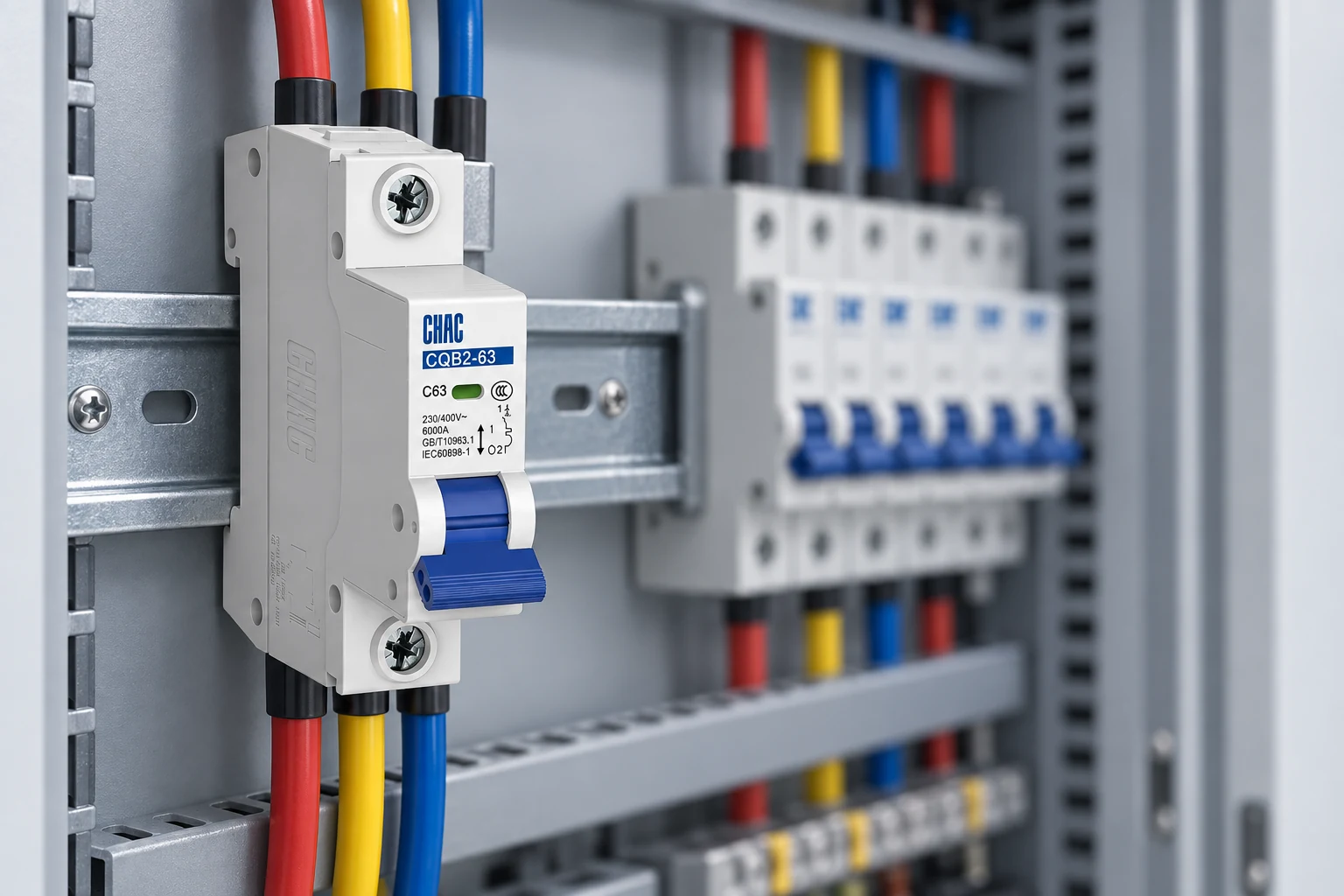
Three-phase current and cable selection
The right answer starts with the application boundary. Define the source, load, conductors, fault level and operating environment before comparing catalogues. A device that looks suitable by ampere rating can still fail on arc duty, selectivity, temperature or installation method. Use the manufacturer time-current curve and the adopted wiring standard as the common language between design, procurement and commissioning.
Document assumptions and test them at the panel. For example, a protection study should state prospective short-circuit current, expected inrush, conductor ampacity and the required disconnection time. Named methods such as primary-injection testing, insulation-resistance testing or a coordination study are more useful than a generic statement that a product is “industrial grade.”
If the answer changes with the destination market, voltage system or utilization category, state that assumption in the specification and obtain written confirmation before release.
C-curve and inrush decisions
The right answer starts with the application boundary. Define the source, load, conductors, fault level and operating environment before comparing catalogues. A device that looks suitable by ampere rating can still fail on arc duty, selectivity, temperature or installation method. Use the manufacturer time-current curve and the adopted wiring standard as the common language between design, procurement and commissioning.
Document assumptions and test them at the panel. For example, a protection study should state prospective short-circuit current, expected inrush, conductor ampacity and the required disconnection time. Named methods such as primary-injection testing, insulation-resistance testing or a coordination study are more useful than a generic statement that a product is “industrial grade.”
If the answer changes with the destination market, voltage system or utilization category, state that assumption in the specification and obtain written confirmation before release.
DIN-rail installation and coordination
The right answer starts with the application boundary. Define the source, load, conductors, fault level and operating environment before comparing catalogues. A device that looks suitable by ampere rating can still fail on arc duty, selectivity, temperature or installation method. Use the manufacturer time-current curve and the adopted wiring standard as the common language between design, procurement and commissioning.
Document assumptions and test them at the panel. For example, a protection study should state prospective short-circuit current, expected inrush, conductor ampacity and the required disconnection time. Named methods such as primary-injection testing, insulation-resistance testing or a coordination study are more useful than a generic statement that a product is “industrial grade.”
If the answer changes with the destination market, voltage system or utilization category, state that assumption in the specification and obtain written confirmation before release.

Comparison for a defensible specification
| Dimension | Option A | Option B |
|---|---|---|
| Current | What is the calculated phase current? | Load schedule and diversity |
| Curve | What inrush does the load create? | Time-current curve and start data |
| Fault duty | What prospective current is present? | Short-circuit calculation |
Selection and procurement actions
- Freeze the electrical assumptions: system voltage, poles, load current, conductor method, fault current and ambient limits.
- Request model-specific data: standard edition, trip curve, breaking capacity, terminal limits, dimensions and test evidence.
- Review coordination with upstream and downstream devices; do not infer selectivity from brand or frame size.
- Approve a sample or first article, record torque and inspection points, and define who performs commissioning tests.
- Plan spares and change control so a later substitution cannot silently alter safety performance.
For buyers comparing configurable protection families, CHAC Electric provides public information on MCB products and electrical distribution equipment. Treat these pages as a starting point and confirm the exact model data for your project.
Validate three-phase assumptions before choosing three poles
A 3-pole MCB is appropriate only when the circuit schedule and switching method call for all three live conductors to be interrupted together. In a three-phase protection plan, verify phase-to-phase voltage, conductor ampacity and prospective fault current. The overlooked issue is phase balance: uneven single-phase loads can change neutral current and the operating profile even when the main rating is 100A.
Use the one-line diagram to show whether a neutral is present, whether simultaneous isolation is required and how upstream selectivity will be checked.
Related reading: What is 3 phase miniature circuit breaker covers the same configuration from a definition-first angle.
Frequently asked questions
Where is a three-pole 100 A MCB used?
Common applications include three-phase feeders, small distribution boards and equipment circuits within the device’s voltage and fault ratings. The application must meet local code and manufacturer limits.
Is a C-curve always right for a motor?
Not always. A C-curve may tolerate moderate inrush, but motor protection often needs a dedicated protector and overload coordination. Use measured or documented starting current.
Can a 3-pole MCB switch the neutral?
A standard three-pole device opens the three phases. If neutral switching is required, specify the correct four-pole or linked arrangement.
How is a DIN-rail MCB installed?
Mount it on the listed rail, observe line/load markings, torque terminals to instructions and maintain clearances. Commissioning includes polarity and trip tests.
Authoritative references
- IEC 60898-1 (consult the current edition and national adoption).
- IEC 60947-2 (consult the current edition and national adoption).
- IEC 60364-4-43 (consult the current edition and national adoption).
The durable principle is simple: specify the circuit and the evidence together, then test the assembled result. For a model review, application question or documented quotation, contact CHAC Electric and share the duty, voltage and destination-market requirements.