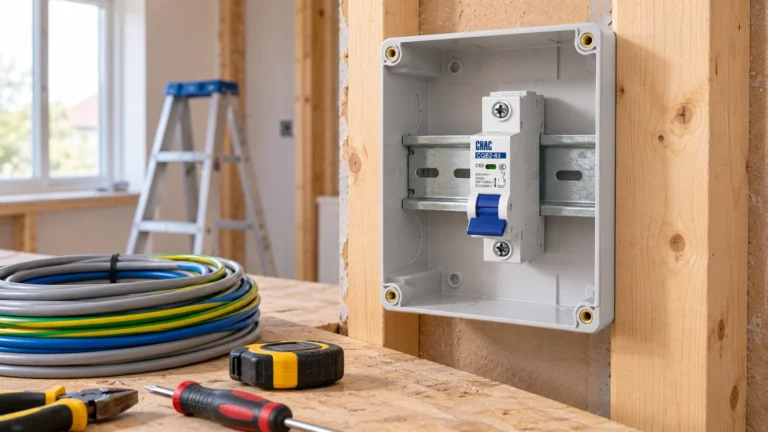
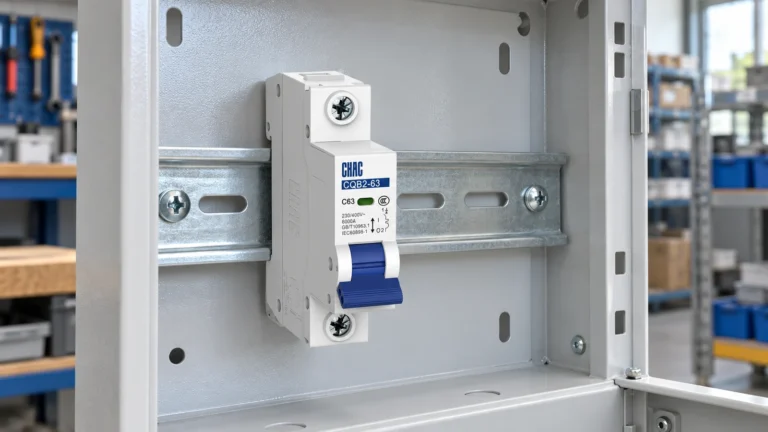
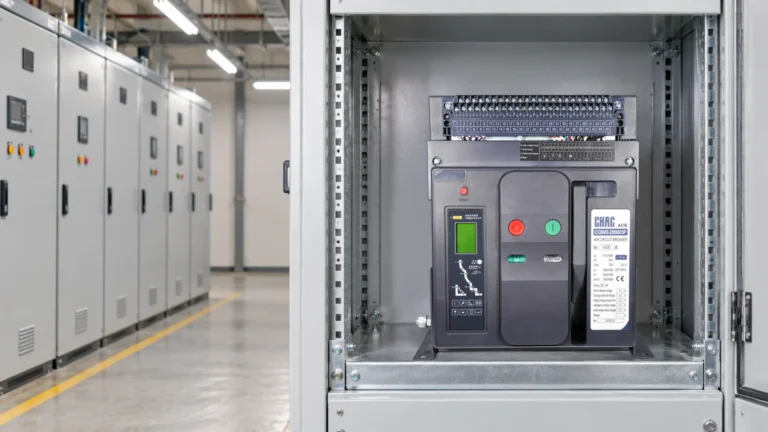
A 20 amp miniature circuit breaker protects a circuit whose design supports that rating. It does not establish the cable size, acceptable number of sockets or permitted appliance load by itself. Start with the equipment demand and the adopted wiring rules, check the conductor’s corrected ampacity, and then select a device with suitable voltage, curve, poles and fault-interruption capability. A larger breaker is not a remedy for an overloaded 20 A circuit.
Work out the load before choosing the current rating
List the connected equipment and determine which loads can operate together. Distinguish continuous operation from short-duration use according to the applicable code. An office receptacle circuit, fixed heater and air-conditioning unit can require different design treatment even if an online product listing recommends the same breaker rating.
Do not use the number of outlets as a universal loading calculation. Local rules may impose specific circuit arrangements, but the actual demand and dedicated-circuit requirements still matter. Follow the appliance instructions where they state circuit ampacity, maximum overcurrent protection or a required supply configuration.
Check cable ampacity after installation corrections
The Electrical Installation Guide gives the IEC-based relationship IB ≤ In ≤ Iz. For a 20 A selection, the corrected permissible cable current must support the protective-device rating and the applicable overload rules. A conductor’s material, insulation, installation method, ambient temperature and grouping all affect that check.
This is why “always use this wire size” is not a dependable international answer. AWG and square-millimetre recommendations are tied to particular tables and conditions. Check terminal conductor limits and temperature ratings as well. If a run is long, review voltage drop in addition to thermal ampacity; satisfying one does not automatically satisfy the other.
Choose B or C from startup and fault conditions
A 20 A MCB trip curve is a separate choice from the ampere rating. A circuit with modest inrush may suit B, while documented higher inrush may justify a different characteristic if the required fault-clearing conditions remain satisfied. Use the exact manufacturer time-current curve rather than deciding from the words “domestic” or “commercial.”
For a numerical illustration, Schneider Electric’s cited B characteristic has a magnetic band of 3–5 times rated current, corresponding to 60–100 A for a 20 A example. That band does not permit a 60 A running load. For more detail on thermal and magnetic behavior, read the Type B MCB tripping-curve guide.

Check the board interface and fault rating
The available short-circuit current at the board must fit the device’s declared breaking capacity under the relevant voltage and conditions, unless an approved documented backup arrangement applies. Also confirm the mounting system, busbar interface, pole arrangement and permitted accessories. Physical fit is only one part of compatibility.
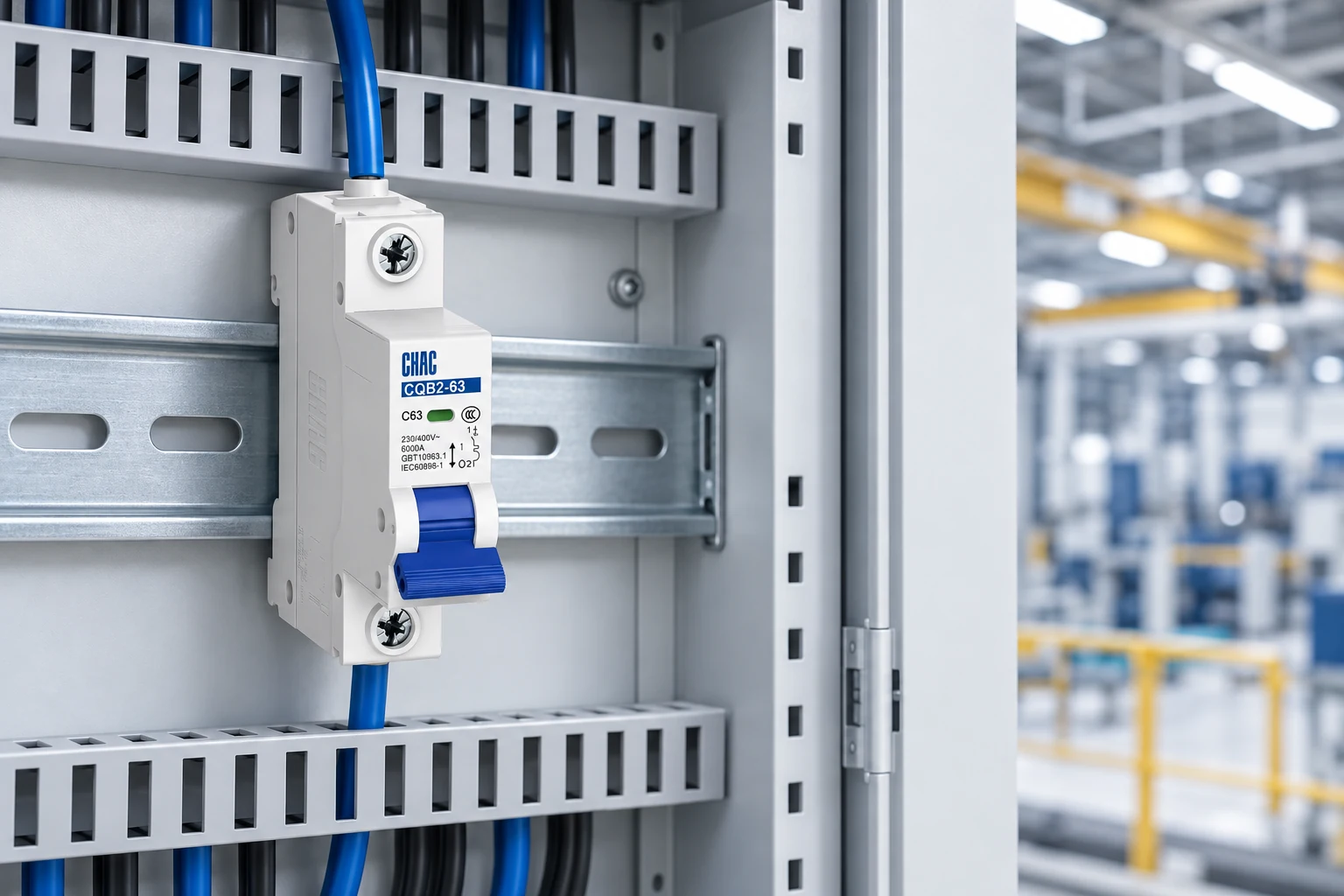
CHAC’s CQB2-63 miniature circuit breaker page and MCB product range can support a variant enquiry. Identify the required 20 A configuration and request the specific technical information. A family page does not establish an approved replacement for another brand’s panel.
Use trip history to guide a repair
For 20 A circuit protection, record whether the trip follows simultaneous appliance use, startup, a warm enclosure or a particular equipment fault. An electrician should investigate the circuit before a higher-rated replacement is considered. Repeated resets can hide the same unresolved problem rather than demonstrate that the breaker is defective.
A useful replacement record includes the old and new catalogue numbers, the reason for the change, circuit-test findings and confirmation that the cable and board remain suitable. This is especially valuable when the original device is discontinued or the replacement quotation uses a different curve, pole arrangement or connection system.
What determines whether a 20 A circuit is appropriate?
| Design item | Check | Why amperes alone are insufficient |
|---|---|---|
| Connected equipment | Demand, operating cycle and instructions | Different loads have different duties |
| Conductors | Corrected ampacity and voltage drop | Installation conditions change capacity |
| Trip characteristic | Inrush and fault-clearing conditions | B and C are not interchangeable labels |
| Assembly | Busbar, mounting and temperature limits | Physical fit is not full compatibility |
| Fault interruption | Available current and declared breaking rating | 20 A is a normal-current rating |
Frequently asked questions
What can a 20 A MCB supply?
It can protect a properly sized branch circuit whose calculated demand and fault duty fit the device. The connected equipment, conductor method and local code determine the practical load.
What size wire is needed for a 20 amp breaker?
Select the conductor using the adopted ampacity table, installation method, correction factors and terminal limits. There is no single worldwide AWG or metric answer. Check voltage drop separately when the route is long.
Should a 20 A MCB be Type B or C?
Choose based on inrush and required fault clearing. Lighting and general loads may suit B; equipment with higher starting current may need C if fault conditions support it.
Can a 20 A MCB be used commercially?
Yes, when the device, board, coordination and wiring comply with the commercial installation requirements and destination regulations.
What size wire does a 20 amp mini-split need?
Use the exact unit’s minimum circuit ampacity, maximum overcurrent-protection information and installation instructions, together with the adopted wiring code. Do not assume that a 20 A breaker marking or another mini-split’s installation determines the cable for this unit.
References
- Schneider Electric Electrical Installation Guide: load, breaker and conductor relationship
- Schneider Electric: B and C MCB characteristics
For a model-specific review, contact CHAC Electric with the circuit diagram, supply voltage, load details and destination-market requirements.