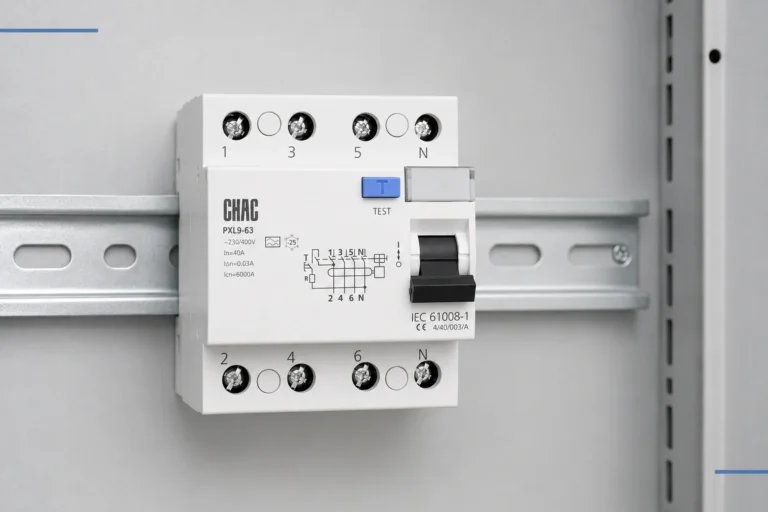
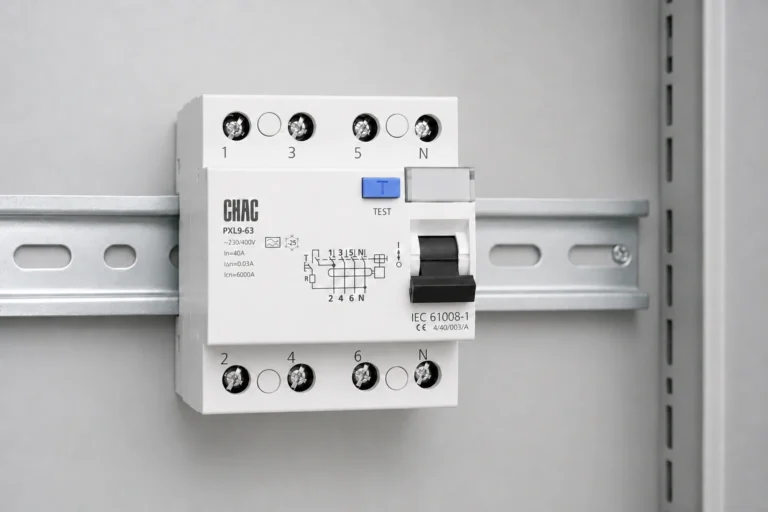
When a facilities manager in Tampa replaced a failed plug-in protector after a thunderstorm, the upstream panel still lacked coordinated transient protection. A second event damaged control electronics because the team compared brand labels instead of installation location, nominal voltage, discharge capability, and grounding path. The lesson was a specification gap, not a simple product failure.
Summary: “Surge arrester” and “surge protector” are often used interchangeably, but buyers should compare five practical differences: installation position, connection topology, rated voltage, surge-current and energy capability, and coordination with the grounding system. IEC 61643-11 covers low-voltage surge protective devices (SPDs); the correct surge arrester vs surge protector choice depends on the threat, equipment, and system design.
Where should a surge device be installed?
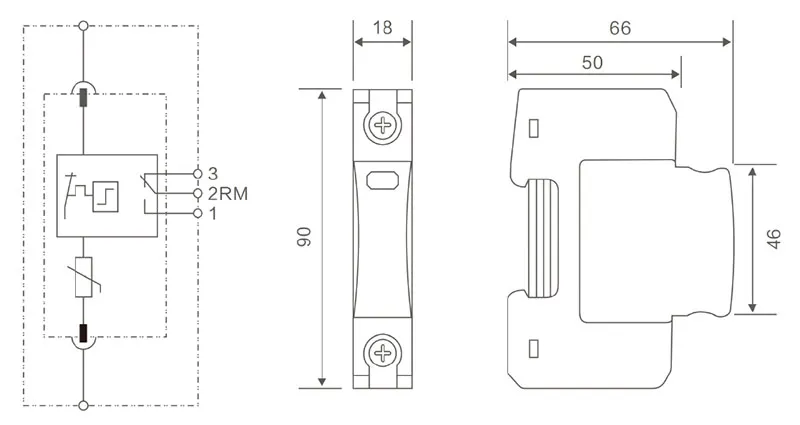
A service-entrance or distribution-board SPD is installed to divert transient energy before it reaches downstream circuits. A point-of-use surge protector is placed near sensitive equipment and is usually intended to limit residual voltage after upstream protection has acted. The terms vary by market, so location and wiring are more reliable than the name on the package.
Coordination requires short, direct conductors and a low-impedance protective-earth path. Long or looped leads add inductive voltage during a fast surge. A device cannot compensate for an incorrect bonding arrangement or an enclosure that lacks the required clearances.
How do protection mode and system voltage affect selection?
SPDs can be connected line-to-line, line-to-neutral, line-to-earth, or in combinations defined by the system. The maximum continuous operating voltage must suit the supply, including temporary overvoltage conditions. A device intended for one earthing system may be unsuitable for another.
Metal-oxide varistors, gas discharge tubes, and hybrid designs behave differently under normal voltage, temporary overvoltage, and repeated impulses. The product data sheet should state the protection modes, voltage ratings, residual voltage, and replacement indication. Do not infer these values from a current rating alone.
Which ratings and standards should buyers compare?
| Specification | What it describes | Why buyers care |
|---|---|---|
| Uc | Maximum continuous operating voltage | Prevents normal supply from overstressing the device. |
| In | Nominal discharge current for the stated test | Helps compare routine surge-handling capability. |
| Imax | Maximum discharge current under the specified test | Indicates a tested impulse level, not a universal guarantee. |
| Up | Voltage protection level | Must be compatible with downstream equipment withstand. |
| Type or class | Installation category under the applicable standard | Links the device to its intended position and test duty. |
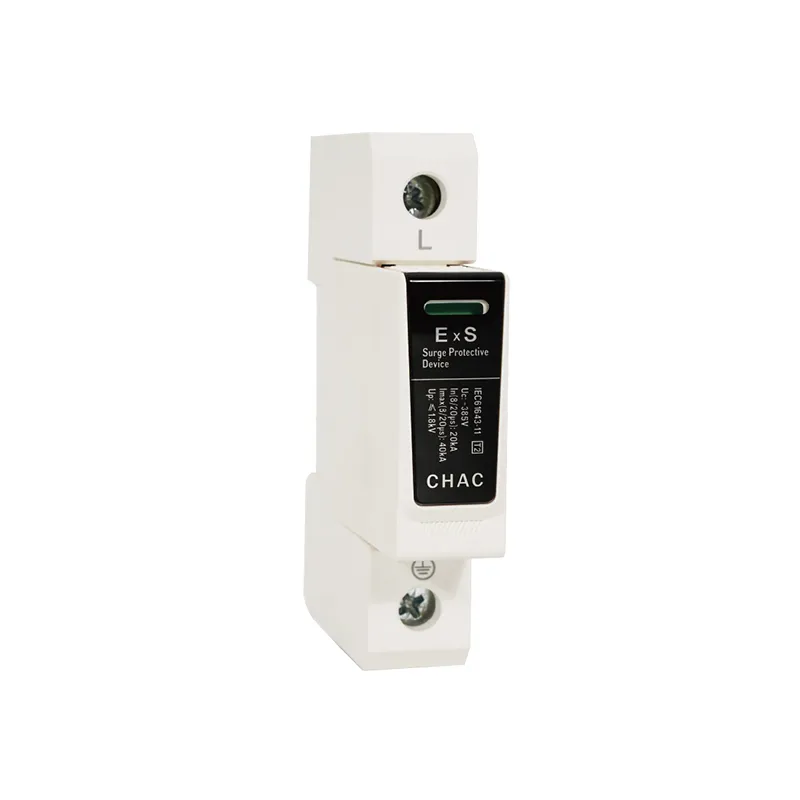
IEC 61643-11 addresses low-voltage AC surge protective devices and their tests. IEC 61643-31 addresses photovoltaic DC applications. UL 1449 may apply in North American product contexts. A standard is evidence of defined testing and scope; it is not a promise that every installation survives any lightning event.
How do installation position and coordination separate the two devices?
In utility and medium-voltage language, an arrester often describes a device connected at a line or transformer point to limit lightning and switching surges. In low-voltage commercial work, suppliers may call a DIN-rail SPD a surge arrester or surge protector. Compare the circuit voltage, short-circuit withstand, backup protection, enclosure, and replacement status rather than translating the term literally.
For a low-voltage panel, CHAC’s EXS T1/T2 AC surge protector can be reviewed for the stated AC application. For a DC system, the CQ T2 DC SPD should be checked against polarity, maximum operating voltage, PV or control-system requirements, and the wiring diagram. A correctly selected voltage protector addresses a different abnormal condition and should not be presented as a lightning SPD without evidence.
What changes between applications and maintenance?
| Application | Typical protection layer | Key check | Maintenance action |
|---|---|---|---|
| Main distribution board | Type 1 or Type 2 class as specified | Earthing system, short leads, backup device | Inspect status indicator after events. |
| Sub-panel | Coordinated Type 2 or Type 3 layer | Upstream device and residual voltage | Confirm conductor torque and labeling. |
| Control cabinet | Equipment-specific SPD | Signal, DC polarity, and impulse level | Replace end-of-life modules promptly. |
| Plug-in electronics | Point-of-use protector | Clamping rating and connected load | Do not daisy-chain power strips. |
Surge protection is part of a system. Bonding, cable routing, shielding, upstream disconnects, and equipment withstand all affect outcome. A protector that keeps tripping may be responding to temporary overvoltage, overload, wiring error, or an exhausted module. A surge event can consume protective components without leaving a dramatic visual mark.
How to specify a device responsibly
Record the supply voltage, earthing system, expected surge environment, installation point, protected equipment, available fault current, and conductor length. Ask for the standard, test class, Uc, In, Imax, Up, backup-fuse guidance, enclosure rating, and replacement indication. Confirm that the installer can maintain the manufacturer’s wiring length and torque limits.
Use the adopted NFPA 70 NEC, IEC 60364 installation rules, and local lightning-protection requirements as applicable. NIST’s electromagnetic measurement resources explain transient measurement concepts, but they do not select a product for a particular building. Keep the specification and inspection record with the panel documentation.
Frequently asked questions
When should you not use a surge protector?
Do not use a device when its voltage, earthing topology, impulse rating, or enclosure conditions do not match the system. A plug-in protector is not a substitute for a coordinated panel SPD, and no SPD corrects poor bonding or unsafe wiring. Ask a qualified designer when the supply is unusual or the fault level is unknown.
What is a surge arrester used for?
It is used to divert transient overvoltage away from electrical equipment. In low-voltage markets the term may describe the same family of SPDs sold as surge protectors. Verify the standard, installation class, ratings, and connection diagram rather than relying on the label.
Is a lightning arrester effective?
A correctly selected and installed SPD can reduce transient stress, but it cannot guarantee protection from every direct or nearby lightning event. Performance depends on grounding, lead length, coordination, and equipment withstand. Inspect status indicators after major events.
What is better than a surge protector?
There is no universal “better” device. A coordinated system may combine service-level, distribution-level, and point-of-use SPDs with proper bonding and cable routing. Select by voltage, location, test class, residual voltage, and protected equipment.
What is surge arrester vs surge protector and what does it protect?
The phrase compares two labels for devices that limit transient voltage, often at different installation points. They protect insulation and electronics from specified impulses; they do not provide overload, short-circuit, or residual-current protection unless another device includes those functions.
Where should surge arrester vs surge protector be installed?
Install the device at the point defined by the system design, with short conductors and a verified protective-earth path. Main boards, sub-panels, DC equipment, and point-of-use loads use different products. Follow the wiring diagram and local code.
Which official sources should buyers verify?
The practical distinction is not the marketing name; it is the tested rating, installation point, and current path. Review CHAC Electric’s AC and DC surge protection options against your system study, then contact the technical team for the applicable datasheets and wiring guidance.