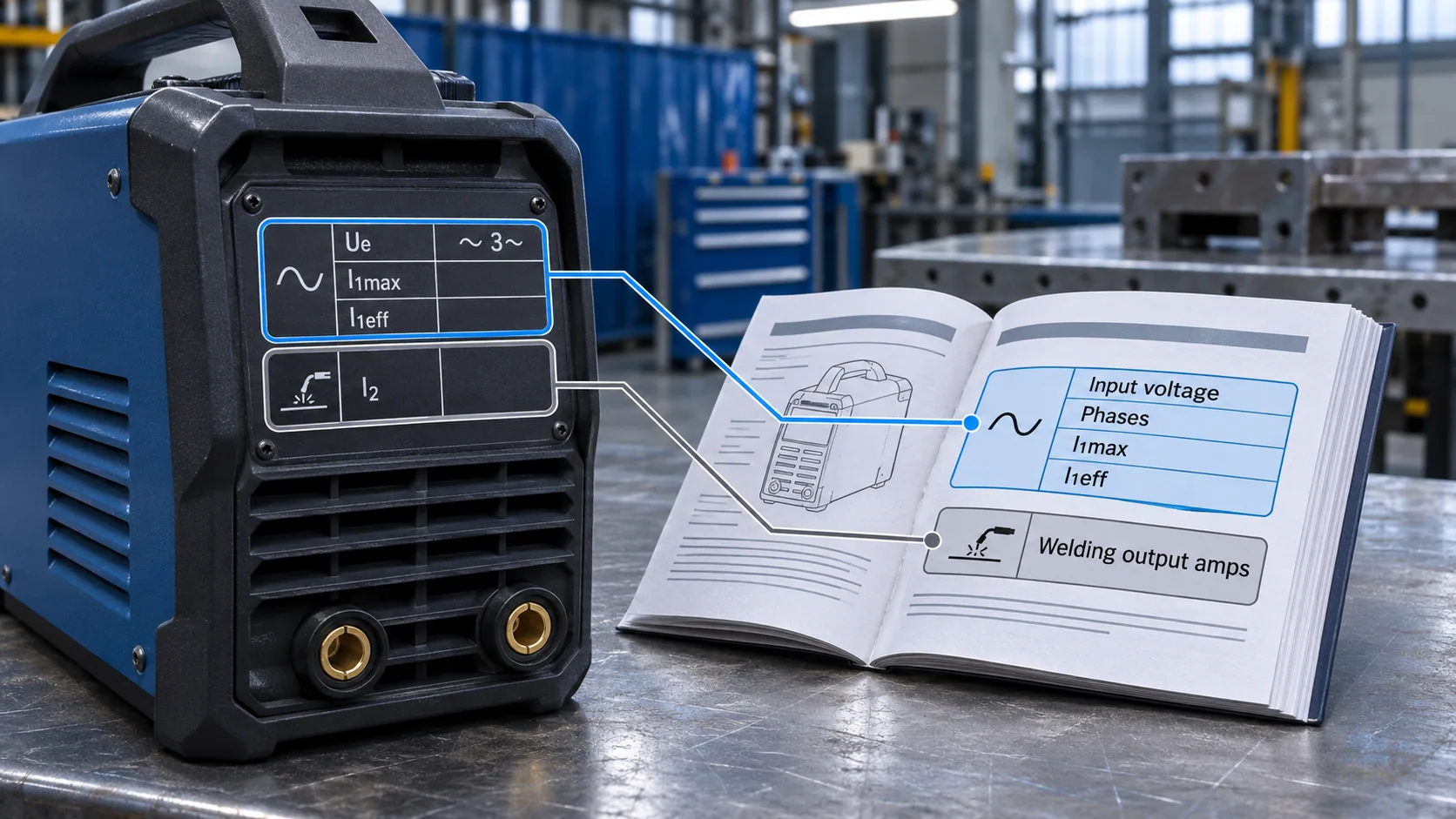
A welding-machine purchase can stall when procurement receives welding output amps but the panel builder needs supply-circuit data. Before requesting a breaker quotation, collect the machine nameplate, installation instructions and site supply details.
Welder breaker size must follow the machine’s input requirements and applicable installation rules—not its welding output rating. CQM7 can be considered for configuration review, but its family ratings alone do not establish suitability for a particular welder, supply circuit or panel.
Which welder ratings should drive breaker sizing?
The welder circuit breaker protects the supply circuit; welding output current describes a different side of the conversion process. Input voltage, phase count, conversion losses and operating pattern prevent a direct substitution of output amps for supply amps.
| Machine information | Meaning | Selection use |
|---|---|---|
| Welding output amps | Current delivered to the welding process | Describes welding capability, not breaker rating |
| I1max | Rated maximum supply current | Review maximum input demand with machine instructions |
| I1eff | Rated maximum effective supply current | Inform thermal assessment where installation rules permit |
| Input voltage and phases | Required supply configuration | Establish the applicable input ratings and circuit arrangement |
Welding duty cycle describes intermittent operation and matters to thermal loading. It does not create a universal breaker multiplier. Installation rules can treat conductor sizing and overcurrent protection differently, so an effective-current value should not automatically become the breaker rating.
For a multi-voltage machine, use the ratings for the intended supply connection. A current figure associated with another voltage or phase arrangement is not an interchangeable purchasing specification.
What must be verified before considering CQM7?
The CHAC CQM7 product listing publishes three-pole configurations, a 16–800 A range and AC 400/415 V ratings. Breaking capacity depends on frame and designation. These facts define a catalogue starting point, not approval for a particular welding machine.
Request the exact proposed variant’s time-current curve and compare documented startup current magnitude and duration against its operating bands. Review both thermal behaviour during repeated welding and instantaneous response during energization. Do not solve suspected nuisance tripping simply by increasing the breaker rating.
Also confirm breaking capacity at the actual operating voltage against the assessed prospective fault current. When comparing molded case breakers for a welder feeder, remember that the frame designation is not the fitted current rating, and overlapping current options do not establish identical dimensions, terminals or accessory compatibility.
IEC 60947-2 addresses circuit-breakers within its stated scope; it does not prove certification or destination-market acceptance of a particular CQM7 unit. Likewise, IEC 61439-1 addresses assembly requirements, including incorporation of equipment. Device selection does not replace panel-level verification.
What information makes a welder breaker enquiry actionable?
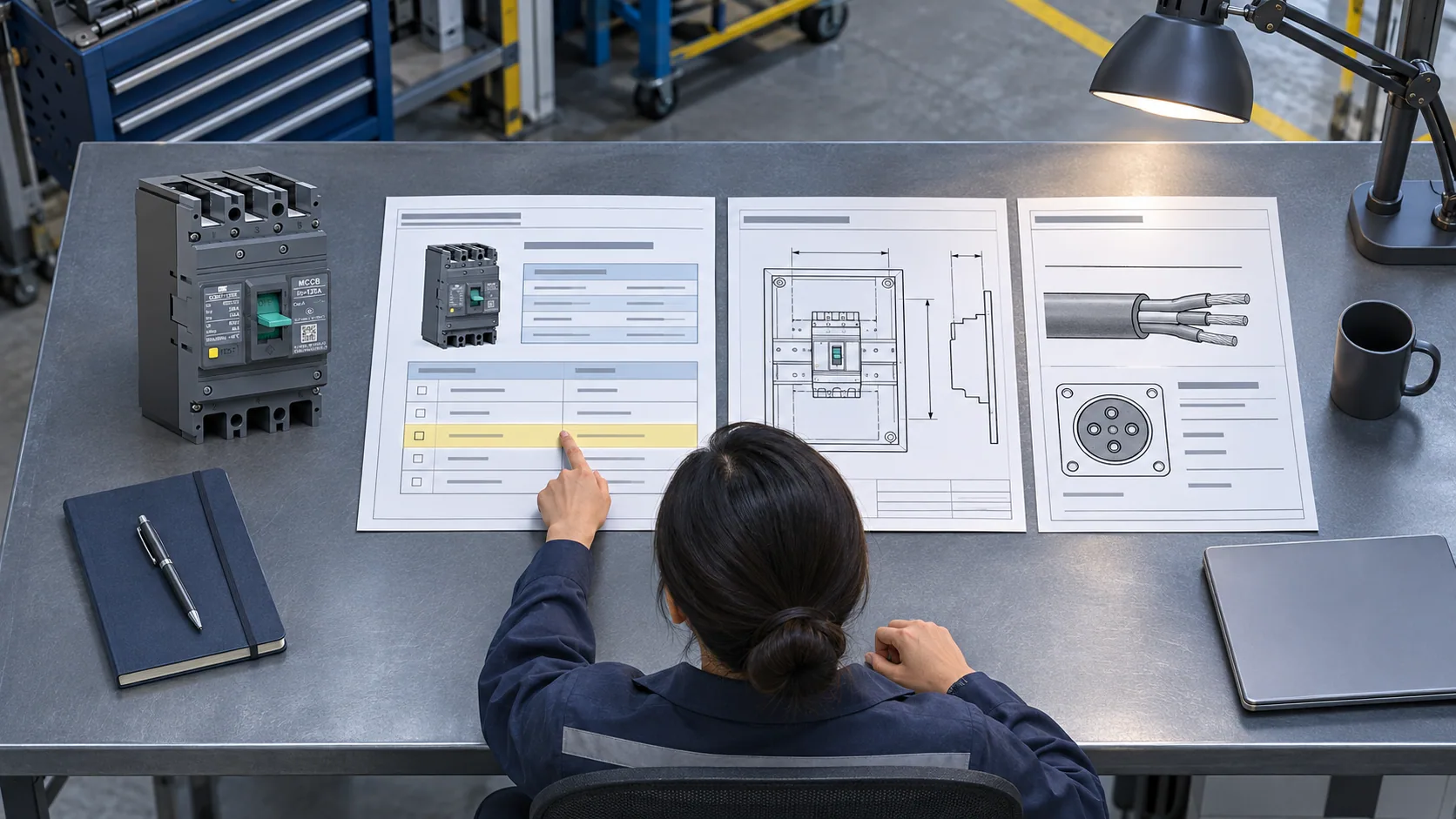
Turn “what size breaker for welder?” into a documented circuit review. The following inputs allow engineering and purchasing teams to distinguish missing information from a confirmed specification.
| Input to provide | Decision it supports |
|---|---|
| Nameplate and complete installation manual | Identify input ratings, duty cycle and specified protection |
| Supply voltage, phases and frequency | Check electrical compatibility |
| Startup current data and proposed trip curve | Assess energization without sacrificing protection |
| Fault-current assessment | Compare variant-specific breaking ratings |
| Cable, receptacle and connection details | Check the complete supply path |
| Panel requirements and destination market | Review mounting, assembly verification and acceptance evidence |
Cable assessment includes installation method, ambient conditions, grouping and termination limits. Receptacles and plugs require their own rating review; a breaker selection cannot establish their suitability. Any permitted welding-circuit provisions must be evaluated under the applicable rules by the responsible designer.
Use the CHAC MCCB buying guide to structure a configuration-specific enquiry. Request evidence for the complete offered configuration rather than accepting a family name as a substitute.
Frequently asked questions
Why should welder breaker sizing use input ratings rather than welding output amps?
The breaker serves the supply side. Welding output amps describe the process side, whose voltage and current differ after conversion. Use the machine’s input data and installation instructions.
How do I1max and I1eff on a welding-machine nameplate differ?
I1max identifies rated maximum supply current; I1eff identifies rated maximum effective supply current associated with intermittent operation. They serve different assessments, and neither independently establishes the breaker rating.
How do input voltage and phase count affect the required supply circuit?
They determine which machine input ratings apply and the required supply arrangement. Multi-voltage or multi-phase capability must be confirmed from the instructions; a three-pole catalogue listing alone does not establish compatibility.
What role does welding duty cycle play under the applicable installation rules?
It informs thermal loading during intermittent use. Rules may allow specific treatment of welding conductors or protection, but duty cycle alone does not justify reducing cable size or increasing breaker size.
How should startup current be checked against the proposed CQM7 trip characteristic?
Obtain documented startup magnitude and duration, then have the designer compare them with the exact variant’s time-current curve and tolerances. Missing curve data means startup compatibility remains unconfirmed.
Why must cable and receptacle ratings be reviewed alongside breaker selection?
Protection must suit the connected supply path. Cable installation conditions, terminal limits and plug/receptacle ratings can constrain selection even when the breaker’s nominal current appears appropriate.
Which machine instructions are needed before recommending a welder breaker size?
Obtain the installation manual covering permitted supplies, input ratings, duty cycle, recommended protection type and rating, conductor requirements and connection provisions. Request manufacturer clarification where startup or protection requirements are missing.
CQM7 suitability remains a configuration-level question. Submit the welder documentation, supply details and panel requirements through CHAC’s project enquiry channel for consultation, with final circuit selection supported by the responsible designer’s review.