A delayed circuit breaker can hold up a completed panel, but buying a similar-looking alternative can introduce another delay: engineering review. For OEMs and distributors, the purchasing question is not simply whether another supplier has stock. It is whether that supplier can deliver an independently available, technically qualified configuration that the intended panel can actually use.
Dual sourcing makes sense when reduced exposure to disruption outweighs qualification, purchasing and ongoing maintenance costs. A second quotation alone provides little resilience. The alternative needs documented technical suitability, acceptance for the intended assembly and a supply route that does not merely duplicate the original supplier’s dependencies.
When does a second source actually reduce supply risk?
Start with the disruption you need to withstand: production interruption, transport delay, unavailable trip units or a supplier’s capacity constraint. A second source supplier helps only where it offers a credible alternative to that specific constraint.
| Sourcing arrangement | Potential benefit | Remaining exposure |
|---|---|---|
| Single qualified source | Concentrated volume and simpler configuration control | No qualified alternative if supply stops |
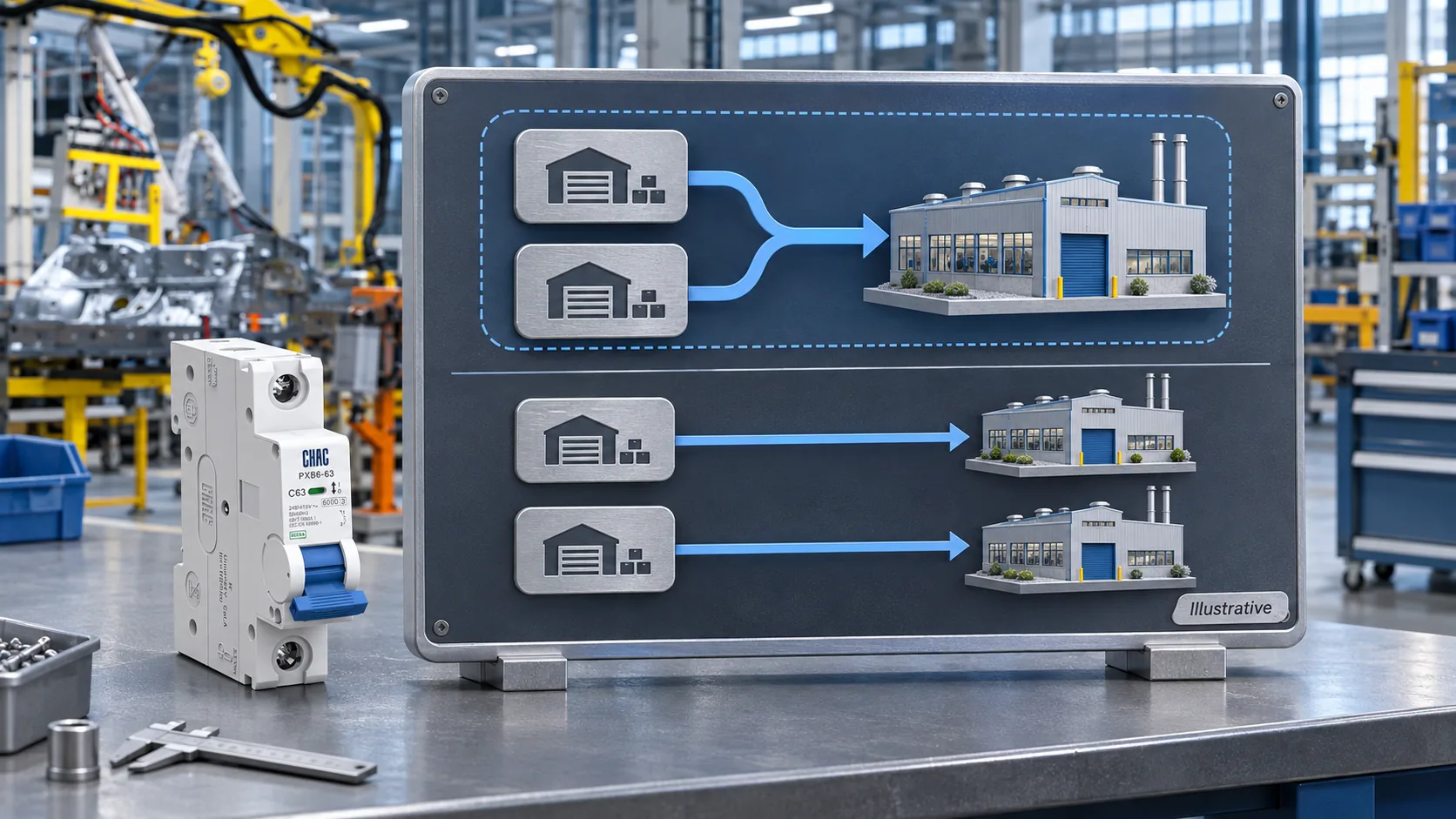
| Two sellers, shared production | Different inventory or delivery routes | Common factory or component interruption |
| Independent, qualified sources | Alternative production and procurement routes | Qualification upkeep and possible volume fragmentation |
Ask who makes the breaker, where critical assemblies originate and whether both suppliers rely on the same trip-unit source or logistics route. Treat undisclosed dependencies as uncertainty, not proof of independence.
In single vs multiple sourcing, compare consequences rather than supplier count. A low-volume breaker that blocks panel shipment may justify backup qualification; an easily replenished item may not. Different sellers can still be useful for stock access without providing manufacturing redundancy.
What must be qualified before an alternative breaker is approved?
Approve the complete configuration, not a current rating or family name. Match circuit type, operating voltage, poles, breaking capacity, trip functions and settings against the application. Then review dimensions, terminals, mounting, accessories and installation constraints using variant-specific documentation.
The CHAC MCCB buying guide distinguishes frame rating from the fitted trip unit and calls for breaking-capacity comparison at the required voltage. IEC 60947-2 is a relevant circuit-breaker standard designation, but its scope does not establish a particular unit’s certification, panel acceptance or suitability for every destination market.
Protection coordination is a separate gate. Similar individual ratings do not establish the same interaction with upstream or downstream devices. Obtain applicable coordination evidence and have the responsible engineering team review the intended combination. Where panel approval depends on specified components, resolve the alternative’s acceptance before purchasing it for production.
The CHAC MCCB range provides a starting point for discussing circuit type and protection options—not evidence that a named variant fits an existing frame or accepts an installed accessory. Request the exact configuration and supporting documents.
How should buyers fund and maintain a usable backup source?
A dual sourcing strategy needs an operating plan, not just an approved supplier entry. Compare lost discounts and added qualification costs with the consequences of an unavailable breaker. Keep assumptions visible: disruption likelihood and duration are estimates, not guaranteed savings.
| Decision input | Buyer check |
|---|---|
| Commercial cost | Compare combined spend, freight, inventory and qualification effort |
| Technical release | Record exact approved variants, documents and permitted applications |
| Supply readiness | Confirm capacity, lead time and ordering conditions |
| Continuing validity | Assign review ownership and change-notification requirements |
Possible arrangements include a primary source with a maintained backup or an ongoing allocation across qualified sources. Neither is automatically better. Regular orders can reveal delivery and documentation problems, while a dormant backup needs explicit checks that its configuration remains available.
Keep purchasing records linked to engineering approvals. Review readiness after product changes, approval changes, delivery deterioration or altered panel requirements. Do not let an old approved-supplier listing become permission to substitute an undocumented configuration.

Frequently asked questions
When does dual sourcing reduce circuit breaker supply risk?
It reduces risk when the alternative is qualified, available within the required recovery window and less exposed to the disruption being addressed. Extra supplier names without usable capacity or independent dependencies offer limited protection.
Why are two breakers with the same current rating not automatically interchangeable?
Current rating does not describe voltage duty, breaking capacity, trip behavior, pole arrangement, terminals, mounting or accessories. Each difference can affect protection or assembly suitability, so comparison must cover the exact variants.
What technical qualification is needed before approving a second-source breaker?
Establish an application specification, obtain variant-specific ratings and dimensional documents, verify relevant certification scope, and review protection and installation requirements. Any necessary evaluation should follow an engineering-approved qualification plan, not improvised field testing.
How can panel approvals and protection coordination affect an alternative supplier decision?
An alternative may require additional assembly review even when its individual ratings appear suitable. Coordination evidence must cover the intended device combination; neither a similar trip curve nor a component certificate alone establishes panel acceptance.
Can two suppliers still depend on the same factory or critical component source?
Yes. Separate sellers may share production, trip-unit components or transport dependencies. Ask for traceable supply-chain information and distinguish independently held stock from genuinely independent production capability.
How should lost volume discounts be weighed against supply-continuity benefits?
Compare total purchasing and maintenance costs with estimated interruption consequences, including delayed panel deliveries and expediting. Use several plausible disruption scenarios rather than treating an uncertain avoided loss as a guaranteed return.
What purchasing and review process keeps a backup breaker supplier ready for use?
Maintain configuration-controlled approvals, current commercial terms and named review ownership. Confirm availability and capacity periodically, require change notifications, and route substitutions through engineering release before production purchasing.
A useful backup is a documented supply option, not an assumed drop-in replacement. Bring the application requirements, approved configuration and continuity objectives to CHAC for a sourcing discussion, keeping technical acceptance separate from commercial availability.