A panel builder may need a feeder breaker that can be commanded from a control room, yet a quotation saying “motorized” leaves an important question unanswered: does the mechanism only open and close, or can it also reset after a protective trip? That distinction affects the control specification, fault-response policy and accessory order.
The direct answer: CQM7’s published ordering information identifies P as motorized operation, but it does not establish remote-reset capability for a particular frame and mechanism. Treat a motorized circuit breaker as a configuration requiring confirmation—not proof of automatic reclosing or post-trip reset.
What does CQM7’s motorized-operation option actually establish?
The CHAC CQM7 product page lists thermal-magnetic protection, frame-dependent ratings and the P motorized-operation designation. This supports discussing a motorized configuration with CHAC. It does not identify an approved mechanism for every frame, its control supply, or its behavior after a trip. When comparing MCCB series, ask which frames accept the specified operator.
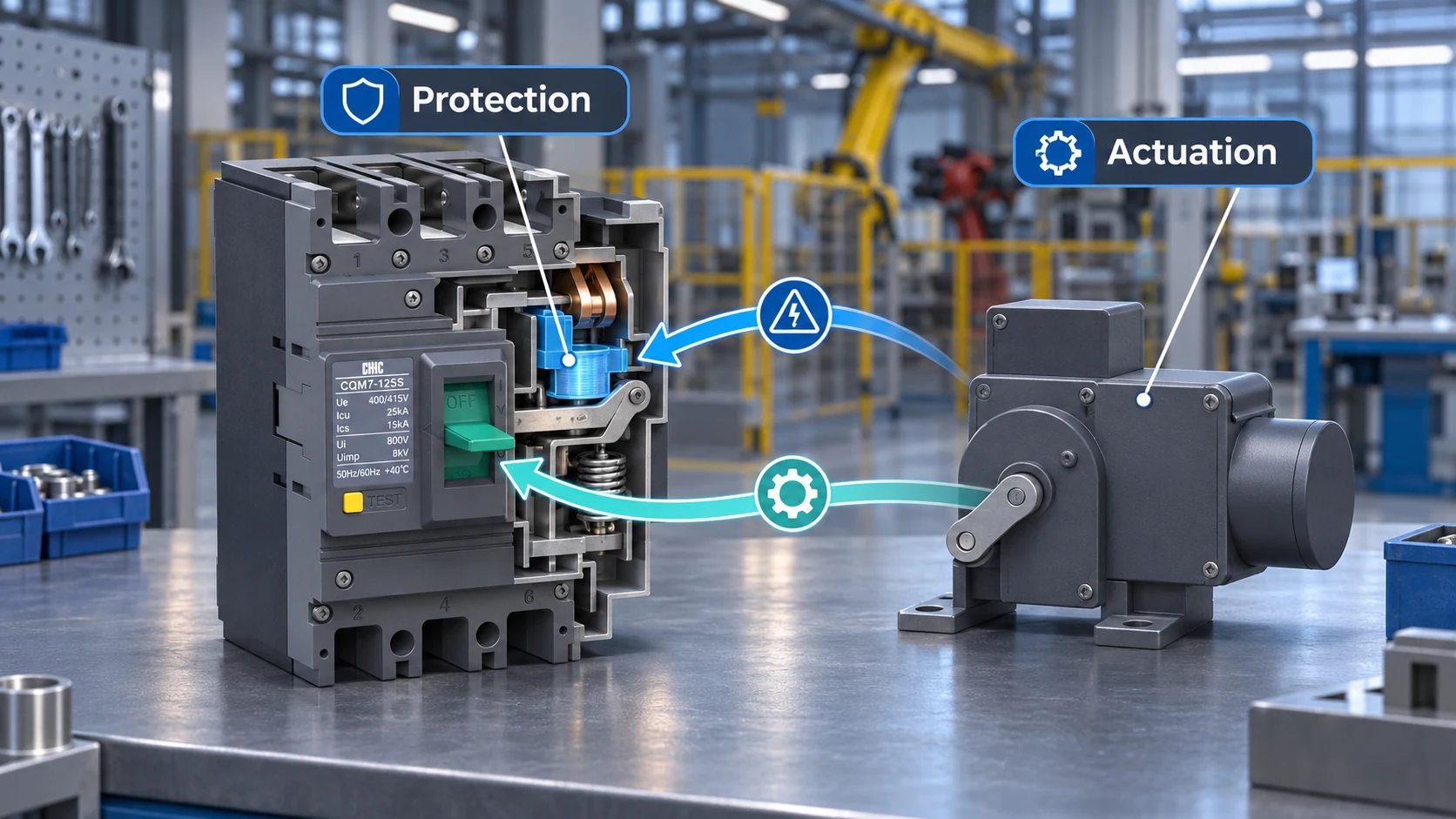
A circuit breaker motor operator provides mechanical actuation; the protective release performs a different function. Buyers should separate those functions in the specification:
| Function | Technical distinction | CQM7 purchasing check |
|---|---|---|
| Protective trip | Responds to the release’s specified fault conditions | Confirm the fitted protection variant |
| Remote opening and closing | Actuates the breaker through a compatible mechanism | Obtain mechanism code and supported commands |
| Post-trip reset | Restores the mechanism from its tripped state | Require explicit reset-function documentation |
| Automatic reclosing | Applies control logic to restoration of supply | Review application permissions separately |
The same page includes magnetic-only options, so overload protection must not be inferred from the family name alone. Similarly, an overlapping current rating does not establish identical mounting or accessory compatibility between frames. The complete order code matters more than a general “remote control circuit breaker” description.
Why must remote reset remain separate from permission to reclose?
Reset capability answers a mechanical question: can the selected operator restore a tripped mechanism? Reclosing permission answers an operational question: is restoring power appropriate after the event? Even an operator documented to perform both actions would not establish that unattended restoration is suitable for the connected equipment.
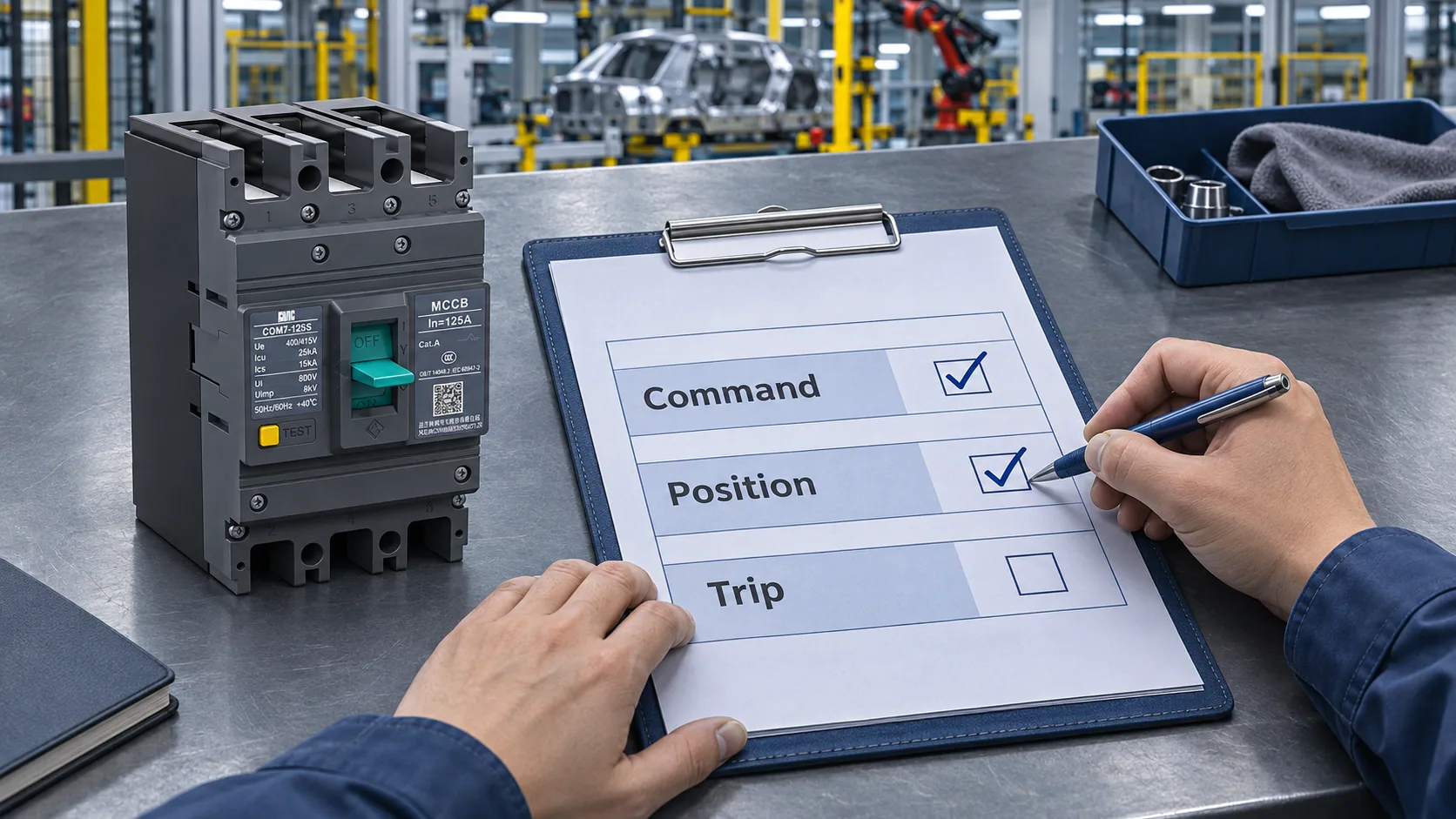
For example, a planned feeder opening and a protective trip should not become indistinguishable events at the supervisory interface. The control design should distinguish commanded state, actual breaker position and trip indication where supported. A command acknowledgment alone is not evidence that the main contacts reached the requested position.
Define fault investigation, authorization to restore service and any automatic-reclosing policy separately from the operator purchase. A protective trip should not be treated as a routine command to close again. Qualified personnel should determine the response appropriate to the fault and installation; remote commands do not replace that assessment.
IEC 60947-2:2024 addresses circuit-breakers within its stated voltage scope and intended operation by instructed or skilled persons. Its scope does not certify a particular CQM7 unit or approve a remote-reset scheme. Likewise, IEC 61439-1:2020 concerns low-voltage assembly requirements; incorporating an operator still requires assembly-level consideration, not just a component description.
What information should buyers obtain before ordering remote operation?
Build the enquiry around the exact breaker and intended control behavior. The CHAC MCCB buying guide emphasizes approval of the complete configuration, including accessory architecture and certification scope, rather than reliance on a family designation.
| Buyer input | Required confirmation |
|---|---|
| Complete breaker code, poles and frame | Compatible operator designation and mounting documentation |
| Available control supply and command interface | Operator supply rating, input requirements and applicable diagram |
| Open, close and reset requirements | Supported functions and documented restrictions after a trip |
| Supervisory indication requirements | Available position and trip contacts, ratings and state definitions |
| Local access and enclosure arrangement | Manual-operation provisions, selector behavior and interlocks |
Also request behavior following control-supply loss and restoration, command conflicts and incomplete operation. Ask whether the arrangement requires separately ordered feedback accessories. Do not assume that an accessory shown for another frame fits the selected motor operated circuit breaker. Resolve these points in the approved configuration and documentation before procurement.
Frequently asked questions
How does a motor operator differ from a circuit breaker's protective trip unit?
A motor operator supplies mechanical actuation for supported commands. The protective trip unit detects its specified fault conditions and initiates tripping. Adding remote actuation does not change the release’s protection characteristics or establish additional protection functions.
Which motorized mechanism is approved for the exact CQM7 frame?
The published CQM7 information identifies P as motorized operation but does not establish an approved mechanism for the exact frame. Ask CHAC for the compatible operator code, complete breaker configuration and mounting documentation.
What control voltage and wiring diagram are required for remote operation?
The required control voltage and diagram are not established by the published CQM7 information. Specify the available AC or DC control supply and command interface, then obtain the diagram and input requirements for the quoted operator. The breaker’s main-circuit voltage is not its operator supply rating.
Can the selected motor operator reset a tripped breaker as well as open and close it?
That remains unconfirmed for the selected CQM7 operator. Require documentation explicitly distinguishing opening, closing and post-trip reset, including any restrictions. A motorized-operation designation alone does not demonstrate all three capabilities.
How should fault investigation be separated from an automatic reclosing command?
Keep trip assessment and authorization to restore power separate from the reset or close command. The operating policy should identify who assesses the event and what conditions permit restoration; remote actuation must not substitute for investigating a protective trip.
Which position feedback and interlocks are needed for reliable remote control?
Define actual open/closed indication, separate trip indication where available, local/remote authority and relevant permissive interlocks. Confirm the selected accessories, contact ratings and state meanings. Supervisory logic should distinguish a requested action from confirmed breaker position.
Can the breaker still be operated locally when its motor-control supply is unavailable?
Local operation during control-supply loss is variant-dependent and is not established here. Obtain the operator’s documented manual-operation provisions, access requirements and mode-selection restrictions, including behavior when control power returns.
For CQM7 procurement, separate the documented motorized-operation option from unconfirmed reset capability. Send the complete breaker code, control-supply specification, required commands and feedback schedule through CHAC’s project enquiry channel, requesting configuration-specific confirmation before approving the remote-control arrangement.