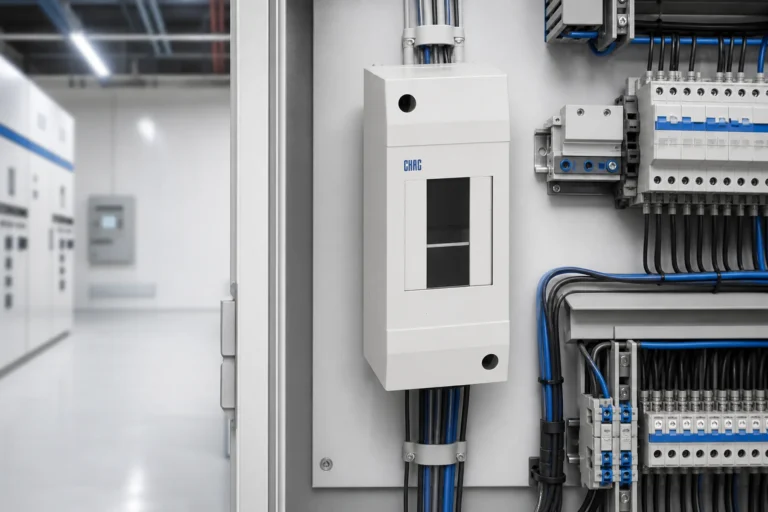
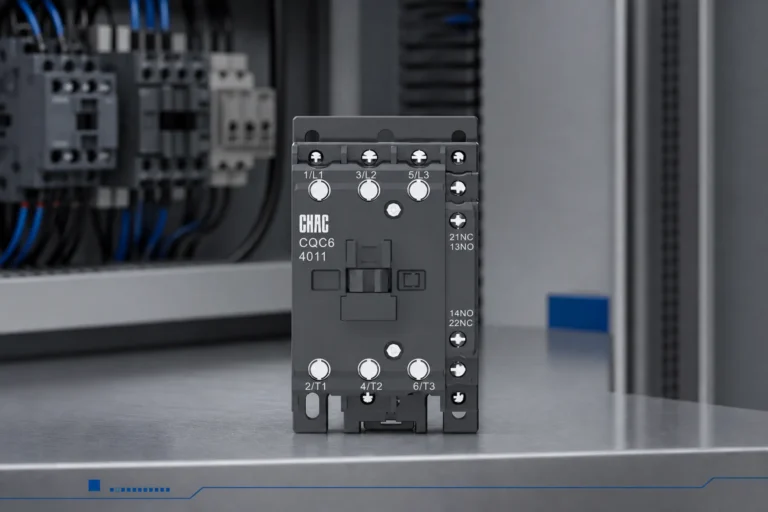
With the increasing demand for electrical safety in residential, commercial, and industrial applications, the Residual Current Circuit Breaker (RCCB) has become an essential protection device in modern power distribution systems. As a key type of RCCB breaker , it helps detect earth leakage faults and quickly disconnect circuits to reduce risks such as electric shock, electrical fires, and equipment damage.
Driven by the growth of smart buildings, renewable energy systems, electric vehicle charging infrastructure, and stricter electrical safety regulations, the global demand for reliable residual current protection solutions continues to grow. Electrical contractors, distributors, and OEM buyers are increasingly looking for RCCB products with higher reliability, wider application compatibility, and compliance with international standards.
However, selecting the right RCCB is not always straightforward. Buyers often face challenges such as choosing the correct RCCB type, understanding wiring requirements, avoiding nuisance tripping, and verifying supplier quality, certifications, and manufacturing capabilities.
This guide provides a complete overview of RCCB installation and wiring, including connection methods, product selection, application scenarios, troubleshooting solutions, and key considerations for sourcing RCCB products from professional manufacturers.
What Is an RCCB and Why Is It Essential for Electrical Safety?
A Residual Current Circuit Breaker (RCCB), also known as a Residual Current Device (RCD), is a protective electrical device designed to detect leakage currents caused by insulation failures, damaged wiring, or accidental contact between live conductors and earth.
Unlike an MCB (Miniature Circuit Breaker), which protects against overload and short-circuit faults, an RCCB focuses on earth leakage protection and helps prevent electric shock and electrical fires.
The working principle of an RCCB is based on current balance. Under normal conditions, the current flowing through the phase conductor is equal to the current returning through the neutral conductor. When leakage occurs, the difference between these two currents is detected by the RCCB’s zero-sequence current transformer (ZCT). If the residual current exceeds the preset trip value, the RCCB disconnects the circuit within milliseconds.
Insulation Failure: Damage or deterioration of insulation materials that causes unwanted current leakage.
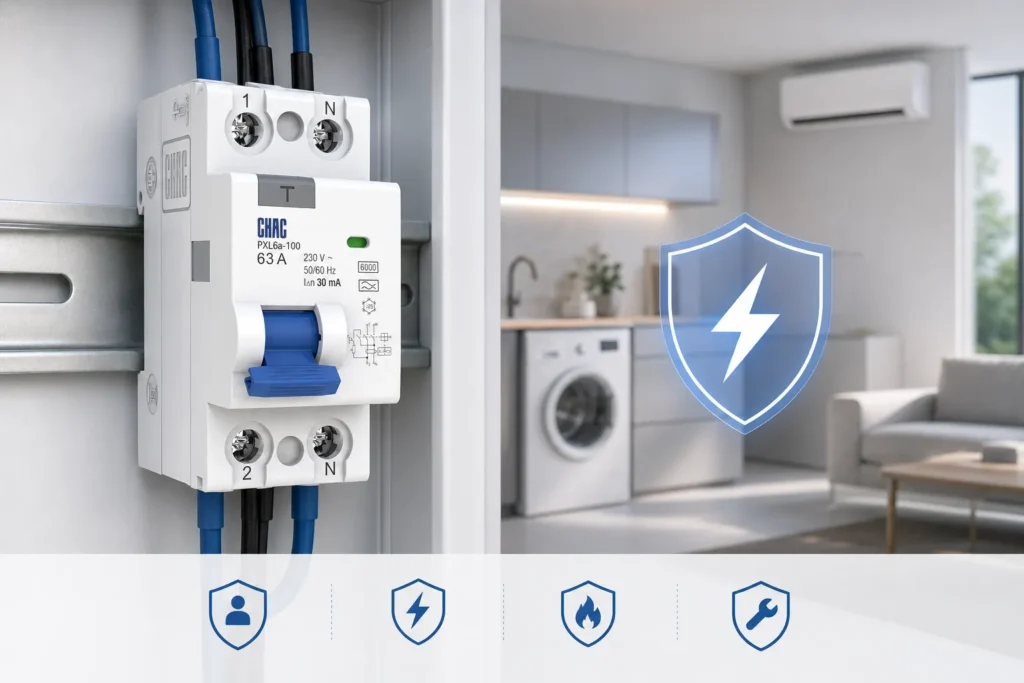
Key Protection Functions of RCCB
| Protection Function | Description |
|---|---|
| Electric shock protection | Disconnects power when dangerous leakage current occurs |
| Fire protection | Reduces risk caused by insulation breakdown and earth faults |
| Equipment protection | Helps protect electrical equipment from leakage damage |
For modern residential, commercial, and industrial electrical systems, RCCBs have become an essential component for improving electrical safety and meeting international protection requirements.
RCCB Wiring Diagram
Correct wiring is critical for RCCB performance. Incorrect connection of phase, neutral, or load terminals may cause nuisance tripping or complete protection failure.
Single Phase RCCB Wiring Connection
A typical single-phase RCCB installation includes:
-
Line (L) input connection
-
Neutral (N) input connection
-
Line and neutral output to the protected load
-
Separate protective earth (PE) connection
Note: The RCCB should monitor both phase and neutral conductors. The earth conductor should never pass through the RCCB because it does not carry normal operating current.
Three Phase RCCB Wiring Connection
For commercial and industrial applications, three-phase RCCBs are commonly used.
Typical configurations include:
-
3P RCCB for three-phase loads without neutral
-
4P RCCB for three-phase + neutral systems
The neutral conductor must pass through the RCCB in systems where a neutral line exists.
| System Type | Recommended RCCB Pole |
|---|---|
| Single phase power | 2 Pole RCCB |
| Three phase without neutral | 3 Pole RCCB |
| Three phase with neutral | 4 Pole RCCB |
Common RCCB Wiring Mistakes
-
Connecting the neutral wire outside the RCCB monitoring path
-
Mixing protected and unprotected neutral wires
-
Installing RCCB without proper earthing arrangement
-
Selecting incorrect rated current or sensitivity
Step-by-Step Guide: How to Install an RCCB Breaker Correctly
Installing an RCCB requires proper product selection, wiring inspection, and functional testing.
Step 1: Check Electrical Parameters Before Installation
Before installation, confirm:
-
Rated voltage (such as 230V/400V)
-
Rated current (In)
-
Residual operating current (IΔn)
-
Number of poles
-
RCCB type (AC, A, F, or B)
Incorrect selection may result in unnecessary tripping or insufficient protection.
Step 2: Install RCCB on DIN Rail
Most RCCBs are designed for standard 35mm DIN rail mounting inside distribution boards.
During installation:
-
Ensure sufficient installation space
-
Maintain correct terminal direction
-
Tighten terminals according to manufacturer specifications
Loose connections may generate heat and reduce device reliability.
DIN Rail Mounting: A standardized installation method using a 35mm metal rail commonly used inside electrical distribution boards.
Step 3: Connect Input and Output Wiring
Normally:
-
Supply cables connect to RCCB input terminals
-
Load cables connect to RCCB output terminals
Always verify terminal markings before energizing the system.
Step 4: Perform RCCB Testing
After installation:
-
Switch on the power supply
-
Press the RCCB test button
-
Confirm the device trips immediately
-
Reset RCCB and verify normal operation
Regular testing ensures the mechanical tripping mechanism remains functional.
How to Choose the Right RCCB for Different Electrical Applications?
Selecting the correct RCCB depends on:
-
Electrical load characteristics
-
Leakage protection requirements
-
Application environment
-
Applicable safety standards
Two important parameters are:
-
Rated current (In)
-
Residual current sensitivity (IΔn)
RCCB Rated Current Selection
Common RCCB current ratings include:
-
25A
-
40A
-
63A
-
80A
-
100A
The RCCB rated current should match or exceed the expected continuous load current.
RCCB Sensitivity Selection
Residual current sensitivity determines when the RCCB trips.
| Sensitivity | Typical Application |
|---|---|
| 10mA | Special protection areas requiring high sensitivity |
| 30mA | Personal electric shock protection in residential systems |
| 100mA | Commercial equipment protection |
| 300mA | Fire protection and industrial applications |
Note: For residential applications, 30mA RCCBs are widely adopted because they provide effective protection against dangerous electric shock.
RCCB Types Explained: Type AC, Type A, Type F and Type B
Different electrical loads generate different leakage current waveforms. Choosing the correct RCCB type is essential for reliable protection.
Type AC RCCB
Type AC detects standard sinusoidal AC residual currents.
Common applications:
-
Lighting systems
-
Conventional resistive loads
-
Basic household appliances
Type A RCCB
Type A can detect:
-
AC residual current
-
Pulsating DC residual current
It is suitable for modern electronic equipment such as:
-
Washing machines
-
Computers
-
Power supplies
-
Smart appliances
Type F RCCB
Type F is designed for equipment with frequency-controlled systems.
Applications include:
-
Variable speed drives
-
Heat pumps
-
Modern appliances with inverter technology
Type B RCCB
Type B provides protection against:
-
AC residual current
-
Pulsating DC current
-
Smooth DC leakage current
Typical applications:
-
Solar PV systems
-
EV charging stations
-
Industrial converters
| RCCB Type | Main Application |
|---|---|
| Type AC | Traditional AC loads |
| Type A | Electronic household equipment |
| Type F | Inverter-based appliances |
| Type B | Solar, EV, industrial systems |
RCCB Applications in Solar PV Systems and Renewable Energy Projects
With the rapid growth of renewable energy, RCCB requirements are becoming more advanced.
Solar inverters may generate DC leakage currents that traditional RCCBs cannot detect effectively. Therefore, selecting the correct RCCB type is critical.

RCCB Requirements for Solar Systems
Important considerations include:
-
Compatibility with inverter output characteristics
-
DC residual current detection capability
-
Correct sensitivity selection
For many photovoltaic applications, Type B RCCBs are recommended because they provide protection against smooth DC leakage currents.
Common solar applications include:
-
Residential rooftop PV systems
-
Commercial solar installations
-
Battery energy storage systems
Common RCCB Installation Problems and Troubleshooting Solutions
Even with a correctly selected RCCB, installation issues can cause unexpected operation problems.
| Problem | Possible Cause | Solution |
|---|---|---|
| RCCB trips immediately | Leakage current or incorrect wiring | Check insulation and neutral connection |
| RCCB cannot reset | Permanent earth fault | Inspect downstream circuits |
| Frequent nuisance tripping | Excessive leakage accumulation | Separate circuits or select suitable RCCB type |
| Test button fails | Mechanical or wiring issue | Replace or inspect device |
Why Does RCCB Keep Tripping?
Common reasons include:
-
Damaged cable insulation
-
Faulty electrical equipment
-
Moisture entering electrical systems
-
Excessive leakage from multiple devices
-
Incorrect neutral connection
In industrial environments, harmonic currents and inverter-based equipment can also influence RCCB operation.
RCCB Standards and Certifications Buyers Should Know Before Purchasing
For distributors and OEM buyers, compliance with international standards is a key purchasing factor.
Common RCCB standards include:
| Standard | Description |
|---|---|
| IEC 61008 | Residual current operated circuit-breakers without overcurrent protection |
| IEC 61009 | RCBO standard combining residual and overcurrent protection |
| CE | European conformity requirement |
| CB Scheme | International product certification system |
When selecting an RCCB supplier, buyers should verify:
-
Product certification
-
Factory testing capability
-
Quality control system
-
Production consistency
How to Choose a Reliable RCCB Supplier for Wholesale and OEM Projects?
A professional RCCB manufacturer should have complete control from product design and component manufacturing to final testing and mass production.
CHAC provides integrated OEM/ODM solutions for low-voltage electrical products, supporting customers from product concept development, engineering design, mold development, component manufacturing, automated assembly, testing, and large-scale production.
With:
-
Annual production capacity exceeding 100 million poles for miniature circuit breakers
-
More than 1,100 employees, including 90+ technical and R&D personnel
-
Over 90% production process automation
-
Around 85% self-developed and self-manufactured key components
-
Professional testing facilities covering materials, components, and finished products
-
Certifications including CE, CB, ISO, CCC, and AEO
CHAC supports global electrical distributors, contractors, and brands with reliable manufacturing capability and customized electrical solutions.
CHAC RCCB Recommended:
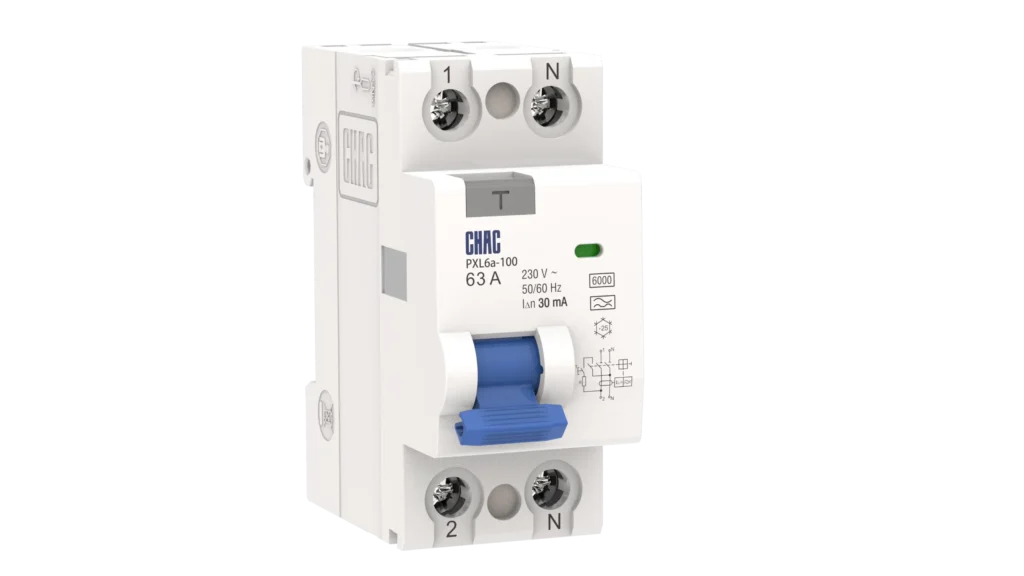
PXL6a-100 Electromagnetic Residual Current Operated Circuit Breaker
Frequently Asked Questions
What is the difference between RCCB and RCD?
RCCB and RCD are commonly used interchangeably. RCD is a general term for devices that detect residual current, while RCCB specifically refers to a residual current circuit breaker without overcurrent protection.
Can RCCB replace MCB?
No. RCCB protects against earth leakage, while MCB protects against overload and short circuits. In many installations, RCCB and MCB are used together.
Can RCCB work without grounding?
An RCCB can detect leakage current without a direct earth connection in certain fault conditions, but a proper grounding system remains essential for complete electrical safety.
Why does my RCCB trip frequently?
Frequent tripping may be caused by:
-
Electrical leakage
-
Faulty appliances
-
Incorrect wiring
-
Wrong RCCB sensitivity selection
How often should RCCB be tested?
Testing frequency depends on local regulations and application conditions. Regular testing using the built-in test button is recommended to ensure reliable operation.
Which RCCB is suitable for solar inverter systems?
For solar applications, Type A or Type B RCCBs may be required depending on inverter design and leakage current characteristics. Type B RCCBs are commonly selected for systems that may generate smooth DC residual currents.