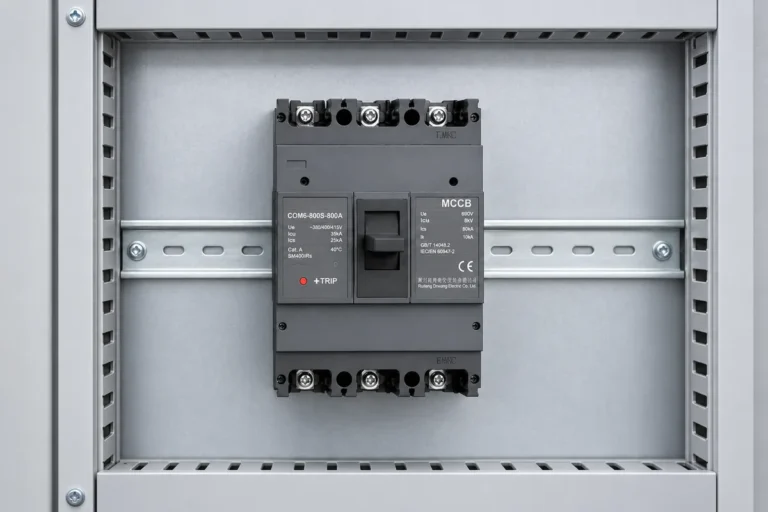
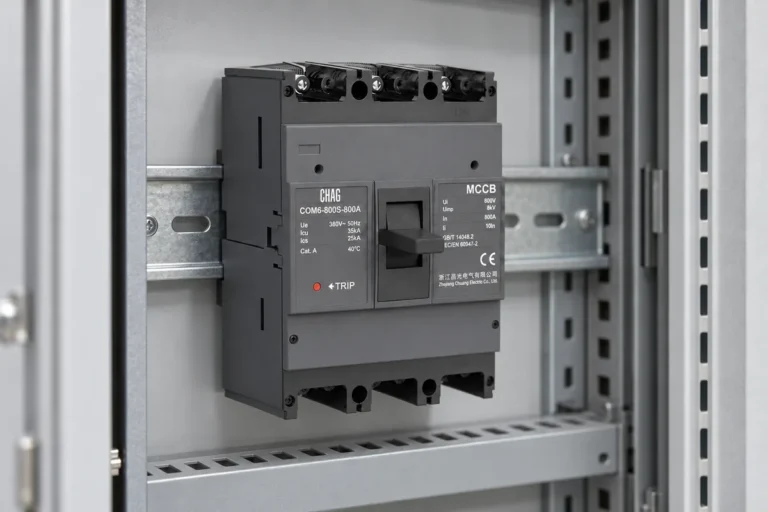
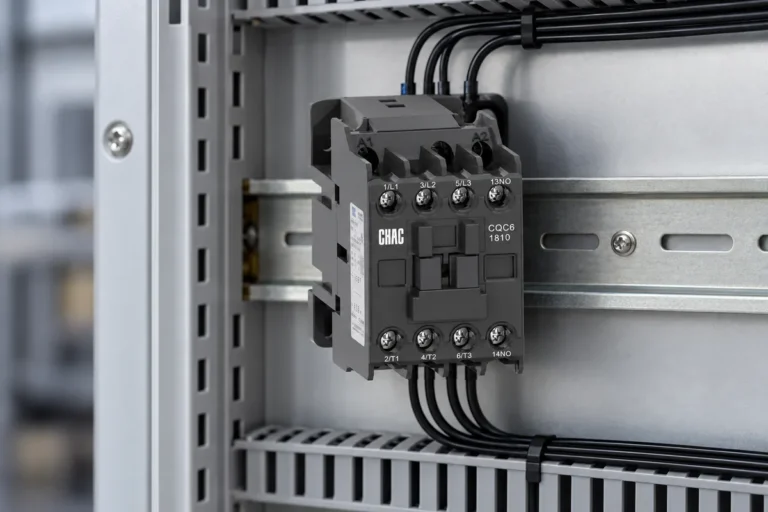
As smart home technology continues to evolve, electrical systems are becoming more intelligent, connected, and energy-efficient. Traditional circuit breakers have played a critical role in protecting homes from overloads and short circuits for decades, but they mainly provide passive protection without visibility or control.WiFi Smart Circuit Breakers represent the next generation of electrical protection by combining traditional circuit protection with digital monitoring, remote control, and energy management capabilities. Through integrated sensors, communication modules, and intelligent control systems, smart breakers allow homeowners to monitor electrical parameters, receive real-time alerts, and manage circuits remotely through mobile applications.
Unlike traditional breakers, smart breakers can provide valuable information such as:
-
Real-time current and voltage monitoring
-
Energy consumption tracking
-
Remote ON/OFF control
-
Fault notifications
-
Smart home integration
With the rapid adoption of solar energy systems, electric vehicle (EV) chargers, home batteries, and intelligent home automation, smart circuit breakers are becoming an important component of modern home energy management systems (HEMS).This guide explains how smart circuit breakers work, key specifications to consider, major brands and models, safety concerns, common problems, buying recommendations, and future technology trends.
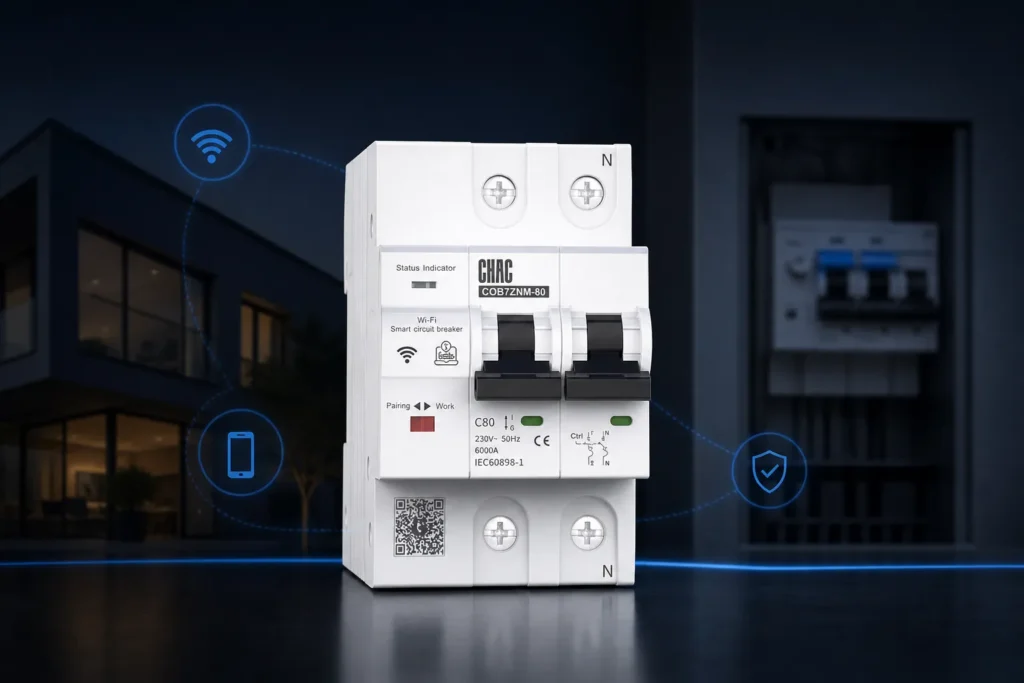
How Do Smart Circuit Breakers Work? Understanding the Technology Behind Them
A smart circuit breaker combines the protection functions of a traditional breaker with advanced electronics and communication technologies. While a conventional breaker only interrupts abnormal current conditions, a smart breaker can continuously monitor electrical data and communicate with users or energy management platforms.
The Basic Structure of a Smart Circuit Breaker
A modern WiFi smart circuit breaker typically includes the following components:
| Component | Function |
|---|---|
| Current sensor | Measures real-time current flow |
| Voltage sensor | Monitors voltage stability and abnormal conditions |
| Microcontroller unit (MCU) | Processes electrical data and executes control logic |
| Communication module | Connects to WiFi or smart home networks |
| Relay or switching mechanism | Controls circuit connection |
| Mobile application | Provides monitoring and remote operation |
The working process can be summarized as:
Electrical measurement → Data processing → Wireless communication → User control
For example, when an abnormal current condition occurs, the smart breaker can detect the change, analyze the electrical data, disconnect the circuit if necessary, and send an alert to the user’s smartphone.
Microcontroller Unit: A small integrated processor that controls smart breaker functions by processing electrical data and executing control logic.
Smart Circuit Breakers vs Traditional Protection Technology
Traditional breakers mainly rely on:
-
Thermal trip mechanisms for overload protection
-
Magnetic trip mechanisms for short-circuit protection
Smart breakers enhance these functions by adding:
-
Digital monitoring
-
Event recording
-
Remote switching
-
Energy analytics
-
Automated control logic
This makes smart breakers not only a safety device but also an intelligent energy management component.
Smart Home Integration and Connectivity
Most smart circuit breaker wifi are designed to integrate with modern smart home ecosystems, including:
- TUYA
-
Amazon Alexa
-
Google Home
-
Apple HomeKit
-
Matter-enabled platforms
This allows users to create automated scenarios, such as:
- Turning off selected circuits during vacations
- Scheduling high-power appliances
- Monitoring energy consumption patterns
- Reducing unnecessary standby power usage
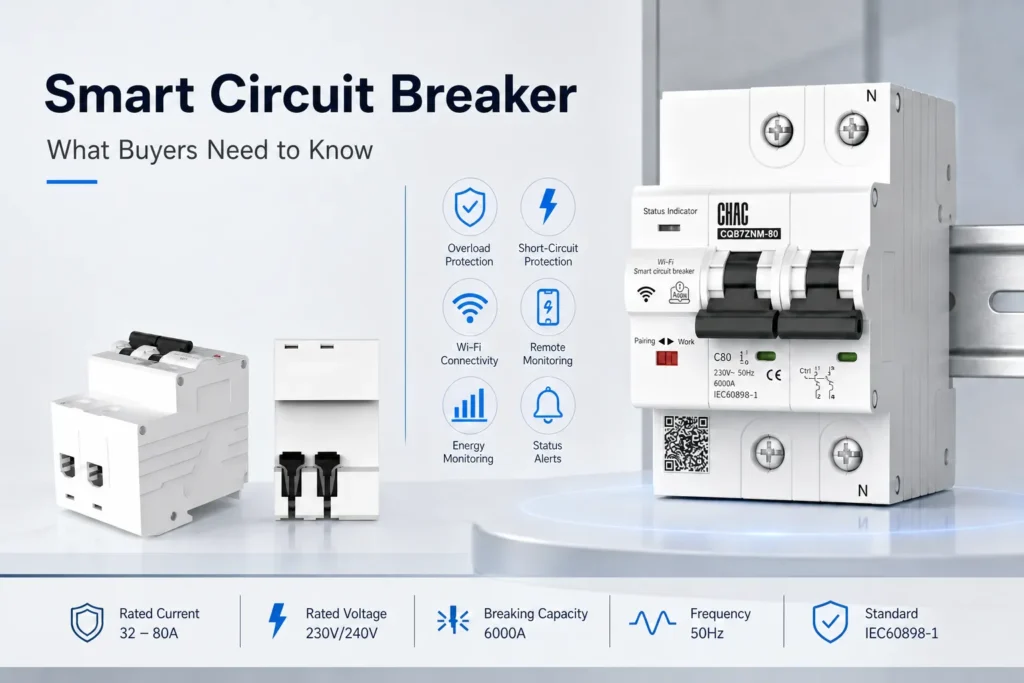
Smart Circuit Breaker Specifications & Ratings: What Buyers Need to Know
When selecting a smart circuit breaker, users should consider not only smart features but also electrical specifications. Electrical ratings determine whether the breaker is safe, compatible, and suitable for a specific application.Professional electrical products are typically evaluated according to international safety standards, including requirements for rated voltage, current capacity, short-circuit protection performance, and mechanical durability. For example, UL 489 Standard for Molded-Case Circuit Breakers defines safety requirements for circuit breakers used in branch circuit protection applications, covering aspects such as construction, performance testing, and interrupting capability.Compliance with recognized standards helps ensure that smart circuit breakers provide reliable protection while maintaining compatibility with modern electrical systems.
1. Voltage Rating
Voltage rating defines the maximum electrical voltage the breaker is designed to handle.
Common residential ratings include:
| Region | Typical Voltage |
|---|---|
| North America | 120V / 240V |
| Europe | 230V |
| Asia-Pacific | 220V |
Before installation, users should confirm that the breaker matches the local electrical system.
2. Current Rating
Current rating indicates the maximum continuous current the breaker can safely carry.
Common ratings include:
- 15A
- 20A
- 30A
- 40A
- 50A
- 60A
Different applications require different ratings:
| Application | Typical Rating |
|---|---|
| Lighting circuits | 15A |
| General outlets | 20A |
| HVAC equipment | 30A–50A |
| EV chargers | 40A–60A |
Choosing an incorrect current rating may reduce protection performance or create safety risks.
3. Interrupting Rating (AIC)
The Ampere Interrupting Capacity (AIC) indicates the maximum fault current that a breaker can safely interrupt.
A higher AIC rating is important in environments where potential fault currents are higher, such as:
- Large residential systems
- Commercial buildings
- Industrial applications
This specification is often overlooked by consumers but is essential for professional electrical selection.
Ampere Interrupting Capacity: The maximum fault current a circuit breaker can safely interrupt without damage.
4. Pole Configuration
Smart circuit breakers are commonly available in:
- Single-pole configurations
- Double-pole configurations
| Type | Typical Applications |
|---|---|
| Single-pole | Lighting, outlets, small appliances |
| Double-pole | HVAC systems, water heaters, EV chargers |
Pole Configuration: The number of independent electrical circuits controlled by a breaker, such as single-pole or double-pole designs.
5. Communication Protocols and Certifications
Besides electrical parameters, buyers should also consider smart features and certifications.
Important factors include:
- WiFi frequency compatibility (commonly 2.4GHz)
- Zigbee or Bluetooth support
- Matter compatibility
- CE certification
- IEC standards compliance
Future-ready smart breakers are increasingly adopting open communication standards to ensure compatibility with evolving smart home ecosystems.
Smart Circuit Breaker vs Traditional Breaker vs Smart Panel
Many homeowners are confused about the difference between a smart circuit breaker and a smart electrical panel. Although they share similar goals, their applications are different.
| Feature | Traditional Breaker | Smart Circuit Breaker | Smart Panel |
|---|---|---|---|
| Overload protection | ✓ | ✓ | ✓ |
| Remote control | × | ✓ | ✓ |
| Energy monitoring | × | ✓ | ✓ |
| Circuit-level data | × | ✓ | ✓ |
| Installation cost | Low | Medium | High |
| Best application | Basic protection | Existing home upgrades | New smart homes |
Smart Circuit Breaker: Best for Targeted Upgrades
A smart breaker is ideal for homeowners who want to upgrade specific circuits without replacing the entire electrical panel.
Typical applications include:
- EV charger monitoring
- Solar system management
- HVAC control
- High-energy appliance monitoring
- Advantages:
- Lower installation cost
- Easier replacement
- Circuit-level monitoring
Smart Panel: Best for Whole-Home Energy Management
A smart panel provides centralized control over the entire electrical system.
It is better suited for:
- New construction projects
- Large solar installations
- Whole-home energy optimization
However, smart panels usually require higher installation costs and more extensive electrical modifications.
Smart Circuit Breaker Brands & Models: Leading Options Compared
The smart circuit breaker market includes electrical manufacturers, smart home companies, and emerging technology providers. When comparing brands, users should consider not only smart features but also electrical expertise, manufacturing capability, testing standards, and long-term reliability.
Leviton Smart Circuit Breakers
Leviton focuses on residential smart electrical solutions with features such as:
- Energy monitoring
- Mobile app control
- Smart home integration
- Residential load center compatibility
Load Center: An electrical distribution panel that houses circuit breakers and distributes power throughout a building.
Eaton Smart Circuit Breakers
Eaton is a global electrical technology company with extensive experience in power management.
Key strengths include:
- Strong electrical safety background
- Reliable protection technology
- Residential and commercial applications
- Integration with energy management systems
Eaton solutions are suitable for users prioritizing electrical reliability and professional-grade performance.
Siemens Smart Circuit Breakers
Siemens provides electrical protection and automation technologies worldwide.
Its advantages include:
- Advanced engineering capabilities
- High reliability
- Extensive electrical product experience
Siemens solutions are often considered by users looking for established electrical technology providers.
CHAC Smart Circuit Breakers: Combining Electrical Expertise with Smart Manufacturing
With more than 30 years of experience, CHAC focuses on the research, development, and manufacturing of low-voltage electrical products, including circuit breakers and related electrical components.
CHAC has an annual production capacity exceeding 100 million circuit breaker poles, including 1 million molded case circuit breakers and 2 million AC contactors, serving customers across global markets.
Driven by smart and sustainable manufacturing, CHAC has established:
- Digital workshops
- Highly automated production lines
- SCADA-based production monitoring systems
- MES manufacturing execution systems
- Intelligent factory management platforms
These advanced manufacturing capabilities help ensure consistent quality, efficient production, and reliable product performance.CHAC is also recognized as a National Green Factory and operates under the ISO 14001 environmental management system, demonstrating its commitment to sustainable manufacturing practices.To maintain strict quality standards, CHAC operates independent laboratories with comprehensive testing capabilities, including:
- Electrical endurance testing
- Salt spray corrosion testing
- Material analysis
- Magnetic performance testing
- Dimensional testing
By combining decades of electrical expertise with intelligent manufacturing technologies, CHAC provides reliable low-voltage electrical solutions designed for modern energy management and smart electrical applications.
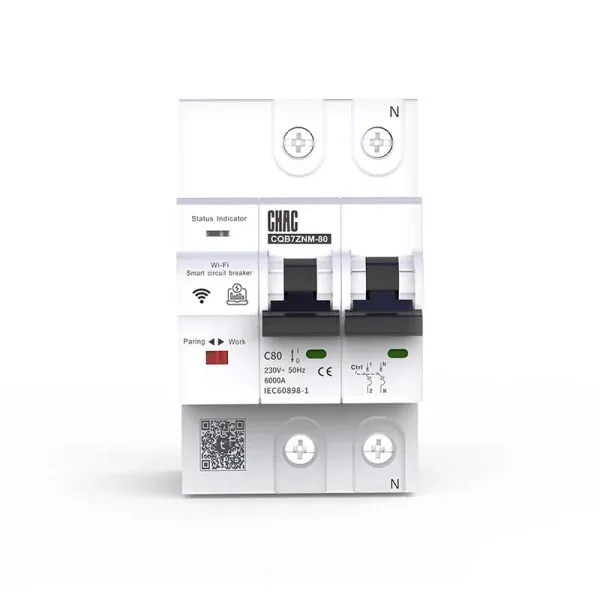
CHAC Smart Circuit Breaker Recommended:
CQB7ZM WIFI Circuit Breaker Smart Circuit Breaker | CHAC Electric
Are WiFi Smart Circuit Breakers Safe? Security and Reliability Explained
Safety is one of the biggest concerns when homeowners consider adding connected electrical devices to their homes. Since WiFi smart circuit breakers combine electrical protection with internet connectivity, users often ask whether smart features introduce additional risks.
The answer is that a properly designed smart circuit breaker maintains the fundamental safety functions of a traditional breaker while adding digital monitoring and control capabilities.
1. Do Smart Circuit Breakers Affect Electrical Safety?
A WiFi smart circuit breaker still performs the essential protection functions of a conventional breaker, including:
- Overload protection
- Short-circuit protection
- Overcurrent interruption
- Electrical fault response
The smart communication system operates as an additional control and monitoring layer. If WiFi connectivity is interrupted, the breaker’s basic electrical protection function continues to operate.
In other words:
Smart functions may depend on connectivity, but electrical protection does not.
2. Can Hackers Control a Smart Circuit Breaker?
Because smart breakers are connected devices, cybersecurity should be considered during product selection.
Potential security risks include:
- Unauthorized access to connected devices
- Weak account passwords
- Outdated firmware
- Unsecured communication protocols
Reliable smart circuit breakers typically use:
- Encrypted communication
- Secure authentication
- Firmware update mechanisms
- Manufacturer security management
Homeowners should also follow basic cybersecurity practices:
- Use strong passwords
- Keep firmware updated
- Secure home WiFi networks
- Choose products from reputable manufacturers
3. Cloud Control vs Local Control
Smart circuit breakers generally use either cloud-based control or local control methods.
| Control Method | Advantages | Limitations |
|---|---|---|
| Cloud-based control | Easy remote access and updates | Depends on manufacturer servers |
| Local control | Better privacy and reliability | May require advanced configuration |
For long-term reliability, future smart electrical systems are expected to support more local processing and open communication standards.
Common Problems With WiFi Smart Circuit Breakers and Solutions
Although smart circuit breakers provide many benefits, users may encounter technical or installation challenges. Understanding these issues helps buyers make better decisions.
1. WiFi Connection Problems
One of the most common issues is unstable wireless connectivity.
Possible causes:
- Weak WiFi signal near the electrical panel
- Router compatibility problems
- 5GHz-only networks
- Network configuration changes
Solutions:
- Use a stable 2.4GHz WiFi connection
- Improve wireless coverage near the electrical panel
- Use a WiFi extender if necessary
Because electrical panels are often installed in garages, basements, or utility rooms, signal strength should be considered before installation.
2. Electrical Panel Compatibility Issues
Not every smart breaker fits every electrical panel.
Before purchasing, users should verify:
- Panel brand compatibility
- Breaker dimensions
- Voltage rating
- Current rating
- Pole configuration
Installing an incompatible breaker may result in poor electrical connection or safety risks.
3. Smart App and Firmware Issues
Smart breakers rely on software platforms, which means users may experience:
- App update problems
- Connection delays
- Firmware compatibility issues
- Cloud service interruptions
Choosing manufacturers with long-term software support is important because electrical equipment is typically expected to operate for many years.
4. Higher Cost Compared With Traditional Breakers
Smart circuit breakers are more expensive due to additional components such as:
- Sensors
- Communication modules
- Control electronics
- Software systems
However, the additional cost can be justified for users who need:
- Energy monitoring
- Remote management
- Smart home automation
- Renewable energy integration
Smart Circuit Breaker Buying Guide: How to Choose the Right One
Choosing the right WiFi smart circuit breaker requires balancing electrical requirements, smart features, compatibility, and future expansion needs.
1. Check Electrical Compatibility First
Before considering smart functions, confirm that the breaker matches your electrical system.
Important specifications include:
| Parameter | What to Check |
|---|---|
| Voltage rating | 120V, 240V, 220V, etc. |
| Current rating | 15A–60A depending on application |
| Pole configuration | Single-pole or double-pole |
| Panel compatibility | Supported electrical panel models |
| Certification | UL, IEC, or regional standards |
Electrical compatibility should always come before smart features.
2. Choose Smart Features Based on Your Needs
Different users require different functions.
| User Requirement | Recommended Features |
|---|---|
| Reduce electricity costs | Energy monitoring |
| Remote appliance control | Mobile app control |
| Smart home automation | Alexa, Google Home, Matter support |
| Solar energy management | Load monitoring and energy analytics |
| EV charging management | High-current support and scheduling |
3. Consider Future Expansion
A smart breaker should not only solve today’s needs but also support future upgrades.
Future household electrical demands may include:
- Electric vehicles
- Solar photovoltaic systems
- Home battery storage
- Heat pumps
- Smart energy management systems
Choosing products with flexible communication options and strong ecosystem support can improve long-term value.
4. Evaluate Manufacturer Reliability
Unlike many consumer electronics, circuit breakers are safety-critical electrical products.
Important factors include:
- Manufacturing experience
- Product certifications
- Testing capabilities
- Quality control systems
- After-sales support
Smart Circuit Breaker Technology & Future Trends
Smart circuit breakers are evolving from simple remote-controlled devices into intelligent electrical management systems. This transformation is closely connected with the increasing adoption of renewable energy, electric vehicles, battery storage, and smart home technologies.According to research on Home Energy Management Systems (HEMS), intelligent energy platforms can help households monitor consumption patterns, optimize electricity usage, and improve overall energy efficiency through data-driven control strategies.As energy systems become more decentralized and connected, smart breakers are expected to play a greater role in coordinating household power distribution, renewable energy utilization, and demand-side management.
1. AI-Based Predictive Energy Management
2. Solid-State Smart Circuit Breakers
Advantages may include:
| Traditional Breaker | Solid-State Smart Breaker |
|---|---|
| Mechanical switching | Electronic switching |
| Physical contact wear | Reduced mechanical wear |
| Millisecond response | Much faster switching capability |
| Limited monitoring | Advanced digital control |
3. Integration With Solar, EV Chargers, and Battery Storage
4. Matter and Open Smart Home Ecosystems
FAQs
Are smart circuit breakers worth it?
Yes. Smart circuit breakers are worth considering for users who need remote monitoring, energy management, fault alerts, and improved electrical safety. They help optimize power usage and provide real-time control through smart systems.
What is the difference between a smart breaker and a regular breaker?
A regular breaker provides basic overload and short-circuit protection, while a smart breaker adds digital features such as WiFi connectivity, remote control, energy monitoring, and real-time fault notifications.
Do smart breakers require professional installation?
Yes. Smart circuit breakers should be installed by qualified electrical professionals to ensure correct wiring, compatibility, and compliance with electrical safety standards.
What is the 80% rule for breakers?
The 80% rule means a circuit breaker should generally not operate continuously above 80% of its rated capacity. For example, a 20A breaker is typically designed for a continuous load of up to 16A.
How much is a smart breaker panel?
The cost of a smart breaker panel depends on the panel size, features, brand, and installation requirements. Prices can range from several hundred to several thousand dollars depending on system complexity.
What is WiFi MCB?
A WiFi MCB (WiFi Miniature Circuit Breaker) is a smart miniature circuit breaker (MCB) with wireless connectivity. It provides traditional circuit protection while enabling remote monitoring, switching control, and energy management through a mobile app or smart home system.
References & Industry Standards
UL 489 – Molded-Case Circuit Breakers, Molded-Case Switches and Circuit-Breaker Enclosures
Smart Home Energy Management: Sequence-to-Sequence Load Forecasting and Q-Learning
International Energy Agency (IEA) – Energy Efficiency and Smart Energy Systems Reports